
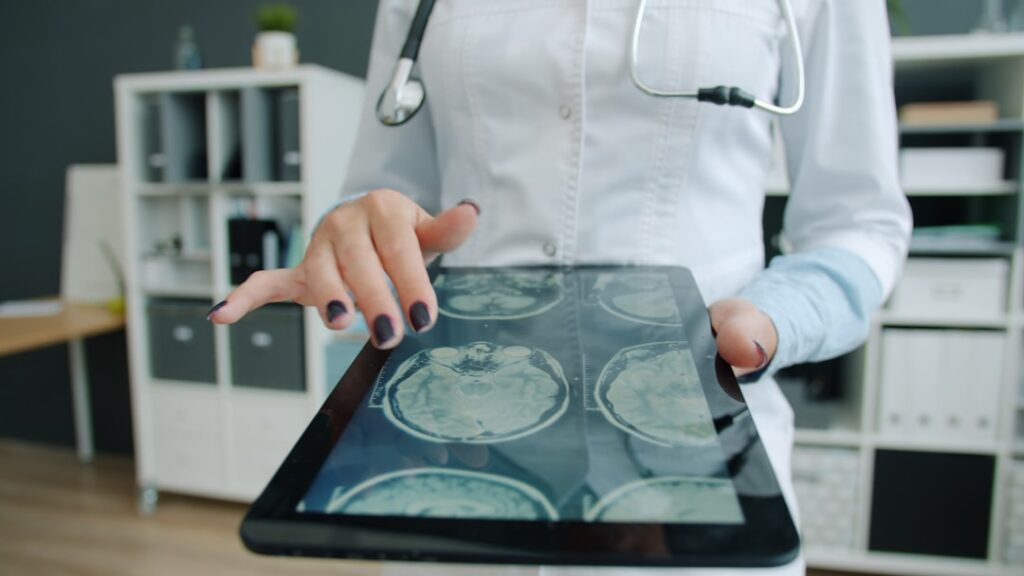
AI Diagnostic Accuracy Surpasses Human Physicians in Emergency Settings
The intersection of artificial intelligence and healthcare has long promised revolutionary improvements in patient outcomes, but a new Harvard-led study provides compelling empirical evidence that this promise may be materializing faster than many anticipated. Researchers examining how large language models perform across diverse medical contexts have uncovered a striking finding: in emergency room scenarios, at least one AI model demonstrated superior diagnostic accuracy compared to experienced human physicians making real clinical decisions.
This research represents more than just another data point in the growing catalog of AI achievements. It addresses one of medicine’s most critical domains—emergency care—where split-second decisions carry life-or-death consequences and diagnostic accuracy directly correlates with patient survival rates. The implications extend beyond academic interest; they suggest a potential paradigm shift in how hospitals might approach triage, initial diagnosis, and treatment decisions during peak patient load situations.
The Study’s Methodology and Scope
The Harvard investigation took a comprehensive approach, testing large language models across a spectrum of medical scenarios. Rather than relying on theoretical cases or textbook examples, researchers analyzed the models’ performance on authentic emergency room cases, ensuring real-world relevance. This methodological choice distinguishes the study from earlier research that sometimes relied on sanitized or simplified clinical scenarios that don’t capture the complexity, ambiguity, and information overload emergency physicians regularly navigate.
The inclusion of actual ER cases matters tremendously. Emergency medicine operates in a fundamentally different context than other medical specialties. Physicians must make decisions with incomplete information, often under severe time pressure, while managing multiple competing priorities. Patients present with confusing symptom clusters, incomplete medical histories, and conditions that don’t fit neat diagnostic categories. Testing AI systems against this backdrop provides a far more rigorous evaluation than laboratory conditions would allow.
Performance Metrics That Challenge Conventional Wisdom
What makes this study particularly noteworthy is not merely that an AI model performed well—it’s that the model outperformed human physicians in diagnostic accuracy. The study compared AI performance against two human doctors, and at least one language model surpassed both in correctly identifying emergency room cases. This wasn’t a narrow victory; it represented a meaningful difference in diagnostic precision.
This outcome contradicts lingering assumptions about the irreplaceability of human medical expertise. For decades, emergency medicine has been regarded as a domain uniquely requiring human judgment, intuition, and real-time decision-making that machines simply couldn’t replicate. The Harvard findings suggest this narrative requires updating. While machines lack the lived experience and contextual understanding physicians possess, they appear to compensate through systematic, bias-free analysis of available clinical data.
The Human Factor in Medical Diagnosis
Understanding why AI exceeded human performance requires examining how physicians actually make diagnostic decisions. Human doctors, despite extensive training, operate within cognitive constraints. They experience fatigue after long shifts, suffer from unconscious biases that influence decision-making, and sometimes prioritize efficiency over thoroughness when overwhelmed. Additionally, confirmation bias—the tendency to seek information supporting an initial hypothesis—can cause physicians to miss alternative diagnoses that don’t fit their first impression.
Large language models, by contrast, analyze presented information without fatigue degradation, emotional influence, or the cognitive shortcuts that sometimes misdirect human reasoning. They process multiple diagnostic possibilities simultaneously without the mental bandwidth limitations that plague human cognition. In high-volume emergency settings where physicians see dozens of patients during a shift, this mechanical advantage becomes increasingly pronounced.
Implications for Healthcare Systems and Patient Care
The practical applications of this research could prove transformative. Rather than replacing emergency physicians—an outcome neither feasible nor desirable—these findings suggest a collaborative model where AI serves as a diagnostic assistant, offering second opinions or flagging possibilities physicians might overlook. This augmentation approach leverages both AI’s pattern recognition strength and human physicians’ contextual understanding, ethical reasoning, and ability to communicate complex medical information to frightened patients.
Hospitals could implement AI diagnostic support systems that analyze patient presentations alongside physician assessments, identifying cases where the AI recommendation diverges from the preliminary human diagnosis. In instances of divergence, the system could trigger additional review, specialist consultation, or alternative diagnostic testing. This safety-net approach could catch errors without requiring physicians to cede diagnostic authority entirely.
Challenges and Considerations Moving Forward
Despite promising results, significant hurdles remain before widespread clinical implementation. Regulatory pathways for AI in medicine remain unclear, with the FDA still developing frameworks for evaluating and approving AI diagnostic tools. Medical liability questions loom large: if an AI system suggests a diagnosis that a physician dismisses, and poor outcomes follow, how does responsibility distribute between the physician and the developers? These legal and regulatory frameworks must mature before hospitals can confidently integrate AI diagnostics into critical care pathways.
Additionally, this single study, while rigorous, cannot definitively establish that AI outperforms physicians across all emergency scenarios. Replication studies with larger datasets, different AI models, and diverse patient populations remain necessary before drawing sweeping conclusions about implementation readiness.
The Broader AI Revolution in Medicine
This Harvard research fits within a larger narrative of AI’s expanding medical applications. From radiology imaging analysis to pathology interpretation, machine learning systems increasingly match or exceed human specialists in narrow, well-defined tasks. The emergency room study extends this pattern into a domain characterized by diagnostic ambiguity and time pressure—territories many assumed would remain distinctly human.
The findings don’t suggest that emergency medicine will soon become an AI-dominated field. Rather, they indicate that the future of medical practice will likely involve sophisticated human-AI collaboration, where each partner contributes unique strengths to patient care. As healthcare systems grapple with physician burnout, rising demand for emergency services, and the need to improve diagnostic accuracy, tools that enhance rather than replace human decision-making offer genuine promise.
The Harvard study represents not an endpoint but a waypoint in medicine’s ongoing transformation. As researchers continue investigating how AI can augment clinical practice, and as regulatory frameworks evolve to accommodate new technologies, emergency medicine may soon look fundamentally different—with AI serving as a trusted partner in the crucial work of saving lives.
This report is based on information originally published by TechCrunch. Business News Wire has independently summarized this content. Read the original article.