
Fashion’s Grandest Night Becomes a Symbol of Class Divide
The Metropolitan Museum of Art’s iconic steps have long served as the red carpet for America’s most elite—a glittering showcase of haute couture, celebrity glamour, and unbridled cultural excess. Yet as fashion’s most prestigious evening prepares to unfold in New York City, the traditional champagne-and-canapés atmosphere finds itself shadowed by an increasingly vocal and organized critique of the wealth on full display. This year, with Amazon founder Jeff Bezos and his fiancée Lauren Sánchez among the attendees, critics of extreme wealth inequality have seized the moment to amplify their message about the troubling concentration of power and resources among America’s billionaire class.
The Met Gala has never been a stranger to controversy. For decades, observers have questioned the spectacle of the ultra-wealthy parading in million-dollar gowns while homelessness, food insecurity, and healthcare disparities plague millions of Americans. But the controversy surrounding this year’s event suggests we may be witnessing a pivotal shift in how the public perceives these symbols of elite excess. Social media, activist organizing, and broader cultural conversations about inequality have created a megaphone that previous generations of Met Gala critics simply did not possess.
The Bezos Effect: Why This Year Feels Different
The presence of Bezos and Sánchez appears to have crystallized longstanding frustrations into something more focused and immediate. Bezos, whose company Amazon has faced sustained criticism over labor practices, warehouse conditions, and worker treatment, represents to many the epitome of modern oligarchic wealth accumulation. His net worth—fluctuating but consistently exceeding $150 billion—makes him among the world’s richest individuals, a status achieved partly through a company where workers have reported grueling conditions and inadequate compensation.
For activists and critics, Bezos’s attendance at an event celebrating extravagant wealth while his own workers struggle with wages that fail to keep pace with inflation feels particularly tone-deaf. The juxtaposition has proven irresistible for those seeking to make their point about systemic inequality, transforming the Met Gala from a purely fashion story into a broader cultural and political statement about how we organize our economy and distribute its rewards.
Protests and Public Pressure Mount
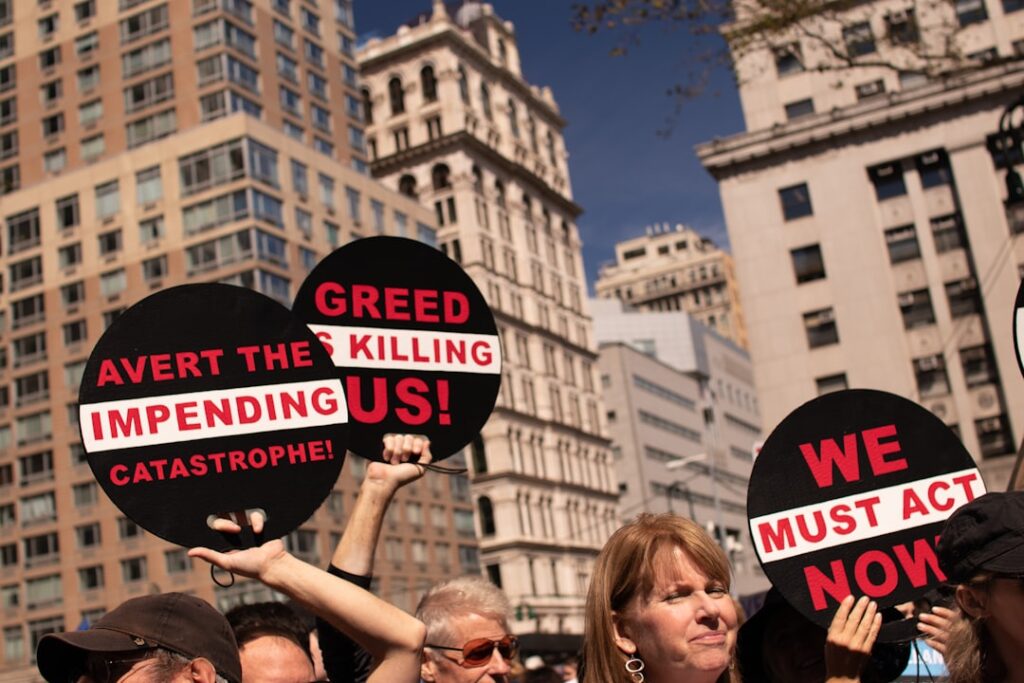
Beyond social media commentary, organized groups have announced plans for protests outside the museum, marking a notable escalation from previous years. These aren’t random complaints from internet commenters—they represent coordinated efforts by labor advocates, inequality organizations, and progressive activists determined to make their voices heard during the event’s media coverage and public attention.
The protest movement reflects growing frustration with what many see as a disconnect between the experiences of ordinary Americans and the insulated world of billionaire excess. As inflation pressures household budgets, healthcare costs continue to rise, and wealth concentration reaches historic levels, the visual spectacle of celebrities and moguls draped in couture becomes harder for critics to ignore or laugh off.
A Cultural Reckoning on the Horizon
Whether this year’s protests and criticism will translate into meaningful change remains uncertain. The Met Gala will likely proceed largely as planned, with photographers capturing stunning fashion moments and fashion media celebrating design innovation. But the growing presence of critical voices suggests that the event’s traditional narrative—fashion celebration unburdened by ethical questions—may be increasingly difficult to maintain.
The controversy surrounding Bezos and Sánchez’s attendance ultimately reflects broader societal questions about wealth, power, and accountability. As inequality reaches levels not seen since the Gilded Age, symbols of elite excess no longer enjoy the cultural immunity they once possessed. Fashion’s biggest night out may find that glamour alone is no longer sufficient to overcome the gravity of these larger conversations about how we want to structure our shared society.
The Met Gala’s future—both as an institution and as a cultural moment—may depend on whether its participants and organizers can navigate these mounting tensions. For now, the steps of the Metropolitan Museum will once again serve as both a celebration of artistic expression and an uncomfortable mirror reflecting the inequalities that define contemporary America.
This report is based on information originally published by Fast Company. Business News Wire has independently summarized this content. Read the original article.