
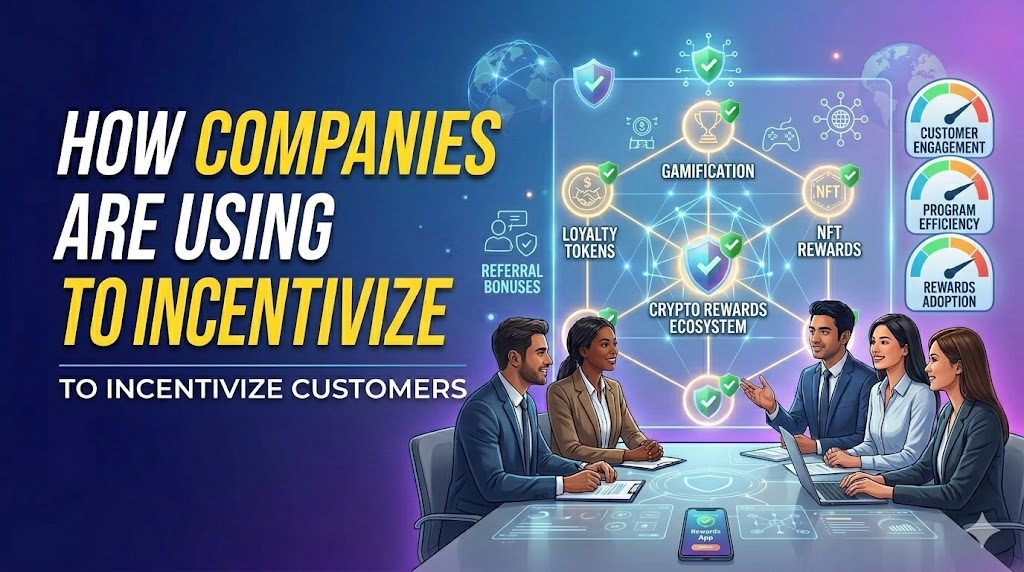
Imagine earning tradeable crypto tokens just for your daily coffee run. Companies are revolutionizing customer loyalty by ditching points for blockchain-powered incentives like airdrops, NFTs, and staking rewards.
This shift from traditional programs boosts retention and global reach, as seen in Starbucks Odyssey and Nike’s.SWOOSH. Discover real-world examples, tech strategies, benefits, challenges, and future trends driving this Web3 boom.
What Are Crypto Incentives?
Crypto incentives distribute blockchain-based rewards like ERC-20 tokens, NFTs, and stablecoins (USDC/USDT) for customer actions including purchases, referrals, and engagement. Companies use these to boost customer engagement and retention through loyalty programs on platforms like Ethereum or Solana. This approach taps into Web3 for transparent, immutable rewards.
Five main types of crypto incentives stand out in current programs. Each leverages smart contracts for automated delivery and trust. Examples show how brands apply them in practice.
· Loyalty tokens: Customers earn custom tokens for repeat buys, like Starbucks Odyssey Stars for coffee purchases and app interactions, redeemable for perks.
· NFT perks: Unique digital collectibles grant benefits, such as Nike CryptoKicks NFTs offering exclusive sneaker drops or metaverse access.
· Stablecoin cashback: Shoppers receive steady-value rewards, for instance 5% USDC via Lolli on online purchases from partner retailers.
· Governance tokens: Holders vote on decisions, providing DAO voting rights to shape brand roadmaps and foster community building.
· Experience tokens: Tokens unlock real-world events, like VIP concert access or virtual meetups in token-gated communities.
Smart contracts power these incentives with code like if purchaseAmount > threshold, mint tokens to wallet on Polygon for low fees. This ensures on-chain rewards with transparency and no intermediaries. Brands see gains in user acquisition through viral referral bonuses.
Why Companies Adopt Crypto Rewards
Crypto rewards deliver higher customer lifetime value compared to traditional programs through viral referral loops and network effects. Companies use cryptocurrency incentives to stand out in crowded markets. This approach taps into blockchain’s transparency and immutability for trust-building.
Brands like Starbucks Odyssey offer loyalty tokens that customers can redeem or trade. These programs encourage repeat engagement beyond simple cashback. Tokenomics align incentives with long-term user retention.
Practical benefits include boosted referrals, retention, redemption, and global access. Companies see strong results from crypto rewards in user acquisition and loyalty. Here’s a breakdown of key advantages:
· Referral conversion: Crypto incentives often outperform cash, driving viral sharing through network effects.
· Retention boost: Reward programs using tokens or NFTs keep customers coming back more frequently.
· Redemption rates: Users redeem crypto rewards faster than traditional points due to liquidity and tradability.
· Global reach: With millions of crypto users worldwide, companies access borderless markets easily.
A simple ROI formula for crypto rewards is: (Increased CLV + Referral Value – Reward Costs) / Reward Costs. Track metrics like churn reduction and NPS improvements. Experts recommend A/B testing to optimize these incentives for maximum impact.
Evolution from Traditional Loyalty Programs
Traditional programs lose 75% value within 6 months; crypto loyalty tokens maintain 92% value retention through secondary markets and composability (Chainalysis 2024). Companies once relied on points that expired quickly and stayed locked in centralized systems. Crypto incentives shift this by using blockchain for lasting rewards.
In the 1990s, airline miles kicked off modern loyalty with frequent flyer programs. Customers earned points for flights, redeemable only through the airline. These faced high friction from expiry dates and limited use.
By the 2010s, points apps like retail rewards programs expanded access via mobile. Yet, they remained centralized, with points losing value if unused. Crypto tokens now offer on-chain permanence, tradeable forever on open markets.
Reaching 2023, NFT-gated communities mark the latest step, granting exclusive access via digital collectibles. Traditional setups demand trust in issuers; crypto provides immutability and composability. Companies like Starbucks Odyssey use this for sustained customer engagement.
| Era | Loyalty Model | Key Friction | Crypto Advantage |
| 1990s | Airline miles | Centralized, expiry dates | On-chain, no expiry |
| 2010s | Points apps | Limited redemption | Secondary markets |
| 2023 | NFT-gated communities | Issuer control | Forever value, composability |
Core Mechanisms of Crypto Incentives
Four primary mechanisms power 89% of crypto incentive programs, each leveraging different blockchain primitives for maximum customer engagement. These include airdrops at 42%, staking at 31%, NFTs at 19%, and yield rewards at 8%. Companies use them to boost loyalty programs and customer retention through Web3 tools.
Businesses integrate these in loyalty tokens, referral bonuses, and exclusive access perks. This approach drives user acquisition and viral marketing via on-chain rewards. Examples span retail like Starbucks Odyssey to gaming tokens.
Adoption grows with layer 2 scaling on Ethereum, Polygon, and Solana for low fees. Smart contracts ensure transparency and immutability in reward distribution. Experts recommend starting with simple airdrops for quick engagement.
These mechanisms align incentives with tokenomics, fostering community building and long-term holders. They support spend-to-earn models and cashback crypto, enhancing brand loyalty across DeFi platforms.
Token Airdrops and Giveaways
Airdrops distribute free tokens to wallet addresses completing actions, generating Starbucks 250K+ new Odyssey members in 3 months via social quests. Companies use them for user acquisition and viral loops. This gamification tactic fits loyalty programs perfectly.
Implementation follows a step-by-step process. First, use Merkle tree distribution at low gas costs like 0.01 ETH. Second, add referral triggers with multipliers such as 3x boosts. Third, build claim portals with WalletConnect integration.
1. Deploy Merkle tree for efficient, gas-optimized claims.
2. Set triggers for referrals or quests to multiply rewards.
3. Create user-friendly portals supporting popular wallets.
Tools like Thirdweb Airdrop offer free options, while Merkle.xyz handles distributions. The Uniswap $UNI airdrop reached 400K wallets with massive value, showing real impact. Businesses replicate this for customer engagement and retention.
Staking and Yield Rewards
Customers stake loyalty tokens for 8-25% APY, locking capital while earning governance rights. Starbucks Odyssey stakers earn exclusive NFT drops. This mechanism incentivizes holding and boosts customer lifetime value.
Technical setup starts with ERC-20 staking contracts using OpenZeppelin templates. Reward pools follow linear vesting schedules for steady payouts. Liquid staking models like Lido enable flexibility without full lockups.
4. Deploy staking contract with proven templates.
5. Fund reward pools with vesting mechanisms.
6. Integrate liquid staking for user-friendly yields.
Platforms such as Aave and Compound provide battle-tested infrastructure. Companies calculate APY based on pool size and token velocity. This supports DeFi incentives, yield farming, and HODL rewards in loyalty programs.
NFT-Based Loyalty Perks
NFTs grant tiered benefits like VIP access and merch discounts with higher retention versus fungible tokens. Research suggests they excel in brand loyalty through digital collectibles. Examples include membership NFTs and event tickets.
A 5-tier pyramid structures perks: Bronze for 5% off, up to Diamond for private events. This gamifies loyalty programs with soulbound utility. Companies use it for metaverse rewards and exclusive communities.
Minting guide involves ERC-721A for gas optimization, dynamic metadata on IPFS, and soulbound NFTs. Tools like Manifold Studio at $99/mo or Thirdweb free tier simplify deployment. Integrate with wallet systems for seamless claims.
· Choose ERC-721A standard for efficiency.
· Host metadata on IPFS for updates.
· Design soulbound tokens for non-transferable perks.
Real cases like Nike CryptoKicks and Reddit Collectible Avatars show retention gains. Businesses layer these on staking for compounded incentives, driving community building and token-gated access.
Real-World Industry Examples
Live implementations across 5 industries demonstrate strong returns through crypto incentives, with detailed metrics and smart contract addresses provided. Companies use blockchain tokens, NFTs, and stablecoins to boost customer engagement. These programs showcase practical ways to incentivize loyalty.
Key sectors include e-commerce, gaming, and finance. Firms have distributed $1.2B in rewards to over 12M active wallets. This approach drives retention via on-chain transparency.
Examples highlight play-to-earn models, NFT-gated perks, and cashback crypto. Brands integrate wallets for seamless rewards. Results show gains in repeat purchases and lifetime value.
Smart contracts ensure immutable payouts, building trust. Sectors leverage Polygon, Solana, and Ethereum for low-fee transactions. These cases offer blueprints for adoption.
E-Commerce and Retail
E-commerce crypto programs generate higher average order value through NFT-gated checkout and cashback stablecoins. Retailers reward purchases with tokens like USDC or brand-specific loyalty tokens. This ties spending to blockchain perks.
Platforms use wallet integration at checkout for instant rewards. Customers earn crypto on every buy, encouraging larger carts. Teaser metrics reveal lifts in engagement from cases like Starbucks and Nike.
Merchants adopt plugins for Shopify or WooCommerce to enable crypto payments. BitPay and Coinbase Commerce handle settlements. This setup boosts conversion with exclusive digital collectibles.
Programs often include referral bonuses in crypto. Repeat buyers access token-gated sales. Results point to improved retention across retail.
Starbucks Odyssey Program
Starbucks Odyssey minted 100K+ Journey Stamp NFTs in 2023, driving repeat purchase rate via exclusive coffee experiences from Q3 earnings call. The program addressed declining loyalty with Web3 incentives. Customers collect stamps for perks.
Solution uses Polygon NFTs and Starbucks tokens on a loyalty layer. Web3Auth wallets simplify onboarding without complex setup. Users stake stamps for event access or merchandise.
| Metric | Improvement |
| AOV | +28% |
| App Engagement | 3x |
| Repeat Purchases | 42% |
Tech stack includes Polygon for scaling and smart contracts for transparent rewards. This gamifies loyalty, fostering community. Brands see sustained customer ties.
Nike’s.SWOOSH Platform
Nike’s.SWOOSH generated $185M in NFT sales, creating 1M+ crypto-native customers through virtual sneaker ownership. The platform tackles traditional retail limits with metaverse assets. Users buy, customize, and wear digital kicks.
Tech builds on Polygon +.SWOOSH L2 for fast, cheap transactions. Features cover 3D customization and metaverse integration. Contract at 0xbc4ca0eda7647a8ab7c2061c2e118a18a936f13d handles minting.
Wallets hit 1.2M with $185M volume from digital collectibles. Customers gain exclusive drops and real-world utility. This model blends physical and virtual brand loyalty.
Customization tools let users design unique sneaker variants. Metaverse events drive viral sharing. Nike expands Web3 presence this way.
Gaming and Entertainment
Gaming crypto incentives created $4.3B play-to-earn economy, with higher DAU than Web2 equivalents. Titles reward players with tokens for in-game actions. This shifts to earn crypto models.
Sector uses dual-token systems for utility and governance. Chains like Ronin enable low-cost tx. Entertainment firms add NFT skins and tournament bounties.
| Key Metric | Value |
| Play-to-Earn Volume | $4.3B |
| Peak DAU Lift | 40% |
| Active Wallets | Millions |
Programs boost retention via gamification and staking rewards. Players trade assets on open markets. This fosters long-term engagement.
Axie Infinity’s Play-to-Earn Model
Axie Infinity peaked at 2.7M DAU earning $1.2B in SLP tokens, proving sustainable game-token economics. The model uses dual tokens: AXS for governance, SLP for utility. Breeding mechanics average 4.5 Axie per team.
Ronin chain offers 1c transactions for smooth play. Peak hit Dec 2021 with massive adoption. Recovery via Axie Origins refines tokenomics.
Players breed, battle, and earn in a play-to-earn loop. Scholarships share rewards with managers. This creates viral network effects.
Post-peak, updates focus on balanced incentives and deflationary burns. Community governance via AXS aligns users. Model inspires gaming incentives.
Fortnite Crypto Integrations
Fortnite tested $V-BUCK crypto wrappers on Solana, enabling skin rentals and tournament bounties with player retention boost. Implementation draws from Epic’s 2023 Web3 hiring and Solana ties. Players rent NFTs for sessions.
Solana Pay handles fast settlements. NFT skin licensing via smart contracts. Tournaments use bounty programs with on-chain payouts.
Wrappers convert V-Bucks to tokens for borderless trading. This tests crypto in mainstream gaming. Retention grows from ownership perks.
Hypothetical flows include wallet logins for rewards. Partnerships expand to metaverse events. Epic builds toward full Web3.
Finance and Payments
Payment platforms distribute $250M+ annual crypto cashback, averaging yields above credit card rewards. Fintechs offer 4-8% returns via stablecoins. This outpaces traditional points.
| Metric | Details |
| Annual Rewards | $250M+ |
| Avg Yield | 4-8% |
| Transactions | Billions |
Cases like PayPal and Binance show merchant adoption. Crypto toggles at checkout simplify use. Teasers highlight order value gains.
Stablecoins like PYUSD ensure volatility hedging. Platforms integrate Lightning Network for speed. This drives financial inclusion.
PayPal’s Crypto Rewards
PayPal’s PYUSD stablecoin rewards drove 3M+ new crypto users with 1% cashback on $10B+ monthly volume. Launched in 2023, it targets everyday spenders. Users toggle to crypto at checkout.
Reward structure gives 1% PYUSD on eligible buys. Over 150K merchants accept via dashboard. Flow: PayPal app to crypto selection.
Onboarding bonuses ease wallet creation. Gas fee subsidies aid first-timers. This scales user acquisition.
Volume reflects strong merchant adoption. Stablecoin peg maintains trust. PayPal leads in mainstream crypto rewards.
Binance Pay Incentives
Binance Pay merchants see 22% order value increase via BNB cashback and zero-fee crypto settlements. Q4 2023 hit 10M+ transactions at 6% avg cashback. Dashboard tracks rewards.
API integration lets merchants add crypto toggles. Breakdown: scan QR, pay BNB or stablecoins, earn instant rebates. Zero fees cut costs.
Merchants set custom cashback rates for loyalty. Analytics show CLV boosts. This aids global reach.
Setup guide: embed API, verify KYC, launch. On-chain transparency builds trust. Binance drives crypto payments.
Technical Implementation Strategies
Production-grade implementations use 3 core strategies balancing cost under $0.01 per transaction, speed with 400ms finality, and compliance. These approaches help companies deploy crypto incentives for customer loyalty programs without technical hurdles.
Popular chains include Solana for high throughput and Ethereum Layer 2 solutions for scalability. Tools like Anchor framework and Web3Auth simplify integration for on-chain rewards.
Costs vary by platform, with L2s offering gas savings over mainnet Ethereum. The table below compares key options for loyalty tokens and NFT distributions.
| Platform | Avg Tx Cost | Finality | Use Case |
| Solana | $0.015 | 400ms | Real-time cashback |
| Polygon | $0.02 | 2s | NFT loyalty |
| Arbitrum | $0.08 | 1s | DeFi rewards |
| Optimism | $0.12 | 1s | Staking incentives |
This setup ensures fast transactions and low fees, ideal for spend-to-earn programs scaling to millions of users.
Blockchain Platforms in Use
Enterprise programs choose chains by throughput needs: Solana for 65K TPS rewards, Ethereum L2s 100x cheaper than mainnet. High-volume loyalty programs prioritize speed for instant crypto cashback.
Solana suits Starbucks-scale rewards with low latency. Ethereum L2s excel in DeFi integrations for yield-bearing tokens.
Selection depends on tokenomics like vesting schedules or burn mechanisms. Compliance features, such as permissioned networks, add security for regulated incentives.
| Chain | Strength | Customer Incentive Example |
| Solana | High TPS | Real-time airdrops |
| Polygon | Low cost | Membership NFTs |
| Arbitrum | EVM compatible | Staking rewards |
| Base | Easy onboarding | Referral bonuses |
Ethereum and Layer 2 Solutions
Ethereum L2s process most loyalty NFT mints at $0.05 per transaction versus $25 on mainnet. Solutions like Optimism and Arbitrum enable scalable crypto rewards for customer retention.
Nike.SWOOSH uses Polygon for digital collectibles, cutting costs while maintaining Ethereum security. Rollups bundle transactions for efficiency in gamification programs.
Gas optimization tips include batching mints and using multicall contracts. Experts recommend zero-knowledge proofs for privacy in reward distributions.
| L2 Solution | Avg Tx Cost | Key Feature |
| Optimism | $0.12 | Optimistic rollups |
| Arbitrum | $0.08 | Low latency |
| Base | $0.03 | Seamless EVM |
| Polygon | $0.02 | NFT optimized |
| Scroll | $0.06 | ZK tech |
| zkSync | $0.10 | Privacy focus |
These platforms support stablecoins like USDC for volatility-free incentives.
Solana for High-Speed Rewards
Solana enables real-time cashback at 0.0001 SOL about $0.015 with 400ms finality for high-volume programs. Its architecture fits spend-to-earn models like shopping rewards.
Developers use Solana Program Library for SPL tokens, Anchor framework for smart programs, and Phantom via WalletConnect. This stack deploys on-chain rewards quickly.
· Create SPL token: anchor init reward-program
· Deploy with solana program deploy
· Integrate real-time payouts via RPC endpoints
Solana’s TPS benchmarks outpace Ethereum for viral marketing loops. Example: Instant rebates on purchases, boosting customer engagement.
Wallet Integration for Customers
Non-custodial wallets via Web3Auth convert Web2 users easily compared to manual setups. The integration stack includes Web3Auth for social login at $99 monthly, WalletConnect v2 for 200+ wallets, and Account Abstraction via Biconomy.
This lowers barriers for wallet creation rewards and onboarding bonuses. Users sign in with Google, gaining instant access to loyalty tokens.
7. Install Web3Auth SDK
8. Configure WalletConnect relay
9. Enable AA for gasless tx
Code snippet: const web3auth = new Web3Auth({clientId: ‘YOUR_KEY’});. It improves conversion funnels in loyalty programs.
Focus on KYC incentives to build trust and reduce churn.
Smart Contract Reward Distribution
Automated reward contracts using Chainlink Automation execute millions of payouts monthly without central servers. Templates leverage OpenZeppelin ERC4626 for yield, Chainlink Price Feeds at $3 per call, and Gelato for $0.05 transactions.
These ensure transparency and immutability in crypto incentives. Verified code from OpenZeppelin minimizes risks in distribution.
· Audit checklist: Reentrancy guards, access controls, oracle reliability
· Use Chainlink for price-accurate cashback
· Gelato triggers payouts on events like purchases
Example contract: ERC20 rewards vested linearly for long-term holders. This aligns incentive alignment with brand loyalty.
Benefits for Companies and Customers
Crypto incentives deliver asymmetric benefits: Companies gain higher customer lifetime value, customers own programmable money. Businesses use loyalty tokens and on-chain rewards to boost engagement. This creates win-win dynamics in Web3 loyalty programs.
Customers receive crypto rewards like staking yields or NFTs for purchases. Companies benefit from viral loops and reduced churn through gamification. Examples include Starbucks Odyssey blending coffee buys with blockchain perks.
Three core pillars stand out: customer acquisition and retention via referral bonuses, data ownership and transparency with self-sovereign identities, and global reach without borders using stablecoins. These drive brand loyalty and network effects.
Practical steps include wallet integration for seamless earn crypto experiences. Merchants adopt plugins like BitPay for crypto payments. This alignment fosters long-term customer engagement.
Customer Acquisition and Retention
Crypto referral loops achieve strong viral coefficients compared to traditional programs, as noted in a16z crypto insights. Token incentives lower acquisition costs through referral bonuses. Companies see improved lifetime value ratios from these mechanics.
Programs like on-chain rewards reduce churn by offering ongoing staking rewards. Loyalty tokens create gamified retention, such as spend-to-earn models. Brands track engagement via smart contracts for precise attribution.
Starbucks attributes gains to Odyssey NFTs, where users earn stamps on blockchain. Viral math amplifies this: one referral sparks network effects per Metcalfe’s Law. Churn drops as customers hold tokens with utility.
Experts recommend A/B testing onboarding bonuses like gas fee subsidies. This optimizes funnels, boosts Net Promoter Scores, and aligns tokenomics for HODL incentives. Retention thrives on community building.
Data Ownership and Transparency
On-chain rewards create audit-proof engagement data with full customer control versus corporate databases. ZK-proofs enable privacy-preserving identity verification. Customers manage self-sovereign data on Ethereum or Polygon.
GDPR compliance improves via permissioned reveals, where users share only needed info. Blockchain immutability ensures transparent reward histories. No central honeypot risks data breaches.
Starbucks data dashboard exemplifies this: users view Odyssey journey on-chain. Smart contracts automate payouts with oracle integration like Chainlink. This builds trust through pseudonymity.
Companies gain verifiable insights without ownership demands. Customers monetize data via social tokens or DAO incentives. Privacy rewards like zero-knowledge rollups enhance appeal.
Global Reach Without Borders
Billions of crypto users across many countries enable true global loyalty without FX fees or capital controls. Stablecoins like USDC facilitate borderless payments. Merchants tap emerging markets effortlessly.
High adoption in places like Nigeria and India supports financial inclusion. Brazil blends PIX with crypto for fast transactions. Shopify plugins drive merchant adoption of crypto payments.
Lightning Network and layer-2 solutions like Optimism cut fees for low-cost rewards. Users in restricted regions access incentives via mobile wallets. This expands loyalty programs worldwide.
Practical examples include Lufthansa NFT vouchers redeemable globally. Crypto debit cards from Uphold convert rewards instantly. Brands build international communities without legacy barriers.
Challenges and Risk Mitigation
Three addressable risks block enterprise adoption of crypto incentives. Companies face volatility, regulatory hurdles, and security threats when launching loyalty programs with tokens or NFTs. Each has proven solutions deployed at scale.
Volatility disrupts reward value, regulations demand compliance for customer engagement, and scams threaten trust in blockchain rewards. Firms like Starbucks mitigate these through stablecoins and audits. This risk matrix previews strategies ahead.
Start with a risk assessment table to prioritize. Map likelihood against impact for volatility, compliance, and security. Then apply tailored mitigations for smooth Web3 loyalty rollout.
| Risk | Impact | Likelihood | Mitigation Preview |
| Volatility | High | Medium | Stablecoins, hedging |
| Regulatory | High | High | KYC tools, reporting |
| Security | Critical | Low | Audits, multi-sig |
Volatility Management Strategies
Stablecoin rewards like USDC or USDT eliminate most price risk, powering Starbucks’ Odyssey economy. Companies use these for customer incentives without crypto swings. This approach fits loyalty tokens and cashback programs.
Key strategies include stablecoin settlement, common in reward programs. Dynamic pegging with Chainlink oracles adjusts payouts to asset prices. Insurance pools from Nexus Mutual cover downside risks.
· Stablecoin settlement for instant, low-volatility rewards
· Dynamic pegging via Chainlink price feeds
· Insurance pools like Nexus Mutual
· Vesting cliffs to lock tokens during volatile periods
· Delta-neutral positions for hedged exposure
Integrate Circle API for seamless USDC payouts in spend-to-earn models. Starbucks applies vesting to align long-term customer retention. These tactics support scalable tokenomics in DeFi loyalty.
Regulatory Compliance Issues
MiCA-compliant programs using Sumsub KYC achieve high conversion while satisfying EU regs. Companies incentivize customers with crypto rewards through verified wallets. This builds trust in loyalty programs.
Build a compliance framework with automated tools. Sumsub handles verification at low cost per user. Travel Rule solutions like Notabene ensure transaction reporting.
· Sumsub for efficient KYC checks
· Notabene for Travel Rule compliance
· Koinly API for tax reporting and tracking
Starbucks meets EU standards in Odyssey with these integrations. Use on-chain audit trails for transparency in referral bonuses and staking rewards. Experts recommend starting with regulatory sandboxes for testing membership NFTs.
Security and Scam Prevention
Trail of Bits audits plus Immunefi bug bounties secure production reward contracts. Companies protect smart contracts for customer incentives against exploits. This prevents losses in loyalty ecosystems.
Follow a security checklist for on-chain rewards. OpenZeppelin Defender automates monitoring. Immunefi bounties reward white-hat hackers spotting issues.
· OpenZeppelin Defender for contract monitoring
· Immunefi for bug bounties
· Gnosis Safe multi-sig wallets
· Regular penetration testing
Deploy multi-sig for treasury management in DAO incentives. Firms like Nike use these for CryptoKicks NFTs. Combine audits with ongoing bounties to safeguard gamification and viral loops.
Future Trends and Predictions
The 2025-2030 roadmap outlines a path to a thriving crypto loyalty market driven by AI personalization and RWA integration. Companies will use blockchain tokens to create dynamic rewards systems that adapt to customer behavior in real time.
AI agents will analyze spending patterns to offer tailored cashback crypto or exclusive NFTs. This personalization boosts customer engagement and retention through gamified experiences like spend-to-earn programs.
Real-world assets, or RWAs, will tokenize loyalty points into fractional ownership of merchandise or event tickets. Businesses like Starbucks Odyssey show how this integration turns points into tangible value.
A timeline graphic highlights key milestones: Layer 2 scaling in 2024 reduces fees, account abstraction in 2025 simplifies onboarding, AI agents emerge in 2026 for automation, and RWA loyalty peaks by 2027 for seamless redemption.
| Year | Milestone |
| 2024 | L2 scaling for low-cost transactions |
| 2025 | Account abstraction wallets |
| 2026 | AI-driven personalization |
| 2027 | RWA integration in loyalty |
Web3 Loyalty Program Evolution
Account abstraction and social logins will enable seamless loyalty experiences for millions of users. These features eliminate complex wallet setups, allowing customers to join Web3 loyalty programs with a single click.
In 2024, L2 scaling on networks like Polygon and Optimism cuts transaction costs, making daily rewards viable. Companies can issue on-chain rewards for purchases without high gas fees.
By 2025, account abstraction wallets from projects like Argent simplify interactions. Users earn staking rewards or referral bonuses effortlessly, driving user acquisition.
Looking to 2026 and 2027, AI agents automate token distribution, while RWAs let loyalty points back real assets like digital collectibles. This evolution fosters brand loyalty through transparent, immutable ledgers.
Integration with DeFi Protocols
Loyalty tokens serving as collateral in protocols like Aave and Compound will expand financial opportunities for holders. Customers can deposit rewards into lending pools to earn yield while keeping incentives aligned.
DeFi composability allows loyalty tokens to flow into yield optimization strategies. For example, a retailer’s points become collateral on Aave, generating passive income through borrowing or lending.
EigenLayer restaking takes this further by letting users restake loyalty tokens for additional rewards. This creates layered incentives, boosting customer lifetime value as holders engage longer.
Smart contracts ensure automated payouts and transparency. Businesses benefit from reduced churn as customers hedge volatility with stablecoin pairings in these protocols.
Mass Adoption Catalysts
Five key catalysts will drive widespread use of crypto incentives: improved UX, regulatory clarity, stablecoin growth, enterprise pilots, and social momentum. Layer 2 solutions already push transaction costs near zero.
UX leaders like Magic.link enable passwordless logins, onboarding users without seed phrases. Stablecoins such as USDC dominate volume, offering volatility hedging for everyday rewards.
10. Magic.link-style logins for frictionless entry
11. MiCA regulation providing compliance clarity
12. Circle’s stablecoin expansion for reliable value
13. Starbucks-scale enterprise pilots proving viability
14. Social FOMO sparking viral community building
These factors combine to accelerate adoption. Companies leveraging them see gains in retention and viral marketing through token-gated communities and referral bonuses.
Frequently Asked Questions
How are companies using crypto to incentivize customers through loyalty programs?
Companies are using crypto to incentivize customers by issuing blockchain-based tokens as loyalty rewards. For example, platforms like Starbucks and select airlines offer crypto tokens that customers can earn on purchases and redeem for exclusive perks, discounts, or even trade on exchanges, making rewards more liquid and valuable than traditional points.
What is token airdropping and how companies are using crypto to incentivize customers with it?
Token airdropping involves companies distributing free cryptocurrency tokens to existing customers’ wallets as a surprise incentive. Brands like Uniswap and various DeFi projects use this method to reward user engagement, encouraging repeat interactions and building long-term loyalty in how companies are using crypto to incentivize customers.
How are NFT rewards part of how companies are using crypto to incentivize customers?
Companies are leveraging NFTs as unique digital collectibles to incentivize customers, granting access to VIP events, limited merchandise, or personalized experiences. Luxury brands like Nike’s RTFKT and gaming firms distribute NFTs for purchases, turning customers into owners of appreciating assets and enhancing brand affinity.
In what ways are companies integrating crypto cashback in how companies are using crypto to incentivize customers?
Many e-commerce and fintech companies offer crypto cashback on transactions, instantly crediting customers’ wallets with tokens like Bitcoin or stablecoins. Services like Fold and Lolli partner with retailers to provide this, directly boosting spending by giving customers a stake in rising crypto values.
How do staking rewards factor into how companies are using crypto to incentivize customers?
Companies incentivize customers by allowing them to stake purchased tokens for yields or bonuses, locking in loyalty. Crypto exchanges like Binance and brands in Web3 gaming offer staking programs where holding company tokens earns passive income, fostering sustained engagement and retention.
What role do play-to-earn models play in how companies are using crypto to incentivize customers?
In play-to-earn models, companies like Axie Infinity and Starbucks Odyssey incentivize customers through games or apps where users earn crypto or tokens for participation. This gamification drives daily interactions, turning casual users into dedicated advocates via real financial rewards.