
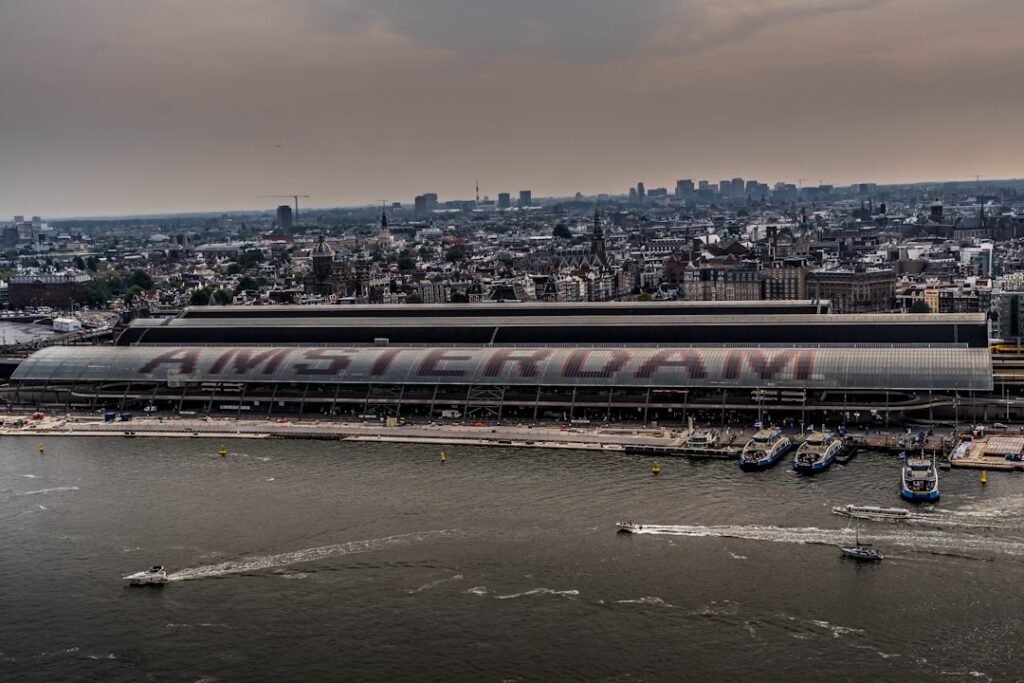
Amsterdam Takes Radical Stand Against Meat and Fossil Fuel Marketing
In a move that positions the Dutch capital as a trailblazer in urban environmental policy, Amsterdam’s city council has approved a comprehensive ban on public advertising for meat products and fossil fuels. This unprecedented regulatory action represents a significant escalation in how municipalities are leveraging advertising restrictions as a climate action tool, signaling a fundamental shift in how cities approach their environmental responsibilities.
The decision, championed by local political leaders, is far more than symbolic posturing. It reflects a deliberate strategic choice to align the city’s commercial landscape with its broader environmental targets. By restricting which products can be promoted in public spaces—billboards, transit stations, street-level displays—Amsterdam is essentially using the power of the purse and regulatory authority to reshape what residents see, and by extension, what industries receive validation through mainstream advertising channels.
Understanding the Environmental Logic
The rationale behind Amsterdam’s decision rests on a straightforward environmental calculation. Advertising for meat products directly promotes consumption of goods that carry significant carbon footprints, particularly in industrial livestock production. Similarly, fossil fuel advertising perpetuates demand for energy sources that are fundamentally incompatible with climate neutrality goals. By removing these messages from public view, city officials argue they are removing implicit endorsements of high-emission consumption patterns.
This approach reflects growing scientific consensus around the climate impact of dietary choices and energy sources. The livestock industry alone accounts for approximately 14-18% of global greenhouse gas emissions, while fossil fuel combustion remains the primary driver of atmospheric carbon concentration. Amsterdam’s advertising ban essentially acknowledges these realities in policy form.
A Growing European Trend
Amsterdam is not operating in isolation. The Dutch capital joins a growing cohort of European cities and regions that have begun restricting fossil fuel advertising. Cities including Paris, Copenhagen, and others have implemented similar measures, though Amsterdam’s inclusion of meat products represents a particularly expansive interpretation of climate-conscious advertising policy. This trend suggests a potential inflection point in how municipal governments view their role in environmental stewardship.
The expansion beyond just fossil fuels to include meat advertising distinguishes Amsterdam’s approach and indicates the city council’s willingness to engage more deeply with lifestyle and dietary consumption patterns. This represents a more intrusive form of regulatory intervention than simple fossil fuel restrictions, as it touches on personal food choices rather than solely energy infrastructure.
Political Motivation and Environmental Ambition
According to local politicians supporting the measure, the advertising restrictions serve as essential tools for meeting Amsterdam’s formal environmental targets. The city has committed to significant emissions reductions in coming years, and officials view the advertising ban as part of a comprehensive strategy that includes infrastructure changes, renewable energy investments, and behavioral incentives.
The political framing is important here. By tying the advertising ban to specific environmental goals, supporters ground the policy in quantifiable objectives rather than mere moral positioning. This creates measurable accountability: if Amsterdam fails to meet its climate targets, the advertising restrictions become subject to scrutiny regarding their actual efficacy.
Commercial and Constitutional Questions Ahead
The ban will inevitably face legal challenges from advertising industries and potentially from meat and energy companies. Free speech and commercial speech protections vary across European jurisdictions, and courts may intervene to establish boundaries around what municipalities can restrict. The outcome could significantly influence whether other cities can implement similar measures.
Beyond legal questions, practical implementation challenges loom. How strictly will the ban be enforced? What constitutes “advertising” versus informational content? Can companies use indirect marketing strategies to circumvent restrictions? These operational details will determine whether the policy achieves its intended environmental impact or becomes merely ornamental.
What This Means for Urban Climate Policy
Amsterdam’s advertising ban represents a significant conceptual shift in municipal climate strategy. Rather than focusing solely on direct emissions from city operations, the city is attempting to influence consumption patterns across its population through regulatory restriction of commercial messages. This approach assumes that controlling information environments can meaningfully shape behavior—a premise that public health campaigns have long tested with mixed results.
The true significance of Amsterdam’s decision may ultimately lie not in its immediate environmental impact, but in its demonstration that cities are willing to exercise regulatory authority over commercial speech in service of climate goals. Whether this approach becomes widely adopted, or remains an outlier curiosity, will depend on both legal outcomes and measurable environmental results.
This report is based on information originally published by BBC News. Business News Wire has independently summarized this content. Read the original article.