
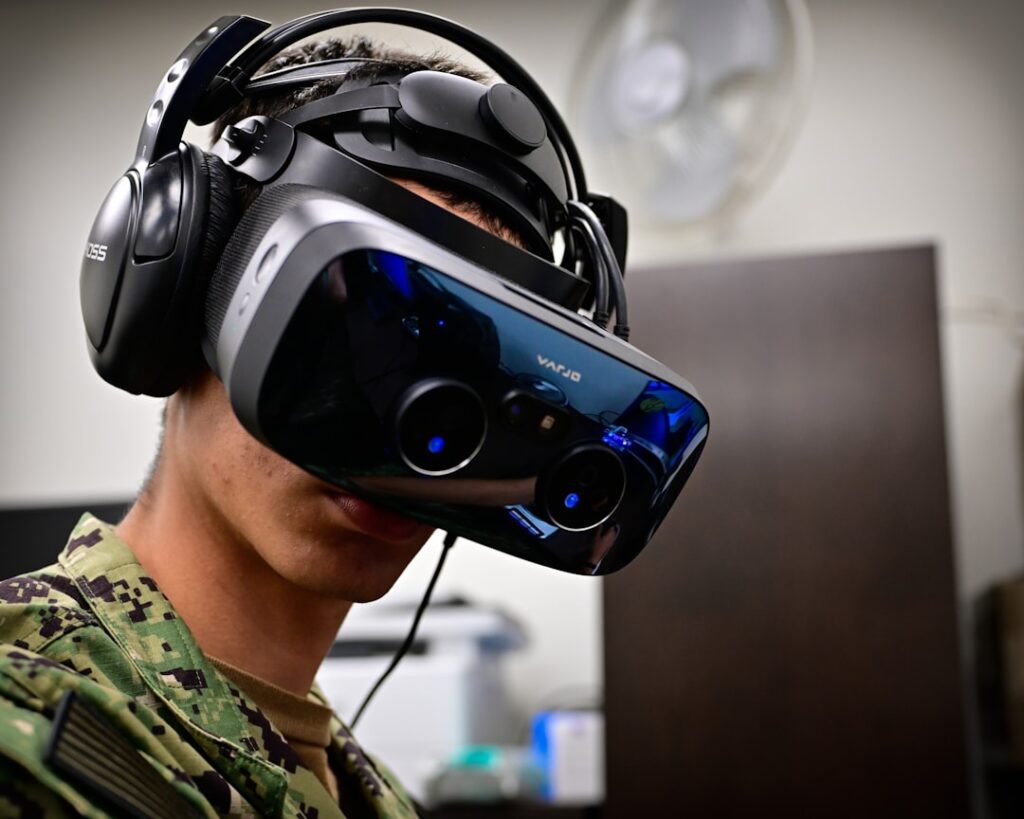
Pentagon Charting New Course With AI-Powered Military Strategy
The United States military establishment has taken a decisive step into the future, committing to what defense officials are calling an “AI-first” operational framework. Through eight newly inked contracts with prominent technology corporations, the Department of Defense is systematically upgrading its capabilities across multiple domains, signaling a fundamental reimagining of how American forces will operate in the decades ahead.
This strategic shift represents more than just procurement decisions—it’s a wholesale transformation of military doctrine and execution. The contracts underscore Washington’s recognition that artificial intelligence will define future conflicts, whether they involve traditional warfare, cyber operations, or intelligence gathering. By embedding AI deeply into military operations, the Pentagon is betting that technological advantage will be the decisive factor in tomorrow’s security challenges.
Understanding the Pentagon’s AI Ambitions
The move comes at a critical juncture in global geopolitics. The United States faces intensifying competition from peer adversaries who are similarly investing in artificial intelligence for military purposes. China and Russia have made no secret of their intentions to leverage AI for strategic advantage, creating an implicit arms race that Washington cannot afford to lose. The Pentagon’s decision to accelerate its AI integration reflects both the urgency of this moment and the determination to stay ahead of potential threats.
These eight contracts span various specialized applications within the military apparatus. From enhancing data analysis capabilities to automating routine operations, the partnerships with major technology firms are designed to address specific gaps in current military infrastructure. The diversity of these contracts suggests a comprehensive approach rather than a narrow focus on any single application, indicating that Pentagon planners understand AI’s transformative potential across the entire military enterprise.
The Private Sector Connection
The involvement of major technology companies in these contracts highlights the growing interdependence between Silicon Valley and the military-industrial complex. These firms bring cutting-edge expertise, research capabilities, and development resources that the Pentagon recognizes it cannot replicate entirely through internal means. The collaboration represents a pragmatic acknowledgment that innovation in artificial intelligence increasingly happens in private sector labs, and defense planners must maintain strong partnerships with these innovation centers.
This approach isn’t without controversy. Some observers worry about the concentration of defense capabilities in the hands of a small number of private corporations. Others raise questions about the ethical implications of automating military decision-making processes. However, Pentagon leadership appears convinced that the strategic benefits of rapid AI integration outweigh these concerns, particularly given the competitive pressures from other world powers.
Implications for Military Operations
An AI-first military posture fundamentally changes how armed forces might operate in practice. Decision-making processes that currently rely on human judgment could increasingly be informed or supplemented by algorithmic analysis. Intelligence gathering, threat assessment, logistics coordination, and tactical planning all stand to be transformed by sophisticated artificial intelligence systems. The goal is to compress decision-making timelines and improve accuracy while freeing human personnel for higher-level strategic thinking.
The Pentagon’s commitment to this trajectory is unambiguous. By formalizing these contracts and explicitly adopting an AI-first framework, military leadership is signaling to the entire defense ecosystem that artificial intelligence is not a peripheral concern but rather central to future operations. This sends a clear message to contractors, suppliers, and military personnel that AI integration will only accelerate in coming years.
Looking Forward
These eight contracts represent just the beginning of what is likely to be a much longer transformation process. The Pentagon will almost certainly continue expanding its AI partnerships and capabilities as technology evolves and operational experience accumulates. Future years will likely bring additional contracts, deeper integration of AI systems across different military branches, and ongoing refinement of how artificial intelligence is deployed in actual operations.
Whether this AI-first approach ultimately delivers on its promise remains an open question. But one thing is certain: the Pentagon is firmly committed to finding out. The strategic calculus is straightforward—in a world where adversaries are aggressively pursuing AI military applications, falling behind is simply not an option the United States is willing to consider.
This report is based on information originally published by BBC News. Business News Wire has independently summarized this content. Read the original article.