
Definition and Core Principles
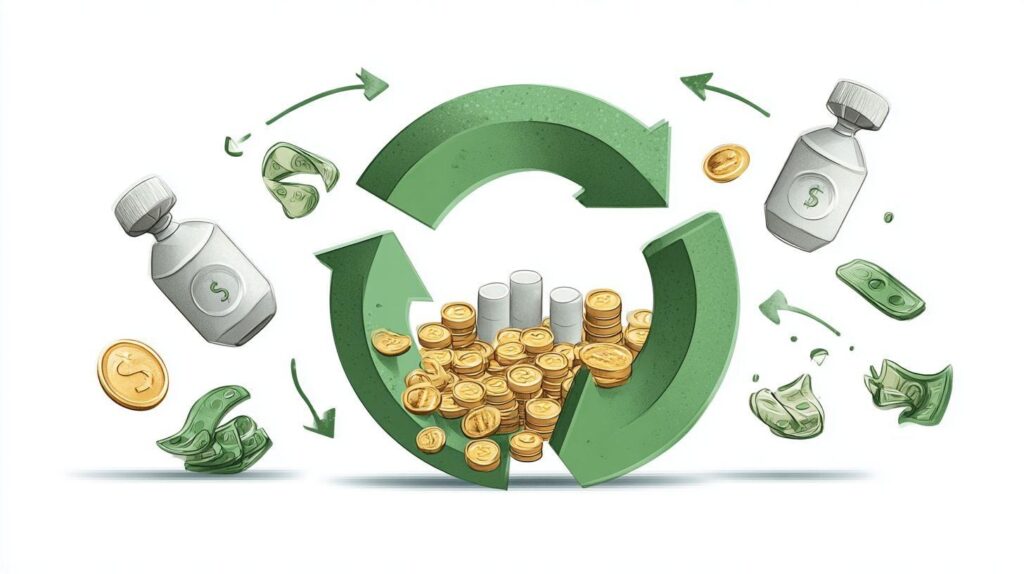
The circular economy, defined by the Ellen MacArthur Foundation, eliminates waste through design by creating closed-loop systems where materials never become trash. This approach shifts from the linear take-make-dispose model to one focused on resource efficiency and sustainability. Businesses turn waste into profit by extending product lifecycles and regenerating resources.
Core principles guide this transformation. They emphasize designing out waste from the start and fostering regenerative systems. Practical examples include companies using modular design for easy disassembly and repair.
Here are the six core principles of the circular economy:
- Design out waste (Cradle-to-Cradle): Create products that eliminate waste by rethinking materials and processes from the outset.
- Keep products and materials in use (reuse, remanufacturing): Extend lifecycles through refurbishing, resale, and product-as-a-service models.
- Regenerate natural systems (biomimicry): Draw inspiration from nature to restore soils and biodiversity via regenerative design.
- Resource efficiency (waste hierarchy): Prioritize reduce, reuse, recycle to minimize resource use and follow the waste hierarchy.
- Closed loops (technical and biological nutrients): Separate materials into safe cycles for reuse, like composting organics or recycling metals.
- Systems thinking (life cycle assessment): Analyze the full product lifecycle to optimize supply chains and reduce environmental impact.
A typical framework diagram illustrates these principles as interconnected loops. It shows a central circle with arrows depicting material flows from production to consumption and back, branching into biological and technical cycles. This visual highlights how closed-loop systems drive economic benefits like cost savings and innovation.
Contrast with Linear Economy
Unlike the linear economy’s ‘take-make-dispose’ model that generated 50% of global GHG emissions (Ellen MacArthur), circular systems retain materials 3-10x longer. This shift supports resource efficiency and reduces environmental impact. Businesses adopting circular practices turn waste into profit through reuse and recycling.
The linear economy relies on finite resources, leading to waste and landfill accumulation. In contrast, the circular economy uses renewable inputs and closed-loop systems. This approach drives sustainability and economic benefits like cost savings.
Key differences appear in material flows and value retention. Linear models lose significant materials value annually, while circular strategies emphasize product lifecycle extension and remanufacturing. Practical examples include refurbishing electronics instead of discarding them.
| Linear Economy | Circular Economy | |
| Resource Flow | Finite resources waste landfill, 94% plastics not recycled | Renewable inputs reuse biological nutrients, $1T opportunity EU |
| Value Metrics | Loses $7.3T materials value annually | Retains 70% more value (Circle Economy Index) |
| Examples | Single-use packaging to incineration | Textile recycling and modular design |
| Outcomes | High carbon footprint, pollution | Job creation, innovation, zero waste |
Companies transitioning to circular models gain competitive advantage through reverse logistics and upcycling. For instance, deposit return systems recover bottles efficiently. This contrast highlights growth potential in the green economy.
Historical Evolution
Circular thinking traces to 1966 with Kenneth Boulding’s ‘spaceship earth’ concept, evolving through Walter Stahel’s 1976 loops to McDonough/Braungart’s 2002 Cradle-to-Cradle manifesto. This progression shifted views from linear take-make-waste models to closed-loop systems. Early ideas emphasized resource efficiency and finite resources conservation.
In 1990, Robert Ayres advanced industrial ecology, mimicking natural ecosystems for waste elimination. Businesses began exploring symbiosis networks, where one company’s waste becomes another’s input. This laid groundwork for eco-parks and material flow analysis.
The 2010 launch of the Ellen MacArthur Foundation accelerated momentum with global advocacy for circular business models. Companies adopted product lifecycle extension through remanufacturing and refurbishing. This milestone spurred innovation in reverse logistics and deposit return systems.
- 1966 Boulding milestone: Introduced spaceship earth, inspiring planetary boundaries awareness and regenerative design.
- 2015 EU Circular Economy Package: Set policy incentives like extended producer responsibility, driving landfill diversion across member states.
- 2020 COVID acceleration: Boosted resilience building via local supply chains and reduced packaging waste during disruptions.
These milestones highlight the growth of the circular economy, turning waste into profit through eco-innovation. Firms now prioritize design for circularity, like modular products, for competitive advantage and regulatory compliance.
Drivers of Circular Economy Growth
Circular economy adoption surged 59% from 2018-2022, driven by resource cost increases and tightening regulations like EU’s 65% recycling targets. These forces highlight interconnected drivers in environment, economics, and regulation. Together, they create opportunities to turn waste into profit through closed-loop systems.
Environmental pressures push companies toward resource efficiency and zero waste practices. Businesses adopting circular models reduce their carbon footprint while preserving natural capital. Examples include upcycling textile waste into new fabrics.
Economic factors, such as rising virgin material prices, favor recycling and remanufacturing. Firms gain cost savings and competitive advantage by extending product lifecycles. Refurbishing electronics offers a practical path to revenue streams.
Regulatory demands enforce extended producer responsibility and waste hierarchy compliance. Policies incentivize reverse logistics and material recovery. This shift supports sustainable business and innovation in supply chains.
Environmental Imperatives
Circular economy practices address planetary boundaries crossed in several categories, pushing for climate action and biodiversity preservation. These imperatives drive growth by preventing environmental impact from waste. Companies can adopt cradle-to-cradle design to minimize harm.
Climate goals demand carbon footprint reduction through recycling and resource recovery. Pollution prevention targets ocean plastics and air emissions. Firms use life cycle assessment to track improvements in closed-loop systems.
Biodiversity threats from land degradation call for regenerative design and eco-innovation. Resource depletion urges conservation of finite resources. Practical steps include composting food waste and biogas production from organics.
Industrial ecology principles foster symbiosis networks in eco-parks. Urban mining recovers metals from e-waste. These strategies build resilience and support net zero emissions targets.
Resource Scarcity and Costs
Virgin material costs rose sharply in recent years, while secondary materials cost much less, driving circular economy’s appeal. This scarcity boosts resource productivity and dematerialization efforts. Businesses turn to secondary raw materials for cost savings.
Key commodities face supply risks, prompting circular supply chains. Copper shortages encourage recycling from wiring scrap. Rare earths dependency pushes for urban mining and reuse in electronics.
- Plastics value loss drives packaging innovation and biodegradable products.
- Steel recycling viability supports remanufacturing in construction.
- Lithium demand growth favors battery refurbishing and leasing models.
Product-as-a-service models extend lifecycles and mitigate scarcity. Predictive maintenance via IoT optimizes use. These approaches create economic circularity and job creation in repair cafes.
Regulatory Pressures
EU’s Circular Economy Action Plan mandates high municipal waste recycling rates by 2035, while many countries implemented extended producer responsibility laws. These rules enforce regulatory compliance and landfill diversion. Businesses adapt through waste-to-energy and deposit return systems.
Key regulations shape global adoption: EU Circular Package spurs investment in circular hubs. US Right to Repair laws in several states promote refurbishing. China Plastic Ban targets reductions via alternatives. India EPR focuses on e-waste recycling. Carbon Border Adjustment Mechanism affects imports. SDG 12 guides responsible consumption and production.
- EU Circular Package spurs investment in circular hubs.
- US Right to Repair laws in several states promote refurbishing.
- China Plastic Ban targets reductions via alternatives.
- India EPR focuses on e-waste recycling.
- Carbon Border Adjustment Mechanism affects imports.
- SDG 12 guides responsible consumption and production.
Compliance drives green procurement and lifecycle costing. Firms gain brand value and risk mitigation. Examples include textile recycling programs and food waste reduction initiatives.
Policy incentives like carbon pricing internalize externalities. Stakeholder engagement aids transition strategies. This pressure fosters innovation ecosystems and ESG investing.
Key Strategies and Business Models
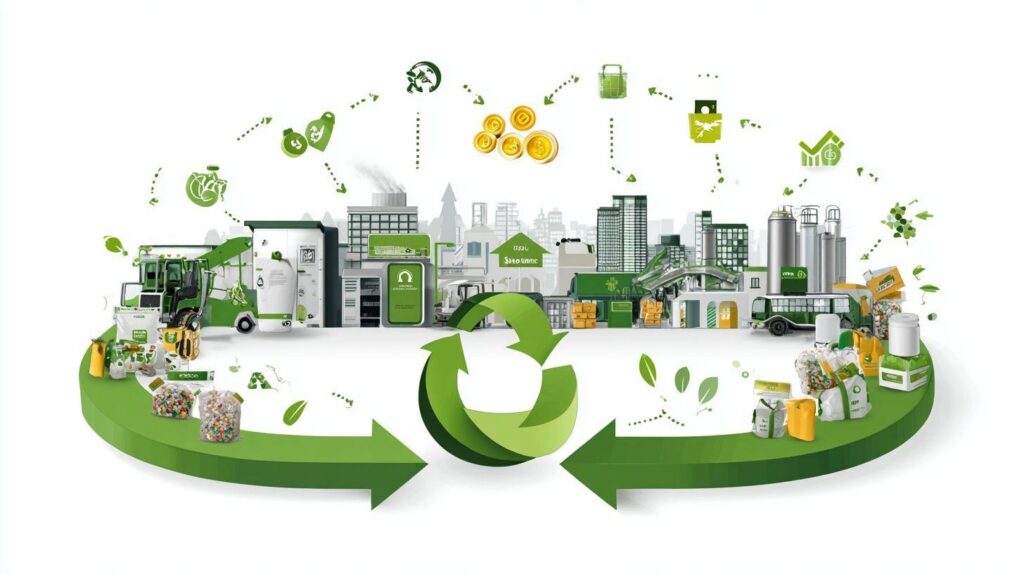
Circular strategies deliver 15-30% EBITDA uplift through proven models like product-as-a-service and closed-loop supply chains. These approaches turn waste into profit by focusing on value retention options such as reuse and remanufacturing. Businesses adopting them generate new revenue streams while cutting costs.
The core framework includes three strategy categories: waste frameworks that apply universally, servicization through PaaS and leasing, and systems redesign for closed loops. Reuse and remanufacturing often yield far higher value than traditional disposal. Companies prioritize these to boost resource efficiency and sustainability.
Practical steps start with assessing current operations for circular opportunities. For example, shifting to leasing models extends product lifecycle and stabilizes income. This supports the growth of the circular economy by aligning profit with environmental goals.
Experts recommend integrating life cycle assessment early to measure impact. Such models foster innovation in supply chains and reduce reliance on finite resources. Overall, they build competitive advantage through cost savings and brand value.
Reduce, Reuse, Recycle Framework
The waste hierarchy prioritizes Reduce through prevention over Recycle as a last resort. This EU-inspired pyramid guides businesses to minimize material loss in linear systems. It promotes prevention at the design phase for maximum efficiency.
- Prevention: Design products to avoid waste from the start, using durable materials.
- Reuse: Create industrial loops for direct product reuse without processing.
- Recycling: Recover materials for new products through material recovery.
- Recovery: Extract energy from waste via methods like biogas production.
- Disposal: Use only as a final option to divert from landfills.
Prevention often saves more than recycling alone by cutting upstream costs. Reuse retains significant value compared to downcycling. Businesses apply this for zero waste goals and regulatory compliance.
For instance, packaging innovation reduces food waste through better design. This framework supports sustainable development goals like SDG 12. Companies gain economic benefits from lower disposal fees and resource productivity.
Product-as-a-Service Models
PaaS models like Philips Lighting-as-a-Service guarantee performance over years while achieving higher margins than ownership sales. Customers pay for outcomes, not products, shifting risks to providers. This drives circular business models with steady revenue.
| Company | Example | Key Benefit |
| Philips Lighting | Lighting-as-a-Service | Performance guarantees |
| Michelin | Tire leasing | Lifecycle savings |
| Caterpillar | Equipment pay-per-use | High return rates |
| Rolls-Royce | Power-by-the-Hour | Engine availability |
Benefits include revenue stability from subscriptions and lifecycle optimization through maintenance. They boost customer retention by tying value to use. Additional gains cover better data from IoT monitoring and reduced environmental impact.
Leasing extends product lifecycle via refurbishing and upgrades. Firms like tire providers cut waste through predictive maintenance. This model aligns with sharing economy principles for profit and sustainability.
Closed-Loop Supply Chains
Closed-loop systems recover high portions of materials using reverse logistics networks that reduce virgin material needs. They form the backbone of cradle-to-cradle design in the circular economy. Businesses implement them for resource conservation and cost savings.
- Design for disassembly: Create modular products easy to take apart.
- Reverse logistics: Use deposit return systems to collect used items.
- Remanufacturing hubs: Restore products to like-new condition.
- Quality certification: Ensure standards for reintroduced materials.
- Closed material loops: Cycle resources indefinitely with minimal loss.
Examples include IKEA buyback programs that recover furniture value for resale. Carpet makers like Interface pioneer full loops in textiles. These cut supply chain costs and carbon footprints.
Implementation starts with stakeholder engagement for collection networks. Remanufacturing creates jobs and innovation in eco-parks. Overall, closed loops build resilience against resource scarcity.
Transformative Case Studies
Real-world implementations prove circular economy viability: Kalundborg saved EUR15M/yr, Renewcell recycled 6,000 tons textiles, Fairphone achieved 85% repairability. These examples highlight ROI metrics across sectors like industrial symbiosis with 25% cost reduction, fashion via 20-50% margin PaaS models, and electronics retaining 70% value. They show scalable learnings for resource efficiency and profit from waste.
Industrial symbiosis networks turn byproducts into inputs, cutting costs and emissions. Fashion brands extend product lifecycles through recycling and resale. Electronics firms prioritize refurbishing over disposal for value retention.
Key takeaway: Businesses adopt closed-loop systems by designing for disassembly and partnering locally. This drives economic benefits like cost savings and new revenue streams. Scalability comes from replicating these models industry-wide.
Stakeholder engagement accelerates transition, from suppliers to consumers. Experts recommend starting with material flow analysis to identify waste-to-profit opportunities. These cases inspire sustainable business growth.
Industrial Symbiosis Examples
Kalundborg Symbiosis exchanges 1.2M tons waste annually among 20 companies, generating EUR15M savings and preventing 93K tons CO2 emissions yearly. This Danish eco-park features 50+ resource exchanges, like EUR1M from fish farm waste turned into fertilizer and 3.4M m wastewater reused. It exemplifies industrial ecology for zero waste.
In Guizhou, China, 1,000 companies form networks capturing $1.3B in gypsum byproduct value. These models achieve 25% cost reduction and 60% waste diversion through symbiosis. Firms collaborate on heat recovery and shared utilities.
Practical steps include mapping local waste streams and building symbiosis networks. Companies gain competitive advantage via supply chain optimization. Scalable to eco-parks worldwide for carbon footprint reduction.
Challenges like initial coordination yield long-term profit maximization. Pair with policy incentives for faster adoption. These stories promote regenerative design across sectors.
Fashion and Textile Recycling
Renewcell’s Circulose recycled 6,000 tons textile waste into 18M meters fibre (2022), while H&M’s garment collection recovered EUR120M materials value. Renewcell converts 1kg cotton to 1kg fibre with 30% CO2 savings. Patagonia’s Worn Wear resold EUR67M in used gear, extending product lifecycles.
Unifi’s Repreve recycled 32B bottles into yarn for brands. Textile recycling splits into chemical (breaks fibres for purity) and mechanical (shreds for reuse). Choose based on material quality needs.
| Recycling Type | Process | Best For | Challenges |
| Chemical | Dissolves fibres into pulp | High-quality new yarn | Higher energy use |
| Mechanical | Shreds and spins fabric | Quick, low-cost blends | Quality degradation |
Adopt product-as-a-service for recurring margins. Collect via reverse logistics to feed closed loops. This cuts virgin material use and boosts brand value.
Electronics Refurbishment
Fairphone’s modular design achieved 85% repair rate with 30K+ spare parts sold; Apple’s trade-in recovered $18B device value (2022). Apple’s Daisy Robot dismantles 300 phones/hr for material recovery. Dell’s 6th generation renew process costs 40% less than new builds.
Back Market sells 2M refurbished phones, retaining 70-90% original value versus 10% from recycling. Refurbishing extends lifecycle through repair cafes and makerspaces. Prioritize modular design for easy upgrades.
Implement e-waste recycling programs with trade-ins and leasing models. Track via IoT for predictive maintenance. This drives job creation in remanufacturing.
Benefits include regulatory compliance and risk mitigation from finite resource scarcity. Scale with digital platforms for resale. Embrace design for circularity to lead in green economy.
Economic Impacts and Profit Mechanisms
Circular businesses achieve 28% higher EBITDA according to McKinsey, unlocking $4.5T global value through $1T material cost savings and 6M new jobs. This shift from linear to closed-loop systems turns waste into profit by prioritizing resource efficiency. Companies adopting these models see faster growth in the circular economy.
The EU presents a $700B opportunity broken into key areas: waste reduction at EUR600B, new business models at EUR550B, and product innovation at EUR490B. Businesses achieve typical ROI payback in under 2 years through optimized material flows. This framework supports sustainable business practices.
Cost savings come from reducing virgin materials and extending product lifecycles. New revenue streams emerge from remanufacturing and recycling premiums. Job creation follows as sectors like repair and waste management expand.
Practical steps include conducting life cycle assessments to identify savings and piloting product-as-a-service models. These mechanisms drive economic benefits while lowering environmental impact. Firms gain competitive advantage through innovation.
Cost Savings from Waste Reduction
Veolia reduced industrial waste costs 35% (EUR2.1B savings) by optimizing material flows with AI analytics across 400K clients. This approach highlights how waste reduction outperforms traditional disposal. Companies can replicate this by focusing on resource efficiency.
ROI calculations show waste prevention saves EUR100-200/ton compared to EUR50/ton for recycling. Four key mechanisms drive these gains. Businesses should prioritize them for quick cost savings.
Here are the mechanisms:
- Material efficiency, as seen with Unilever using 50% less virgin plastic in packaging.
- Energy recovery through waste-to-energy processes yielding 1.5MWh/ton.
- Water recycling with savings of EUR0.50/m in industrial operations.
- Predictive maintenance cutting equipment costs by 30% via IoT monitoring.
Start with material flow analysis to pinpoint inefficiencies. Integrate AI for predictive insights. These steps build zero waste systems and enhance profitability.
New Revenue Streams
Bundesdruckerei generated EUR50M secondary raw material sales (2022), while Circularise blockchain platform created EUR10M recycled content premium revenue. These examples show how circular business models open diverse income sources. Firms can tap into them for growth.
Seven revenue models transform waste into profit. They range from high-margin remanufacturing to subscription services. Understanding them helps in revenue stream diversification.
| Revenue Model | Description | Example Benefit |
| Remanufacturing | Restoring products to like-new condition | 50% margins on refurbished goods |
| Recycled content premium | Charging more for sustainable materials | 20% price uplift for verified recyclables |
| PaaS subscriptions | Product-as-a-service leasing | Recurring income from usage-based fees |
| Waste-to-energy | Converting waste into power | Energy sales plus carbon footprint reduction |
| Repair services | Extending product lifecycles | Local repair networks boost loyalty |
| Data services | Selling insights from IoT tracking | Analytics for supply chain partners |
| Carbon credits | Monetizing emissions reductions | Tradeable credits in compliance markets |
Michelin earns 30% lifecycle revenue from tire retreading services. Adopt reverse logistics to capture these streams. Blockchain ensures traceability for premium pricing.
Job Creation and Market Growth
EU circular economy creates 700K net new jobs by 2030 (EUR 1.8T value), with remanufacturing 4x more labor-intensive than manufacturing. This growth stems from job multipliers in recycling and refurbishing. Sectors expand rapidly as demand rises.
Recycling generates 10x more jobs than landfilling, while refurbishing creates 36x more than mining per ILO insights. Circular services could reach EUR1T by 2030 with 20% CAGR. Key sectors include repair, waste management, and design.
- Repair sector: 3M jobs from extended product lifecycles.
- Waste management: 2M jobs in resource recovery.
- Design roles: 1M jobs in circular innovation.
Businesses foster this by investing in repair cafes and training programs. Policymakers support through extended producer responsibility. These efforts build resilient local economies and advance sustainable development goals.
Technological Enablers
Digital technologies unlock much of the circular economy potential, with blockchain verifying recycled content and AI optimizing material flows.
Four key tech pillars drive this shift: tracking via blockchain, intelligence from AI and IoT, advanced materials through nanotech, and digital platforms as marketplaces. These tools close the gap to full circularity by enabling precise resource tracking and reuse.
Companies implementing these technologies see faster returns on investment through supply chain optimization and waste reduction. For example, blockchain ensures transparent provenance, while AI predicts maintenance needs to extend product lifecycles.
Practical steps include integrating IoT sensors for real-time monitoring and using AI for demand forecasting. This supports closed-loop systems, turning waste into profit via resource recovery and upcycling.
Digital Tracking and Blockchain
Circularise blockchain verified thousands of tons of recycled plastics for major brands, enabling premiums for certified content through mass balance approaches.
Blockchain provides end-to-end traceability in circular supply chains, reducing fraud in recycling claims. It records material journeys from waste to new products, supporting compliance with extended producer responsibility rules.
| Platform | Focus Area | Key Impact |
| Circularise | Plastics | Transparent recycling certification |
| IBM Food Trust | Food supply | Enhanced traceability and efficiency |
| VeChain | Luxury goods | Authenticity verification |
| Minespider | Minerals | Ethical sourcing tracking |
Implementation involves API integration for seamless data sharing, offering high auditability at low costs. Businesses can start by piloting blockchain for high-value items like electronics, boosting resource efficiency and consumer trust.
Advanced Materials and AI
AI from leading tech firms has optimized energy use in data centers, while advanced recycling methods achieve high purity in plastics processing.
Key technologies include AI material matching from open databases, enzymatic recycling for PET plastics, IoT for reverse logistics, digital twins for lifecycle simulation, and additive manufacturing for material savings.
- AI matches recycled inputs to manufacturing needs, minimizing virgin material use.
- Enzymatic processes break down plastics efficiently for reuse.
- IoT tracks assets in reverse logistics to cut losses.
- Digital twins model product performance over time.
- Additive manufacturing reduces waste in production.
Companies apply these by embedding AI in design for circularity and using IoT for predictive maintenance. This extends product lifecycles, supports remanufacturing, and drives economic benefits through cost savings and innovation.
Challenges and Barriers
Despite the vast potential of the circular economy, adoption remains limited due to deep-rooted barriers in policy, markets, and behaviors. These issues block progress in turning waste into profit and achieving resource efficiency. Companies face hurdles in scaling closed-loop systems amid competing priorities.
Policy distortions like subsidies for virgin materials favor linear models over recycling and upcycling. Businesses struggle with inconsistent regulations that hinder remanufacturing and reverse logistics. Overcoming these requires targeted reforms to unlock economic benefits.
Consumer habits resist premium pricing for sustainable products, slowing demand for reuse and refurbishing. Supply chains lack coordination for material recovery, complicating zero waste goals. Experts recommend stakeholder engagement to address these gaps.
Measurement challenges make it hard to track circularity, while financing gaps limit investment in eco-innovation. A clear scaling roadmap can tackle these four barrier categories, enabling smoother transitions to cradle-to-cradle designs and reduced environmental impact.
Scaling Solutions Globally
Only 8.6% of materials circulate globally due to heavy subsidies for fossil-based resources compared to limited incentives for circular practices; regions like the EU show stronger progress by capturing more opportunities through policy shifts. Addressing key barriers unlocks growth in the circular economy. Practical solutions pave the way for profit from waste.
Subsidy reform redirects funds from virgin materials to support recycling and bio-based alternatives. Consumer behavior shifts through education on product lifecycle extension, encouraging reuse over disposal. Supply chain coordination improves with blockchain for traceability in reverse logistics.
Standardized tools like the circularity index enable better measurement of resource productivity. ESG investing channels capital into circular business models, funding remanufacturing and leasing. These steps foster innovation in areas like plastic recycling and food waste reduction.
- Year 1: Reform subsidies and launch consumer awareness campaigns for mindful consumption.
- Year 2: Implement blockchain in supply chains and adopt circular metrics for life cycle assessment.
- Year 3: Scale ESG finance for startups in upcycling and urban mining.
- Year 4: Build industrial symbiosis networks and repair cafes for community engagement.
- Year 5: Evaluate progress with material flow analysis, adjusting for rebound effects and achieving closed-loop systems.
Frequently Asked Questions
What is the Circular Economy and how does ‘The Growth of the Circular Economy: From Waste to Profit’ describe its core principles?
The Circular Economy is an economic system aimed at eliminating waste and continually using resources through reuse, sharing, repair, refurbishment, remanufacturing, and recycling. ‘The Growth of the Circular Economy: From Waste to Profit’ highlights principles like designing out waste, keeping products and materials in use, and regenerating natural systems, transforming traditional linear ‘take-make-dispose’ models into profitable, sustainable loops.
How has ‘The Growth of the Circular Economy: From Waste to Profit’ shown the shift from waste management to profit generation?
‘The Growth of the Circular Economy: From Waste to Profit’ illustrates this shift by showcasing real-world examples where waste streams, such as plastics and electronics, are repurposed into valuable resources. Companies like those in fashion and tech sectors turn discarded materials into new products, reducing costs, creating revenue from byproducts, and boosting profitability while minimizing environmental impact.
What are key drivers behind the growth of the circular economy as discussed in ‘The Growth of the Circular Economy: From Waste to Profit’?
Key drivers include regulatory pressures like extended producer responsibility laws, rising resource costs, consumer demand for sustainability, and technological advances in recycling and AI-driven material tracking. ‘The Growth of the Circular Economy: From Waste to Profit’ emphasizes how these factors are accelerating adoption, with global market projections reaching trillions in value by 2030.
Can you provide examples of businesses profiting from circular economy practices in ‘The Growth of the Circular Economy: From Waste to Profit’?
Yes, ‘The Growth of the Circular Economy: From Waste to Profit’ features cases like Patagonia’s repair and resale programs, which extend product lifecycles and generate loyalty-driven profits, and Interface’s carpet tile recycling, saving millions while turning waste into raw materials. These demonstrate scalable models across industries from automotive to food.
What challenges does ‘The Growth of the Circular Economy: From Waste to Profit’ identify in achieving widespread circular economy adoption?
Challenges include fragmented supply chains, lack of standardized recycling infrastructure, high upfront costs for redesign, and cultural resistance to change. ‘The Growth of the Circular Economy: From Waste to Profit’ argues that policy incentives, cross-sector collaboration, and education can overcome these to unlock full economic potential from waste streams.
What future trends does ‘The Growth of the Circular Economy: From Waste to Profit’ predict for turning waste into profit?
‘The Growth of the Circular Economy: From Waste to Profit’ predicts trends like digital product passports for traceability, bio-based materials replacing virgin resources, and platform economies for sharing assets. It forecasts a boom in circular jobs, with the model driving GDP growth and resilience against resource scarcity by 2050.