
SEO Title and Meta Information
Sole Proprietor Tax Guide: What You Really Owe
The Reality of Sole Proprietor Taxation
Running your own business as a sole proprietor offers flexibility and simplicity in many ways, but when tax season arrives, the complexity can feel overwhelming. Unlike corporate structures that shield personal finances from business obligations, sole proprietors face a straightforward but potentially hefty tax reality: your business income and your personal income are one and the same in the eyes of the IRS. This integration means you cannot separate your business finances from your personal tax liability, which requires a comprehensive understanding of what you actually owe.
The burning question on every sole proprietor’s mind is straightforward: exactly how much of my earnings will the government take? The answer isn’t as simple as applying a single tax rate to your bottom line. Instead, you’re looking at multiple layers of taxation that work together to determine your final bill. Federal income tax, self-employment tax, state taxes, and potentially local levies all converge to create your total tax obligation. Without proper planning and understanding, sole proprietors often find themselves blindsided when tax day arrives.
How Income Reporting Works for Self-Employed Business Owners
When you operate as a sole proprietor, the IRS requires you to report all business income through a specific mechanism: Schedule C of your Form 1040. This form is where you declare your gross income and subtract your allowable business expenses to arrive at your net profit. Unlike employees who receive a W-2 and have taxes withheld automatically throughout the year, sole proprietors must actively manage their tax obligations and set aside funds accordingly.
Your net business income—the amount remaining after legitimate business expenses are deducted—gets added to any other income sources you might have, such as investment earnings or spousal income. This combined figure determines your personal income tax bracket and rate. The progressive tax system means that as your total income increases, so does your effective tax rate, potentially pushing you into a higher bracket altogether.
This integration of business and personal income creates a critical planning opportunity. Unlike business owners who can employ certain strategies to defer or redistribute income through corporate structures, sole proprietors must be particularly strategic about deductions and timing to optimize their tax position.
Understanding Self-Employment Tax Obligations
Here’s where sole proprietorship taxation becomes significantly more burdensome than traditional employment: self-employment tax. This category encompasses Social Security and Medicare contributions that employed individuals split with their employers, but as a sole proprietor, you pay both sides yourself. The combined rate totals 15.3% of your net self-employment income.
This self-employment tax applies automatically once your net business profit exceeds $400 in any given tax year. Unlike federal income tax, which varies based on your bracket, self-employment tax is a flat percentage applied consistently to your qualifying earnings. For a sole proprietor earning $50,000 in net profit, that’s $7,650 in self-employment taxes before considering income tax obligations—a substantial amount that catches many business owners by surprise.
The mechanics of self-employment tax deserve deeper explanation. The 15.3% breaks down into 12.4% for Social Security and 2.9% for Medicare. However, you’re allowed to deduct half of your self-employment tax as a business expense on your tax return, providing modest relief from the overall burden. Additionally, the Social Security portion has a wage base limit—meaning earnings above approximately $160,000 are not subject to the 12.4% Social Security portion, though all earnings remain subject to the 2.9% Medicare portion.
Federal Income Tax Calculations and Brackets
Your federal income tax obligation depends entirely on your total income and filing status. The United States employs a progressive tax system with multiple brackets, meaning different portions of your income are taxed at different rates. A sole proprietor with $75,000 in net business income doesn’t pay one flat rate on all earnings; instead, income is taxed incrementally as it moves through successive brackets.
The current federal tax brackets range from 10% at the lowest level to 37% at the highest, with several intermediate brackets in between. Your business income combines with other income sources to determine which brackets apply to you. This is why two sole proprietors earning identical business income may pay dramatically different income taxes—their personal circumstances, filing status, and other income sources create entirely different tax situations.
Beyond standard income tax brackets, sole proprietors should be aware of the Qualified Business Income (QBI) deduction, also known as the 20% pass-through deduction. This provision allows eligible sole proprietors to deduct up to 20% of their qualified business income from their taxable income, providing meaningful tax relief for many self-employed individuals. However, this deduction phases out for higher-income earners and comes with specific limitations that warrant professional guidance.
Setting Aside Money: The 25-30% Rule
Financial advisors consistently recommend that sole proprietors set aside between 25% and 30% of their net business income specifically for tax obligations. This guideline accounts for federal income tax, self-employment tax, and a modest buffer for state taxes and unexpected tax bill increases. While this may seem aggressive, it’s deliberately conservative to prevent the nightmare scenario where tax day arrives and you cannot pay your obligation.
The percentage you should actually set aside depends on several variables. Your marginal income tax bracket significantly affects this number—a sole proprietor in the 12% bracket faces a different total obligation than one in the 32% bracket. Your state of residence matters tremendously; some states impose no income tax whatsoever, while others levy substantial rates. The nature of your business expenses also influences the calculation, as higher deductible expenses reduce your taxable income and thus your tax liability.
Many sole proprietors benefit from establishing a dedicated high-yield savings account specifically for tax obligations. By moving 25-30% of each payment received into this account, you create a buffer that prevents the crisis of discovering you cannot pay your tax bill. This disciplined approach also forces you to calculate profitability accurately—if you cannot consistently set aside 25-30% and still operate profitably, your business model may need adjustment.
Quarterly Estimated Tax Payments Explained
Unlike traditional employees who have taxes withheld gradually throughout the year, sole proprietors must proactively pay their taxes in quarterly installments. The IRS requires estimated tax payments if you expect to owe $1,000 or more in total tax liability. These payments occur four times annually, typically on April 15, June 15, September 15, and January 15 of the following year.
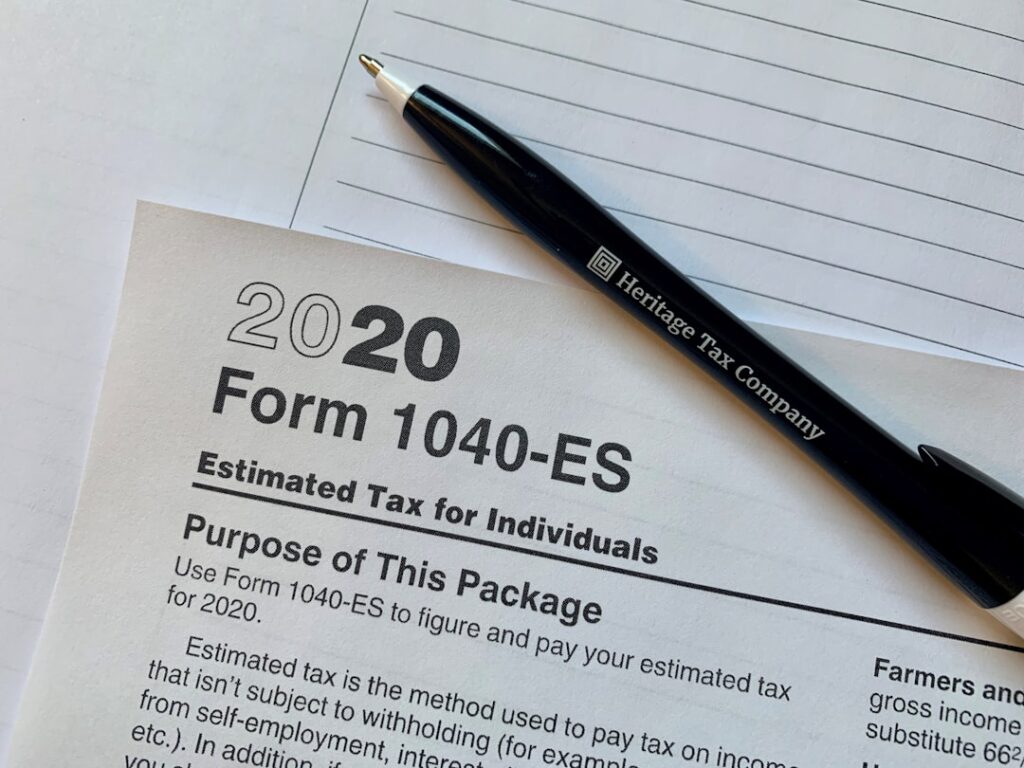
Calculating your estimated quarterly payments requires projecting your annual income and tax liability, then dividing that amount into four equal installments. Many sole proprietors base their estimated payments on the previous year’s tax obligation, adjusted for anticipated income changes. The IRS provides Form 1040-ES to guide these calculations, breaking down the process step-by-step.
Missing quarterly estimated tax payments or underpaying significantly can trigger penalties and interest charges from the IRS. These penalties compound throughout the year, making it essential to either pay your estimated taxes or adjust your payments when business circumstances change materially. If you have an unusually strong year, increasing your quarterly payment amount prevents a massive tax bill surprise in April.
Maximizing Deductions to Reduce Tax Liability
One of the most powerful tools available to sole proprietors is the ability to deduct legitimate business expenses, which directly reduces taxable income and thus tax liability. Common deductions include home office expenses, health insurance premiums, business supplies, equipment purchases, vehicle expenses, and professional services. Understanding which expenses qualify is essential for minimizing your tax burden legally.
Home office deductions deserve particular attention. You can deduct either a simplified amount of $5 per square foot (up to 300 square feet) or calculate actual expenses including utilities, internet, rent or mortgage interest, and property tax allocations. Vehicle expenses can be deducted using either actual expense tracking or a standard mileage rate determined annually by the IRS. Retirement contributions, such as SEP-IRA or Solo 401(k) accounts, provide dual benefits of reducing current taxable income while building retirement savings.
Health insurance premiums for self-employed individuals are fully deductible, a benefit that significantly reduces taxable income for sole proprietors who purchase their own coverage. Professional fees paid to accountants, lawyers, or consultants qualify as business expenses. Equipment and supplies used exclusively for business purposes are deductible, and asset purchases may qualify for accelerated depreciation under Section 179 or bonus depreciation provisions.
State and Local Tax Considerations
Beyond federal taxes, sole proprietors must account for state income taxes that vary dramatically depending on geography. Some states impose no income tax whatsoever—Alaska, Florida, Nevada, South Dakota, Tennessee, Texas, Washington, and Wyoming all avoid personal income tax entirely. However, sole proprietors in these states may still face other tax obligations such as business licenses, self-employment taxes, or specialized levies.
States with income tax typically calculate liability based on your federal taxable income, making accurate federal reporting essential. Tax rates vary considerably: some states impose flat rates around 3%, while others employ progressive brackets reaching 10% or higher. Additionally, certain cities and counties impose local income taxes that further increase your obligations.
Some states offer specific deductions or credits for sole proprietors. Research your state’s treatment of self-employed income, home office deductions, and retirement contributions. A sole proprietor relocating to a different state can dramatically change their total tax liability, making geography a legitimate tax planning consideration for those with flexibility.
Real-World Example: Calculating Total Tax Liability
Consider a practical example to illustrate how these various tax components combine. Suppose you operate a consulting business and generate $80,000 in gross revenue with $20,000 in deductible business expenses, resulting in $60,000 net business income. Here’s how your taxes would calculate:
First, you owe self-employment tax on this $60,000 figure. Applying 15.3% yields $9,180 in self-employment taxes. You can deduct half of this ($4,590) as a business expense, reducing your net income to $55,410 for income tax purposes.
Next, add any other income sources to this figure. If you’re married filing jointly with a spouse earning $30,000 in W-2 wages, your household income is approximately $85,410. For 2024, the standard deduction for married filing jointly is $29,200, leaving $56,210 in taxable income. This income falls largely within the 12% federal bracket, resulting in approximately $6,745 in federal income tax.
Your total federal obligation is approximately $15,925 ($9,180 self-employment tax plus $6,745 income tax). Add your state’s income tax—assuming 5% state tax on similar income, approximately $2,810—and your total tax bill reaches roughly $18,735, or about 31% of your net business income. This demonstrates why the 25-30% set-aside guideline proves so essential.
Avoiding Penalties and Audit Triggers
The IRS actively monitors sole proprietors and self-employed individuals, as this category historically shows higher non-compliance rates than wage earners. Certain behaviors trigger audit flags and potential penalties. Dramatically underreporting income relative to your business size, claiming excessive home office deductions, or deducting personal expenses as business costs all raise red flags.
Maintaining meticulous records represents your best defense against audit complications. Keep receipts for all business expenses, document mileage for vehicle deductions, and maintain a business ledger showing income and expenses. If audited, your documentation either proves your claims or leaves you vulnerable to penalties and additional tax assessment.
Failure to pay estimated taxes when required results in specific penalties calculated quarterly. Underpaying your tax obligation results in both penalties and interest. Filing late incurs additional penalties, and misrepresenting income can trigger fraud penalties carrying significantly higher consequences. Professional tax preparation and planning help you stay compliant while minimizing your legitimate tax liability.
Professional Help: When to Consult a Tax Expert
While straightforward sole proprietorships with consistent income patterns can often be handled with quality tax software, complex situations warrant professional guidance. If your business income exceeds $100,000, if you have multiple income sources, if you’re contemplating business structure changes, or if you have significant deductible expenses, consulting a CPA or tax professional becomes invaluable.
A tax professional can identify opportunities for legal tax reduction that DIY approaches might miss. They can optimize retirement contribution strategies, review your business structure to ensure you’re in the most advantageous category, and help you understand tax law changes affecting your situation. The cost of professional tax preparation is itself a deductible business expense, and the tax savings and peace of mind typically far exceed the professional fees.
Bottom Line: Planning for Sustainable Tax Obligations
Sole proprietors who achieve financial success aren’t those who pay the least taxes through aggressive strategies; they’re those who plan systematically, set aside appropriate funds, maximize legitimate deductions, and maintain compliance with tax law. Understanding that your tax obligation typically ranges from 25-40% of net business income—depending on your specific situation—allows you to build realistic pricing and profitability assumptions.
The sole proprietorship structure offers simplicity in many respects, but tax obligations demand attention and planning. By setting aside funds consistently, making quarterly estimated payments, maintaining meticulous records, and consulting professionals when needed, you transform tax obligations from a potential crisis into a manageable business expense. This proactive approach allows you to focus on growing your business rather than dreading tax season.
This report is based on information originally published by Small Business Trends. Business News Wire has independently summarized this content. Read the original article.