
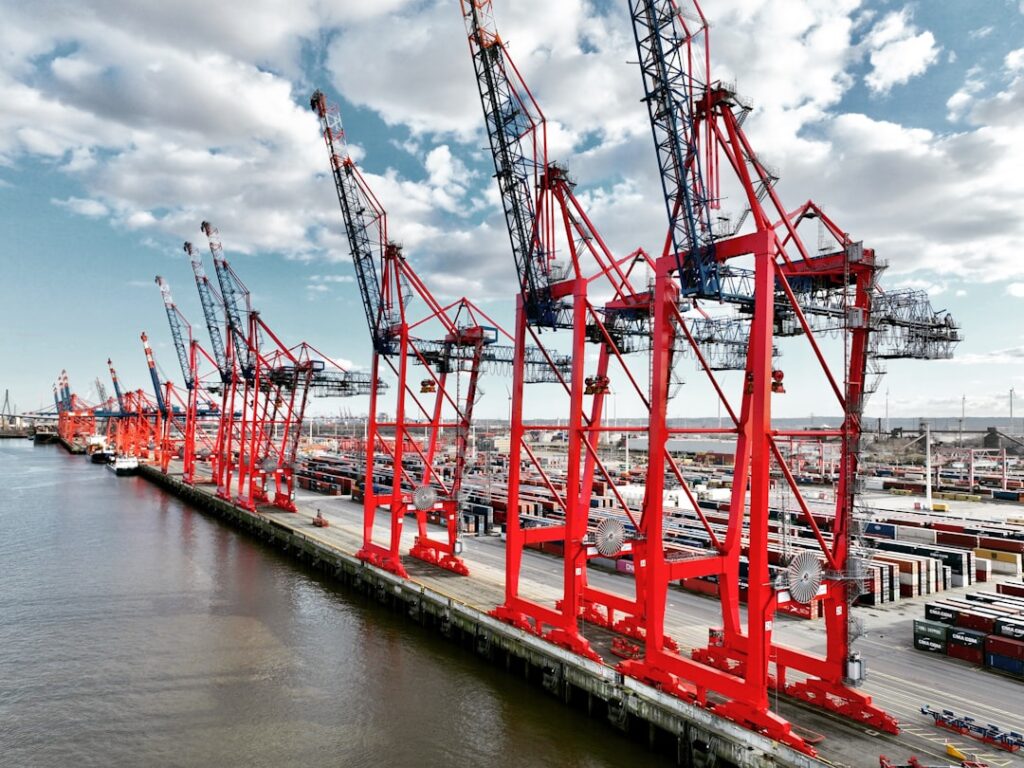
Ningbo’s Industrial Revolution: When Old Meets the Algorithm
In the shadow of China’s eastern coastline, something remarkable is unfolding in Zhejiang Province. The Ningbo-Zhoushan Port rarely experiences silence—cargo containers flow ceaselessly, ships arrive and depart in meticulously choreographed sequences, and inland facilities hum with an intensity that defines modern industrial power. Yet what distinguishes this hub from countless other manufacturing centers isn’t merely the volume of activity; it’s the fundamental transformation occurring beneath the surface. Ningbo represents a watershed moment in how China manufactures, thinks about production, and positions itself for the decades ahead.
For generations, Ningbo built its reputation on doing what it did best: making things. The port became synonymous with reliability, scale, and the kind of no-nonsense efficiency that powered global supply chains. Factories produced components, assembled products, and shipped them worldwide with the precision of a Swiss chronometer. This model generated tremendous wealth and established Ningbo as an indispensable node in international commerce. But indispensable doesn’t mean irreplaceable, and forward-thinking leaders in the region recognized a fundamental truth: the future belongs not to those who make things, but to those who make things intelligently.
The Smart Manufacturing Imperative
This distinction matters profoundly. Traditional manufacturing emphasizes raw capacity—more factories, more workers, faster production lines. Smart manufacturing emphasizes optimization, predictability, and adaptive systems. It’s the difference between playing chess and playing checkers, between following a predetermined script and composing music in real-time. Ningbo’s transition reflects a strategic pivot driven by economic necessity, technological possibility, and visionary leadership willing to reimagine what an industrial powerhouse could become.
The infrastructure already in place provided a compelling foundation. The Ningbo-Zhoushan Port handles unprecedented cargo volumes, maintaining seamless operations across multiple terminals. Rather than simply maintaining this capacity, local authorities and business leaders began asking transformative questions: How could data analytics enhance port operations? Where could artificial intelligence reduce bottlenecks? How might automation eliminate inefficiencies that had always been accepted as inevitable costs of doing business?
Technology Meets Tradition
What emerged was neither wholesale rejection of proven methods nor uncritical embracement of every new technology. Instead, Ningbo pursued strategic integration. Factory floors that once relied entirely on human judgment now incorporate computer vision systems that identify defects with superhuman consistency. Supply chain managers wielded new analytical tools that predicted disruptions weeks in advance rather than reacting to crises after they materialized. Logistics networks transformed into adaptive systems that continuously optimized routes, storage, and distribution based on real-time data streams.
This evolution carries implications extending far beyond Ningbo’s borders. The region demonstrates that established manufacturing centers needn’t accept obsolescence as their inevitable fate. Legacy infrastructure, experienced workforces, and established supply chain relationships represent enormous assets—not liabilities—when combined with modern technology. Ningbo proved that old industrial cities could become laboratories for advanced manufacturing innovation.
A Blueprint for Economic Resilience
The stakes involved in this transformation transcend corporate profitability, though financial returns matter significantly. In an era of supply chain fragmentation, geopolitical uncertainty, and volatile international relationships, manufacturing prowess anchors national economic strength. Nations that maintain sophisticated production capabilities retain leverage, employment opportunities, and technological leadership. Ningbo’s pivot toward intelligent manufacturing secures its position within this competitive landscape while simultaneously addressing labor availability challenges and environmental sustainability concerns.
Smart manufacturing consumes less raw material per unit produced, generates fewer emissions through optimized logistics, and reduces waste through predictive quality systems. These benefits align with both environmental objectives and economic interests—increasingly, they’re inseparable. Companies operating within intelligent systems achieve superior margins through efficiency while simultaneously reducing their environmental footprint. The profit motive and planetary stewardship need not conflict when properly structured.
The Broader Chinese Strategy
Ningbo’s transformation occurs within the context of deliberate national policy. Chinese leadership has explicitly prioritized manufacturing innovation and technological advancement as central to sustained economic development. The Silk Road initiative, historically framed in terms of trade routes and infrastructure connectivity, now encompasses digital infrastructure, technological standards, and intelligent manufacturing capabilities. Ningbo exemplifies how ancient trading traditions adapt to contemporary technological realities.
The Ningbo-Zhoushan Port’s continued prominence demonstrates that geography and historical advantage, when combined with strategic reinvention, remain powerful competitive advantages. The port’s location along established shipping lanes, its accumulated expertise in logistics, and its deep connections within global supply networks provide durable foundations—but only if the region evolves with changing circumstances.
Implications for Global Manufacturing
Other industrial regions worldwide are watching Ningbo’s experiment closely. Can established manufacturing centers successfully transition toward intelligent production systems? Will smart manufacturing concentrate in a few global hubs or distribute across multiple regions? How will the integration of artificial intelligence, automation, and advanced data analytics reshape labor markets and urban economies?
Ningbo’s trajectory suggests that the most competitive manufacturing hubs in coming decades won’t simply make things faster or cheaper—they’ll make them smarter. The future belongs to regions that recognize this distinction, invest accordingly, and execute thoughtfully. In doing so, Ningbo isn’t merely securing its own future; it’s illuminating a path for industrial regions everywhere.
This report is based on information originally published by All News Releases. Business News Wire has independently summarized this content. Read the original article.