
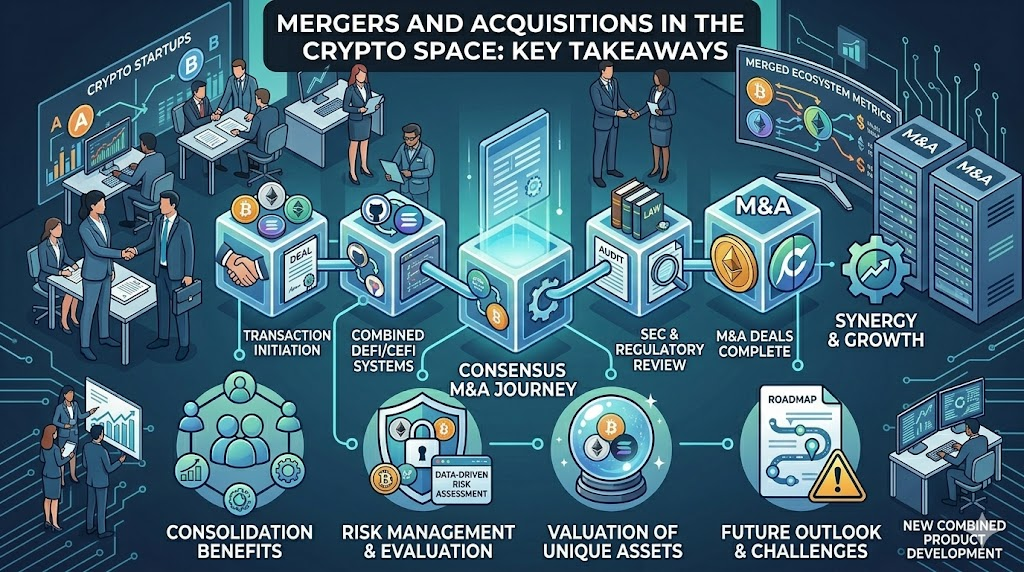
In 2023 alone, crypto M&A deals surged 300% year-over-year, fueled by post-2020 market cycles and high-profile moves like Binance’s CoinMarketCap buyout. This article unpacks strategic drivers-from product acceleration to regulatory edges-while tackling valuation pitfalls, SEC hurdles, due diligence musts, integration woes, financing innovations, and the Layer 2/DeFi wave ahead. Discover proven takeaways to navigate this volatile frontier.
Explosion of Deals Post-2020
Post-2020, crypto M&A volume exploded with 187 deals in 2023 vs 42 in 2020 (PitchBook data). This surge reflects growing investor confidence in blockchain infrastructure during bull markets. Companies pursued strategic acquisitions to capture market share amid rising cryptocurrency adoption.
Quarterly deal volumes highlight this trend with clear peaks and dips. For instance, Q1’21 saw 28 deals, Q4’22 had 15 deals, and Q2’23 reached 52 deals. These shifts tie to crypto winter recoveries and renewed hype around DeFi and NFTs.
| Quarter | Deal Volume |
| Q1’21 | 28 deals |
| Q4’22 | 15 deals |
| Q2’23 | 52 deals |
The top sectors driving activity include exchanges at 32%, wallets at 18%, and DeFi at 15%. Exchanges led due to consolidation efforts, while wallets focused on user security enhancements. DeFi mergers targeted protocol synergies like yield farming integrations.
· Exchanges (32%): Dominated by CEX acquisitions for liquidity.
· Wallets (18%): Key for custody solution buyouts.
· DeFi (15%): Focused on lending protocol acquisitions.
Specific examples underscore the boom, including 17 SPAC mergers in 2021 for quick public listings and 43 exchange deals from 2022-2023. Firms used these to navigate regulatory scrutiny and scale operations. Buyers emphasized due diligence on smart contract audits during integration.
Market Cycles Driving Activity
Bull markets see 4.2x more deals than bear markets. This pattern holds true in the crypto space, where surging prices fuel aggressive acquisitions and mergers. Companies rush to capture market share during peak optimism.
In the 2021 bull cycle, deal volume spiked with high-profile exchange mergers and NFT acquisitions. Buyers targeted projects with strong tokenomics and user growth. This activity reflected confidence in blockchain scalability and DeFi synergies.
The 2022 bear market, or crypto winter, shifted focus to distressed sales. Failures like FTX bankruptcy triggered fire sales of lending protocols and mining operations. Strategic buyers scooped up undervalued assets for long-term plays.
Recovery in 2023 brought strategic mergers, such as layer 2 scaling deals and custody solution buyouts. Firms emphasized due diligence on smart contract audits and regulatory compliance. Experts recommend timing entries based on these cycles for optimal synergies realization.
High-Profile Case Studies
Examine three landmark deals totaling $2B+ that shaped crypto M&A precedents. These cases demonstrate regulatory navigation, valuation complexity, and integration success. Total value reached $2.1B across the three deals. Each set different benchmarks for Web3 consolidation.
Binance’s Acquisition of CoinMarketCap
Binance acquired CoinMarketCap in April 2020 for estimated $300M in undisclosed BNB tokens. The deal announced in April saw full transition by October 2020. It faced regulatory scrutiny in 2021 from global authorities.
Post-acquisition, CoinMarketCap traffic surged, boosting Binance market share. Key lessons include the critical role of NDAs in early talks. Firms must prioritize regulatory filings and data privacy compliance during due diligence.
Strategic buyers like Binance used this to expand data services. Integration highlighted synergies in traffic and user engagement. Experts recommend thorough cybersecurity due diligence for such platform mergers.
Practical advice centers on timing disclosures to avoid antitrust issues. This exchange merger shows how cross-border M&A demands jurisdiction-specific strategies. Success relied on swift post-merger integration.
ConsenSys Buys MetaMask
ConsenSys acquired MetaMask in 2020, accelerating wallet development for 30M+ users. The deal used a stock swap structure with earn-outs. User base grew from 10M in 2020 to 30M by 2023, with estimated $50M+ annual revenue.
Community retention stayed strong at 95% unchanged post-deal. Tech integration wrapped in 6 months, preserving governance. This tuck-in acquisition preserved wallet migration smoothness.
Key takeaways stress management retention via incentives like golden parachutes. ConsenSys focused on cultural fit to maintain developer trust. Governance changes avoided community backlash through transparent communication.
For DeFi mergers, replicate this by setting clear integration timelines. Experts recommend board seats for sellers to ensure alignment. This deal exemplifies platform strategy in blockchain ecosystems.
Circle’s Acquisition of Poloniex
Circle acquired Poloniex in 2019 for $400M to expand USDC trading infrastructure. The deal closed in November 2019. By 2021, US operations spun out as Polo Digital.
USDC volume jumped dramatically, though compliance costs hit $25M. Lessons highlight separating regulated and unregulated entities. License transfer proved complex in this stablecoin deal.
Implementation focused on AML system convergence and KYC alignment. Circle navigated SEC scrutiny through structured divestitures. This bolt-on deal boosted liquidity events for institutional entry.
Practical steps include early regulatory approval planning and escrow for risks. Experts advise MAC clauses for crypto winter volatility. Success came from IP transfer and custody solution synergies.
Strategic Motivations
Crypto acquirers achieve 25-40% faster product launches through M&A versus organic growth. This speed helps companies capture market opportunities in the fast-paced crypto space. Buyers target immediate capabilities to stay ahead of competitors.
Strategic drivers in mergers and acquisitions often deliver strong returns compared to other paths. Acquirers gain access to proven blockchain technology and teams. This approach supports long-term growth in the cryptocurrency ecosystem.
Common goals include expanding into DeFi mergers, NFT acquisitions, or exchange mergers. Deals like Binance acquisitions show how synergies boost efficiency. Experts recommend thorough due diligence to maximize value.
Key takeaways focus on aligning M&A with business goals. Post-merger integration ensures smooth IP transfer and cultural fit. This positions firms for success amid regulatory scrutiny and market shifts.
Accelerating Product Development
Acquisitions cut product launch time from 18 months to 4 months in many cases. This allows crypto firms to integrate advanced tech quickly. Examples include Alchemy acquiring Infura for infrastructure and Polygon buying Hermez for zk-tech.
The process often involves asset purchase for smooth IP transfer. A typical 90-day tech migration roadmap minimizes disruptions. This speeds up deployment of smart contracts and layer 2 solutions.
Buyers benefit from ready-made teams and codebases. Tuck-in acquisitions add features to existing platforms. Research suggests this path supports rapid scaling in Web3 mergers.
Focus on wallet migration and smart contract audits during integration. Such moves enable layer 2 scaling deals like Arbitrum or Optimism expansions. Strong planning leads to revenue growth through faster market entry.
Regulatory Compliance Advantages
Acquiring licensed entities bypasses lengthy licensing delays in the crypto space. This provides instant access to key jurisdictions. A case in point is Kraken buying CryptoFacilities for its FCA license.
Benefits include shared compliance teams and established processes. Firms avoid building AML KYC frameworks from scratch. This cuts costs tied to standalone licensing efforts.
Regulatory approval becomes simpler with proven entities. Cross-border M&A leverages licenses in hubs like Singapore or Dubai. Experts recommend checking crypto license transfer rules early.
Deals mitigate SEC scrutiny and antitrust issues. Integration of regulatory sandboxes or MiCA compliance strengthens positions. This approach supports expansion into institutional crypto services.
Market Share Consolidation
Top exchanges have grown dominance through aggressive M&A strategies. Binance saw major share gains after acquiring CoinMarketCap. This reflects a trend toward market share consolidation in centralized platforms.
Strategies include eliminating competitors and cross-selling to user bases. Many deals focus on hybrid exchange models combining CEX and DEX strengths. Revenue lifts come from unified liquidity pools.
· Pursue bolt-on deals to add trading pairs or custody solutions.
· Target DEX mergers for decentralized order books.
· Integrate prime brokerage for institutional clients.
Key takeaways emphasize post-deal synergies like user migration. Monitor tokenomics and governance changes. This builds lasting advantages in volatile markets.
Valuation Challenges
Crypto valuations swing wildly compared to traditional assets. Token prices create a 3x discrepancy versus standard DCF models in many cases. This volatility leads to frequent renegotiations before closing.
Buyers in the crypto space face unique hurdles with fluctuating markets. Traditional methods often fail to capture tokenomics or network effects. Deal structures must adapt to protect against sudden drops.
Solutions include escrow holdbacks and averaged pricing over time. These tools help align interests in mergers and acquisitions. Experts recommend thorough due diligence on token vesting and liquidity.
Understanding these challenges is key for strategic buyers and financial buyers alike. Hybrid approaches blend financial metrics with blockchain-specific factors. This reduces risks in DeFi mergers or exchange acquisitions.
Volatile Token Pricing Models
Token prices fluctuated dramatically in past years compared to stablecoin benchmarks. This volatility complicates valuation in crypto M&A. Buyers must account for rapid shifts during negotiations.
Common solutions include 60-day VWAP pricing and 50% escrow holdbacks. These mechanisms smooth out extremes and secure value post-close. For example, the FTX acquisition used a 90-day average BUSD price to stabilize terms.
A practical formula blends metrics: Market Cap x 0.25 + Revenue x 8. This weights circulating supply against cash flows. It helps in exchange mergers or NFT acquisitions.
Sellers benefit from clear deal structures like these. They build trust and speed up regulatory approval. Always audit smart contracts as part of due diligence.
DCF vs. Tokenomics Approaches
Traditional DCF often misses the mark on crypto targets. It undervalues network growth and token utility. Tokenomics provides a fuller picture in blockchain mergers.
Consider this comparison:
| Method | Key Inputs | Sample Valuation |
| DCF | 10% discount rate | $150M |
| Tokenomics | FDV $600M, 25% circ supply | $600M+ |
Hybrid methods work well, such as 60% tokenomics + 40% revenue multiple. The Messari framework guides this balance. It suits Web3 mergers and DAO acquisitions.
Apply hybrids for synergies realization in layer 2 deals or oracle integrations. Test scenarios with bull market and crypto winter assumptions. This sharpens term sheets and LOIs.
Post-Merger Value Erosion Risks
Many crypto deals see sharp value drops soon after closing. Token dumps and user exodus amplify losses. Mitigation starts with strong post-merger integration.
Key risks include sudden sell-offs by early holders. Communities may leave without proper retention. A 2022 exchange merger lost significant token value due to these issues.
Counter with 24-month vesting schedules and community DAO incentives. These lock in value and maintain engagement. Include management retention in merger agreements.
Plan for cultural fit and wallet migration during integration. Conduct cybersecurity due diligence upfront. This preserves market share in consolidation plays.
Regulatory Hurdles
Regulatory delays average 9 months, often killing announced deals in the crypto space. The SEC blocked several major 2023 deals, highlighting intense regulatory scrutiny. Cross-border approvals commonly add extra months to timelines.
Compliance issues determine much of a deal’s success in mergers and acquisitions. Buyers must conduct thorough due diligence on regulatory risks early. Poor preparation leads to abandoned transactions.
Key strategies include engaging regulatory counsel from the start and structuring deals for compliance. Examples like offshore mergers show ways to navigate hurdles. Experts recommend building flexibility into term sheets and LOIs.
Post-merger integration demands quick adaptation to rules like AML/KYC. Firms succeeding here realize synergies faster. Proactive planning turns regulatory challenges into competitive edges.
SEC Scrutiny on Securities
SEC classified many tokens as securities in 2023 enforcement actions. The Howey Test checklist guides this: is it an investment contract with expectation of profits from others’ efforts? Common enterprise and secondary market liquidity often trigger classification.
Pre-deal, hire SEC counsel to assess risks and structure safely. Safe harbor options like simple agreements for future tokens help. This process involves significant costs but avoids deal breakers.
Ripple vs SEC case shows ongoing implications for cryptocurrency projects. Courts clarified secondary sales may not always qualify as securities. Buyers should audit tokenomics and smart contracts accordingly.
Practical steps include smart contract audits and vesting schedules. Friendly mergers with strategic buyers benefit from shared compliance expertise. This scrutiny shapes deal structure in DeFi and NFT acquisitions.
Cross-Border Approval Issues
EU-US deals face longer approval timelines compared to domestic ones. Jurisdictions vary: Singapore processes faster, Dubai follows, Cayman Islands quicker still, while US lags. Cross-border M&A demands jurisdiction planning.
Strategy favors BVI holdco structures for efficiency. An example is a UAE acquirer bypassing SEC via offshore merger. This approach suits exchange mergers and blockchain projects.
Shifting to hubs like Singapore or Dubai aids regulatory approval. Crypto firms use Cayman or BVI entities for tax optimization and speed. Due diligence covers license transfers under MiCA or similar rules.
Key takeaway: map approvals early in LOI stage. Offshore setups enable consolidation without full US exposure. This tactic supports Web3 mergers and stablecoin deals effectively.
AML/KYC Integration Mandates
Merged entities must integrate AML within 90 days or face steep fines. Technical solutions merge tools like Chainalysis and Elliptic APIs. This ensures regulatory compliance post-closing.
Costs add up in year one, but high compliance rates follow. Pre-merger gaps in KYC processes demand upgrades. Buyers audit wallet migrations and custody solutions upfront.
Integration covers blockchain analytics for transactions. Examples include DEX mergers adding CEX-level checks. Post-merger, monitor for OFAC sanctions and FATCA.
Actionable advice: include AML milestones in merger agreements. Retain management for smooth rollout. Success here unlocks revenue growth and risk mitigation in crypto M&A.
Due Diligence Essentials
Crypto DD uncovered 41% more risks than traditional approaches per EY 2023. In mergers and acquisitions within the crypto space, due diligence must prioritize code at 35%, tokenomics at 25%, and legal at 20%. This allocation helps acquirers spot hidden threats in blockchain projects.
Average budgets run around $750k for thorough reviews. Essential checks target vulnerabilities that could destroy deal value. Focus on smart contracts, token distribution, and community governance to build a solid foundation.
Strategic buyers often use this phase to assess synergies and integration risks. Financial buyers emphasize valuation and exit strategies. Skipping these steps invites regulatory scrutiny or post-merger failures.
Key takeaways include mandating multiple audits and vesting analysis. Examples like FTX bankruptcy show how poor diligence leads to collapse. Experts recommend phased reviews with NDAs and LOIs in place.
Smart Contract Audits
Unaudited contracts caused billions in exploits last year per Certik reports. In DeFi mergers, prioritize audits from top firms like Certik, PeckShield, or Quantstamp. Costs typically range from $29k to $45k depending on complexity.
Essential checklist items cover reentrancy, overflow, and access control flaws. Require at least two audits before closing to layer defenses. This practice avoids massive losses, as seen in cases dodging $600M exploits.
· Review audit reports for fix verification.
· Test edge cases in staging environments.
· Integrate ongoing monitoring post-acquisition.
Audits ensure cybersecurity due diligence aligns with deal structure. For exchange mergers or NFT acquisitions, they flag IP transfer risks. Acquirers gain confidence in code integrity for smooth wallet migration.
Token Distribution Analysis
Top holders often control a large share of tokens in typical projects. During crypto M&A, scrutinize distribution for red flags like over 30% unlocked team allocations or planned VC dumps. Tools such as Etherscan and Dune Analytics reveal these patterns.
Standard structures feature 36-month vesting cliffs to align incentives. Analyze cliffs, unlocks, and liquidity events for dump risks. This protects valuation in bull market deals or crypto winter consolidations.
Red flags signal governance changes or board seat battles. In DAO acquisitions, uneven distribution sparks revolts. Mitigation involves earn-outs tied to fair launches.
· Map top 20 holders and vesting schedules.
· Model post-merger supply inflation.
· Negotiate escrow for insider tokens.
Community Governance Risks
A significant portion of DAO acquisitions face community pushback per deepdao.io insights. In Web3 mergers, sentiment analysis via LunarCrush API or Discord monitoring uncovers revolt potential. Gauge support before announcements to avoid TVL drops.
Mitigate with pre-announcement Snapshot votes and 20% token airdrops. Cases like failed DAO buyouts lost substantial TVL due to ignored signals. This preserves market share and synergies.
· Track vote participation and proposal history.
· Engage key influencers early.
· Plan management retention and cultural fit.
Governance risks tie into regulatory compliance and shareholder approval. For stablecoin deals or layer 2 scaling, align tokenomics with community goals. Key takeaways stress post-merger integration to prevent forks or hard resolutions.
Integration Challenges
Crypto integrations fail 2.3x more than Web2 due to decentralization. Acquirers often overlook the 90-day critical path for tech convergence, team alignment, and culture. These elements demand focused efforts to capture synergies in DeFi mergers or exchange mergers.
Tech issues top the risks, followed by team friction and cultural gaps. Poor handling destroys post-merger integration value. Experts recommend a phased plan to mitigate these in the crypto space.
Start with due diligence on wallet migration and smart contract audits. Align on tokenomics and governance early. This approach supports synergies realization amid regulatory scrutiny.
Real-world cases like Binance acquisition efforts show success comes from rapid convergence. Track progress weekly to avoid liquidity events derailing the deal. Strong integration preserves market share.
Technology Stack Convergence
Tech migration failures cause 35% user loss within 6 months. Blockchain differences complicate convergence in Web3 mergers. A phased approach prevents disruptions during cross-chain bridge setups.
Day 1: Launch a live bridge for seamless access. By Day 30, complete full migration using tools like Chainlink CCIP or LayerZero. Day 90 marks decommissioning of legacy systems.
Maintain dual-stack operation for three months to ensure high retention. Conduct smart contract audits and oracle integrations upfront. This supports layer 2 scaling deals and interoperability.
Examples include Polkadot parachain integrations preserving user flows. Focus on cybersecurity due diligence to secure wallet migration. Success here drives revenue growth in DEX mergers.
Decentralized Team Alignment
Remote-first teams see 28% attrition post-merger versus 12% in traditional setups. Decentralized structures amplify misalignment in DAO acquisitions. Retention strategies counter this risk.
Offer 2-year tokens in packages exceeding $2M for key talent. Adopt a remote HQ hybrid model. Use quarterly OKR syncs and a dedicated Discord #acquisition channel.
Aim for under 15% attrition in Year 1 as a success metric. Include management retention clauses in the merger agreement. This aids team alignment across time zones.
Practical steps involve vesting schedules and board seats. Address change of control provisions early. Aligned teams boost synergies in staking pool mergers.
Cultural Clashes in Web3
Culture clashes cause 62% of integration failures per Web3 surveys. Decentralized ethos collides with centralized acquirers in crypto M&A. Early assessment prevents value erosion.
Run a 1-month trial governance period with NPS surveys. Retain DAO voting mechanisms. Implement a dual CEO structure for the first 12 months.
Examples like MakerDAO acquisition preserved strong community sentiment. Prioritize cultural fit during due diligence. This sustains engagement in NFT acquisitions.
Monitor sentiment via community channels. Adjust governance changes gradually. Harmonized cultures enhance post-merger integration and long-term value.
Financing M&A Deals
Crypto firms funded most of their M&A activity in 2023 from token treasuries. This approach outpaced traditional methods like debt or equity. It allowed quick execution in the fast-paced crypto space.
Alternative financing beat traditional debt at 18% usage and equity at 9%. Firms using treasury utilization closed deals four times larger on average. This scaled transactions beyond $100 million easily.
Key methods include OTC desk sales and liquidity provision strategies. These enable deal structures with minimal market disruption. Tax strategies like Section 351 exchanges add efficiency.
In practice, protocols tap treasuries for strategic acquisitions in DeFi or NFT spaces. This funds consolidations without diluting governance tokens. It supports bull market M&A and crypto winter opportunities alike.
Token Treasury Utilization
Average treasury holds substantial value across top protocols. These funds power acquisitions without external capital. Leaders structure deals via OTC desk sales at a 1% discount to avoid price slips.
Liquidity provision to DEXs generates yields while funding M&A. Tax strategies like 351 exchanges defer gains on token swaps. This keeps more value in the combined entity.
For example, Uniswap’s treasury funded three acquisitions totaling $220 million. Targets included DeFi protocols with strong tokenomics. This boosted market share and synergies in automated market makers.
Practical advice: Audit treasury composition during due diligence. Align vesting schedules to avoid dumps post-merger. This ensures smooth post-merger integration and governance changes.
Venture Debt in Crypto
Venture debt surged in the crypto space during 2023. Providers like Galaxy Digital offered terms with 10% warrants. Others, such as BlockFi before FTX, provided similar structures.
Typical terms include 12% interest over a 36-month period. This bridges equity gaps in deals delayed by regulatory approval. It suits regulatory-delayed exchange mergers or layer 2 scaling deals.
Use cases shine in crypto winter scenarios, like distressed M&A from lender collapses. Funds cover working capital during SEC scrutiny or antitrust reviews. It minimizes dilution for token holders.
Experts recommend pairing debt with earn-outs for risk mitigation. Conduct smart contract audits on targets to secure collateral. This supports bolt-on deals in staking pools or oracle integrations.
Future Outlook
Forecasts for 2024-2025 point to over $25 billion in deals driven by Layer 2 consolidation in the crypto space. BlackRock ETF approvals open doors to massive capital inflows for mergers and acquisitions. This shift encourages strategic buyers to pursue growth amid rising institutional interest.
Layer 2 solutions and DeFi rollups lead the pipeline for consolidation plays. Experts note that unified liquidity and revenue sharing will fuel these transactions. Buyers focus on synergies like cost savings and market share gains.
Institutional entry accelerates M&A activity, with custody and prime brokerage as prime targets. Post-ETF, firms like BlackRock and Fidelity drive demand for compliant infrastructure. Regulatory approval remains key for smooth deal execution.
Key takeaways include prioritizing due diligence on smart contracts and tokenomics. Sellers should prepare for post-merger integration challenges. This wave promises liquidity events and exit strategies for early projects.
Layer 2 Consolidation Wave
L2 TVL grew dramatically to notable levels, with over 15 consolidation deals expected in 2024. Projects like Optimism acquiring Velodrome and Arbitrum targeting GMX highlight the trend. Sequencer revenue sharing drives these friendly mergers.
Unified liquidity across chains boosts TVL efficiency and user retention. Buyers seek strategic synergies through integrated scaling solutions. This consolidation reduces fragmentation in the blockchain ecosystem.
Expect top L2s to dominate by 2026 through roll-up strategies. Due diligence must cover sequencer risks and cross-chain bridges. Regulatory compliance ensures deals withstand SEC scrutiny.
Sellers benefit from earn-outs tied to TVL growth post-close. Integration plans should address wallet migration and governance changes. These deals mark a shift to mature layer 2 scaling in crypto M&A.
DeFi Protocol Rollups
DeFi M&A targets major efficiency gains via rollup migration for protocols. Examples include Aave acquiring integrated L2s and Uniswap v4 enabling cross-chain operations. Gas savings and MEV capture motivate these moves.
Rollups cut costs and enhance DeFi mergers viability. Buyers integrate AMM designs for better liquidity. Smart contract audits are essential during due diligence.
Forecasts point to several major deals in the second half of 2024. Focus on token vesting and impermanent loss hedges in deal structures. Post-merger integration unlocks revenue growth.
Strategic buyers prioritize yield farming synergies and oracle integrations. Sellers negotiate management retention for smooth transitions. This trend reshapes DeFi through rollup consolidation.
Institutional Entry Acceleration
Post-ETF approval, institutions now hold significant BTC positions compared to prior years. Drivers include BlackRock’s IBIT and Fidelity custody deals. These fuel institutional-led M&A in custody and prime brokerage.
Targets like Fireblocks for custody solutions attract financial buyers. Bitcoin ETF impact brings capital for acquisitions. Compliance with AML KYC is non-negotiable.
Predictions suggest many institutional deals in 2025. Regulatory sandboxes aid cross-border M&A. Buyers conduct thorough cybersecurity due diligence.
Key advice: Structure deals with indemnification for compliance risks. Institutions seek board seats and cultural fit. This acceleration defines bull market M&A in crypto.
Frequently Asked Questions
What are the main key takeaways from recent Mergers and Acquisitions in the Crypto Space: Key Takeaways?
Mergers and Acquisitions in the Crypto Space: Key Takeaways highlight consolidation trends, with major players acquiring startups to enhance technology stacks, expand user bases, and integrate DeFi protocols amid market volatility.
Why have Mergers and Acquisitions in the Crypto Space: Key Takeaways become more frequent post-2022 crypto winter?
Mergers and Acquisitions in the Crypto Space: Key Takeaways show increased activity as firms seek survival strategies, regulatory compliance synergies, and cost efficiencies through asset integration during downturns.
What regulatory challenges are emphasized in Mergers and Acquisitions in the Crypto Space: Key Takeaways?
Mergers and Acquisitions in the Crypto Space: Key Takeaways underscore navigating SEC scrutiny, cross-border compliance, and anti-trust issues, particularly for deals involving stablecoins or centralized exchanges.
How do valuation methods differ in Mergers and Acquisitions in the Crypto Space: Key Takeaways?
Mergers and Acquisitions in the Crypto Space: Key Takeaways reveal unique approaches like tokenomics-based valuations, TVL metrics for DeFi projects, and discounted cash flow adjusted for crypto market cycles over traditional multiples.
What role does token integration play in Mergers and Acquisitions in the Crypto Space: Key Takeaways?
Mergers and Acquisitions in the Crypto Space: Key Takeaways emphasize seamless token swaps, governance token mergers, and liquidity pool consolidations to maintain community trust and ecosystem value post-deal.
What future trends can we expect from Mergers and Acquisitions in the Crypto Space: Key Takeaways?
Mergers and Acquisitions in the Crypto Space: Key Takeaways predict a rise in cross-chain acquisitions, AI-blockchain synergies, and institutional entry driving larger deals as the sector matures toward mainstream adoption.