
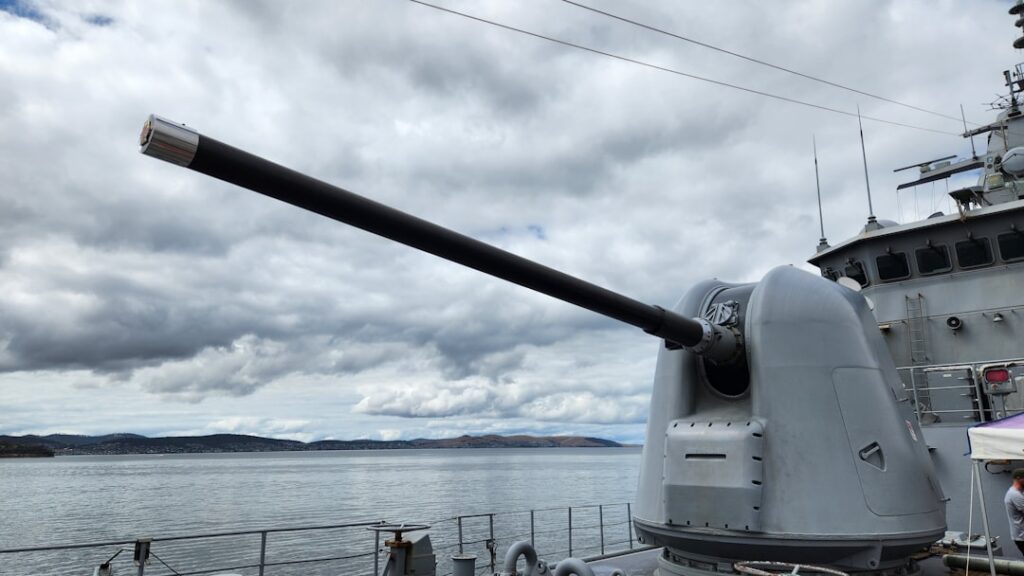
The vision is intoxicating: warships bristling with directed-energy weapons, their laser turrets cutting through the electromagnetic spectrum to neutralize threats faster than conventional munitions. When U.S. Navy leadership announced earlier this year that “the dream of a laser on every ship can become a real one,” they signaled a transformative shift in naval warfare doctrine. Yet beneath this optimistic proclamation lies a more complicated reality—one where the very platforms designed to host these weapons may simultaneously constrain their operational potential.
Aircraft carriers represent the logical first choice for laser weapon deployment. These floating cities generate enough electrical power to operate systems that would bankrupt smaller vessels, and their size provides the thermal management capabilities necessary for weapons that transform energy into devastating beams of light. In theory, carriers offer the ideal testbed for this revolutionary technology. In practice, the marriage between laser weapons and carrier operations reveals uncomfortable truths about the gap between military aspiration and maritime physics.
The Power Advantage: Why Carriers Make Sense
Let’s start with the obvious advantage. A modern supercarrier like the USS Gerald R. Ford generates enough electricity to power a small city. With four reactors producing over 550 megawatts of electrical power, these vessels can operate power-hungry systems that would be simply impossible on destroyers, cruisers, or littoral combat ships. High-energy laser weapons demand enormous amounts of electricity—firing a directed-energy weapon consumes power at rates that conventional warships simply cannot sustain.
The carrier’s size also offers practical benefits for thermal management. Lasers generate waste heat, and managing that thermal signature while maintaining the weapon’s operational capability requires robust cooling systems and significant physical space. Aircraft carriers, already equipped with sophisticated environmental control systems to manage aviation operations, have the infrastructure to handle these demands. Their massive flight decks and superstructure provide locations where weapons can be mounted with clear sight lines across the horizon.
Furthermore, the carrier’s command and control capabilities represent a tremendous asset. These ships serve as floating command centers with sophisticated radar, communications, and computational systems. Integrating laser weapons into this ecosystem allows for coordinated fire control, sensor fusion, and rapid targeting—capabilities that smaller vessels simply cannot replicate. The decision-making infrastructure exists to employ these weapons effectively within fleet operations.
The Operational Constraints: Where Reality Intrudes
Yet this technological advantage conceals significant operational liabilities. Aircraft carriers are vulnerable assets—extraordinarily expensive platforms that represent a significant concentration of naval power. Deploying laser weapons on carriers creates a strategic paradox: the very power infrastructure that makes carriers ideal for these weapons also makes them precisely the kind of high-value target that adversaries would prioritize in any conflict. Losing a carrier equipped with cutting-edge laser weapons would represent not just a military disaster but a catastrophic intelligence windfall for rivals.
The maritime environment presents challenges that laser advocates often downplay. Water vapor, salt spray, fog, and atmospheric distortion degrade laser effectiveness. Carriers operate in unpredictable ocean conditions, and many potential combat zones feature weather patterns that would severely limit laser range and accuracy. A carrier fighting in the Western Pacific during monsoon season would find its advanced directed-energy weapons operating at significantly reduced capacity—a vulnerability that traditional missile systems don’t face to the same degree.
There’s also the question of carrier vulnerability itself. These ships, despite their size and power, move slowly and follow predictable patterns. Laser weapons operate at the speed of light but require clear line-of-sight to targets. A carrier’s own aircraft and escort vessels can actually interfere with laser operations, creating dead zones where the weapons cannot engage. In contested environments where adversaries possess their own sophisticated sensors and weaponry, carriers may find themselves unable to employ their laser systems effectively without exposing themselves to unacceptable risk.
The Debate Over Deployment Strategy
Military strategists remain divided on how aggressively to pursue carrier-based laser weapons. Some argue that distributed deployment across smaller vessels makes more strategic sense—accepting lower power levels in exchange for reduced vulnerability. Others contend that the power requirements are simply too demanding for anything smaller than a supercarrier, making the technology carrier-dependent by necessity rather than choice.
The cost equation adds another layer of complexity. Aircraft carriers represent roughly $13 billion in investment per ship. Installing laser weapon systems adds further expense, modification requirements, and integration challenges. If a single laser system malfunction or degradation scenario significantly impacts carrier operations, the return on investment becomes questionable.
Looking Forward
The Navy’s ambition to deploy laser weapons across its fleet reflects genuine technological progress. High-energy directed-energy weapons are no longer science fiction—they represent an emerging class of military capability with real potential applications. Aircraft carriers will almost certainly serve as the initial platforms for these systems, given their power generation and command capabilities.
However, the navy must approach this transition with clear-eyed realism about both opportunities and constraints. Laser weapons on carriers offer advantages, but they also introduce new vulnerabilities and operational limitations. The weapon system that seems ideal on a drawing board may perform quite differently in the contested, chaotic environment of modern naval warfare.
The dream of a laser on every ship may indeed become reality, but expectations must align with operational physics rather than technological enthusiasm.
This report is based on information originally published by Fast Company. Business News Wire has independently summarized this content. Read the original article.