
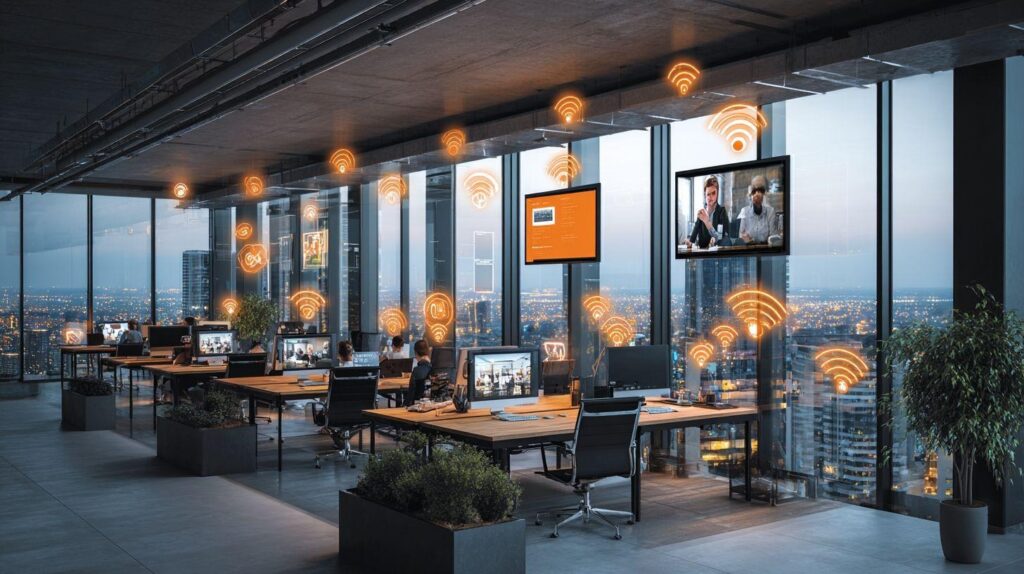
The pandemic accelerated a seismic shift: 80% of companies now plan hybrid work models, per McKinsey research, reshaping commercial real estate forever. As traditional offices empty, hybrid solutions emerge as the lifeline-blending flexibility, tech, and efficiency.
Discover market trends, design innovations, economic impacts, challenges, case studies, and 2030 predictions to future-proof your strategy.
Defining Hybrid Work Models
Hybrid work models allocate office space by activity. They emphasize flexible workspaces tailored to tasks like collaboration or focus time. This approach supports the future of work in commercial real estate.
Three core models shape hybrid office solutions. Activity-Based Working (ABW) uses hot-desking with ratios like 0.7 desks per employee. Workers choose spaces based on needs, such as quiet zones or team areas.
Core Hours Scheduling focuses on peak usage from 9am to 3pm. This model optimizes space utilization during high-demand periods. Employees coordinate schedules for better office flow.
The Distributed Workforce model incorporates satellite offices and neighborhood spots. A key formula guides planning: Total SF = Employees x 150 SF x 0.6 utilization rate. For example, 100 employees might need 9,000 square feet total.
- ABW promotes hot desking for agile workspaces.
- Core hours reduce overcrowding in collaboration spaces.
- Distributed setups leverage coworking spaces for remote teams.
Experts recommend integrating proptech tools like IoT sensors for occupancy analytics. This ensures workplace strategy aligns with employee experience and productivity.
Post-Pandemic Shift in Office Use
Office occupancy dropped 62% from pre-pandemic levels, averaging 20-30% utilization per Kastle Systems 2024 data. This sharp decline marked the start of widespread remote work adoption. Businesses quickly adapted to maintain operations amid lockdowns.
In 2020, about 95% of workers shifted to remote setups, transforming commercial real estate dynamics. Companies relied on video conferencing and basic productivity tools. This period highlighted the need for flexible workspaces beyond traditional offices.
By 2022, hybrid models emerged as a dominant approach in the future of work. Employees returned part-time, blending work from home with office visits. Leaders began rethinking office design for activity-based working and hot desking.
In 2024, full occupancy recovered to around 28%, with Class A office vacancy hitting 19.6% in Q1 per the CBRE report. Utilization heatmaps show patterns like Monday at 45% and Wednesday at 75%. These trends push hybrid office solutions like agile workspaces and proptech for occupancy analytics.
Current Market Trends Driving Adoption
U.S. office vacancy rates reached 19.8% in Q2 2024, driving adoption of flexible leasing in commercial real estate. Persistent high vacancy, strong preference for hybrid work among younger generations, and a surge in proptech investments shape the future of work. These trends push landlords toward hybrid office solutions to fill space and meet tenant needs.
High vacancy rates force owners to rethink traditional models. Companies now seek agile workspaces like hot desking and coworking spaces to match distributed workforces. This shift supports employee experience while cutting costs on underused square footage.
Gen Z and Millennial workers favor hybrid office solutions, blending remote work with collaborative in-office days. Proptech tools, such as IoT sensors for occupancy analytics, help optimize space utilization. Landlords using these technologies attract tenants focused on workplace strategy and productivity tools.
Flexible leasing trends emerge as providers offer short-term options. Examples include activity-based working setups with collaboration spaces and wellness design. This adaptation signals office market recovery through adaptive reuse and amenities-rich offices.
Remote Work Statistics and Projections
Research suggests a sharp rise in hybrid work, with many U.S. knowledge workers adopting mixed schedules. This trend fuels demand for flexible workspaces and remote tech spend. Projections show continued growth, reshaping office design and leasing trends.
| Metric | 2020 | 2024 | 2027 Projection |
| Hybrid adoption | 20% | 58% | 74% |
| Office SF demand | -15% | -25% | -35% |
| Remote tech spend | $50B | $147B | $250B |
These shifts highlight the need for smart buildings with touchless technology and video conferencing integration. Companies implement hybrid work policies, like core hours scheduling, to boost collaboration. Tools such as predictive analytics aid in AI workspace optimization.
Experts recommend planning for satellite offices and neighborhood offices to support return-to-office efforts. This approach enhances talent retention and corporate culture in a post-pandemic office landscape.
Declining Demand for Traditional Office Space
Traditional office demand has fallen since 2019, with asking rents dropping in many gateway markets. High office vacancy rates prompt a move to efficient layouts like modular offices and office pods. Landlords face pressure to offer sustainable offices and green buildings.
| Market | Vacancy Rate | Rent Change |
| NYC | 18.5% | -12% |
| SF | 29.4% | -22% |
| Dallas | 21.3% | +2% |
For a team of 1,000 employees, traditional needs might total 225,000 SF at 225 SF per person. With 30% utilization in hybrid models, only 67,500 SF suffices, enabling space utilization savings. This calculation guides portfolio management and lease abstraction.
Practical steps include adopting biophilic design and acoustic solutions to draw workers back. Features like fitness centers and cafes in offices improve employee engagement in agile workspaces.
Rise of Flexible Leasing Models
Flexible leases now represent a larger share of office stock, reflecting office leasing trends. Providers enable short-term leases and pay-per-use spaces for distributed workforces. This model supports startup ecosystems and innovation hubs.
- WeWork with thousands of locations offers coworking spaces.
- Regus provides serviced offices in over 2,500 sites.
- LiquidSpace allows pay-per-day bookings for fractional offices.
Compare a 12-month rolling lease at $45 per SF to traditional $55 per SF over 5-10 years with full commitment. Flexible options use 60-80% utilization versus 100%, fitting hybrid preferences. Benefits include lower risk and scalability for tenant experience.
Landlords should explore co-working operators like the WeWork model for revenue stability. Integrated workplace management systems track usage, aiding facilities management and ESG investing goals.
Key Benefits of Hybrid Offices
Hybrid offices deliver real estate cost savings while boosting employee satisfaction and operational efficiency. Fortune 500 firms average $11,000 per employee in annual savings, according to CoreNet Global. These gains span financial metrics, human capital retention, and streamlined operations in commercial real estate.
Businesses reduce overhead through flexible workspaces and optimized layouts. Employees gain work-life balance from hybrid models blending remote work with office time. Landlords benefit from higher occupancy in agile setups.
CoreNet Global highlights how these models cut expenses without sacrificing collaboration. Leaders in workplace strategy report stronger talent retention. This positions hybrid offices as a cornerstone of the future of work.
Practical steps include piloting hot desking and activity-based working. Track results with proptech tools for data-driven adjustments. Such approaches future-proof office design amid evolving office leasing trends.
Cost Savings for Businesses and Landlords
Businesses save significantly per employee annually; landlords increase net operating income through higher utilization. Hybrid setups lower real estate costs by rightsizing space needs. Tenants shift to flexible lease terms like short-term options from co-working operators.
Traditional offices demand more square footage per worker than hybrid models. For example, dropping from higher to lower space allocation at steady rates yields major reductions. Landlords fill vacancies faster with agile workspaces, boosting revenue from underused buildings.
Consider a 100,000 square foot property: partial occupancy generates less than fuller use over a year. JLL notes potential NOI lifts from better tenant mixes. Integrate real estate technology for yield management and portfolio optimization.
Actionable advice includes negotiating serviced offices or membership models. Explore adaptive reuse for mixed-use developments. These tactics support office market recovery and align with REIT strategies.
Enhanced Employee Satisfaction and Retention
Hybrid models boost satisfaction and cut turnover costs. Employees value flexibility in hybrid work policies, blending office and home. This fosters employee experience through personalized schedules.
Engagement rises with options like core hours and async communication. Retention improves as workers prefer setups like Microsoft’s pilots. Wellbeing stems from flexibility times amenities times technology.
Real-world examples show preference for return to office hybrids with wellness design. Amenities such as fitness centers or cafes reduce attrition. Track via employee NPS and engagement scores.
Implement productivity tools like video conferencing alongside biophilic design. Offer ergonomic furniture and childcare facilities. These elements strengthen corporate culture and talent retention in distributed workforces.
Improved Space Utilization Efficiency
Hybrid offices achieve higher utilization than traditional setups. Pre-hybrid spaces often sit underused, while hybrids optimize via activity-based working. Benchmarks show gains from smart scheduling.
Calculate weekly efficiency from peak booking rates over standard hours. IoT sensors reveal true occupancy, as in Cisco’s space reductions. Occupancy analytics guide office revitalization.
Adopt hot desking and satellite offices for better flow. Proptech like IWMS tracks real-time data. This supports space utilization in neighborhood offices or third spaces.
Experts recommend AI for workspace optimization and predictive analytics. Integrate touchless tech and modular offices. Such steps enhance efficiency in smart buildings and sustainable offices.
Design Innovations for Hybrid Spaces
Modern hybrid office solutions prioritize flexibility through demountable walls, modular furniture, and zoned activity areas. These elements allow commercial real estate to adapt to the future of work, supporting remote work and return-to-office trends. Experts recommend allocating space per IFMA standards at 150-175 square feet per employee in hybrid setups, compared to over 225 square feet in traditional offices.
Hybrid spaces use a 40/30/20/10 zone allocation: collaboration at 40%, focus at 30%, meetings at 20%, and amenities at 10%. This activity-based working model enhances employee experience and productivity tools. Property managers can reconfigure layouts quickly to match occupancy analytics.
Incorporate biophilic design and acoustic solutions for wellness. For example, add plants and natural light in collaboration zones to foster creativity. Sustainable offices with green building features align with ESG investing goals in office leasing trends.
These innovations create agile workspaces that boost space utilization. Real estate investors see value in adaptive reuse projects, turning vacant floors into hybrid hubs. This approach supports office market recovery and distributed workforces.
Flexible, Reconfigurable Workstations
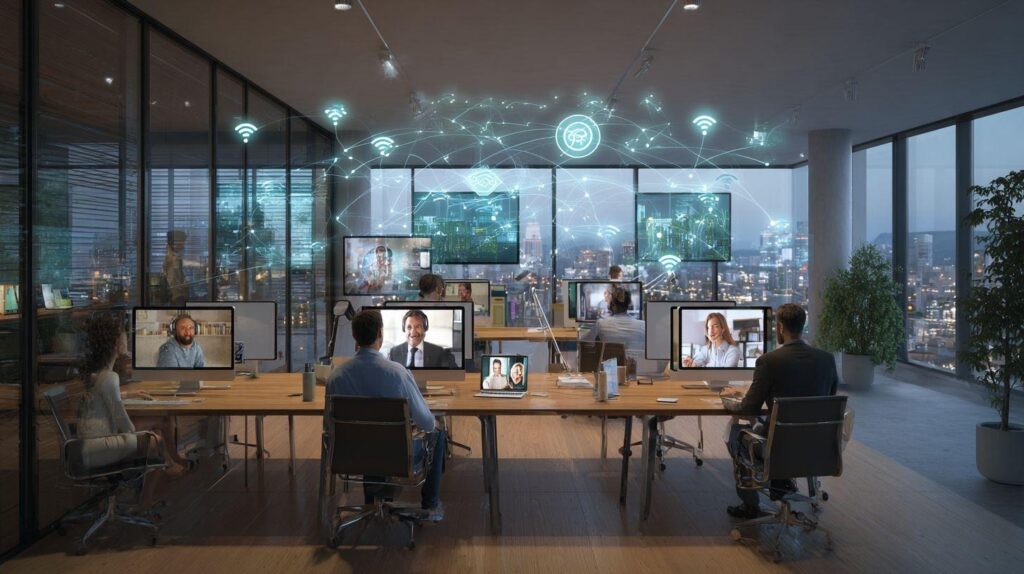
Hot-desking ratios average 0.7:1 (desks to employees) with high advance booking compliance using tools like desk reservation software. This setup suits hybrid work policies and reduces office vacancy rates. Employees book spots via apps for core hours scheduling.
Key workstation types include hot-desk stations at 24 by 48 inches, office pods for four people, height-adjustable desks with growing adoption, and modular panels that reconfigure in hours. These options enable flexible workspaces. Teams mix them based on daily needs.
| Workstation Type | Size/Specs | Approx. Cost |
| Hot-desk stations | 24×48 | $450 each |
| Office pods | 4-person | $8,500 |
| Height-adjustable desks | Ergonomic, sit-stand | Varies |
| Modular panels | Reconfigurable walls | Per project |
Use ergonomic furniture to support talent retention and corporate culture. For instance, pods work well for video conferencing in coworking spaces. This strategy fits short-term leases and pay-per-use models.
Technology-Integrated Environments
Seamless tech integration via Power over Ethernet lighting, occupancy sensors, and digital signage creates responsive smart buildings. These proptech tools enhance workplace strategy and real estate technology. Fortune 500 firms increasingly adopt them for hybrid setups.
Many hybrid offices deploy IoT sensors, often one per 125 square feet, for real-time space monitoring. Sensors track usage to optimize layouts and support predictive analytics. Managers gain insights into peak times and underused areas.
Integrate touchless technology like app-controlled doors and air quality monitoring. This improves health protocols and employee engagement. Pair with IWMS for facilities management and portfolio management.
Digital twins and BIM modeling preview designs virtually. AI workspace optimization suggests changes based on data. These features drive office revitalization and tenant experience in amenities-rich offices.
Collaborative Hubs and Quiet Zones
Experts recommend an optimal ratio of 45% collaborative, 35% focus, and 20% meeting spaces for hybrid environments. This balances activity-based working with individual needs. Layouts in a 20,000 square foot floor might allocate 9,000 square feet to collaboration, 7,000 to focus, and 4,000 to meetings.
Specify huddle rooms for four people at 120 square feet with strong sound isolation, phone booths, and acoustic pods. These collaboration spaces include quiet zones for async communication. Add wellness design like fitness centers or cafes in offices.
- Huddle rooms: 4-person, 120 SF, high isolation
- Phone booths: Compact, private calls at around $4,500 each
- Acoustic pods: High noise reduction for focus work
Biophilic elements and natural ventilation boost productivity in sustainable offices. For example, place pods near windows for light. This design aids return-to-office efforts and neighborhood offices.
Technology Enablers
Proptech investment reached $28B in 2023, powering 65% of hybrid office transformations per CB Insights. Cloud platforms, AI analytics, and immersive tech now enable dynamic hybrid workplaces in commercial real estate. These tools support flexible workspaces and improve the employee experience.
Key categories include workplace management solutions, which lead the market, followed by occupancy analytics and collaboration tools. Workplace management handles scheduling and reservations for hot desking. Occupancy analytics track space utilization in real time.
Collaboration tools enhance remote work through video conferencing and virtual reality meetings. Together, they drive office design toward agile workspaces and smart buildings. Proptech integrates IoT sensors for predictive analytics in the future of work.
Businesses adopt these for workplace strategy, reducing office vacancy rates and supporting return to office plans. Examples include activity-based working and neighborhood offices. This shift aids real estate investment and REITs in post-pandemic recovery.
Cloud-Based Workspace Management
IWMS platforms reduce admin time 67% and improve space utilization 24%, per IDC 2024. Integrated workplace management systems streamline hybrid office solutions through cloud-based facilities management. They manage reservations, maintenance, and portfolio management centrally.
These platforms support hot desking and activity-based working in flexible workspaces. A typical rollout takes about 90 days, with training for teams on lease abstraction and space planning. They work together with BIM modeling for digital twins of office design.
| Platform | Price | Modules | Best For | Pros/Cons |
| IBM TRIRIGA | $50/seat/mo | Space, Asset, Lease | Enterprise portfolios | Scalable; complex setup |
| Archibus | $45/seat | Real estate, Maintenance | Mid-size firms | Customizable; steep learning |
| FM:Systems | $38/seat | Occupancy, Reservations | Hybrid teams | User-friendly; limited integrations |
| Planon | $42/seat | FM, Sustainability | Green buildings | ESG tracking; higher cost |
| Accruent | $40/seat | Portfolio, Projects | Multi-site ops | Analytics strong; UI dated |
Choose based on needs like sustainable offices or tenant experience. Experts recommend starting with a pilot for employee engagement and talent retention.
AI-Driven Occupancy Analytics
AI analytics achieve 92% occupancy prediction accuracy, enabling right-sizing decisions per VergeSense data. Occupancy analytics use IoT sensors in smart buildings to monitor hybrid workspaces. They track real-time data for office leasing trends and space utilization.
Key metrics include utilization on an hourly basis, dwell time, and collision rates in collaboration spaces. This supports agile workspaces and reduces waste in commercial real estate. Predictive analytics aid workplace strategy for distributed workforces.
- VergeSense: $3/device/mo, high accuracy for density mapping.
- Spacewell: $15/seat, integrates with IWMS for reservations.
- Cim.io: $2/device, focuses on touchless technology and air quality.
- Ori: $25/seat, offers wellness design insights.
BP reduced its footprint by 30% using such tools for right-sizing. Apply to satellite offices or coworking spaces for better productivity tools and employee experience.
VR/AR for Remote Collaboration
VR collaboration reduces travel 78% and improves remote meeting engagement 40%, per Stanford HCI study. Virtual reality meetings and AR enhance hybrid office solutions for the future of work. They create metaverse offices for immersive remote collaboration.
Deployment models suit various team sizes in commercial real estate. Hardware like the Quest 2 at $299 per headset enables access. Use for virtual office tours and digital twins in office revitalization.
- Meta Horizon Workrooms: free, 25-user limit for small teams.
- Microsoft Mesh: $20/user/mo, integrates with productivity tools.
- Spatial.io: $15/user, supports AR site visits.
- Engage VR: $40/user, ideal for training in innovation hubs.
Accenture uses it for virtual office tours, boosting corporate culture. Pair with async communication for flexible lease terms and phased return plans in post-pandemic offices.
Economic and Financial Impacts
Hybrid adaptation in commercial real estate creates premium asset classes with superior returns. For context, properties focused on hybrid office solutions attract tenants seeking flexible workspaces, boosting demand in the post-pandemic office market.
REIT performance highlights this shift, with firms emphasizing hybrid models showing stronger gains compared to traditional office REITs. Owners benefit from higher occupancy through agile workspaces and amenities-rich offices.
Hybrid retrofits yield solid returns compared to traditional office investments, as noted by Green Street Advisors. Investors see value in office revitalization projects that incorporate proptech like IoT sensors for space utilization.
This trend supports the future of work by aligning properties with hybrid work policies, return to office strategies, and employee experience priorities. Forward-thinking CRE strategies emphasize revenue diversification for long-term stability.
Revenue Models for CRE Owners
Hybrid assets generate higher net operating income through revenue diversification, according to PwC Real Estate 2024. CRE owners can tap multiple streams beyond traditional leases in flexible workspaces.
Key options include flexible lease terms, amenity fees, membership clubs, and event space rentals. For example, a 100,000 square foot building at 75% utilization might achieve stronger NNN income with these models compared to standard setups.
- Flexible leases now form a larger portfolio share, appealing to distributed workforces with short-term options.
- Amenity fees cover perks like fitness centers or cafes in offices, charged per seat.
- Membership clubs offer access to collaboration spaces and hot desking for remote workers.
- Event space rentals monetize underused areas for meetings or team events.
These approaches enhance tenant experience and support office leasing trends, making properties resilient in the era of remote work and activity-based working.
Investment Opportunities in Hybrid Retrofits
Retrofit costs for hybrid offices average a range with achievable ROI timelines at competitive cap rates, per Transwestern. These projects turn underutilized spaces into future-proof offices with features like wellness design and smart buildings.
Investors target strategies such as HQ retrofits, suburban conversions, and mixed-use developments. Funds like Tishman Speyer’s hybrid initiatives exemplify capital flowing into adaptive reuse.
| Strategy | Cost/SF | Cap Rate | IRR | Example |
| HQ Retrofit | $110 | 7.8% | 14% | Urban core upgrade with biophilic design |
| Suburban conversion | $95 | 8.2% | 16% | Neighborhood offices for satellite teams |
| Mixed-use | $125 | 7.2% | 19% | Transit-oriented with coworking spaces |
Practical steps include assessing space utilization with occupancy analytics before retrofitting for hybrid work policies. This positions assets for office market recovery and ESG investing trends like sustainable offices.
Challenges and Risk Mitigation
Hybrid office solutions in commercial real estate encounter key barriers like employee resistance, cybersecurity threats, and zoning restrictions. Research suggests poorly managed transitions can harm productivity. Yet, structured approaches help organizations navigate these issues effectively.
65% of hybrid transitions face cultural pushback, but structured change management achieves high adoption rates. Leaders must address these challenges head-on to support the future of work. Proactive strategies ensure smooth shifts to flexible workspaces.
Security risks rise in distributed environments with remote work and hot desking. Data privacy concerns demand robust protections. Regulatory hurdles also slow retrofits for agile workspaces.
Mitigation starts with clear policies on hybrid work policies and core hours scheduling. Tools like occupancy analytics and IoT sensors optimize space utilization. This fosters employee experience while driving office market recovery.
Cultural Resistance to Change
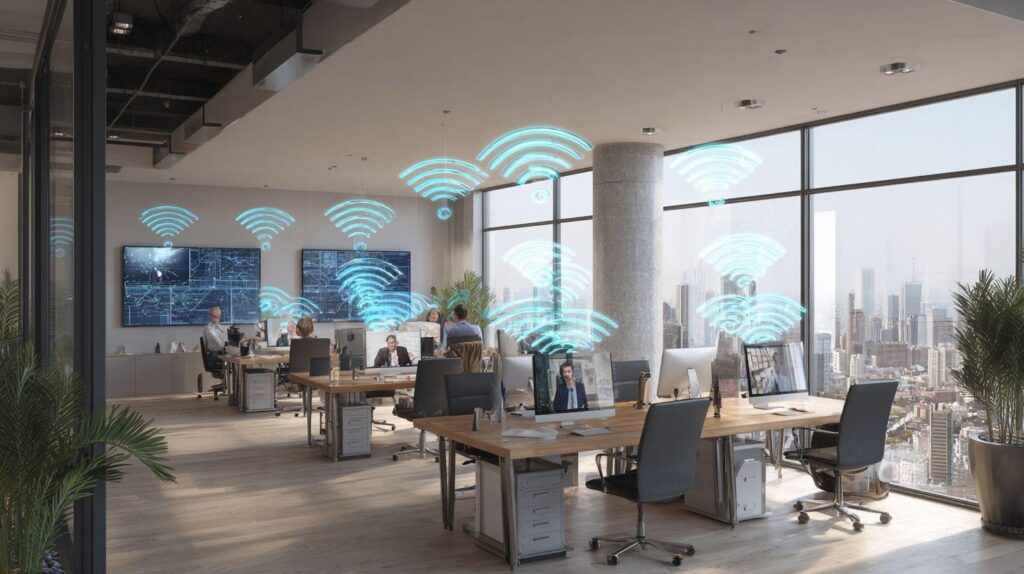
43% of employees prefer full-time office despite executive hybrid mandates, per Edelman Trust Barometer. Cultural resistance stems from attachment to traditional setups in commercial real estate. Addressing it builds trust in hybrid office solutions.
One type is office tribalism, where teams cling to dedicated spaces. Combat this with cross-team events held twice quarterly to encourage collaboration spaces. Such events strengthen corporate culture.
Scheduling conflicts arise from mismatched preferences for work from home or return to office. Implement core hours from 10am to 3pm to align flexible workspaces. This supports activity-based working and async communication.
Employees fear status loss without fixed desks in hot desking setups. Provide assigned lockers for personal items to ease concerns. Weekly pulse surveys target high response rates to monitor trust issues and refine workplace strategy.
Security and Data Privacy Concerns
Hybrid environments face elevated data breach risks from unmanaged devices in remote work setups. Cybersecurity workspaces require vigilant protections for the future of work. Leaders must prioritize these in office design.
Unsecured networks pose threats in coworking spaces or satellite offices. Training counters social engineering with no added cost. Segmented networks address IoT vulnerabilities in smart buildings.
| Threat | Impact | Mitigation | Cost |
| Rogue WiFi | High | Airgap VLANs | Moderate |
| Lost devices | Medium | MDM solutions | Low |
| Social engineering | High | Training programs | $0 |
| IoT vulnerabilities | Medium | Segmented networks | Moderate |
This risk matrix guides proptech investments like MDM for lost devices. Real estate technology ensures resilient infrastructure. Such steps safeguard tenant experience in amenities-rich offices.
Regulatory and Zoning Hurdles
35% of retrofit projects face zoning delays averaging 18 months per Urban Land Institute. Zoning hurdles challenge hybrid office solutions in commercial real estate. Navigating them unlocks adaptive reuse opportunities.
Density limits restrict floor area ratios in urban planning. Requests to increase ratios support flexible workspaces. Parking minimums often demand reductions to match distributed workforce trends.
Amenity mandates require contributions for community benefits. Miami’s recent zoning reform sped approvals for mixed-use developments. This example shows paths to transit-oriented offices and suburban shifts.
Pursue variances with this checklist: document project impacts, engage stakeholders early, submit detailed plans, and track application status. Flexible lease terms pair well with these efforts. Success enables neighborhood offices and office revitalization.
Case Studies and Success Stories
Leading adopters achieved 25-40% cost savings with 85%+ employee satisfaction scores. Real-world implementations validate the economics of hybrid office solutions in commercial real estate. Companies across sectors shifted to flexible workspaces, blending remote work with agile workspaces.
Tech firms embraced hot desking and activity-based working, while financial services focused on neighborhood offices. Professional services prioritized collaboration spaces and employee experience. These examples show how workplace strategy drives the future of work.
Metrics highlight space utilization gains and productivity tools integration. Firms used IoT sensors for occupancy analytics, optimizing office design. Success stories underscore office leasing trends toward distributed workforces and satellite offices.
Lessons include adopting proptech for portfolio management and tenant experience. Hybrid models support talent retention and corporate culture. They pave the way for sustainable offices and smart buildings in post-pandemic recovery.
Corporate Examples: Tech Giants
Microsoft reduced its 100M SF portfolio by 30% while boosting satisfaction to 91% via a hybrid model. The company downsized from traditional layouts to flexible workspaces, incorporating hot desking and video conferencing. Before, floorplans featured fixed desks; after, open zones with activity-based working emerged.
Google implemented a 2.3 desking ratio, with 87% employee preference for the setup. They designed neighborhoods for focused work and collaboration spaces. Floorplan shifts replaced rows of desks with modular pods and third spaces.
Salesforce launched Trailhead Ranch, achieving 40% cost savings through suburban satellite offices. Amenities-rich designs included fitness centers and cafes in offices. Before-and-after plans showed dense urban footprints transforming into spread-out, wellness-focused hubs.
Amazon deployed 50+ neighborhood offices, enhancing accessibility and reducing commute burdens. These nodes support a distributed workforce with touchless technology. Visual evolutions in floorplans highlight agile workspaces over rigid structures, boosting employee engagement.
Urban vs. Suburban Implementations
Suburban hybrid nodes achieve 82% utilization versus urban 65%, per CBRE suburban office report. This shift reflects office market recovery trends toward distributed workforces. Suburban sites offer stable space utilization, while urban faces volatility.
MetricUrbanSuburbanWinner Utilization65%82%Suburban Cost/SF$62$38Suburban Commute time45min22minSuburban Utilization consistencyVolatileStableSuburban
| Metric | Urban | Suburban | Winner |
| Utilization | 65% | 82% | Suburban |
| Cost/SF | $62 | $38 | Suburban |
| Commute time | 45min | 22min | Suburban |
| Utilization consistency | Volatile | Stable | Suburban |
Meta’s 15 suburban pods contrast its NYC HQ, prioritizing lower costs and employee wellness. Urban hubs suit high-density collaboration but struggle with vacancy rates. Suburban wins for cost efficiency and work-life balance.
Firms blend both via hybrid work policies, using predictive analytics for optimization. Suburban expansions support talent retention amid the suburban shift. This comparison guides real estate investment in resilient, future-proof offices.
The Future Outlook: 2030 Predictions
By 2030, convergence of sustainability, AI optimization, and immersive tech will redefine commercial real estate. Office portfolios will shift from core urban dominance to suburban hubs and virtual spaces. This evolution supports hybrid office solutions amid the future of work.
Expect a major pivot in space distribution. Urban cores will yield to suburban hubs and satellite offices. Investors will prioritize flexible workspaces that blend remote work with return-to-office strategies.
Proptech innovations like IoT sensors and occupancy analytics will drive efficiency. Smart buildings will enable activity-based working and hot desking. These changes enhance employee experience and productivity tools.
Leaders in workplace strategy will adopt agile workspaces early. Collaboration spaces with video conferencing and VR meetings will become standard. This outlook promises resilient, future-proof offices for distributed workforces.
Sustainability Integration
Net-zero hybrid offices will attract premium tenants through strong ESG performance. Owners can roadmap toward full integration by focusing on key tech stacks. This approach aligns with green buildings and investor demands.
Start with electrification using heat pumps across portfolios. Add solar canopies to generate on-site power and water reclamation systems for conservation. AI energy management will optimize usage in real time.
- Electrification targets full heat pump adoption for heating and cooling.
- Solar canopies offset energy needs with renewable sources.
- Water reclamation cuts usage through greywater recycling.
- AI systems predict and adjust consumption for peak efficiency.
Real-world examples include large-scale solar installations in corporate campuses. These features boost net zero offices appeal. They support biophilic design and wellness-focused office revitalization.
Global Market Expansion
Asia-Pacific regions lead in hybrid office solutions adoption compared to other markets. Growth stems from innovative urban planning like 15-minute cities. This sets a model for office leasing trends worldwide.
Key emerging models include Singapore’s compact neighborhoods, London’s club-style workspaces, Texas neighborhood offices, and flex labs for life sciences. These cater to agile workspaces and high utilization rates. Investors eye substantial global opportunities in mixed-use developments.
- Singapore’s 15-minute cities minimize commutes with integrated amenities.
- London’s club workspaces offer premium, membership-based access.
- Texas neighborhood offices support suburban shift and satellite setups.
- Life sciences flex labs enable scalable R&D in innovation hubs.
Regional forecasts highlight strong growth in APAC, followed by Americas and EMEA. Focus on transit-oriented offices and amenities-rich designs like fitness centers or cafes. This expansion drives real estate investment in sustainable, tech-enabled properties.
Strategic Recommendations for Stakeholders
Stakeholders should target 60-75% hybrid portfolio penetration within 24 months for optimal ROI. This approach aligns with the future of work by embracing hybrid office solutions in commercial real estate. Practical steps ensure adaptability to remote work and return to office trends.
Owners, tenants, developers, facilities managers, and investors each follow a tailored 5-phase roadmap. These phases include assessment, planning, pilot testing, scaling, and monitoring. Implementation timelines span 24 months with clear KPIs for success.
Focus on flexible workspaces like hot desking and activity-based working drives employee experience. Integrate proptech tools such as IoT sensors for occupancy analytics. This strategy supports office market recovery and sustainable offices.
Key benefits include improved space utilization, talent retention, and ESG investing alignment. Examples like amenities-rich offices with cafes and fitness centers enhance collaboration spaces. Track progress through productivity tools and workplace strategy metrics.
Owners: Retrofit Portfolio for Hybrid Readiness
Owners start by assessing current assets in phase 1, targeting 30% of the portfolio for retrofits by Q1 2025 with a $100 per square foot budget. Prioritize office revitalization through modular offices and agile workspaces. This sets the foundation for hybrid office solutions.
In phase 2, plan office design upgrades like biophilic design and acoustic solutions. Phase 3 involves piloting retrofits in select buildings with touchless technology. Scale in phase 4 to full portfolio integration.
Phase 5 monitors KPIs such as space utilization rates and tenant retention. Use integrated workplace management systems for portfolio management. Examples include adaptive reuse into mixed-use developments with neighborhood offices.
Timeline: Complete assessment in month 1, pilots by month 6, full rollout by month 18. Measure success via reduced vacancy rates and higher rental rates through flexible lease terms.
Tenants: Pilot Hybrid Workforce Models
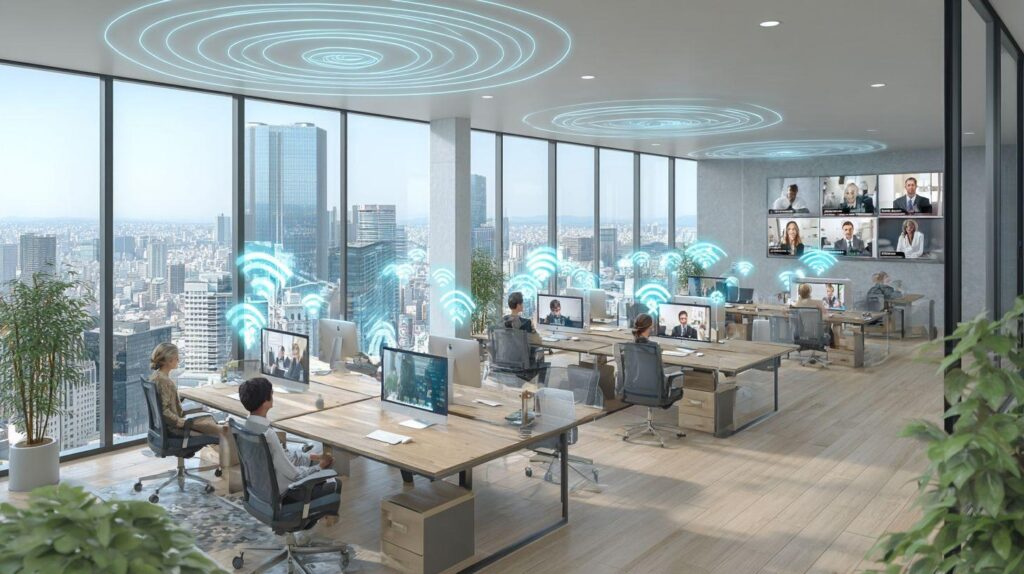
Tenants begin with phase 1 workforce audits to pilot 20% hybrid teams in a 6-month trial. Develop hybrid work policies with core hours scheduling and async communication. This supports distributed workforce and employee engagement.
Phase 2 designs workplace strategy around activity-based working and hot desking. Test coworking spaces or satellite offices in phase 3. Evaluate results before scaling in phase 4.
Phase 5 refines models using occupancy analytics from IoT sensors. KPIs include productivity gains and talent retention rates. Incorporate wellness design like ergonomic furniture for better employee experience.
Timeline: Launch pilot month 1, review at month 6, expand by month 12, optimize by month 24. Real-world examples feature video conferencing hubs and collaboration spaces for return to office.
Developers: Balance Suburban and Urban Projects
Developers in phase 1 analyze market trends for a 70/30 suburban/urban allocation. Focus on transit-oriented offices and suburban shift for future-proof offices. This responds to office leasing trends and post-pandemic office demands.
Phase 2 plans sustainable offices with green buildings and net zero designs. Phase 3 builds pilots like neighborhood offices or third spaces. Scale innovative features in phase 4.
Phase 5 tracks KPIs such as cap rates and yield management. Integrate real estate technology like BIM modeling and digital twins. Examples include mixed-use developments with fitness centers and childcare facilities.
Timeline: Site selection month 1-3, construction start month 6, first occupancy month 18. Emphasize prefabricated construction and smart buildings for efficiency.
Facilities Managers: Deploy Advanced Tech Stack
Facilities managers kick off phase 1 by selecting IWMS and IoT at $15 per seat. Deploy for space utilization and predictive analytics. This enhances facilities management and proptech integration.
Phase 2 trains teams on cloud-based FM and AI workspace optimization. Pilot in phase 3 with air quality monitoring and touchless technology. Expand system-wide in phase 4.
Phase 5 uses data for ongoing lease abstraction and tenant experience improvements. KPIs cover occupancy rates and maintenance costs. Support health protocols like UV disinfection.
Timeline: Procurement month 1, rollout month 4, full deployment month 12, audit month 24. Examples include smart buildings with drone surveying for resilient infrastructure.
Investors: Prioritize Hybrid-Focused Assets
Investors assess portfolios in phase 1, aiming for hybrid REIT weighting over 40%. Shift toward life sciences real estate and innovation hubs. This aligns with real estate investment in the future of commercial real estate.
Phase 2 models ESG investing with net zero offices and circular economy design. Due diligence in phase 3 on properties with flexible workspaces. Allocate capital in phase 4.
Phase 5 monitors KPIs like ROI and office vacancy trends. Use SaaS real estate for portfolio management. Examples include investments in serviced offices and startup ecosystems.
Timeline: Portfolio review month 1, first investments month 6, rebalance by month 18, annual review month 24. Focus on venture capital proptech for long-term gains.
Frequently Asked Questions
What is the future of commercial real estate in the context of hybrid office solutions?
The future of commercial real estate: hybrid office solutions is shifting towards flexible, adaptable workspaces that blend remote and in-office work. This evolution prioritizes modular designs, advanced technology integration, and employee well-being to meet post-pandemic demands, ensuring properties remain competitive and sustainable.
How are hybrid office solutions reshaping the future of commercial real estate?
Hybrid office solutions are reshaping the future of commercial real estate by emphasizing shared amenities, hot-desking, and smart building tech. Landlords are retrofitting spaces for agility, reducing vacancy rates, and attracting tenants who value work-life balance and cost efficiency.
What role does technology play in the future of commercial real estate: hybrid office solutions?
Technology is central to the future of commercial real estate: hybrid office solutions, powering tools like IoT sensors for occupancy management, video conferencing hubs, and AI-driven space optimization. These innovations enable seamless collaboration and data-informed decisions for dynamic work environments.
Why are hybrid office solutions key to the future of commercial real estate investment?
Hybrid office solutions are key to the future of commercial real estate investment because they mitigate risks from traditional leases, boost occupancy through flexibility, and align with ESG goals. Investors see higher returns from properties that support hybrid models, appealing to a broader tenant base.
What challenges does the future of commercial real estate: hybrid office solutions face?
The future of commercial real estate: hybrid office solutions faces challenges like infrastructure upgrades, data privacy concerns, and cultural resistance to change. However, overcoming these through strategic planning and innovation will solidify hybrid models as the industry standard.
How can businesses prepare for the future of commercial real estate with hybrid office solutions?
Businesses can prepare for the future of commercial real estate: hybrid office solutions by assessing space needs, adopting flexible lease terms, and investing in employee-centric designs. Partnering with forward-thinking developers ensures scalable, future-proof workspaces that enhance productivity and retention.