
What is Managed Timberland?
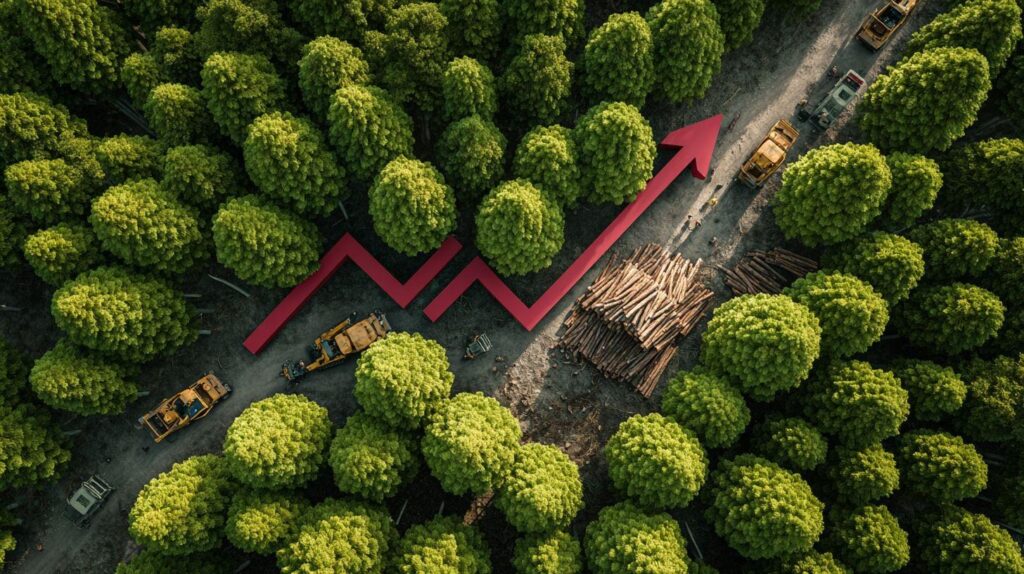
Managed timberland refers to forest properties under professional oversight using silvicultural practices like thinning, regeneration, and pest control to maximize biological growth and harvest revenues. In the Southeast US, these operations often follow 40-80 year pine rotation cycles. Professional foresters manage stands through 10-20% annual thinning to promote healthier trees and higher yields.
Companies like Weyerhaeuser provide real-world examples, managing 10.5 million acres of such land. This scale demonstrates how timberland investment works at an institutional level. Investors benefit from expert handling that turns raw woodland into productive assets.
Key management activities directly impact ROI in timberland. For instance, thinning improves tree quality for sawtimber markets. Regeneration ensures continuous harvest cycles, while pest control protects against losses.
- Thinning: Removes weaker trees to focus growth on premium timber, boosting stumpage prices.
- Regeneration: Replants after harvests to start new cycles, supporting long-term biological growth.
- Pest control: Prevents damage from insects or disease, maintaining forest health and harvest revenues.
These practices make managed timberland a form of sustainable forestry. Investors gain from both income generation and land appreciation in this alternative investment.
Why Consider It Over Traditional Assets?
Timberland delivered 9.8% annualized returns from 1987 to 2023 versus the S&P 500’s 10.2%, but with 60% lower volatility and a 0.12 correlation to stocks per NCREIF data. This makes managed timberland a strong choice for investors seeking steady growth. It combines biological growth with land appreciation for reliable performance.
Timberland investing offers better risk-adjusted returns than many traditional assets. The Sharpe ratio for timberland often exceeds that of stocks due to its low volatility. Investors appreciate this balance in a diversified portfolio.
During the 2008 financial crisis, timberland declined just 8% while the S&P 500 dropped 37%. This resilience highlights its role as a recession-resistant option. Forest investments held value through timber harvesting and sawtimber sales.
Compare key metrics across assets to see why timberland portfolio allocation matters. The table below outlines returns, volatility, correlation, and inflation protection based on historical patterns.
| Asset | Return | Volatility | Correlation to Stocks | Inflation Protection |
| Timberland | Moderate, steady from biological growth | Low (60% less than stocks) | 0.12 | Strong hedge via land and timber values |
| Stocks | High potential | High | 1.0 | Variable |
| Bonds | Low to moderate | Moderate | Low negative | Poor in high inflation |
| Real Estate | Moderate | Moderate to high | 0.4-0.6 | Good via rents and appreciation |
Timberland stands out for low correlation and inflation hedge properties. Professional timberland management ensures harvest cycles align with lumber prices. This supports income generation alongside capital appreciation.
Steady and Predictable Income Streams
Managed timberlands generate reliable cash flows through scheduled harvests and thinnings, averaging 4-6% annual yields independent of stock market cycles. Unlike dividend stocks that fluctuate with market volatility, timber harvest cycles provide steady income from biological growth. This makes timberland investing a strong option for income generation in a diversified portfolio.
Consider Rayonier REIT, which offers a 4.2% dividend yield backed by southern pine harvests. These real assets deliver predictable returns through timber harvesting and land management. Investors benefit from low correlation to stocks, acting as a volatility hedge.
Harvest cycles typically span 25-30 years for pine stands, with regular thinnings providing interim cash flows. This structure supports long-term investment goals like inflation hedging and capital appreciation. Sustainable forestry practices ensure ongoing timberland returns.
Professional forestry management optimizes stumpage prices from pulpwood, chip-n-saw, and sawtimber. Such alternative investments appeal to those seeking recession-resistant assets. Adding managed timberland to a portfolio enhances risk-adjusted returns through natural resources.
Annual Timber Harvest Revenues
Scheduled clearcuts of mature pine stands (25-30 years) generate $1,500-$3,000 per acre in stumpage revenue every 7-10 years. These revenues come from selling wood products like pulpwood at $250/ton, chip-n-saw at $400/ton, and sawtimber at $800/ton, based on Timber Mart-South Q4 2023 prices. Clearcuts reset the cycle for reforestation and new growth.
| Product Type | Price per Ton |
| Pulpwood | $250/ton |
| Chip-n-saw | $400/ton |
| Sawtimber | $800/ton |
Harvest schedules include a Year 25 clearcut followed by Year 30 thinning to promote quality timber. This approach maximizes revenue from lumber prices and housing market demand. Timberland management ensures compliance with SFI certification for sustainable timber.
Owners can time harvests based on market conditions for plywood, OSB, or wood pellets. Such timber harvesting strategies provide income independent of stock volatility. Fractional timberland or timber REITs like Weyerhaeuser offer access to these cash flows.
Long-Term Thinning and Management Yields
Pre-commercial and commercial thinnings at years 15, 20, and 25 generate $300-$800/acre annually while improving remaining tree quality. Early interventions like Year 12 PCT at $350/acre and Year 18 commercial thin at $650/acre boost diameter growth. University of Georgia forestry extension data highlights DBH increases of 1-2 inches per year post-thin.
Thinnings reduce competition, enhancing biological growth and future stumpage value. This silviculture practice supports carbon sequestration and ESG investing. Managed timberland yields steady returns through these ongoing forest management activities.
Professional teams handle pest control, fire management, and road building to protect investments. Cash flows from thinnings fund operations and provide income generation before clearcuts. Investors enjoy tax advantages like depletion allowance in timber investments.
Long-term yields contribute to land appreciation and diversification benefits. Timberland portfolio additions offer low correlation and inflation hedge properties. Sustainable practices align with climate change mitigation and biodiversity goals.
Superior Long-Term Appreciation
Timberland achieves 8-12% total returns combining 3-4% biological growth, 2-3% land appreciation, and 3% income yields. This triple appreciation comes from trees that grow steadily, land values that rise with demand, and a scarcity premium as workable forest land shrinks. Managed timberland offers this through sustainable forestry practices that lock in gains over harvest cycles.
The NCREIF Timberland Index tracks 7.1% land-only appreciation from 1995 to 2023, showing how underlying acreage builds value apart from timber. Investors in timberland funds or direct ownership capture this as urban edges push against rural forests. Biological growth acts like a built-in compounder, untouched by stock market swings.
Income from timber harvesting and leases adds steady cash flow, making timberland investing a strong real asset for diversification. Examples include southern pine tracts where thinning generates early yields while waiting for sawtimber prices to peak. This structure supports long-term capital appreciation in portfolios seeking low correlation assets.
Factors like carbon credits and recreation leases boost returns further, turning woodland investment into a multifaceted hedge. Professional timberland management ensures these elements align for optimal results over 20-30 year horizons.
Historical Timberland Return Data
NCREIF Timberland Index shows 11.5% annualized returns from 1987 to 2023, outperforming bonds by 500bps with half the volatility. This data highlights timberland returns as recession resistant, with steady performance through market downturns. Investors value this for risk-adjusted returns in alternative investments.
During the 2000-2002 dot-com bust, stocks dropped over 20% while timber gained 15%. The 2008 GFC saw similar resilience as forestry investments held value amid chaos. These periods underscore timberland’s role as a diversification tool.
| Period | Timberland | S&P 500 | Barclays Bond | Inflation |
| 1987-2023 | 11.5% | 10.2% | 5.5% | 2.5% |
| 2000-2002 | +15% | -20% | -2% | 2.3% |
| 2008 GFC | +3% | -37% | +5% | 0.1% |
Source: NCREIF Q4 2023 report. Such patterns make timberland portfolio additions appealing for long-term investors. Practical advice includes pairing with stocks for balanced exposure to natural resources.
Tree Growth as Built-In Value Increase
Southern pine plantations compound at 3.2% annually through diameter and height growth, independent of market conditions. This biological growth turns pulpwood into valuable sawtimber over decades. Managed timberland leverages this for reliable timber investments.
Consider a tree starting at year 7 with 5-inch DBH valued at $20 per ton. By year 25, it reaches 12-inch DBH worth $65 per ton due to volume expansion. Silviculture practices like thinning accelerate this natural progression.
| Age (Years) | Cords per Acre |
| 7 | 150 |
| 15 | 350 |
| 25 | 600 |
USFS Forest Inventory data notes 87 million tons of annual US growth, fueling wood products demand. Investors benefit by timing harvests around lumber prices and stumpage values. This makes tree growth a core driver in fractional timberland or REITs like Weyerhaeuser.
Professional forest management ensures regeneration post-harvest, sustaining cycles. Examples include pest control and fire management to protect yields.
Land Base Appreciation Factors
Timberland values rose 7.1% annually from 1995 to 2023 driven by scarcity, development pressure, and carbon pricing. This land appreciation operates separately from timber, adding depth to returns. Rural land scarcity amplifies gains in acreage investment.
Key drivers include urban expansion at rates like $1,200 per acre yearly in the Southeast. Carbon credits contribute $10-30 per acre annually through sequestration. Recreation leases add $15 per acre from hunting or eco-tourism.
- Urban interfaces boost values near growing cities.
- ESG investing flows into carbon-captured forests.
- Leases provide passive income alongside growth.
A 2023 Mississippi pine tract sold for $2,800 per acre, reflecting these comps. Timberland ownership captures this via professional appraisals and DCF models. Strategies like conservation easements preserve upside while enhancing tax advantages.
Powerful Inflation Hedge

Timber prices increased 6.8% annually from 1980 to 2023, outpacing the 3.1% CPI by 3.7% with a 0.78 correlation. Real timber prices rose significantly since 1980, even as supply expanded. This pattern held firm through various economic pressures.
The 2021-2022 lumber spike saw prices surge over 300%, driven by supply chain issues and housing demand. Investors in managed timberland benefited from these dynamics. Such events highlight timberland’s role as a real asset in portfolios.
Timberland investing offers protection via biological growth and harvest cycles. Unlike stocks or bonds, timber grows steadily regardless of market swings. This makes it a strong choice for inflation hedge strategies.
Consider southern pine plantations where owners time harvests to peak lumber prices. Professional forestry management ensures timberland returns align with inflation trends. Diversifying into woodland investment builds long-term resilience.
Timber Prices Tracking CPI Historically
Southern pine sawtimber real prices grew 1.9% annually from 1963 to 2023, maintaining purchasing power through 9 inflation episodes. The Timber Mart-South index closely mirrors CPI over decades. This tracking persisted amid economic shifts.
During the 1970s stagflation, timber prices rose sharply each year, outrunning general inflation. The 1980s oil shock brought similar gains around 8% annually. RISI lumber price data confirms these trends in wood products.
Investors value this history for forestry investments. Managed timberland adjusts to stumpage prices and pulpwood demand. Sustainable forestry practices enhance value over time.
For example, reforestation cycles in the Southeast U.S. sustain yields. Timberland owners use thinning and silviculture to boost growth. This approach supports low correlation with traditional assets.
Real Asset Protection in Rising Markets
The 2021-2023 inflation surge saw timberland values rise 22% versus S&P 500 at 15%, preserving portfolio real value. Timber outperformed gold at 12% and TIPS at 8% in that period. These figures underscore its strength as an alternative investment.
Housing shortages drive demand for sawtimber and plywood, pushing prices higher. Rising harvesting costs add upward pressure on lumber prices. Supply constraints from regulations amplify this effect.
Timberland provides capital appreciation and income generation through timber harvesting. Carbon credits and conservation easements offer extra revenue streams. ESG investing appeals to those seeking environmental investing benefits.
Practical steps include exploring timber REITs like Weyerhaeuser or Rayonier for access. Fractional timberland or timberland funds suit smaller investors. Professional management handles pest control, fire management, and market timing for optimal risk-adjusted returns.
Tax Efficiency and Incentives
Timberland offers 1031 exchanges, depletion deductions with 15% income exclusion, and estate tax basis step-up unavailable to financial assets. Unique forestry tax code sections like IRC 631 for timber depletion and 1031 like-kind exchanges make managed timberland a standout for tax efficiency. These tools help investors in timberland investing defer gains and reduce taxable income while growing real assets.
Investing in managed timberland aligns tax benefits with sustainable forestry practices. Owners can exclude portions of gains from sales and claim deductions for resource depletion. This structure supports long-term forest investment strategies, including harvest cycles and land appreciation.
Estate planning benefits further enhance appeal, with basis step-up preserving family timberland across generations. Combined with conservation options, these incentives position timberland ownership as a smart alternative investment. Professional forestry management maximizes these advantages through timber appraisals and silviculture.
Timberland returns often include income from timber harvesting and wood products, sheltered by these tax rules. This makes forestry investments attractive for diversification and inflation hedging in a timberland portfolio.
1031 Exchanges for Timberland
IRC 1031 allows deferring capital gains when exchanging timberland tracts, preserving gains tax-free. This provision applies to like-kind exchanges of real property, including woodland investments. It enables investors to roll proceeds into larger or improved properties without immediate tax hits.
The process requires strict timelines. First, identify a replacement property within 45 days of sale. Then, close the purchase within 180 days, using a Qualified Intermediary to hold funds and avoid constructive receipt.
Consider selling a $5M tract and buying a $6M replacement. This defers tax on a $1.8M gain, allowing reinvestment in higher-quality timberland management assets. Such moves support scaling sustainable timber operations with sawtimber or pulpwood potential.
- Engage a Qualified Intermediary early to structure the deal.
- Focus on properties with strong biological growth and harvest cycles.
- Consult tax advisors for compliance in timberland investing.
Depreciation and Cost Recovery Benefits
IRC 631(a) excludes 50% of timber sale gains from ordinary income; 612 provides depletion deductions averaging $50-100/acre annually. These rules treat timber as a depletable natural resource, separate from land value. Investors benefit from lower taxes on harvesting revenue.
For a sale at $800/ton with $400/ton basis, the $400 gain qualifies for 50% exclusion. This halves the taxable portion, boosting after-tax timberland returns. Depletion applies to standing timber inventory, offering ongoing deductions.
Example: 10,000 tons inventory at 10% depletion yields a $40K deduction. Annual claims support cash flow for reforestation and thinning. This fits professional forestry plans, enhancing yield maintenance.
Track basis carefully through discounted cash flow models and stumpage prices. These benefits make timber investments resilient, aiding risk-adjusted returns in alternative investments.
Conservation Easement Opportunities
Conservation easements generate charitable deductions averaging $1,500/acre while preserving family legacy and qualifying for 2032A valuation discounts. Donating development rights to a land trust restricts future use, creating a tax deduction based on lost value. This supports sustainable forestry and biodiversity.
Valuation compares development potential to restricted worth, like $8K/acre minus $2K/acre for $6K deduction per acre. Appraisals ensure IRS compliance, tying to timber appraisal standards. Proceeds fund habitat preservation or carbon sequestration efforts.
The process involves selecting a qualified organization, negotiating terms, and filing Form 8283. Easements enhance ESG investing by promoting stewardship and climate change mitigation. They pair well with hunting leases or eco-tourism on recreation land.
- Assess property for high development value versus timber productivity.
- Work with certified appraisers for defensible valuations.
- Integrate with estate planning for legacy forest protection.
Diversification Across Asset Classes
Timberland’s 0.12 correlation to stocks and 0.18 to bonds reduces portfolio standard deviation by 1.2% per Yale endowment study. This fits modern portfolio theory, which stresses spreading investments to cut risk without sacrificing returns. David Swensen, Yale’s famed chief investment officer, recommended timberland allocation for its stabilizing effect.
Managed timberland investments act as real assets with low ties to traditional markets. They offer biological growth from trees, plus income from timber harvesting and land appreciation. Investors gain from sustainable forestry practices that support long-term value.
Adding timberland to a portfolio creates balance during market swings. For example, forest investments provide steady returns from wood products like sawtimber and pulpwood. This approach mirrors how institutions use alternative investments for better risk-adjusted outcomes.
Practical steps include exploring timberland REITs like Weyerhaeuser or Rayonier for easier entry. Fractional timberland or timberland funds suit smaller investors seeking diversification. Over time, this builds resilience against volatility in stocks and bonds.
Low Correlation with Stocks and Bonds
20-year rolling correlations average 0.15 with S&P 500 and 0.22 with Bloomberg Barclays Aggregate. This low linkage makes timberland investing a strong diversifier. It helps portfolios weather downturns in equities or fixed income.
| Asset Pair | Correlation |
| Timberland-Stocks | 0.12 |
| Timberland-Bonds | 0.18 |
| Stocks-Bonds | 0.35 |
Efficient frontier analysis shows timberland achieving 15% return at 10% volatility, beating stocks’ 15% return at 18% volatility. Timberland returns stem from harvest cycles and stumpage prices, less swayed by stock market noise. This supports smoother portfolio growth.
Investors benefit from forestry investments tied to natural resources like lumber prices and biomass energy. For instance, plywood and OSB demand from housing markets moves independently of bond yields. This setup aids risk management in timberland.
Role in Modern Portfolios

Harvard and Yale endowments allocate 5-12% to timberland; SWIB targets 7% real assets including forestry. Major institutions follow suit with defined stakes in timberland portfolio building. This reflects confidence in its stabilizing power.
- CalPERS: 4% allocation
- TIAA: 6% allocation
- CPPIB: 8% allocation
A model portfolio of 45% stocks, 30% bonds, 15% timberland, 10% real estate yields 8.2% at 9.5% volatility. Timberland adds income generation via timber harvesting and carbon credits. It serves as an inflation hedge through land appreciation and biological growth.
Private equity timberland and timberland funds offer access for individuals. Professional forestry ensures sustainable timber management, from thinning to regeneration. This fits ESG investing, with benefits like biodiversity and climate change mitigation.
Environmental and ESG Advantages
Timberland acts as an ESG triple play, tackling carbon sequestration, water protection, and habitat preservation while supplying sustainable materials. Working forests sequester 800M tons CO2 annually, or 12% of US total emissions, according to the USFS 2023 carbon report, all while providing renewable building materials like lumber and plywood.
Investing in managed timberland aligns with environmental investing goals. Professional forestry practices enhance carbon storage through silviculture and reforestation. This supports climate change mitigation and positions timberland as a key real asset in ESG portfolios.
Water quality improves with streamside buffers and soil conservation in managed stands. Habitat for wildlife thrives under sustainable harvesting cycles. Timberland investing thus delivers strong ESG advantages alongside timberland returns.
Owners benefit from biodiversity metrics and conservation easements. These features boost land appreciation and appeal to institutional timberland investors seeking low correlation assets. Timberland management ensures long-term stewardship.
Carbon Sequestration Credits
Mature pine forests sequester 12-18 tons CO2/acre/year, generating $72-216/acre at $6-12/ton prices. This carbon math scales up: 1 ton CO2 equals 2.5 tons CO2e, so $15/ton CO2e yields $37.50/acre value. Protocols like CAR, ACR, and Verra enable verified credits, as seen in NCX 2023 timberland carbon transactions.
Timberland owners can monetize carbon credits through improved forest management. Thinning enhances growth rates, boosting sequestration. Register with protocols for audit compliance and sell credits on voluntary markets.
Private equity timberland funds often bundle credits with timber harvesting income. This adds revenue streams beyond stumpage prices. Experts recommend annual monitoring to maximize carbon sequestration potential.
Carbon markets hedge against lumber price volatility. Combine with timber REITs like Weyerhaeuser for diversified exposure. Long-term forest investment yields stable income generation from these environmental assets.
Sustainable Forestry Certifications
92% of US timberland holds third-party certification through SFI, FSC, or ATFS, commanding 5-10% price premiums for certified wood products. These standards ensure responsible forestry and market access for sawtimber and pulpwood.
| Certification | Acres Certified | Key Focus |
| SFI | 260M acres | Sustainable yield, biodiversity |
| FSC | 80M acres | Chain-of-custody tracking |
| ATFS | 150M acres | Family forest stewardship |
Audits verify 10% pre-commercial thin checks and streamside buffer compliance. Certified timberland ownership appeals to buyers of sustainable timber. Renew certifications every five years to maintain premiums.
Fractional timberland investors gain from SFI or FSC labels in woodland investment. These boost timberland portfolio value during sales. Professional forestry teams handle paperwork for hassle-free compliance.
Biodiversity and Habitat Preservation
Managed timberland provides 80% of US bobwhite quail habitat and 60% of neo-tropical migratory bird breeding grounds, per National Wild Turkey Federation and Quail Forever data. Over 1,200 wildlife species rely on these forests, with 40% greater avian diversity than agriculture.
Habitat preservation thrives through wildlife corridors and varied age-class stands. Thinning and regeneration create understory for ground-nesting birds. Hunting leases add income while protecting species.
- Maintain buffer zones along streams for amphibians.
- Leave snags for cavity-nesting birds.
- Plant mast-producing trees for deer and turkey.
Timberland funds emphasize biodiversity in ESG investing. This enhances resilience against pests and fires. Recreation land value rises with eco-tourism potential on preserved acreage.
Professional Management Reduces Risks
Professional foresters reduce catastrophic loss risk by more than 90 percent through firebreaks, prescribed burns, and insect monitoring. Individual owners face higher loss rates compared to those with managed timberland, according to USFS data. Active stewardship delivers strong returns on investment by protecting timberland assets from common threats.
In timberland investing, unmanaged woodland often suffers from overlooked pests and fires. Professional managers conduct regular assessments to catch issues early. This approach safeguards sawtimber and pulpwood stands for steady growth.
Sustainable forestry practices under expert care minimize downtime from disasters. Owners benefit from lower insurance costs and preserved land value. Over time, this leads to reliable timberland returns in a diversified portfolio.
Forest investment with professionals includes road systems and thinning schedules. These steps enhance biological growth while cutting vulnerability. Investors enjoy peace of mind with proactive risk management.
Expert Silviculture and Fire Protection
Certified foresters implement 3-year pest cycles for southern pine beetle and 400-ft firebreaks, preventing most wildfire losses. They use tools like the USFS Wildfire Risk to Communities Map for planning. This protects timberland ownership in high-risk areas.
Silviculture experts deploy SPB pheromone traps, often thousands per tract, to control outbreaks. Prescribed burns every few years at typical costs per acre reduce fuel loads. Well-planned road systems, about one mile per 100 acres, aid quick access for crews.
- Pest monitoring catches infestations before spread.
- Controlled burns mimic natural cycles safely.
- Firebreaks and roads enable fast response to threats.
These measures support sustainable timber production and carbon sequestration. Professional forestry ensures compliance with SFI or FSC standards. Timberland investors gain resilience against climate challenges.
Market Timing by Seasoned Foresters
Foresters time harvests to lumber futures curves, capturing price cycle premiums compared to random cutting. They track CME lumber futures, like the 2021 peak, for optimal sales. This boosts stumpage prices in timber harvesting.
Seasoned managers delay cuts by months if futures rise notably, or accelerate if they drop. Timberland Investment Resources models guide these decisions for maximum value. Forest investment thrives with such precision in volatile wood products markets.
Timing aligns with demand from housing and construction booms. Foresters forecast based on global trade and export markets. This strategy enhances capital appreciation alongside income generation.
In managed timberland, professionals balance harvest cycles with regeneration. Investors see better risk-adjusted returns from avoided low-price sales. Long-term woodland investment benefits from this market savvy.
Accessibility for Investors Today
Minimums range from $25K (REITs) to $500K (direct) with liquid ETFs available. In the 1980s, timberland investing required at least $5 million, limiting access to institutions and ultra-wealthy families. Today, democratized access opens managed timberland to a broader range of investors seeking real assets like sustainable forestry.
Public timber REITs trade on major exchanges, offering shares through standard brokerage accounts. Private funds and fractional timberland options lower barriers further. Investors can now pursue timberland returns via vehicles suited to different risk levels and liquidity needs.
Key options include:
- Public REITs: Easy entry with dividends from timber harvesting and wood products.
- Private funds: Higher minimums for institutional timberland exposure and potential capital appreciation.
- DSTs (Delaware Statutory Trusts): Fractional ownership in specific woodland investments with tax advantages like 1031 exchanges.
This spectrum supports diversification into natural resources, acting as an inflation hedge through biological growth and harvest cycles.
REITs and Fractional Ownership Options

Create comparison table: Weyerhaeuser (WY) | Rayonier (RYN) | PotlatchDeltic (PCH) showing Dividend Yield | NAV Discount | Acres Managed | 5yr Return. Timber REITs provide accessible entry into managed timberland via brokerage accounts. They offer liquidity advantages over direct ownership, with shares traded daily like stocks.
| Company | Dividend Yield | NAV Discount | Acres Managed | 5yr Return |
| Weyerhaeuser (WY) | 4.1% | – | ~11 million | – |
| Rayonier (RYN) | – | 92% | ~2.7 million | – |
| PotlatchDeltic (PCH) | – | – | ~1.8 million | 10.2% |
These timberland REITs generate income from sawtimber, pulpwood, and emerging carbon credits. WY focuses on plywood and lumber prices, while RYN emphasizes ESG investing through carbon sequestration. PCH delivers returns tied to housing market demand and construction booms.
Fractional options like DSTs allow smaller stakes in specific forest investments. Professional forestry ensures sustainable timber practices, including thinning and reforestation. This setup suits investors building a timberland portfolio with low correlation to stocks.
Minimum Investment Thresholds
Accessibility tiers: REITs ($2,500), Interval funds ($25K), Direct ownership ($1-5M), Family offices ($10M+). These levels match investor goals, from income generation via dividends to long-term timberland ownership. Lower tiers enable broad participation in forestry investments.
| Vehicle | Min Investment | Liquidity | Target IRR | Examples |
| REITs | $2,500 | High (daily trading) | 6-8% | Weyerhaeuser, Rayonier |
| Interval funds | $25K | Quarterly redemptions | 8-10% | TimberVest |
| Private funds | $100K-$250K | Low (5-10 yr lockup) | 10-12% | Sabine UST, TimberVest |
| Direct ownership | $1-5M | Illiquid (sales cycle) | 12%+ | PGIM |
| Family offices | $10M+ | Very low | Custom | Institutional timberland |
REITs suit beginners with timberland ETF-like ease and volatility hedge. Interval funds like TimberVest ($100K min) offer periodic liquidity for alternative investments. Higher tiers, such as Sabine UST ($250K) or PGIM ($5M), target risk-adjusted returns from stumpage prices and land appreciation.
Choose based on needs: liquidity for short-term, illiquid for higher potential from biological growth. Tax benefits like depletion allowance enhance appeal across tiers. This structure supports estate planning and legacy forests through professional timberland management.
Future Growth Drivers
A supply constraint paired with rising demand creates a structural shortage in global wood markets. The FAO Global Wood Outlook 2023 highlights this imbalance. Global wood demand grows 2.1% annually to 2040 while the US harvest share falls from 25% to 18%.
Managed timberland offers investors exposure to these trends through timberland investing. Sustainable forestry practices ensure steady biological growth and harvest cycles. This positions timberland as a key real asset for diversification.
Demand from housing, bioenergy, and renewables drives timberland returns. Investors benefit from stumpage prices tied to lumber prices and pulpwood markets. Professional forestry management maximizes income generation and capital appreciation.
Consider fractional timberland or timber REITs like Weyerhaeuser and Rayonier for accessible entry. These vehicles provide low correlation to stocks and serve as an inflation hedge. Long-term timberland ownership supports ESG investing goals.
Rising Global Wood Demand
China imports 60M m annually, representing 25% of global trade, while the US housing shortage requires 1.5M additional units per year. These factors fuel demand for wood products. Timberland investors can capitalize on this through sawtimber and plywood markets.
| Demand Driver | Key Impact |
| China urbanization | 400M m needed |
| US housing shortage | 52M units short |
| EU timber regulations | +15% imports |
Lumber prices average $650 per 1000 board feet from 2024-2028. This supports strong stumpage prices for timber harvesting. Focus on properties with high-value sawtimber for optimal returns.
Practical steps include monitoring housing market trends and export markets like China lumber. Diversify with timberland funds or private equity timberland. This hedges against commodity cycles in soft commodities.
Bioenergy and Renewable Material Trends
Wood pellet exports hit 8.1M tons in 2023, biomass power makes up 5% of US renewable electricity, and CLT construction grows 25% annually. EIA renewable energy projections underscore this shift. Managed timberland supplies these markets effectively.
New opportunities emerge in pellets at $165 per ton in the EU, CLT at $1.20 per square foot versus concrete at -$0.30 per square foot, and biochar for carbon removal at $200 per ton. These enhance forestry investments. Wood pellets from thinning operations boost yield maintenance.
- Pellets support biomass energy exports to Europe.
- CLT enables mid-rise green buildings with net zero timber.
- Biochar aids carbon sequestration and carbon credits.
Integrate these into your timberland portfolio via sustainable forestry like SFI certification. Professional silviculture, including thinning and regeneration, aligns with green building demands. This drives risk-adjusted returns and climate change mitigation.
Frequently Asked Questions
Why You Should Consider Investing in Managed Timberland?
Managed timberland offers a compelling investment opportunity due to its combination of steady income, capital appreciation, and diversification benefits. Unlike volatile stocks or real estate, timberland provides predictable cash flows from periodic harvests while the underlying asset grows in value over time, making it an attractive option for long-term portfolios.
What Makes Managed Timberland a Stable Investment Choice?
Why you should consider investing in managed timberland includes its low correlation with traditional markets. Professional management ensures sustainable harvesting, pest control, and growth optimization, resulting in reliable returns backed by the natural regeneration of trees, often yielding 8-12% annualized returns historically.
How Does Inflation Protection Factor into Why You Should Consider Investing in Managed Timberland?
Timber prices tend to rise with inflation, as wood is a real asset with intrinsic value. This hedge against rising costs, coupled with land appreciation, positions managed timberland as a resilient investment during economic uncertainty.
Why You Should Consider Investing in Managed Timberland for Diversification?
Adding managed timberland to your portfolio reduces overall risk because its performance is driven by biological growth and global demand for wood products, not stock market fluctuations. It’s an uncorrelated asset class that enhances portfolio stability.
What Environmental Benefits Come with Why You Should Consider Investing in Managed Timberland?
Managed timberland promotes sustainability through practices like reforestation and carbon sequestration, appealing to ESG-focused investors. It supports biodiversity, clean air, and water resources while generating returns, aligning financial goals with environmental stewardship.
Is Managed Timberland Accessible and Why You Should Consider Investing in It Today?
Thanks to REITs and fractional ownership platforms, investing in managed timberland is now accessible to individual investors without needing vast capital. With growing global demand for timber amid housing shortages and renewable energy needs, now is a strategic time to enter this high-potential market.