
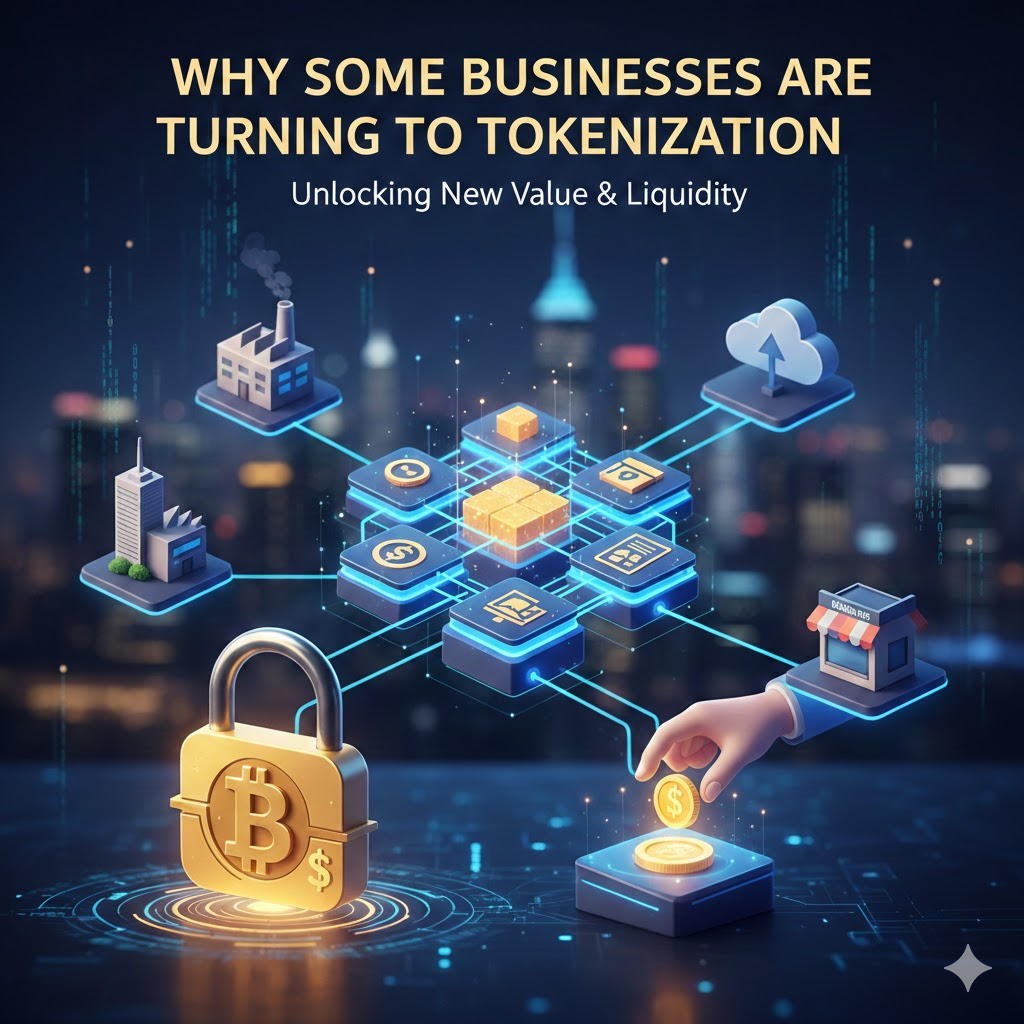
Tokenization is moving from a niche blockchain concept into a practical business tool. At its core, tokenization means representing ownership of a real or digital asset as a digital token on a blockchain. That asset could be almost anything: shares in a company, real estate, artwork, commodities, loyalty points, or even future revenue streams.
Instead of ownership being tracked in traditional databases and paperwork, it is recorded on a secure, shared ledger. This shift is attracting businesses that want faster transactions, new funding options, and more efficient asset management.
While still emerging, tokenization is starting to reshape how companies raise capital, manage assets, and interact with customers.
Unlocking Liquidity From Hard to Trade Assets
Many valuable assets are difficult to buy or sell quickly. Commercial property, private equity stakes, and fine art often require large minimum investments and lengthy transfer processes.
Tokenization breaks these assets into smaller digital units. Each token represents a fraction of ownership, which can be bought or sold more easily.
For businesses, this means assets that once sat idle can become liquid. For investors, it lowers the entry barrier and opens access to markets that were previously out of reach.
Faster and Cheaper Transactions
Traditional asset transfers involve paperwork, intermediaries, and reconciliation between multiple systems. This adds cost and delay.
On a blockchain, ownership can change hands almost instantly once conditions are met. Smart contracts can automate settlement, reducing the need for manual processing and middlemen.
Businesses benefit from lower administrative costs and quicker deal completion.
Access to a Global Investor Base
Tokenized assets can, in principle, be offered to investors anywhere that regulations allow. Instead of relying only on local or institutional buyers, companies can reach a broader, more diverse pool of capital.
This wider access can improve fundraising efficiency and potentially achieve better valuations.
It also allows smaller investors to participate in opportunities that were once limited to large funds.
Built In Transparency and Security
Blockchain ledgers are tamper resistant and auditable. Every transfer of a token is permanently recorded.
This transparency can reduce disputes over ownership and simplify compliance checks. Audits become easier because transaction history is always available.
For businesses, stronger record keeping builds trust with investors and partners.
Programmable Ownership and Automation
Tokenization is not just digital record keeping. Tokens can include rules about how they behave.
For example, a token can automatically distribute rental income to holders, enforce transfer restrictions, or trigger dividend payments on specific dates.
This automation reduces operational work and the risk of human error while ensuring rules are followed consistently.
New Business and Revenue Models
Tokenization allows companies to design innovative offerings.
A real estate firm can sell fractional ownership in a building. A startup can issue tokens linked to future product revenue. A brand can create tradeable loyalty tokens that customers exchange or use across partners.
These models can deepen customer engagement and unlock alternative financing paths beyond traditional loans or equity.
Improved Efficiency in Secondary Markets
Trading traditional private assets is slow and often opaque. Tokenized assets can trade on digital platforms with clearer pricing and faster settlement.
This creates more active secondary markets, giving investors confidence that they can exit positions when needed.
Higher liquidity often attracts more participants, creating a positive cycle of activity.
Better Asset Management and Reporting
Because ownership data lives on a shared ledger, reconciliation between different record systems becomes simpler.
Companies can generate near real time reports on who owns what, reducing back office complexity.
This efficiency is especially valuable for funds managing large numbers of investors and transactions.
Challenges Businesses Must Consider
Tokenization is promising but not effortless.
Regulation varies by country and asset type. Many tokenized offerings must follow securities laws, which adds legal and compliance work.
Technology integration can be complex, requiring secure custody of digital keys and reliable platform partners.
Market infrastructure is still developing, so liquidity and standards may differ across platforms.
Businesses must balance innovation with careful governance and risk management.
Where Tokenization Makes the Most Sense
Tokenization is particularly useful when assets are
- High value but illiquid
- Suitable for fractional ownership
- Attractive to a broad investor base
- Able to benefit from automated payments or rules
Real estate, private funds, infrastructure projects, and intellectual property are common early use cases.
The Bigger Picture
Tokenization does not replace traditional ownership systems overnight. Instead, it adds a more efficient digital layer on top of them.
As standards mature and regulation becomes clearer, more businesses are likely to use tokenization for specific advantages rather than as a universal solution.
Those that adopt thoughtfully can unlock liquidity, reduce costs, and reach new investors while maintaining compliance and control.
Conclusion
Businesses are turning to tokenization because it makes assets easier to divide, transfer, and manage. By combining fractional ownership, global reach, transparency, and automation, tokenization can open new funding channels and create more liquid markets.
The path forward requires careful legal, technical, and operational planning. But for the right assets and use cases, tokenization offers a practical way to modernise how value is owned and exchanged.
Frequently Asked Questions About Business Tokenization
What is tokenization in simple terms?
Tokenization is the process of turning ownership of a real or digital asset into digital tokens on a blockchain. Each token represents a small piece of that asset and can be transferred or traded digitally.
Is tokenization the same as cryptocurrency?
No. Cryptocurrencies like Bitcoin are standalone digital currencies. Tokenization uses similar blockchain technology, but the tokens represent ownership of real world or financial assets such as property, shares, or funds.
Why are businesses interested in tokenization?
Businesses use tokenization to raise capital more easily, unlock liquidity from hard to sell assets, reduce transaction costs, and reach a wider pool of global investors.
How does tokenization improve liquidity?
By splitting large assets into many small tokens, more people can afford to buy and sell them. This makes it easier to trade ownership and creates more active markets.
Is tokenization legal?
It can be legal, but it must follow existing financial and securities regulations. In many cases, tokenized assets are treated like traditional securities and require proper compliance and approvals.
What types of assets can be tokenized?
Common examples include real estate, private equity, bonds, commodities, artwork, intellectual property, and even future revenue streams from a business or project.
Are tokenized assets secure?
They use blockchain technology, which is designed to be tamper resistant and transparent. However, security also depends on safe storage of digital keys and the reliability of the platforms used.
Can small investors participate in tokenized assets?
Yes. One of the main benefits is fractional ownership. Investors can buy small portions instead of needing large amounts of capital to purchase an entire asset.
What are the main risks for businesses?
Key risks include changing regulations, technology challenges, platform reliability, and uncertain liquidity if there are not enough active buyers and sellers.
Will tokenization replace traditional finance?
Not completely. It is more likely to work alongside existing systems, improving efficiency and access in certain areas rather than replacing all traditional ownership and trading methods.
These points highlight why tokenization is gaining attention. It offers real advantages, but successful adoption depends on careful planning, compliance, and choosing the right use cases.