
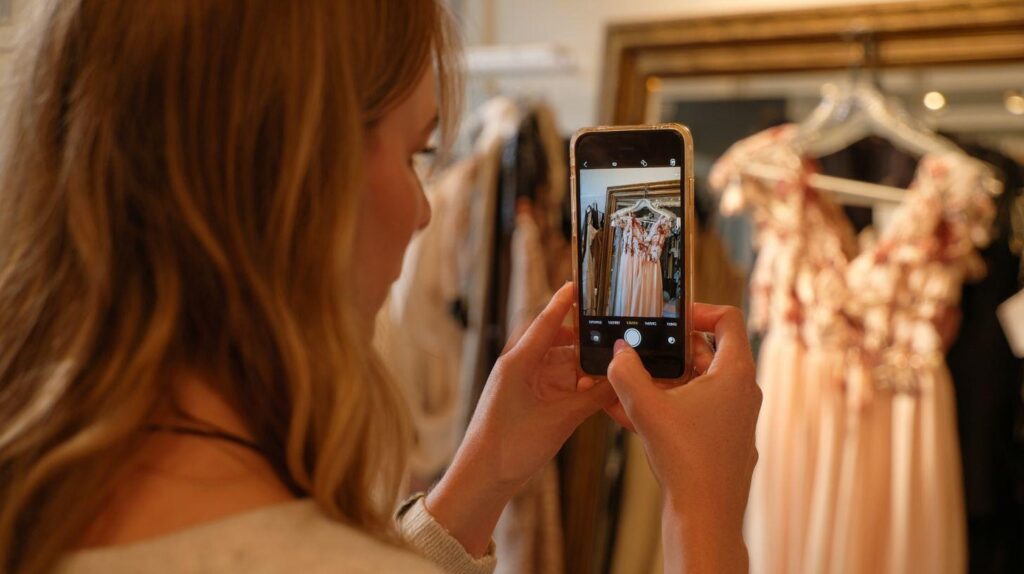
Imagine slipping a virtual pair of sneakers onto your feet from your smartphone screen-no shipping required. Retailers are harnessing augmented reality (AR) to redefine shopping, slashing return rates by up to 40%, per Shopify studies.
This article explores AR’s evolution from traditional retail, its boosts to engagement, conversions, and sales, plus case studies revealing why it’s a game-changer for staying competitive.
Defining AR Shopping Experiences
AR shopping experiences use smartphone cameras to project 3D product models onto real-world spaces, enabling virtual furniture placement (IKEA Place) or makeup try-on (Sephora Virtual Artist).
Retailers integrate this AR technology to create immersive shopping. Customers point their devices at a room or mirror. Products appear realistically overlaid in real time.
Four core types define AR shopping experiences. Each boosts customer engagement through interactive visualization.
- Furniture visualization: Apps like IKEA Place let users place sofas or tables in their living rooms. This helps assess fit and style before purchase.
- Apparel fitting: Tools such as Nike AR shoe try-on project sneakers on users’ feet. Shoppers see accurate sizing and color matches virtually.
- Beauty try-on: Sephora Virtual Artist applies lipstick or eyeshadow via face tracking. It simulates shades on live video feeds.
- Home decor AR: Platforms like Wayfair View in 3D position lamps or rugs in spaces. Users rotate and scale items for perfect placement.
AR relies on two technical approaches: marker-based and markerless. Marker-based uses QR codes or images for precise anchoring, ideal for scan-to-try in stores. Markerless employs device sensors for free placement anywhere, powering most mobile AR apps.
Evolution from Traditional Retail
Traditional retail’s touch-and-feel limitation evolved to AR’s virtual interaction during COVID-19. Retailers shifted to augmented reality shopping for contactless experiences. This change boosted consumer engagement through interactive visualization.
Key milestones mark this progression. In 2016, IKEA Place launched mobile AR for furniture visualization. By 2018, Sephora expanded with Virtual Artist for makeup try-on, setting trends in beauty retail.
The 2020 pandemic accelerated AR adoption. Retailers ramped up digital transformation, integrating AR SDKs like ARKit and ARCore. This timeline shows a clear shift from physical stores to omnichannel retail.
Pre-AR shopping faced high apparel return rates due to fit issues. AR-enabled virtual try-on reduced these by enabling precise product visualization. Examples like Nike AR and Amazon AR View highlight improved customer satisfaction and sales conversion.
Enhanced Customer Engagement
AR boosts engagement 200%+ by replacing passive browsing with interactive product exploration, as demonstrated by Snapchat AR filters averaging 4x longer session times. Retailers see clear gains in dwell time and reduced bounce rates through this shift. Experts note that interactive elements keep shoppers on pages longer.
Context shows engagement metrics improving, with dwell time rising and bounce rates dropping in AR-integrated sites. This sets the stage for deeper dives into product visualization and try-before-buy features. Specific interactions like virtual placements drive longer sessions.
Brands using AR shopping report higher interaction rates from mobile AR and web AR tools. This leads to better customer experience in e-commerce. Retailers integrate AR to foster immersive shopping and boost consumer engagement.
Practical examples include AR filters on social platforms that encourage repeated visits. Such tactics support digital transformation in the retail industry. Overall, AR enhances sales conversion and brand loyalty through engaging experiences.
Interactive Product Visualization
Interactive visualization tools like Amazon AR View let customers rotate, scale, and place furniture in their actual rooms, increasing time-on-product through hands-on exploration. Retailers use 360 degrees rotation in Shopify AR apps for full product views. This technique allows shoppers to inspect details from every angle.
Another approach involves scale comparison with height markers, helping users gauge furniture size against real spaces. Environment matching via lighting algorithms ensures products blend naturally into home settings. These methods rely on ARKit, ARCore, or Vuforia for precise rendering.
Zappar tools show strong boosts in interaction time with these features. Customers spend more time engaging with 3D models before purchase. Retailers benefit from reduced returns due to accurate visualizations.
Implementation is straightforward with AR SDKs like Unity AR or 8th Wall for web AR. Brands can add gesture controls for rotation and scaling. This drives personalized shopping and higher purchase intent in omnichannel retail.
Immersive Try-Before-You-Buy
Nike’s AR shoe try-on via Snapchat Lens achieved high virtual fittings during launch week, proving try-before-buy’s engagement power. Footwear scanning uses mobile AR for precise fit checks. QR codes or image recognition trigger these experiences easily.
Eyewear fitting with Warby Parker employs face tracking for virtual glasses trials. Jewelry from Brilliant Earth features hand rendering for ring and necklace previews. Accessories like Gucci hats and glasses use AR filters for quick try-ons. These implementations cut cart abandonment by simulating real-world use. Retailers activate via scan-to-try for seamless access.
- Eyewear fitting with Warby Parker employs face tracking for virtual glasses trials.
- Jewelry from Brilliant Earth features hand rendering for ring and necklace previews.
- Accessories like Gucci hats and glasses use AR filters for quick try-ons.
Sephora Virtual Artist and IKEA Place exemplify makeup and furniture try-ons. Real-time rendering with photorealistic overlays boosts confidence. Integration with machine learning enhances accuracy over time.
Gen Z shoppers favor these virtual try-on options in social commerce. Retailers gain from user-generated content and influencer AR campaigns. This fosters contactless shopping and competitive advantage in post-pandemic retail.
Reduced Return Rates
AR virtual fitting reduces apparel returns by improving size accuracy. Retailers see notable drops in returns through this augmented reality shopping integration. Tools like virtual try-on help customers make better choices before buying.
Industry return rates often reach high levels in e-commerce, especially for apparel. AR technology previews fitting tech that lowers these rates. Case studies show reductions across categories with immersive shopping experiences.
Shopify highlights potential savings from widespread adoption. Retailers using AR fitting rooms report fewer mismatches in sizing. This leads to higher customer satisfaction and lower logistics costs.
Digital transformation in retail includes AR for product visualization. Customers engage more with 3D models overlaid on their space or body. Such features boost sales conversion while cutting returns.
Virtual Fitting and Sizing Accuracy
Zara’s AR fitting room uses body scanning algorithms achieving high size prediction accuracy. This cuts returns by improving fit confidence. Customers avoid common sizing errors in online shopping.
The process starts with body measurement via ARKit depth sensing on devices like iPhone 12 and later. Next, size recommendation ML models analyze data for precise suggestions. Finally, real-time fit visualization shows how items look on the user.
Retailers integrate mobile AR tools like ARCore for Android compatibility. This enables virtual try-on across platforms. Accuracy helps in categories like eyewear and clothing for better personalized shopping.
Examples include glasses fitting with strong precision and clothing tools enhancing decisions. AR SDKs such as Unity AR make implementation straightforward. Retailers gain from reduced cart abandonment and improved purchase intent.
Case Studies on Return Reductions

IKEA Place reduced furniture returns by enabling accurate room visualization before purchase. Customers scan their space with the app for product visualization. This simple step avoids post-buy regrets.
Sephora Virtual Artist shows makeup shades on users’ faces via AR filters. Lipstick returns drop as buyers see realistic results. The tool boosts consumer engagement in beauty retail.
- IKEA Place features millions of monthly room scans for furniture placement.
- Sephora integrates camera-based try-on for interactive visualization.
- Home Depot uses AR for paint color matching, reducing sample returns.
Home Depot’s AR color tool lets users preview paints on walls in real-time. Implementation involves easy app downloads and scan-to-try activation. Retailers calculate ROI through lower return processing and higher brand loyalty.
Increased Conversion Rates
AR experiences boost conversion rates by reducing purchase uncertainty. Retailers see clear gains in the conversion funnel, such as higher add-to-cart actions and checkout completions. This leads to stronger sales outcomes in e-commerce.
L’Oral reported strong returns from acquiring ModiFace for virtual try-on. Such tools address buyer doubts directly. They fit into broader digital transformation efforts across the retail industry.
Psychological triggers play a key role here. Features like immersive shopping build trust and urgency. Retailer data shows consistent lifts in purchase intent.
Integrating AR technology helps cut cart abandonment. Mobile AR and web AR options make it accessible. This creates a smoother path to seamless checkout.
AR’s Impact on Purchase Decisions
AR eliminates ‘will it fit/work?’ hesitation in AR shopping. Virtual try-on features guide users toward confident choices. This shifts the customer experience positively.
Key psychological factors include a confidence boost from interactive visualization. Users feel ready to buy after seeing products in their space. Social proof comes from sharing Snapchat AR experiences with friends.
FOMO arises from limited AR stock displays, pushing quick decisions. A/B tests often reveal higher engagement with AR. Retailers note better consumer engagement overall.
Practical examples like IKEA Place for furniture visualization show real impact. Apparel fitting and makeup try-on reduce doubts. This fosters personalized shopping and loyalty.
Data from Leading Retailers
Amazon AR View achieved higher conversion rates across multiple product categories. This highlights AR integration success in everyday shopping. Retailers track these gains through internal metrics.
Leading brands leverage tools like Shopify AR for immersive experiences. Results vary by category, such as eyewear fitting or home decor AR. Company reports confirm the value.
| Retailer | AR Tool | Conversion Lift | Revenue Impact |
| Amazon | AR View | 1.4x higher | Increased sales |
| Shopify | AR stores | Add-to-cart rise | Funnel improvement |
| Target | Mobile AR | Conversion boost | Mobile sales gain |
| ASOS | Virtual try-on | Sales lift | Engagement to revenue |
These examples from retail industry leaders show patterns. Tools built on ARKit or ARCore drive results. Experts recommend testing for specific audiences like Gen Z shoppers.
Competitive Market Pressures
With Gen Z shoppers pushing for immersive experiences, retailers ignoring AR shopping integration face stiff competition from leaders like Amazon and Walmart. Amazon’s AR View lets customers visualize products in their space, while Walmart offers AR furniture placement. IKEA has long led with IKEA Place, setting the standard for virtual try-on.
The retail industry sees mounting pressure from younger consumers who expect augmented reality in e-commerce. Post-pandemic shifts toward contactless shopping have raised demands for interactive tools. Retailers must adopt mobile AR to meet these expectations and boost customer engagement.
Brands like Sephora with Virtual Artist and Nike using AR filters on Snapchat show how AR technology drives sales conversion. Without it, stores risk higher cart abandonment and lost brand loyalty. Integrating web AR helps create omnichannel retail experiences that blend online and in-store.
Experts recommend starting with simple product visualization tools to test AR adoption. This approach reduces returns through better immersive shopping and improves customer satisfaction. Forward-thinking retailers use QR code activation for quick scan-to-try features.
Keeping Pace with E-Commerce Giants
Amazon’s AR View handles massive daily traffic, so mid-tier retailers must match this via accessible platforms like Shopify AR. These tools enable 3D models and photorealistic overlays without huge investments. E-commerce giants set the bar, forcing others to integrate AR SDKs for survival.
Choosing the right platform depends on scale and needs. A comparison helps retailers pick options that fit their setup.
| Platform | AR Solution | Setup Cost | Time-to-Launch | Best For |
| Shopify | 8th Wall | $499/mo | Weeks | Small-medium stores |
| WooCommerce | AR for Woo | $99 | Days | Budget sites |
| Magento | Vuforia | Enterprise | Months | Large enterprises |
| Custom | Unity AR | $25K+ dev | 3-6 months | Unique experiences |
Platforms like ARKit and ARCore power these solutions for cross-device compatibility. Retailers using Shopify AR or WooCommerce AR quickly add furniture visualization or apparel fitting. This keeps pace with giants and cuts implementation costs.
Standing Out in Crowded Markets
Gucci’s AR sneakers try-on created viral buzz through shareable experiences, showing how exclusive AR drops differentiate brands. In packed markets, retailers need unique AR shopping tactics to boost consumer engagement. These strategies turn browsing into memorable interactions.
Here are five practical ways to stand out with augmented reality:
- Exclusive AR drops, like Gucci’s NFT sneakers, for limited-time hype.
- Influencer AR filters on Snapchat to expand reach through user-generated content.
- Brand-specific gestures and voice interaction for personalized shopping.
- Gamified AR hunts in apps to increase dwell time and purchase intent.
- Web3/NFT try-on blending blockchain with makeup or eyewear fitting.
Such tactics enhance customer experience and foster brand loyalty. Experts recommend pairing AI integration with AR for real-time recommendations. This drives social commerce and reduces bounce rates in competitive spaces.
Technological Advancements

Web AR platforms like 8th Wall eliminated app downloads, enabling instant virtual try-on for most smartphone users. This shift supports AR shopping without barriers, letting retailers offer immersive experiences directly in browsers.
Hardware advancements such as 5G and LiDAR enhance real-time rendering and photorealistic overlays. Retailers now achieve smooth furniture visualization or apparel fitting on everyday devices, boosting customer engagement.
Free SDKs like ARKit and ARCore simplify development, while no-code platforms priced from $99 to $999 per month speed up deployment. These tools enable omnichannel retail, blending online and in-store AR for better sales conversion.
Mobile integration with QR code activation or scan-to-try features drives consumer engagement. Retailers like IKEA with Place app show how these advancements cut returns through accurate product visualization.
Accessible AR Tools and Platforms
8th Wall offers web AR starting at $499/mo with drag-and-drop interface, deployable in days versus months for custom dev. This no-code platform suits retailers seeking quick makeup try-on or eyewear fitting without coding expertise.
Choose no-code tools like Zappar for fast setups if your team lacks developers. For complex needs, such as automotive AR, opt for developer-focused SDKs like Unity AR.
| Tool | Price | Key Features | Best For | Setup Time |
| 8th Wall | $499/mo | Web AR, drag-and-drop, multi-platform | Web-based try-ons | 2 days |
| Zappar | $99/mo | No-code, QR triggers, analytics | Campaigns, pop-ups | 1 day |
| Unity AR | Free SDK | 3D models, cross-platform, gestures | Custom games, viz | 1-2 weeks |
| ARKit | Free (iOS) | LiDAR support, face tracking | iOS makeup, furniture | Days |
| ARCore | Free (Android) | Motion tracking, depth sensing | Android apparel, decor | Days |
| Vuforia | $99/mo | Image recognition, cloud anchors | Marker-based retail | 1 week |
Experts recommend no-code platforms for small retailers launching seasonal campaigns. Developers should pick free SDKs for scalable e-commerce integrations like Shopify AR.
Integration with Mobile Devices
Most AR retail experiences now run on standard smartphones via ARKit (iOS) and ARCore (Android), no special hardware needed. This covers billions of devices, making immersive shopping widely accessible.
- Start with ARKit setup on iOS 11+, add LiDAR for precise home decor AR on newer models.
- Implement ARCore for Android 7.0+, supporting motion tracking on vast device ranges.
- Use Web AR via 8th Wall for no-app experiences, ideal for Snapchat AR-style filters.
- Optimize for 5G to achieve faster loading times and real-time interactions.
These steps ensure cross-device compatibility, from Gen Z shoppers to millennial consumers. Retailers gain competitive advantage with features like gesture controls in Nike AR shoe try-ons.
Test on popular devices for seamless checkout and reduced cart abandonment. This mobile AR focus supports phygital experiences, linking online visualization to in-store foot traffic.
Boosted Sales and Revenue
Retailers using augmented reality shopping report strong revenue growth through immersive experiences. Luxury brand LVMH achieved notable ROI from AR investments by enabling virtual try-on features. These tools drive direct sales and enhance customer engagement in e-commerce.
AR technology opens multiple revenue channels, including upsells and higher average order values. Retailers integrate mobile AR and web AR to visualize products in real environments. This approach reduces cart abandonment and boosts purchase intent.
Practical examples like IKEA Place show how furniture visualization leads to confident buying decisions. Sephora Virtual Artist offers makeup try-on, increasing sales conversion. Retailers see benefits from personalized shopping and interactive product visualization.
Integration with platforms such as Shopify AR or WooCommerce AR supports omnichannel retail. This digital transformation helps build brand loyalty and customer satisfaction. Experts recommend starting with simple AR filters to test impact on revenue.
AR-Driven Upsell Opportunities
Wayfair’s AR suggests matching decor items during sofa visualization, creating natural upsell paths. This boosts average order value by encouraging complementary purchases. Retailers can replicate this with AR shopping tools for home decor.
Key upsell tactics include complementary suggestions, such as pairing an IKEA lamp with a sofa. Bundle pricing overlays appear in real-time during visualization. ‘Frequently bought with’ recommendations use AR to show items together in the user’s space.
- Room complete visualizations fill empty areas with suggested products.
- Premium upgrade prompts highlight higher-end options overlaid on basics.
Apparel retailers use virtual try-on for outfit upgrades, while furniture brands visualize full room setups. These methods enhance immersive shopping and drive upsells. Experts recommend AI integration for personalized suggestions based on user scans.
Quantified Revenue Growth Metrics
Shopify AR merchants experience higher revenue per visitor compared to non-AR stores, according to platform insights. This metric highlights the power of product visualization in e-commerce. Retailers track these gains through analytics from AR SDKs like ARKit or ARCore.
The table below summarizes key metrics showing AR impact across the retail industry.
| Metric | Industry Avg | AR Impact | Example |
| Revenue per visitor | Baseline | Higher with AR | Shopify AR stores |
| Average order value | Standard | Increased | Wayfair visualizations |
| Conversion rate | Typical | Improved | Nike AR try-on |
| ROAS | Standard | Strong returns | Google AR campaigns |
| Customer lifetime value | Average | Boosted | Amazon AR View |
These metrics come from reports by Shopify, Google, and McKinsey, with real retailer cases like Nike AR. AR integration reduces returns and increases dwell time. Retailers gain competitive advantage by adopting these for Gen Z shoppers and millennial consumers.
Improved Customer Satisfaction
AR-powered personalization increases NPS scores for retailers, creating emotionally connected shoppers. Customers gain fit confidence through virtual try-ons, reducing uncertainty in purchases. This leads to higher satisfaction compared to traditional e-commerce methods.
Key drivers include personalization and the delight factor of immersive shopping. Retailers using AR technology see shoppers engage longer with product visualization. Interactive features like real-time rendering build trust in online decisions.
AR integration boosts customer experience across mobile AR and web AR platforms. Examples include Sephora Virtual Artist for makeup try-on and IKEA Place for furniture visualization. These tools preview items in real environments, enhancing satisfaction.
Overall, reduced returns follow as customers feel assured about fit and style. Loyalty builds from positive interactions, setting the stage for personalized journeys and stronger brand ties. Retailers adopting AR gain a competitive edge in digital transformation.
Personalized Shopping Journeys
Stitch Fix uses AR + AI to recommend wardrobe items based on past virtual try-ons. User data from body scans and preferences drives AR recommendations. This creates tailored suggestions that match individual styles.
The personalization stack starts with user data feeding into dynamic content. For instance, spring browsers might see pastel outfits in AR previews. Behavioral triggers like abandoned cart reminders use AR to re-engage shoppers.
- Collect preferences via initial scans and quizzes.
- Generate dynamic AR content based on season or trends.
- Send cross-session learning updates for evolving tastes.
- Track interactions to refine future recommendations.
Retailers benefit from higher repeat purchase rates through these journeys. Platforms like Shopify AR enable easy integration for small businesses. Personalized paths turn browsing into confident buying.
Building Brand Loyalty
Burberry’s AR handbag try-on sparked user-generated Instagram posts, strengthening customer bonds. Shareable AR moments like #MyARLook encourage social sharing. This fosters community around the brand.
Loyalty loops include points for AR engagement and exclusive member perks. Influencer UGC campaigns amplify reach through AR filters. Customers return for unique, interactive experiences.
- Reward AR try-ons with loyalty points.
- Offer exclusive AR previews to members.
- Run campaigns with influencers using Snapchat AR.
- Promote user content on brand channels.
These efforts drive social impressions and referral traffic in the retail industry. Features like Nike AR or Amazon AR View keep shoppers coming back. Long-term, they grow lifetime value through emotional connections and omnichannel retail.
Frequently Asked Questions
Why Retailers are Integrating Augmented Reality Shopping: What is the Main Driver?
Retailers are integrating Augmented Reality (AR) shopping primarily to enhance customer engagement and reduce purchase hesitation. By allowing shoppers to virtually try on products or visualize them in their own space, AR bridges the gap between online convenience and in-store experience, leading to higher conversion rates and customer satisfaction.
Why Retailers are Integrating Augmented Reality Shopping: How Does It Boost Sales?
AR shopping boosts sales by minimizing returns; for instance, virtual try-ons for clothing or furniture placement previews ensure better fit and suitability. Studies show AR can increase conversion rates by up to 40%, making it a powerful tool for retailers to drive revenue in a competitive e-commerce landscape.
Why Retailers are Integrating Augmented Reality Shopping: What About Customer Experience?
Retailers integrate AR to create immersive, personalized shopping experiences that mimic physical stores. Features like AR filters on apps let customers interact with products realistically, fostering loyalty and turning browsing into confident buying decisions.
Why Retailers are Integrating Augmented Reality Shopping: Is It Cost-Effective?
Yes, despite initial development costs, AR integration is cost-effective long-term as it lowers return rates (often by 20-30%) and operational expenses. Retailers like IKEA and Sephora have seen ROI through scalable AR tools that attract tech-savvy millennials and Gen Z shoppers.
Why Retailers are Integrating Augmented Reality Shopping: How Does It Compete with In-Store Shopping?
AR levels the playing field against brick-and-mortar by bringing tactile elements online, such as 3D product rotations or room visualizations. This hybrid approach helps omnichannel retailers retain customers who value digital innovation without abandoning physical stores.
Why Retailers are Integrating Augmented Reality Shopping: What Future Trends Should We Expect?
Looking ahead, retailers will deepen AR integration with AI for hyper-personalization, like customized recommendations in AR environments. As 5G and AR glasses proliferate, expect widespread adoption, transforming retail into seamless virtual-physical ecosystems by 2025 and beyond.