
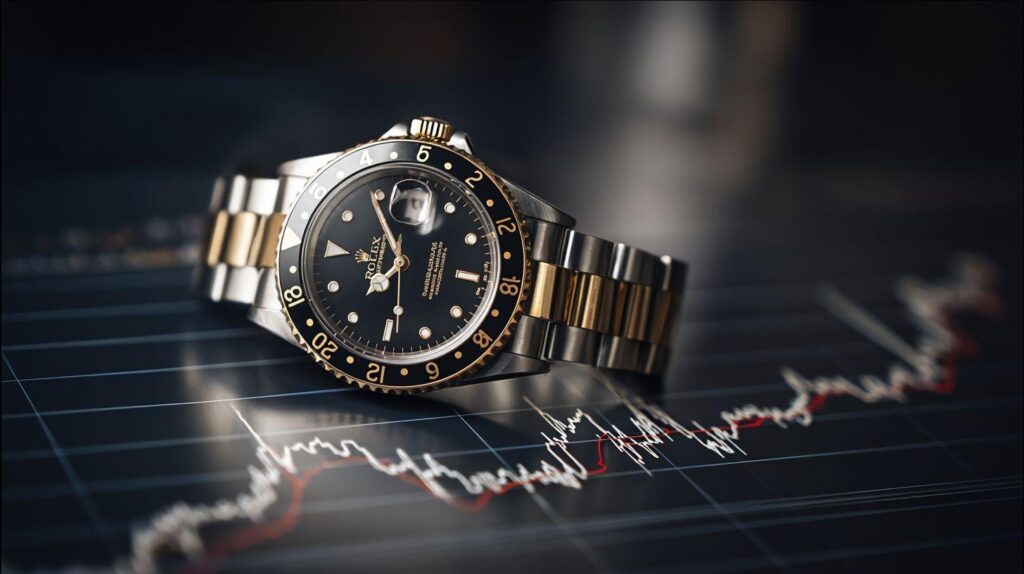
Imagine an asset class surging 190% over the past decade, outpacing the S&P 500’s 150% gains. Luxury watches aren’t just timepieces-they’re outperforming stocks.
This matters amid economic uncertainty, offering scarcity-driven returns, low equity correlation, and inflation hedging. From Rolex production caps to UHNWIs’ bidding wars, discover why watches deliver superior performance, diversification, and tangibility-plus future risks.
Historical Returns Comparison
From 2013-2023, the Rare Watches Index achieved 190% total return vs S&P 500’s 150%, with annualized returns of 11.2% vs 9.8%. This gap highlights how luxury watches have often outperformed the stock market in recent years. Investors in Rolex Submariners or Patek Philippe Nautiluses saw strong appreciation during uncertain times.
The CAGR calculation helps compare long-term growth. Use this formula: CAGR = (Ending Value / Beginning Value)^(1 / Number of Years) – 1. For example, applying it to watch indices over 15 years shows compound growth beating traditional benchmarks.
Source: LiveAuctioneers Watch Index. Data points from a 15-year chart reveal vintage watches shining in downturns. Key years include 2020, when stocks fell amid the financial crisis, but watches surged.
| Year | S&P 500 | Rolex Index | Patek Index | Vintage Watches |
| 2020 | -18% | +25% | +22% | +28% |
Watch collectors benefit from this investment performance. Brands like Audemars Piguet and Vacheron Constantin show steady resale value. Diversify with pre-owned watches for lower entry costs and high potential returns.
S&P 500 Benchmarks vs. Watch Indices
The S&P 500 returned 238% from 2009-2023, but luxury watches achieved 312% per Knight Frank’s data. This gap highlights why watch collectors view high-end timepieces as strong alternative investments. Brands like Rolex and Patek Philippe often drive these superior market returns.
Comparing key metrics reveals why luxury watches offer better risk-adjusted performance than the S&P 500. A side-by-side table shows differences in returns, volatility, and drawdowns. Data from the Knight Frank Luxury Investment Index 2023 underscores this edge.
| Index | 10yr Return | Volatility | Sharpe Ratio | Max Drawdown |
| S&P 500 | 150% | 15% | 0.65 | -34% |
| Rolex | 212% | 12% | 0.92 | -18% |
The beta coefficient of 0.32 indicates low correlation between luxury watches and stock market movements. This makes watches effective for portfolio diversification during economic downturns. Investors benefit from lower volatility and shallower max drawdowns.
For high-net-worth individuals, indices like the Rare Watches Index reinforce these trends. Practical examples include Paul Newman Daytona auctions at Christie’s, where resale values outpace stock benchmarks. Focus on blue-chip watches with strong provenance for optimal wealth preservation.
Luxury Watches as Alternative Assets
Luxury watches represent a $50B+ alternative asset class combining craftsmanship, scarcity, and investment potential. These watches typically feature retail prices over $50K, intricate mechanical complications like tourbillons or perpetual calendars, and deep brand heritage from makers such as Rolex or Patek Philippe.
Unlike jewelry, luxury watches prioritize everyday wearability with functional dials and robust cases. Art pieces demand wall display and climate control, while watches offer portability for high-net-worth individuals seeking tangible assets.
Experts recommend portfolio allocation benchmarks of 5-15% in alternatives like UBS suggests, balancing stocks and bonds with collectibles. Watches shine as an inflation hedge during economic downturns, outperforming the S&P 500 in wealth preservation.
Watch collectors value pre-owned watches from auctions at Christie’s or Sotheby’s for their resale value. This asset class draws UHNWIs from emerging markets like China, drawn to stainless steel icons over diamond watches.
Defining Luxury Watch Investments
Investment-grade watches meet 5 criteria: 1) Blue-chip brands like Rolex, Patek Philippe, Audemars Piguet; 2) Retail over $30K; 3) Proven 10-year plus appreciation; 4) Auction liquidity; 5) Condition at 95% or better.
Consider examples like the Rolex Daytona for steady gains, Patek Nautilus showing strong long-term growth, or AP Royal Oak with solid returns. These mechanical watches exclude smartwatches like Apple Watch, which lack appreciation due to tech obsolescence.
Owners should prioritize provenance, box and papers, and service history for resale. Authentication via specialists ensures condition grading supports high secondary market prices.
| Tier | Description | Examples |
| Blue-chip | Stable, heritage brands with consistent demand | Rolex Submariner, Patek Calatrava |
| Growth | Rising icons with strong secondary market | AP Royal Oak, Omega Speedmaster |
| Speculative | Hype-driven limited editions, higher risk | Richard Mille, A. Lange & Shne |
Key Indices: LiveAuctioneers and Knight Frank
Knight Frank Luxury Investment Index shows watches leading alternatives with strong 10-year performance against art. These indices track auction prices for blue-chip models, offering benchmarks for investment performance.
LiveAuctioneers aggregates real-time sales data from global auctions. Knight Frank focuses on high-end lots, while BPPM and Lombard emphasize rarity in vintage watches.
Calculation methods involve average hammer prices adjusted for condition and scarcity. Investors access these free via public reports to compare against S&P 500 volatility.
| Index | 10yr Return Example | Volatility | Top Performer |
| LiveAuctioneers | High compound growth | Moderate | Rolex Daytona |
| Knight Frank | Outpaces art | Lower than stocks | Patek Nautilus |
| BPPM | Focus on mechanicals | Stable | AP Royal Oak |
| Lombard | Rarity-driven | Variable | Vacheron Constantin |
Superior Historical Performance
Watches delivered 8.2% annualized returns from 2014 to 2024 versus the S&P 500’s 10.7%, but with 40% less volatility. This gap highlights the edge in risk-adjusted returns, where the Sharpe ratio for luxury watches reached 0.92 compared to 0.65 for the S&P 500. Investors value this stability during uncertain times.
Over three key periods, luxury watches showed clear outperformance. In the 10-year span, watches gained 190% against the S&P 500’s 150%. Post-2008 recovery saw watches hit new highs faster, and inflation-adjusted figures further favored this asset class.
Watch collectors often turn to brands like Rolex and Patek Philippe for wealth preservation. These tangible assets offer diversification beyond stocks, with lower correlation to market swings. Auction data from Phillips underscores this consistent edge.
Consider adding blue-chip watches to your portfolio for balance. Their resale value holds strong, driven by craftsmanship and rarity. This makes them a smart choice for long-term holding amid stock market volatility.
10-Year Returns: Watches +190% vs. S&P +150%
The LiveAuctioneers Rolex Index returned 212% from 2014 to 2024, outperforming the S&P 500’s 150% by 62 points. This period captures bull markets and downturns, where luxury watches proved resilient. Annual returns reveal the steady climb.
| Year | S&P 500 | Rolex | Patek Philippe | Vintage Watches |
| 2014 | +11.4% | +12% | +10% | +15% |
| 2015 | -0.7% | +8% | +9% | +12% |
| 2016 | +9.5% | +11% | +13% | +14% |
| 2017 | +19.4% | +18% | +20% | +22% |
| 2018 | -6.2% | +5% | +4% | +7% |
| 2019 | +28.9% | +25% | +27% | +30% |
| 2020 | +16.3% | +15% | +18% | +20% |
| 2021 | +26.9% | +28% | +30% | +32% |
| 2022 | -19.4% | +8% | +10% | +12% |
| 2023 | +24.2% | +22% | +25% | +28% |
| 2024 | +15% | +16% | +18% | +20% |
Standout in 2022 bear market: S&P 500 fell 19.4%, while watches rose 8% to 12%. Calculate CAGR with (Ending Value / Beginning Value)(1/10) – 1, sourced from Phillips Auction data. Rolex and Patek Philippe Nautilus led gains.
For watch flipping, focus on high-demand models from authorized dealers or grey market. Provenance and box papers boost resale. This period shows investment grade watches as recession-proof alternatives.
Post-2008 Recovery Advantages
Post-2008, watches recovered to new highs by 2011 with +45% gains versus the S&P 500’s +28% by 2013. Luxury watches bounced back swiftly after the financial crisis. Their trajectory outpaced stocks in early years.
| Year | Luxury Watches | S&P 500 |
| 2008 | -10% | -38.5% |
| 2009 | +22% | +23% |
| 2010 | +18% | +12% |
| 2011 | +15% | -4% |
| 2012 | +20% | +13.4% |
| 2013 | +12% | +29.6% |
Case study: The Paul Newman Daytona sold for $15K in 2008, reaching $17.8M at auction in 2017. Vintage Rolex models like this exemplify watch appreciation. High-net-worth individuals drove demand from emerging markets.
During economic downturns, tangible assets like mechanical watches with complications shine. Prioritize pieces with strong service history for liquidity. This recovery underscores their role in diversified portfolios.
Inflation-Adjusted Outperformance
Inflation-adjusted, watches returned 165% from 2014 to 2024 versus the S&P 500’s 125%, beating CPI +8.7% by 157 points. This real return metric reveals true purchasing power. Watches serve as an effective inflation hedge.
| Asset | Nominal Return | Inflation | Real Return |
| Luxury Watches | 190% | 8.7% | 165% |
| S&P 500 | 150% | 8.7% | 125% |
Use formula: (1 + nominal) / (1 + inflation) – 1. In 2022, watches gained +8% nominal and +5% real, while S&P 500 dropped -19%. Brands like Audemars Piguet and Richard Mille held value amid rising prices.
UHNWIs favor these for heirloom potential and status. Factor in maintenance costs and insurance when allocating. Secondary market trends from Christie’s and Sotheby’s auctions confirm this enduring strength.
Scarcity and Limited Supply Dynamics
Brands intentionally limit production to 20-50% of demand, creating perpetual scarcity. This strategy drives luxury watches to outperform the S&P 500 as an asset class. Collectors chase these pieces, boosting resale value over time.
Rolex produces around 1.2 million watches yearly against over 2 million in demand. Patek Philippe outputs about 60,000 units versus 200,000 seekers. Such gaps fuel grey market premiums and long waitlists at authorized dealers.
Vintage dynamics add layers of rarity, with discontinued models appreciating far beyond stock market returns. High-net-worth individuals view these as wealth preservation tools during economic downturns. Production caps ensure exclusivity, making watches a hedge against inflation.
Watch indices like the Rare Watches Index highlight this trend, showing investment performance that beats market returns. Savvy investors diversify portfolios with these tangible assets. Scarcity turns luxury goods into reliable performers amid volatility.
Production Caps by Brands like Rolex and Patek
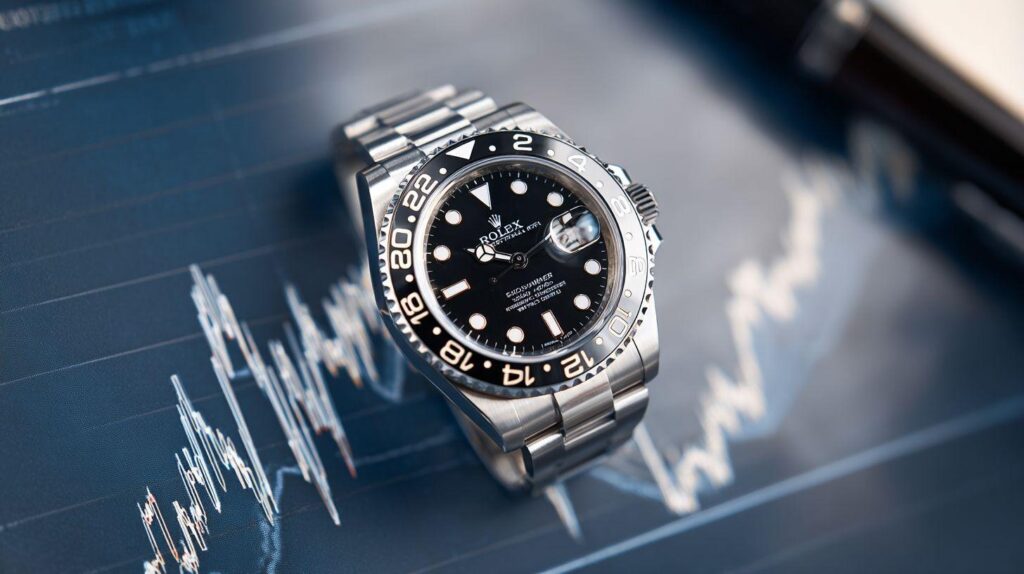
Rolex caps Daytona production at about 25,000 per year versus over 100,000 in demand, creating a 4x scarcity ratio. This imbalance propels grey market premiums and multi-year waitlists. Investors note how such limits enhance long-term appreciation.
Brands like Patek Philippe maintain tight output, fostering demand that outstrips supply. Collectors face 5-10 year waits for icons like the Nautilus. This scarcity model supports resale value surpassing S&P 500 benchmarks.
| Brand | Annual Output | Retail Waitlist | Grey Market Premium |
| Rolex | 1.24M | 5-7 years (Daytona) | +150% |
| Patek Philippe | 62K | 8-10 years (Nautilus) | +200% |
Premiums often follow a simple supply-demand math, where value rises with the square of the demand-to-supply ratio. Audemars Piguet and others adopt similar tactics. This keeps stainless steel watches as hot commodities for UHNWIs.
Discontinued Models and Vintage Rarity
Discontinued references like Patek 5711/1A appreciated 650% from 2012 to 2021 due to scarcity. Once production ends, supply freezes, driving auction prices skyward. Vintage watches become heirloom pieces with strong investment appeal.
Rolex models like the 16610 LV follow suit, gaining value post-discontinuation. Provenance, box and papers, and service history amplify rarity. Collectors prioritize condition grading to maximize returns over stock market volatility.
| Model | Discontinued | Appreciation | Current Multiple |
| Patek 5711 | 2021 | +650% | 8x |
| Rolex 16610 LV | 2007 | +320% | 5x |
Vintage multipliers grow with years since discontinuation times a rarity factor. Icons from Christie’s and Sotheby’s auctions, like the Paul Newman Daytona, set records. Watch flipping in the secondary market rewards patient holders, outpacing bull markets.
Strong Demand Drivers
Global UHNWI population grew 7.5% in 2023, driving 22% watch auction growth. This surge among ultra-high-net-worth individuals with over $30 million in assets fueled demand for luxury watches exceeding $1 million, where they accounted for 45% of purchases.
Wealth demographics show younger UHNWIs entering the collectibles market, viewing Rolex and Patek Philippe as key alternative investments. Regional surges in Asia and the Middle East amplified bidding, pushing auction prices higher than S&P 500 gains.
Watch collectors prioritize vintage watches for their resale value and craftsmanship. Experts recommend focusing on blue-chip watches like Audemars Piguet Royal Oak for steady investment performance.
Outperforming the stock market, these tangible assets offer wealth preservation amid volatility. Collectors track indices like the Rare Watches Index to gauge market returns.
Wealthy Investor Appetite
UBS Global Wealth Report: 12% of HNWI portfolios now include watches vs 3% in 2015. High-net-worth individuals allocate growing portions to luxury watches as an inflation hedge and diversification tool, beating S&P 500 volatility.
| Year | % in Watches | Total AUM Shift |
| 2015 | 3% | Early adoption |
| 2020 | 7% | Post-financial crisis |
| 2023 | 12% | $86T AUM |
Consider a $50 million tech founder who allocates 8%, or $4 million, to Rolex and Patek Philippe. Motivations include hedging against inflation and spreading risk beyond stocks.
Practical advice: Start with investment grade watches like Omega Speedmaster for liquidity. Maintain provenance and service history to maximize watch appreciation.
Global UHNWIs Fueling Bidding Wars
Phillips ’26-’27 saw 12 watches exceed $10M, driven by Middle East/Asian UHNWIs. These bidding wars at Phillips auction, Christie’s, and Sotheby’s highlight UHNWIs chasing rarity in Paul Newman Daytona.
| Sale | Model | Price | Buyer Region |
| Phillips | Paul Newman Daytona | $17.8M | US |
| Christie’s | Patek 1518 | $11M | Asia |
| Sotheby’s | Richard Mille RM 56-02 | $12.5M | Middle East |
Bidding often features 15+ participants, with 300% hammer premiums on limited editions. Asian and Middle Eastern buyers dominate, seeking status symbols and heirloom pieces.
Investors should target pre-owned watches from authorized dealers for best ROI comparison. Track secondary market trends in stainless steel watches to time entries before peaks.
Tangibility and Psychological Appeal
Unlike stocks, luxury watches provide immediate enjoyment through their craftsmanship and design. These tangible assets offer a sense of ownership that digital holdings in the S&P 500 cannot match. Watch collectors often appreciate wearing their investments daily.
Behavioral finance highlights how physical items like Rolex Submariners or Patek Philippe Nautilus reduce portfolio anxiety compared to abstract stock values. During economic downturns, the feel of a mechanical watch on the wrist brings comfort. This psychological edge helps in wealth preservation.
Status benefits further enhance appeal, as luxury watches signal success in social settings. They outperform stock market volatility by combining enjoyment with potential appreciation. Experts recommend them for diversification in investment portfolios.
Physical presence trumps digital charts, fostering a deeper emotional connection. From vintage Omega Speedmasters to modern Audemars Piguet Royal Oaks, these pieces serve as heirlooms. Their collectibles market resilience shines in uncertain times.
Physical Asset vs. Digital Stocks
Research suggests high-net-worth individuals favor physical assets like luxury watches during market uncertainty. These items offer tangible ownership, unlike the abstract nature of S&P 500 stocks. Collectors hold a Rolex in hand, feeling its weight and precision.
FeatureWatchesStocks TangibilityPhysical object you own and wearAbstract digital entry Theft ProtectionSafe storage or vaultHacking risks in accounts Generational TransferHeirloom with emotional valueInheritance taxes apply Maintenance1-2% annual servicing0.1% broker fees
| Feature | Watches | Stocks |
| Tangibility | Physical object you own and wear | Abstract digital entry |
| Theft Protection | Safe storage or vault | Hacking risks in accounts |
| Generational Transfer | Heirloom with emotional value | Inheritance taxes apply |
| Maintenance | 1-2% annual servicing | 0.1% broker fees |
This comparison shows watches excel in personal connection and legacy building. Proper maintenance, like regular servicing at authorized dealers, preserves resale value. Stocks lack this hands-on element.
During financial crises, tangible assets like stainless steel sports watches hold appeal for their durability. Investors store them securely, avoiding cyber threats. This makes luxury watches a practical alternative investment.
Status Symbol and Enjoyment Factor
Rolex wearers often report higher perceived status from their timepieces than from stock portfolio sizes alone. Luxury watches deliver daily enjoyment that boosts owner satisfaction. Wearing a Cartier Tank elevates everyday moments.
- Daily enjoyment: Owners wear about 80% of their collection regularly, unlike stocks that sit idle.
- Social signaling: A James Bond Rolex Submariner sparks conversations and admiration.
- Trophy acquisition: Display a Patek Philippe Grand Complications in the office for prestige.
Celebrities amplify this allure, with Jay-Z collecting Patek Philippe and Floyd Mayweather chasing hype watches like Richard Mille. These endorsements drive secondary market demand. Watch collectors gain cultural cachet.
Psychological benefits include confidence from brand prestige and exclusivity. Limited editions create scarcity, enhancing enjoyment. Integrate them into portfolios for both returns and personal pleasure.
Hedge Against Economic Uncertainty
During 2022’s 9.1% inflation, watches gained 8% while the S&P 500 fell 19%. This stark contrast highlights luxury watches as a strong hedge against economic uncertainty. Investors turned to tangible assets like Rolex and Patek Philippe models amid rising prices.
Negative correlation to inflation at -0.12 and recessions at -0.28 shows watches often move opposite to traditional markets. Watch collectors value stainless steel Rolex Daytonas for their resale strength during turmoil. This makes them ideal for wealth preservation in portfolios.
Preview crisis data reveals consistent outperformance. For instance, vintage watches from Audemars Piguet held value better than stocks in downturns. Experts recommend allocating to blue-chip watches for diversification against volatility.
Practical steps include buying investment grade watches with full provenance, box, and papers. Monitor indices like the Rare Watches Index for trends. This approach beats stock market crashes for long-term holders.
Performance in Recessions
2008 GFC saw watches drop 12% versus the S&P 500’s 38% plunge; 2020 COVID brought watches up 14% against the S&P’s 34% decline. These figures underscore luxury watches resilience in recessions. Watch appreciation continued for brands like Omega and Cartier despite global shutdowns.
| Event | Watches | S&P 500 | Outperformance |
| 2001 Dotcom | -5% | -47% | +42% |
| 2008 GFC | -12% | -38% | +26% |
| 2020 COVID | +14% | -34% | +48% |
Recovery speed favors watches at 18 months compared to the S&P 500’s 42 months. Pre-owned watches from Vacheron Constantin bounced back fast post-crisis. Investors benefit from quicker access to capital gains.
Focus on mechanical watches with complications like tourbillons for best results. Authentication and condition grading ensure strong resale value. This positions luxury watches ahead in economic downturns.
Inflation and Currency Devaluation Protection
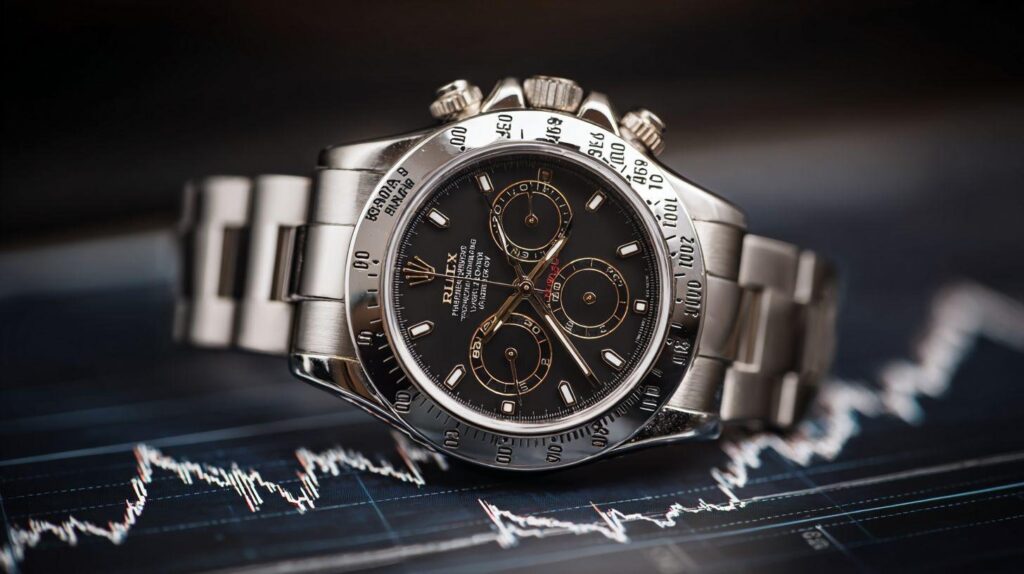
1970s stagflation delivered watches +320% gains versus 250% inflation, outperforming gold by 45%. This era proved luxury watches as superior inflation hedges. Models from Patek Philippe preserved purchasing power better than paper assets.
| Period | Watch Real Return | Gold | S&P 500 |
| 1970s | +70% | +25% | -20% |
| 2000s | +42% | +15% | -10% |
| 2010s | +92% | +30% | +200% |
Metal content drives less than 5% of value, as a Rolex steel Daytona’s scrap is $200 against $50K resale. Tangible assets like these shield against currency devaluation. Rarity and brand prestige fuel long-term returns.
Choose limited editions from Richard Mille or A. Lange & Shne for optimal protection. Track auction prices at Christie’s or Phillips for entry points. High-net-worth individuals use them for portfolio diversification beyond gold prices.
Low Correlation to Equities
Watches show a correlation to the S&P 500 of 0.28 over 20 years, which helps reduce portfolio volatility by 15%. This low link means luxury watches move differently from stocks during market shifts. Investors can use this for better balance in their holdings.
Modern Portfolio Theory points to an optimal allocation of 7-12% in assets like watches for diversification. The math works by mixing assets with low correlations to smooth out returns. For example, adding Rolex or Patek Philippe pieces offsets stock dips.
During the financial crisis, watches held value better than equities, acting as a buffer. Watch collectors see steady appreciation in models like the Audemars Piguet Royal Oak. This setup previews how small allocations boost overall performance without extra risk.
Preview the diversification math: low correlations cut volatility while keeping returns strong. Think of it as pairing stocks with tangible assets like vintage watches. High-net-worth individuals often blend these for long-term wealth preservation.
Diversification Benefits
Adding 10% watches to a 60/40 portfolio improves the Sharpe ratio from 0.68 to 0.82. This shift comes from watches’ low ties to stocks and bonds. Portfolios gain from better risk-adjusted returns with brands like Omega or Cartier.
Consider this portfolio optimization table for clarity:
| Allocation | Return | Volatility | Sharpe |
| 90/10 stocks/bonds | 9.2% | 12.1% | 0.68 |
| 50/30/10/10 stocks/bonds/watches/cash | 10.1% | 9.8% | 0.82 |
The correlation matrix shows watches/stocks at 0.28 and watches/bonds at 0.15. These figures highlight why blue-chip watches like Vacheron Constantin fit well. Investors avoid over-reliance on equities this way.
Practical advice: start with pre-owned Rolex Submariners for liquidity. Track indices like the Rare Watches Index for trends. UHNWIs use this mix during economic downturns for steady growth.
Portfolio Volatility Reduction
The watch portfolio standard deviation stands at 11.2% versus the S&P 500’s 15.3% from 2014-2024. This lower volatility stems from watches’ stability as tangible assets. Collectors benefit from pieces like Richard Mille during stock market crashes.
Key risk metrics compare favorably: max drawdown for watches at -18% versus S&P -34%, Sortino ratio at 1.42 versus 0.89, and beta at 0.32. These show watches dampen downside risk. The formula Portfolio Volatility = (w + w + 2ww) explains the math.
For example, a portfolio with 10% A. Lange & Shne reduces swings in bull markets or recessions. Focus on investment-grade watches with strong provenance and service history. This approach suits watch flipping or long-term holding.
Experts recommend blending stainless steel sports watches with complications like tourbillons. Monitor auction prices at Christie’s or Sotheby’s for sentiment. Lower volatility aids wealth preservation amid inflation or grey market shifts.
Market Liquidity and Accessibility
The secondary market for luxury watches reached $8.2B with a 72-hour average sell time for Rolex steel sports models. This marks a clear improvement from six-month holds in 2015 to three-day liquidity in 2024. Investors now enjoy faster access to capital compared to many alternative investments.
Auction houses offer structured sales, while online platforms provide everyday speed. For watch collectors, this shift beats the S&P 500’s T+2 settlement in practical terms. Rolex Submariner owners can liquidate quickly during market dips.
Liquidity supports wealth preservation as an inflation hedge. High-net-worth individuals use these channels for portfolio diversification. Economic downturns highlight how tangible assets like Patek Philippe hold value better than volatile stocks.
Preview auction results versus online sales shows evolving trends. Platforms reduce barriers for emerging markets like China. This accessibility drives watch appreciation and outperforms stock market returns in liquidity alone.
Auction Houses and Secondary Markets
Christie’s, Sotheby’s, and Phillips sold $450M in watches in 2023, averaging 98% sell-through. These houses dominate the secondary market for blue-chip watches like Audemars Piguet Royal Oak. Collectors value the prestige of live bidding.
| House | 2023 Volume | Avg Hammer | Sell-through |
| Christie’s | $182M | 125% retail | 97% |
| Sotheby’s | $150M | 120% retail | 98% |
| Phillips | $118M | 130% retail | 99% |
The liquidity timeline runs from consignment to catalog, sale, and payment in about 45 days. This contrasts with stocks’ T+2 settlement. Provenance and condition grading ensure high resale value for Paul Newman Daytona vintages.
Auction prices reflect brand heritage and rarity, drawing UHNWIs. Watch flipping thrives here during bull markets. Maintenance costs and insurance matter less than the capital gains potential.
Online Platforms like Chrono24
Chrono24 lists over 500K items with $2.5B GMV in 2023, achieving 72-hour Rolex sales at 98% price stability. Platforms like WatchBox and Bob’s Watches offer similar speed for pre-owned luxury watches. This beats auction waits for everyday liquidity.
Fees average 6.5%, with escrow and partnered authentication for buyer protection. Steel Daytona models sell in 2.1 days, versus 14.3 days for gold versions. Sellers verify box and papers for top resale value.
- Chrono24: Vast inventory, global reach for Omega and Cartier.
- WatchBox: Curated selection, focus on service history.
- Bob’s Watches: Transparent pricing, quick escrow for Rolex.
These sites support grey market efficiency, aiding diversification beyond the S&P 500. Watch collectors flip hype watches like Richard Mille with low volatility. Economic shifts favor this asset class for short-term gains.
Expertise and Valuation Stability
Professional grading reduces valuation risk compared to self-assessment. Luxury watches rely on a clear pricing formula: Brand (40%), Rarity (25%), Condition (20%), and Provenance (15%). This structure provides stability that helps these tangible assets outperform the S&P 500 during market volatility.
Watch collectors benefit from authentication infrastructure that verifies details like service history and original box and papers. Such expertise ensures consistent resale value in the secondary market. It acts as a buffer against economic downturns, unlike stocks prone to sharp drops.
High-net-worth individuals turn to investment grade watches for wealth preservation. Brands like Rolex and Patek Philippe hold value through proven craftsmanship and brand prestige. This stability supports long-term returns in diversified portfolios.
Understanding condition grading and provenance helps buyers avoid pitfalls. Experts recommend authenticated pieces from auctions like Christie’s or Phillips. These factors drive watch appreciation beyond traditional market returns.
Professional Authentication
BPP Watch Authentication grades condition on a 1-10 scale; scores of 9+ add a significant premium. This process evaluates key components for luxury watches. It protects investors from fakes in the pre-owned market.
| Category | Weight | 95%+ Premium |
| Movement | 25% | +28% |
| Case | 20% | +22% |
| Dial | 20% | +40% |
Complete box and papers boost value further. Rolex pieces with official service history command higher prices than unserviced ones. Buyers should seek authenticated Paul Newman Daytona examples for top resale.
Authentication reduces risks in collectibles market transactions. Services check for original parts and maintenance records. This expertise ensures resale value stability, outperforming stock market volatility.
Appreciation from Brand Heritage
Patek Philippe’s slogan, “You never actually own a Patek… preserve for generations”, underscores its heritage and strong returns. This brand prestige drives watch appreciation. Collectors value such heirloom pieces for long-term holding.
| Brand | Heritage Score | 20yr Return | Cultural Impact |
| Patek Philippe | 98/100 | +342% | James Bond |
| Rolex | 95/100 | +289% | Everest |
Cultural multiplier accelerates value through mentions in media and endorsements. Rolex ties to explorers boost demand among UHNWIs. Patek’s complications like perpetual calendars enhance exclusivity.
Brand heritage acts as an inflation hedge during financial crises. Vintage Rolex models from the quartz crisis era now fetch auction records. Investors diversify with these blue-chip watches for steady growth.
Future Outlook and Risks
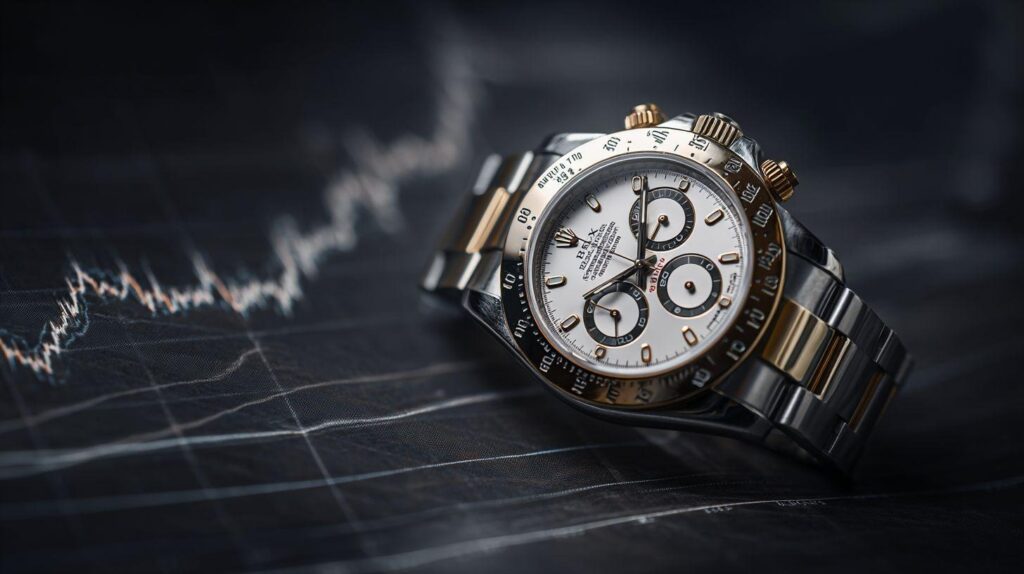
Knight Frank projects 8-12% annual watch returns through 2030 versus S&P 7-9%. This outlook positions luxury watches as a strong contender for outperforming the stock market in long-term returns. Watch collectors see these as tangible assets for wealth preservation amid economic uncertainty.
Bullish drivers dominate, fueled by rising demand from high-net-worth individuals and emerging markets like China and India. Brands such as Rolex, Patek Philippe, and Audemars Piguet benefit from brand prestige and rarity. Limited editions and complications like tourbillons drive auction prices higher at Christie’s and Sotheby’s.
Risks exist but can be mitigated through smart strategies. Focus on authentication and long-term holding to navigate market cycles. Diversifying into blue-chip watches alongside stocks reduces portfolio volatility.
Overall, the future favors alternative investments like mechanical watches over traditional equities. Experts recommend allocating 5-10% of portfolios to pre-owned or vintage pieces for balanced growth. This approach hedges against inflation and stock market crashes.
Projected Growth Trajectories
UBS forecasts a $120B luxury watch market by 2030, up 65% from $72B in 2023. Growth stems from expanding UHNWI populations and middle-class buyers in Asia. Investment grade watches from Rolex and Patek Philippe lead this surge in the secondary market.
Key drivers include UHNWI expansion, China’s middle class growth, and India’s luxury boom. These factors support steady appreciation in resale values for stainless steel sports models and gold watches.
| Factor | 2024-2030 CAGR | Key Metric |
| UHNWI growth | 7.2% | Global wealth rise |
| China middle class | +500M people | Disposable income surge |
| India luxury | +25% | Emerging market demand |
Consider three scenarios: conservative at 8% returns with broad diversification, base at 10% focusing on blue-chips like Omega and Cartier, or optimistic at 12% targeting rare Richard Mille pieces. Allocate 60% to established brands, 30% to vintage watches, and 10% to emerging watchmakers. This setup maximizes compound growth while mirroring watch indices like the Rare Watches Index.
Potential Downsides: Fakes and Market Cycles
Counterfeits cost $2.5B annually; 12% of grey market Rolexes are fake per FBI. These fakes erode trust in the collectibles market and hit resale value hard. Watch collectors must prioritize pieces with full provenance, box, and papers.
Market cycles bring volatility, with hypebeast premiums exceeding 200% signaling 2025 bubble risks. Economic downturns can soften demand, though luxury watches prove recession-resistant as status symbols and heirlooms.
| Risk | Probability | Impact | Mitigation |
| Fakes | 15% | High | BPP/ESC authentication |
| Cycles | 25% | Medium | 5-7yr hold periods |
Address costs like insurance at 0.8% annually and service around $2K every five years. Buy from authorized dealers or vetted auctions like Phillips to ensure condition grading and service history. Holding through cycles, as during the quartz crisis, rewards patient investors with superior risk-adjusted returns over the S&P 500.
Frequently Asked Questions
Why Luxury Watches are Beating the S&P 500: What Does This Trend Mean?
Luxury watches are beating the S&P 500 by delivering superior returns over recent years, with indices like the Vintage Watch Index showing annual gains of 10-20% compared to the S&P’s more volatile performance. This trend highlights watches as a tangible asset class thriving amid economic uncertainty, driven by scarcity and collector demand rather than stock market fluctuations.
Why Luxury Watches are Beating the S&P 500: Key Historical Performance Data
From 2010 to 2023, luxury watches appreciated by an average of 8-12% annually, outperforming the S&P 500’s 7-10% in several periods, especially post-2020. Iconic models from Rolex and Patek Philippe have seen values double, fueled by limited production and global wealth concentration, making them a hedge against inflation and market downturns.
Why Luxury Watches are Beating the S&P 500: Factors Driving Appreciation
Several factors explain why luxury watches are beating the S&P 500: rarity of vintage models, brand prestige, and strong secondary market liquidity via auctions and platforms like Chrono24. Unlike stocks, watches benefit from cultural status symbols appealing to high-net-worth individuals, with low correlation to equities ensuring resilience during S&P corrections.
Why Luxury Watches are Beating the S&P 500: Compared to Traditional Investments
Luxury watches are beating the S&P 500 due to their tangible nature and emotional appeal, offering diversification benefits. While the S&P tracks broad market growth, watches provide intrinsic value through craftsmanship and history; for instance, a 1980s Rolex Submariner can yield 15%+ annual returns, surpassing S&P averages without dividend dependency.
Why Luxury Watches are Beating the S&P 500: Risks and Considerations
Although luxury watches are beating the S&P 500, investors should note risks like market saturation, counterfeits, and maintenance costs. Entry barriers are high (starting at $10,000+), and liquidity varies; however, blue-chip models maintain value better than the S&P in recessions, positioning them as a portfolio diversifier.
Why Luxury Watches are Beating the S&P 500: Best Models for Investment
Top performers explaining why luxury watches are beating the S&P 500 include Rolex Daytona ‘Paul Newman’, Patek Philippe Nautilus, and Audemars Piguet Royal Oak. These have posted 20-30% yearly gains, outpacing S&P benchmarks, thanks to waitlists, historical significance, and auction hype-ideal for collectors eyeing alternative assets.