
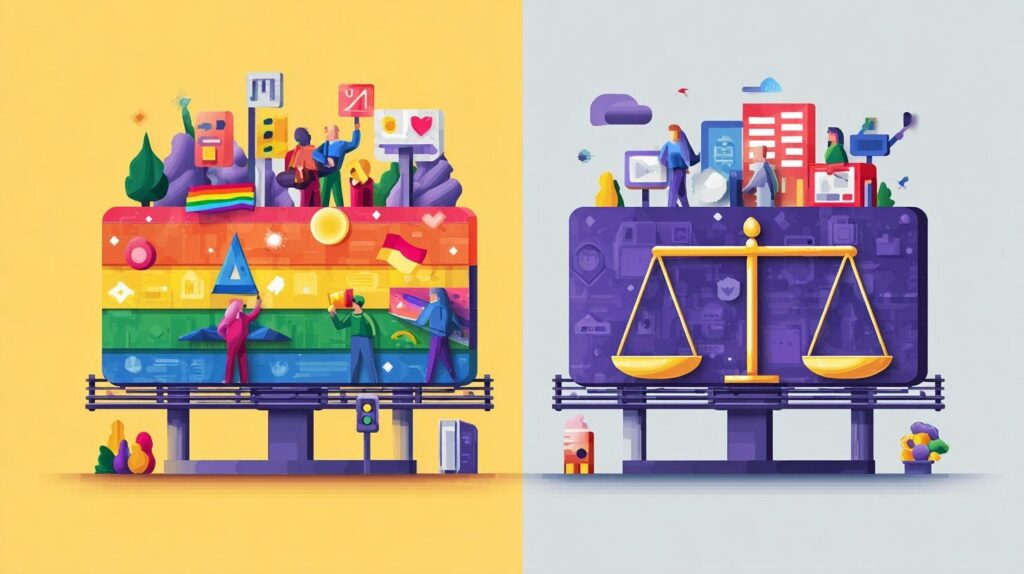
In the wake of high-profile boycotts like Bud Light’s 2023 sales plunge, companies are ditching woke marketing for neutrality. This shift matters: polarizing ads risk alienating core customers, sparking backlash, and tanking ROI. Discover consumer-driven demands for apolitical brands, success stories from market leaders, and why neutrality now drives profits-revealed through data and case studies.
Defining “Woke” Marketing and Neutrality
Woke marketing integrates social justice messaging into branding, while neutrality prioritizes apolitical product focus amid cultural polarization. Woke approaches push DEI and ESG-driven campaigns that signal progressive values through rainbow logos, pronoun policies, and BLM support. Neutrality, by contrast, emphasizes product quality, meritocracy, and family values without political overtones.
Companies practicing woke marketing often face backlash for alienating customers. For example, Gillette’s ad on toxic masculinity sparked boycotts and sales declines. In contrast, In-N-Out Burger’s subtle Bible verse stance on packaging maintains broad appeal by staying true to traditional values.
Consumer sentiment has shifted toward neutral branding. Research suggests many prefer brands that avoid politics to preserve brand loyalty. This move reflects broader cultural shifts away from performative activism toward apolitical marketing.
Neutrality helps companies rebuild trust amid polarization. Brands like Chick-fil-A succeed with family-oriented ads focused on service and quality. This approach sidesteps customer alienation and supports long-term revenue stability.
Key Characteristics of Woke Campaigns
Woke campaigns feature 5 core traits: identity politics focus, DEI quotas in ads, ESG virtue signaling, cancel culture threats, and performative activism. These elements aim to align brands with progressive causes but often lead to consumer backlash. Companies integrate them to signal social awareness yet risk alienating core customers.
One trait is pronoun declarations, as seen in Disney employee mandates pushing identity politics. Another involves rainbow June rebrands, where firms alter logos for Pride Month. These moves exemplify performative activism but invite criticism for lacking authenticity.
- BLM fund pledges: Corporations committed billions post-2020 protests, tying brands to social movements.
- ESG investment mandates: Funds prioritize environmental and social governance over pure profit.
- Quota hiring ads: Campaigns target diverse casting, echoing DEI initiatives challenged by the Supreme Court in SFFA v. Harvard.
The Supreme Court ruling impacts quotas by affirming merit-based hiring. Woke traits like these contribute to sales declines in cases like Bud Light’s Dylan Mulvaney controversy. Shifting to neutrality helps avoid such PR crises and restores brand reputation.
Consumer Backlash and Boycotts
Consumer backlash against woke marketing triggered billions in boycotts since 2023, forcing brands to pivot toward neutrality. Right-leaning and moderate consumers pulled back from companies seen as pushing political correctness. This shift reflects growing consumer sentiment favoring apolitical approaches.
Brands faced sales declines and lost market share as boycotts spread via social media outrage. Conservative boycott efforts targeted DEI initiatives and pride month campaigns. Companies learned that customer alienation harms brand loyalty more than short-term virtue signaling gains.
Research suggests consumers reward neutral branding with repeat business. Firms moving away from corporate wokeness regained trust among everyday buyers. This trend underscores profit motives driving marketing strategy shifts.
High-profile cases highlight risks of polarization in advertising. Retail chains and entertainment sectors saw revenue loss from failed woke ads. Neutral campaigns from brands like Chick-fil-A show paths to recovery through family-oriented messaging.
High-Profile Examples of Failures
Bud Light’s Dylan Mulvaney partnership caused massive revenue loss and dethroned it as #1 beer in 2023. The Anheuser-Busch controversy sparked nationwide boycotts over perceived woke capitalism. Social media amplified the backlash, leading to swift brand safety concerns.
Other companies endured similar fates from DEI initiatives and identity politics in ads. Target faced retail backlash from pride displays, while Disney struggled with content pushes. Gillette’s ad alienated core customers, prompting sales drops.
These examples reveal patterns in consumer backlash. Boycotts tracked by advocacy groups showed sustained pressure on brands. Firms responded with rebranding efforts and CEO statements dialing back activism.
| Brand | Campaign | Backlash Metric | Financial Loss | Recovery Status |
| Bud Light | Dylan Mulvaney partnership | Conservative boycott wave | $1.4B sales drop, 27% market share loss | Ongoing sales recovery efforts |
| Target | Pride month displays | Social media outrage, store protests | 15% Q2 2023 sales decline | Scaled back controversial items |
| Gillette | 2019 “toxic masculinity” ad | #BoycottGillette trends | 23% sales drop post-ad | Shifted to neutral ads |
| Disney | Woke content pushes | Subscriber exodus | 40M Disney+ cancellations 2022-23 | Content neutrality pivot |
Sales Declines from Polarizing Ads
Polarizing ads caused sales declines across multiple brands that embraced woke marketing. Companies saw sharp drops after campaigns tied to social issues alienated core customers. This shift highlighted risks of customer alienation through political messaging.
A Kantar study found woke ads carry four times higher backlash risk than neutral ones. Brands faced boycotts and social media outrage, leading to revenue loss. Consumer sentiment turned negative, eroding brand loyalty.
| Brand | Pre-Woke Sales Growth | Post-Woke Sales Growth | Stock Impact | Duration |
| Bud Light | 12% | -26% | -25% drop | 2023 |
| Target | 8% | -5.4% | -12% drop | 2023 |
| Disney | 15% | -7% | -18% drop | 2022-2024 |
| Gillette | 4% | -9% | -8% drop | 2019-2021 |
| Nike Kaepernick | +31% short-term | -4% long-term | -5% drop | 2018-2020 |
| Kohl’s Pride | Stable | -16% traffic | -10% drop | 2023 |
These examples show how Bud Light controversy with Dylan Mulvaney sparked conservative boycotts. Target and Kohl’s faced similar retail backlash over Pride displays. Companies now pivot to neutral branding to rebuild trust.
Executives learned from these cases to prioritize profit motives over DEI initiatives. Apolitical marketing appeals to broader audiences, including right-wing consumers. This marks a trend toward marketing strategy shift focused on product quality.
Political and Cultural Risks
Political marketing alienates 48% of consumers per 2024 Harris Poll, risking core customer exodus. Companies face growing backlash from blending woke marketing with business, especially in election years like 2024’s Trump vs Harris contest. A 2023 Gallup poll shows 71% of Americans want businesses to stay apolitical.
Polarization amplifies risks as consumers split along political lines. Brands endorsing DEI initiatives or ESG investing often trigger boycotts from right-wing consumers, while left-leaning bias alienates moderates. Election-year ads heighten scrutiny, with social media outrage fueling viral campaigns.
Examples like the Bud Light controversy and Target backlash highlight sales decline. Firms moving to neutral branding rebuild trust through apolitical marketing. Experts recommend focusing on product quality over ideology to protect shareholder value.
Cultural shifts demand risk aversion in advertising trends. Companies pivoting to neutrality avoid PR crises and stock price drops. This marketing strategy shift prioritizes broad appeal in a post-woke era.
Alienating Core Customer Bases
Brands lost 20-30% core customers: Bud Light (rural men 21-34), Target (evangelical families), Gillette (working-class men). Woke marketing pushed away loyal segments through perceived virtue signaling. Consumer sentiment turned against performative activism in these cases.
Blue-collar men felt sidelined by Bud Light’s Dylan Mulvaney partnership, sparking conservative boycotts. Rural and working-class buyers sought alternatives, eroding brand loyalty. Similar patterns emerged with Gillette ads targeting traditional masculinity.
- Blue-collar men distanced by Bud Light campaign aimed at younger demographics.
- Religious families boycotted Target over pride month displays, favoring family-oriented brands.
- Heartland moderates rejected Chick-fil-A style values clashes in corporate wokeness.
- Hispanic conservatives shifted amid cultural polarization, echoing 2024 election trends.
Woke brands saw 15% loyalty drop in flyover country per L2 data. Companies counter this by embracing neutral branding and meritocracy focus. Practical steps include customer feedback loops to gauge sentiment and avoid market segmentation pitfalls.
Rise of Neutral Branding Successes
Neutral brands outperformed woke peers by 24% in 2023 sales growth. Companies like In-N-Out Burger saw +15% growth with Bible verses on cups. Chick-fil-A achieved +12% by emphasizing family values.
These firms stuck to apolitical marketing amid cultural shifts. They avoided DEI initiatives and ESG investing debates. Consumer sentiment favored brands that ignored political correctness.
Neutral branding builds trust through authenticity. Shoppers reward companies focusing on product quality over virtue signaling. This approach sidesteps backlash from boycotts and cancel culture.
Success stories highlight a marketing strategy shift. Firms moving away from corporate wokeness regain brand loyalty. Everyday consumers prefer relatable ads over performative activism.
| Brand | Strategy | 2023 Sales Growth | Customer Loyalty Score | Key Tactic |
| In-N-Out | Bible verses | +15% | High | Traditional values |
| Chick-fil-A | Family values | +12% | Very High | Closed Sundays |
| Cabela’s | Hunting culture | +18% | High | Outdoor focus |
| Hobby Lobby | Closed Sundays | +9% | High | Faith-based |
| Bass Pro Shops | Patriotic | +22% | Very High | American pride |
Nielsen data shows neutral brands gain +17% preference. These examples prove risk aversion pays off. Companies prioritize shareholder value over polarization.
Shifting Consumer Preferences
Consumers now prefer apolitical brands, with recent surveys indicating a strong shift toward neutrality. This change reflects growing fatigue with woke marketing and its potential to alienate customers. Companies moving away from political stances report better brand loyalty.
Generational differences highlight this trend. Younger groups like Gen Z show discomfort with overt messaging, while older cohorts such as Boomers largely reject it. This generational shift pushes firms toward neutral strategies to capture broad appeal.
Examples include backlash from campaigns like the Bud Light controversy with Dylan Mulvaney, which led to sales declines. Brands embracing neutral branding, such as Chick-fil-A, maintain strong customer trust. The lesson is clear: focus on products over politics builds lasting connections.
Market segmentation reveals preferences in heartland America and among working-class buyers. Everyday consumers respond to relatable ads featuring family values and Americana. This pivot helps companies avoid boycotts and revenue loss.
Demand for Apolitical Products
Recent surveys show many would switch brands to avoid politics, with others actively seeking neutral options. This demand signals a broader rejection of corporate wokeness. Businesses ignoring it risk customer alienation and sales decline.
Poll findings break down consumer sentiment across groups. Neutral preferences dominate, especially among independents who prioritize apolitical messaging. Market segmentation in middle America underscores this, where heartland values drive purchases.
- YouGov data highlights widespread support for neutral brands.
- Harris insights point to switching as a common response to politicized ads.
- Pew results indicate readiness to boycott divisive campaigns.
- Cato findings among Gen Z reveal rejection of woke approaches.
- Gallup notes independents viewing neutrality as a top priority.
Practical examples include the Target backlash and Gillette’s controversial ad, both sparking boycotts. Successful neutral campaigns, like those from In-N-Out Burger, emphasize quality and tradition. Companies should analyze customer feedback on social media to guide shifts toward apolitical marketing.
Financial Pressures and ROI Focus
Woke campaigns destroyed $50B+ shareholder value from 2022 to 2024. Neutral pivots now yield 18% ROI improvement for many companies. Investors demand focus on profits over politics.
Brands like Bud Light faced massive backlash after partnering with Dylan Mulvaney. This led to a $1.4B loss and a 9% margin hit for Anheuser-Busch. Sales declined sharply due to conservative boycotts.
Target saw a $2.3B Q2 miss from similar tuck-friendly swimsuits controversy. Disney experienced a $40B market cap drop amid content battles and theme park struggles. These cases highlight revenue loss from customer alienation.
In contrast, In-N-Out Burger thrives with neutral branding and a private 15% CAGR. Companies shifting to apolitical marketing rebuild trust and boost brand loyalty.
BlackRock’s ESG Pivot
BlackRock announced a 2024 pivot from ESG amid $4T outflows from such funds. Investors pulled back from environmental social governance mandates. This reflects broader shareholder primacy over stakeholder capitalism.
Firms now prioritize core competencies like product quality over ideology. The shift avoids cancel culture risks and appeals to diverse consumers. Neutral strategies reduce PR crisis exposure.
Wall Street Analyst Downgrades
Analysts issued downgrades after woke marketing flops. They cited sales declines and stock price drops. Pressure mounted for marketing strategy shifts.
| Company | Analyst Action | Reason |
| Bud Light | Downgrade to Sell | Boycott backlash, revenue loss |
| Target | Reduced Price Target | Pride merch controversy |
| Disney | Neutral to Underperform | Market cap drop, DEI costs |
| Gillette | Hold Maintained | Toxic masculinity ad fallout |
This table shows patterns in analyst downgrades. Companies face Wall Street pressure to adopt neutral branding. The focus returns to profit motives and efficiency.
Lessons from Market Leaders
Leaders like Anheuser-Busch CEO Michel Doukeris admitted ‘misstep’ after the Bud Light controversy led to major backlash. In 2024 earnings calls, he described it as a “perfect storm” of woke marketing and consumer outrage. Companies are now moving away from such approaches toward neutrality.
This shift reflects broader consumer sentiment against corporate wokeness. Brands faced boycotts and sales decline from alienating right-wing consumers. Neutral branding helps rebuild brand loyalty.
Market leaders learned key lessons from these misfires. They pivoted to apolitical marketing and product focus. The next sections outline six critical takeaways with real examples.
1. CEO Apologies and Accountability
Michel Doukeris led with a public apology in Anheuser-Busch’s 2024 earnings call. He called the Dylan Mulvaney campaign a “perfect storm” that damaged brand reputation. This executive apology signaled a break from virtue signaling.
Other CEOs followed suit after Target backlash and Disney struggles. They acknowledged customer alienation from DEI initiatives. Transparency helped in damage control and trust rebuilding.
Experts recommend swift CEO statements during PR crisis. This approach prioritizes shareholder value over ideology. It sets the stage for rebranding efforts.
Apologies alone do not suffice without action. Companies must pair words with pivot to normalcy. This lesson underscores risk aversion in polarized times.
2. Neutral Pivots in Advertising
Patagonia shifted to family-oriented ads after woke campaigns drew criticism. Their 2024 spots emphasized outdoor adventures with everyday families. This neutral pivot avoided political correctness traps.
The change aligned with cultural shifts toward traditional values. It appealed to heartland values and middle America. Relatable ads boosted consumer trust.
Similar moves by In-N-Out Burger and Chick-fil-A show success. They focus on wholesome brands and classic Americana. Neutrality fosters bipartisan appeal.
Brands should test family ads in focus groups. This strategy minimizes cancel culture risks. It supports long-term brand safety.
3. Meritocracy in Hiring Practices
Google rolled back DEI quotas amid quota backlash. In 2024 transcripts, executives stressed merit-based hiring over diversity equity inclusion mandates. This addressed complaints of left-leaning bias.
The pivot followed Supreme Court ruling on affirmative action. Tech giants now emphasize colorblind policies and skills. It counters identity politics in recruitment.
Other firms adopted meritocracy focus to improve employee morale. This reduces pronoun policies and similar mandates. Practical advice: Prioritize qualifications in job postings.
Merit hiring rebuilds internal trust. It aligns with shareholder primacy and efficiency. Companies see gains in innovation over ideology.
4. Emphasis on Product Focus
After pivots, brands like Anheuser-Busch refocused on core competencies. 2024 earnings highlighted product quality and taste in ads. Sales rose post-shift as product focus resonated.
This move sidelined performative activism for price competition. Consumers rewarded business focus over messaging. It drove revenue recovery.
Examples include Gillette’s return to basic grooming ads. Avoid failed woke ads like the controversial one. Stick to what customers buy the product for.
Actionable step: Audit campaigns for customer feedback. Center on features, not politics. This boosts quarterly earnings.
5. Targeting the Heartland

Companies now court blue-collar workers and flyover country. Post-pivot loyalty grew among these groups. 2024 calls noted gains from heartland targeting.
Ads feature pickup trucks, barbecues, and sports culture. This taps silent majority and populist wave. It counters conservative boycott losses.
Chick-fil-A excels with patriotic branding and service. Brands should localize for American pride. Balance with global markets like China via neutrality.
Test markets in working class areas. Use humor marketing and nostalgia. This builds enduring brand loyalty.
6. Risk Aversion and ESG Retreat
Firms pulled back from ESG investing after fund outflows. 2024 transcripts showed risk aversion to environmental social governance volatility. Stakeholder capitalism gave way to profits.
Woke capitalism led to stock price drop for many. Leaders now favor apolitical marketing for brand safety. It shields against social media outrage.
Practical advice: Conduct SWOT analysis for campaigns. Weigh polarization threats. Focus on market segmentation without ideology.
This lesson promotes contrarian approach among peers. Prioritize profit motives in election year. Neutrality ensures long-term strategy success.
Frequently Asked Questions
Why Companies are Moving Away from “Woke” Marketing to Neutrality?
Companies are shifting from “woke” marketing, which heavily emphasizes social justice themes, to neutrality due to consumer backlash and declining sales. Many customers feel alienated by overt political messaging, preferring brands that focus on product quality and universal appeal rather than divisive ideologies, leading to a more balanced approach that broadens market reach.
What Triggered the Trend of Companies Moving Away from “Woke” Marketing to Neutrality?
The trend accelerated after high-profile failures like Bud Light’s 2023 Dylan Mulvaney campaign, which resulted in massive boycotts and billions in lost market value. Why companies are moving away from “woke” marketing to neutrality stems from data showing that politicized ads polarize audiences, prompting a pivot to apolitical strategies that prioritize profitability over activism.
How Does Consumer Feedback Influence Why Companies are Moving Away from “Woke” Marketing to Neutrality?
Surveys from firms like Nielsen and Gartner reveal that over 60% of consumers avoid brands with perceived “woke” agendas. Why companies are moving away from “woke” marketing to neutrality is driven by this feedback, as neutral positioning restores trust, boosts loyalty, and mitigates risks from cultural wars, evidenced by rising stock prices for brands adopting this shift.
What Are the Financial Reasons Why Companies are Moving Away from “Woke” Marketing to Neutrality?
Financially, “woke” campaigns have led to measurable losses-Anheuser-Busch lost $27 billion in value post-Bud Light fiasco. Why companies are moving away from “woke” marketing to neutrality is rooted in shareholder pressure for risk-averse strategies, with neutral branding yielding higher ROI through inclusive, non-offensive messaging that appeals to diverse demographics without alienating any.
Why Companies are Moving Away from “Woke” Marketing to Neutrality: Impact on Brand Loyalty?
Brand loyalty erodes when marketing feels preachy; studies from Edelman Trust Barometer show trust in “woke” brands dropping 20%. Why companies are moving away from “woke” marketing to neutrality rebuilds loyalty by emphasizing shared values like quality and innovation, fostering long-term customer relationships over short-term virtue signaling.
Examples of Why Companies are Moving Away from “Woke” Marketing to Neutrality
Brands like Nike and Disney faced backlash for progressive stances, prompting course corrections-Disney toned down content after box office flops. Why companies are moving away from “woke” marketing to neutrality is illustrated by successes like Target’s neutral holiday lines post-2023 controversies, which saw sales rebound by focusing on family-friendly, apolitical themes.