
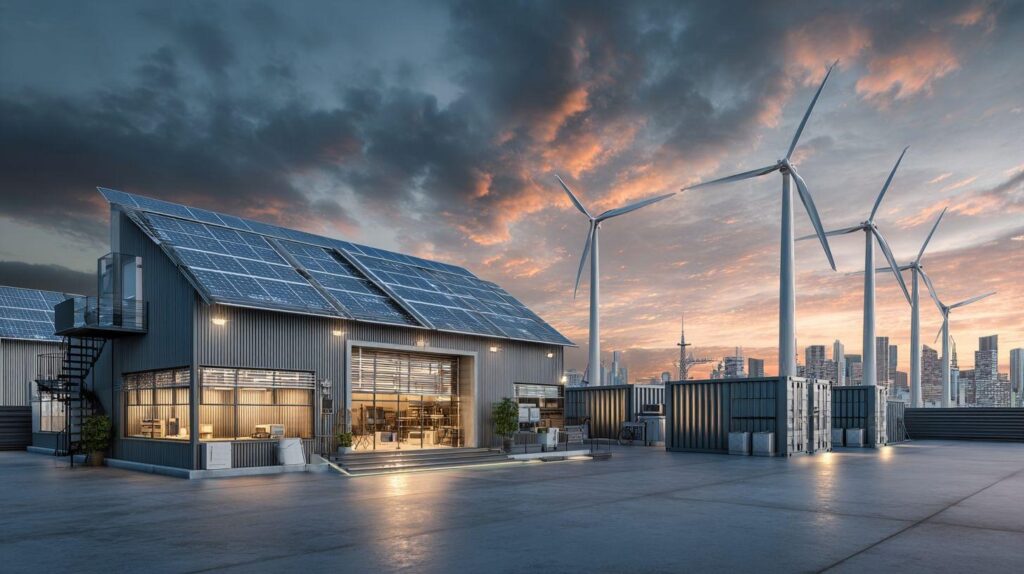
In an era of escalating blackouts and energy crises, forward-thinking businesses are ditching dependence on fragile utility grids. Enter power micro-grids: self-sufficient systems blending renewables, storage, and smart controls for uninterrupted operations.
This article explores soaring costs, outage risks from extreme weather, independence gains, ESG-driven sustainability, long-term ROI, incentives, and cutting-edge tech driving adoption. Discover why micro-grids are the strategic edge businesses can’t ignore.
Understanding Power Micro-Grids
Power microgrids are localized energy systems that generate, store, and manage electricity independently or in coordination with the main grid, typically integrating solar PV (50-70% capacity), battery storage like Tesla Megapack (3-4 hour discharge), and wind turbines for 24/7 operation. Per IEEE 1547 standards, they function as self-contained grids that can island from the utility during outages, ensuring energy resilience for businesses. This setup supports operational continuity amid grid failures.
Microgrids include six core components that enable reliable power delivery. These systems promote energy independence by combining renewable sources with storage and controls.
| Component | Typical Capacity | Example Model |
| Solar PV | kW rating | SunPower panels |
| Battery Storage | MWh capacity | Tesla Megapack 3MWh |
| Inverters | per unit | SMA Sunny Island |
| Microgrid Controller | system-wide | Schneider Electric |
| Load Management | EMS | Energy Management System |
| Backup Genset | standby kW | Caterpillar diesel |
A typical system diagram shows energy flow from solar PV and wind to inverters, then battery storage, managed by the microgrid controller before reaching loads or the main grid. During islanding, the controller disconnects in seconds, prioritizing critical loads. This modular design aids scalability for business investment.
Google’s 2.85MW Kauai microgrid exemplifies real-world use, blending solar power and storage for reliable supply. It achieves high uptime, cutting reliance on the utility during peak demand or outages. Businesses in data centers or manufacturing facilities adopt similar hybrid microgrids for sustainability and cost control.
Definition and Core Components
Core microgrid components follow IEEE 1547 interconnection standards, enabling seamless grid disconnection within 2 seconds during outages. This islanding capability protects against blackouts from extreme weather or utility failures. Businesses gain energy security through these decentralized systems.
The table below breaks down key components with capacities, models, costs, and lifespans. It highlights how renewable energy integrates with storage for hybrid operation.
| Component | Typical Capacity | Example Model | Cost Range | Lifespan |
| Solar PV | 100kW-5MW | SunPower | $1.2/W | 25yrs |
| Battery Storage | 1-10MWh | Tesla Megapack $350/kWh | per kWh | 15yrs |
| Microgrid Controller | system-wide | Schneider Conext | $25k | 20yrs |
| Inverters | per unit | SMA Sunny Island | $15k/unit | 15yrs |
System diagrams illustrate flow: solar PV and battery storage feed into inverters, controlled by the EMS, then to loads or grid. ASCII art representation: Solar –> Inverter –> Battery –> Controller –> Loads/Grid. This setup supports peak shaving and demand response.
For businesses, these components lower energy costs via on-site generation and excess energy sales. Hospitals and commercial buildings use them for critical infrastructure backup. Experts recommend starting with modular designs for quick ROI through reduced opex.
Rising Energy Costs and Volatility
U.S. commercial electricity rates rose 6.2% in 2023 (EIA data), with peak time-of-use rates hitting $0.45/kWh in California vs. $0.12/kWh off-peak, creating 300% price spreads ideal for microgrid arbitrage.
Businesses face sharp swings in energy costs, including natural gas prices from $2.50 to $9 per MMBtu between 2022 and 2023. Electricity tariffs, like those from CA PG&E, jumped from a $0.32 base to $0.58 peak rate. These shifts push companies toward on-site generation for stability.
A 500kW microgrid can save $180k yearly through peak shaving, calculated as 3 hours per day over 150 days at a $0.40/kWh spread. This approach uses battery storage to shift loads, cutting reliance on high utility peaks. Real-world cases, such as an Amazon warehouse microgrid arbitrage, show ROI in 24 months.
Utility rates vary widely by state per EIA 2024 data, with California leading in high peaks while others lag. Businesses in high-cost areas gain most from energy independence. Investing in hybrid systems with solar power and storage turns volatility into opportunity.
Grid Reliability and Outage Risks
U.S. power outages cost businesses $150 billion annually, averaging 8 hours per commercial customer yearly with 25% from weather events. These disruptions threaten operational continuity for factories, data centers, and hospitals. Companies turn to power microgrids for energy resilience.
The 2021 Texas freeze left 4.5 million customers without power, while PG&E’s California wildfires affected over 2 million. Such events highlight grid reliability gaps in the utility grid. Microgrids offer islanding capability to maintain uptime during blackouts.
Businesses invest in on-site generation like solar power and battery storage to achieve energy independence. This setup reduces reliance on vulnerable transmission lines. Hybrid microgrids integrate renewables with backup power for seamless operation.
With smart grids and IoT sensors, microgrids enable predictive maintenance and demand response. Firms in the industrial sector gain from energy security against utility grid failures. This shift supports ESG goals and cuts long-term energy costs.
Impact of Extreme Weather Events
Hurricane Ida in 2021 caused outages across 8 states lasting an average of 7 days, costing hospitals $1.2 million per day in diesel generator fuel. Extreme weather amplifies power outage risks for critical infrastructure. Microgrids provide a path to energy resilience.
During Hurricane Ida, a hospital’s microgrid saved significant costs by avoiding fuel dependency. It maintained 100% uptime for its data center over 96 hours in islanded mode. Such performance shows decentralized energy benefits in disaster recovery.
The Texas 2021 freeze led to ERCOT’s massive grid failure, while California’s 2019 wildfires triggered PG&E outages for 2 million customers. These cases underline weather-outage links. Businesses use battery storage and solar power to counter these threats.
| Year | Event | Outages | Microgrid Response |
| 2021 | Hurricane Ida | 1.2M customers | Hospital islanded 96hrs |
| 2021 | Texas Freeze | 4.5M customers | On-site generation key |
| 2019 | CA Wildfires | 2M+ affected | DER prevented losses |
Experts recommend hybrid microgrids with wind power and fuel cells for extreme weather readiness. This approach ensures operational continuity and supports net zero ambitions. Facilities like manufacturing plants benefit from modular designs for quick deployment.
Energy Independence and Security
Data centers adopting microgrids eliminated 100% grid dependency. Google’s 2.85MW Kauai system provides full energy independence with 4hr islanding capability. This setup ensures operational continuity during grid failures.
Hospitals rely on microgrids for HIPAA compliance and patient safety. On-site generation with battery storage and renewable energy like solar power maintains critical systems. These systems support life-saving equipment without interruptions.
Manufacturing facilities avoid massive downtime costs through hybrid microgrids. Combining wind power, natural gas, and fuel cells offers resilience against power outages. Businesses invest in this for reliable production lines.
| Grid Reliability | Microgrid Reliability |
| Prone to widespread blackouts from extreme weather | Islanding capability for isolated operation |
| Limited fault tolerance | Redundancy with N+1 design and black start |
| High exposure to cyberattacks | Reduced attack surface via decentralized control |
Cybersecurity improves with microgrids, as noted by experts. They limit vulnerabilities compared to centralized utility grids. Energy security becomes a priority amid rising threats.
Sustainability and ESG Mandates
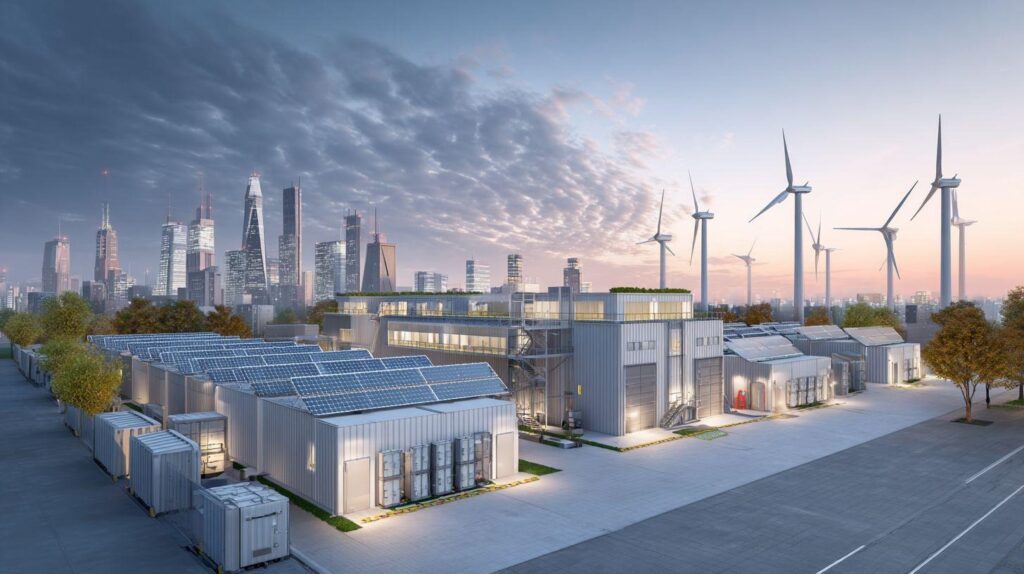
Businesses face growing pressure from ESG mandates to reduce their environmental impact. These requirements push companies toward investments in power microgrids for cleaner operations. Regulatory frameworks demand detailed reporting on emissions and sustainability efforts.
Key regulations include the SEC Climate Rule 2024, which requires public companies to disclose climate risks, alongside the EU CSRD for broader sustainability reporting. CDP Scope 2 reporting focuses on indirect emissions from purchased electricity. These rules encourage on-site generation with solar power and battery storage to meet compliance.
| Regulation | Key Focus | Impact on Businesses |
| SEC Climate Rule 2024 | Climate risk disclosure | Mandatory reporting for U.S. public firms |
| EU CSRD | Sustainability reporting | Applies to large EU companies and non-EU entities |
| CDP Scope 2 | Purchased electricity emissions | Tracks indirect carbon footprint |
Microgrids support energy independence by integrating renewable energy sources. They help achieve net zero ambitions through decentralized energy resources. This shift leads into specific carbon reduction goals with clear regulatory timelines.
Carbon Reduction Goals
Corporate Scope 2 emissions from purchased electricity often form a large part of the total footprint. Solar and battery microgrids cut these emissions by enabling on-site renewable generation. Experts recommend hybrid systems for maximum impact.
A 1MW solar microgrid can offset significant CO2 each year, based on standard calculators. Companies like Microsoft aim for 100% renewable energy by 2025 using 50MW microgrids. These efforts align with science-based targets for carbon emissions reduction.
| Company | Microgrid Size | CO2 Reduction Focus | Timeline |
| Microsoft | 50MW | Renewable energy shift | 2025 |
| Multiple MW-scale | Scope 2 cuts | 2030 net zero | |
| Amazon | Hybrid solar+storage | Data center decarbonization | 2040 |
Over 280 companies in RE100 commit to 100% renewable electricity. Microgrids provide islanding capability and energy resilience while pursuing these goals. Practical steps include pairing solar power with battery storage for consistent output.
Cost Savings Over Time
Microgrids achieve 15-25% lower lifetime energy costs versus the grid, with LCOE at $0.08-0.12/kWh compared to utility rates of $0.15-0.25/kWh (NREL 2024). Businesses investing in power microgrids cut long-term expenses through on-site generation and storage.
Initial economics break down to capex of $2.5M per MW and opex at $20k per MW-year, leading to payback in 5-7 years. This setup supports energy independence by reducing reliance on volatile grid prices.
Renewable energy like solar power and battery storage drives these savings, especially with peak shaving and demand response. Hospitals and factories use microgrids to ensure operational continuity during outages while lowering bills.
Over time, total cost of ownership drops as businesses avoid escalating tariffs and gain from regulatory incentives such as tax credits. Hybrid microgrids with diesel generators or natural gas provide backup, enhancing energy resilience.
ROI from Renewables and Storage
1MW solar+4MWh storage microgrid: $3.2M installed, $450k/year savings, 6.2yr payback, 18% IRR (NREL SAM model 2024 inputs). These systems deliver strong ROI through renewable energy integration and battery storage for peak shaving.
Hospitals benefit from quick payback, like a 500kW setup achieving 4.8 years, while factories see results in a 2MW project at 5.9 years. Energy management systems optimize output for maximum savings.
| System Size | Capex | Annual Savings | Payback | IRR | ITC Benefit |
| 500kW Hospital | $1.6M | $320k | 4.8 yrs | 20% | 30% credit |
| 2MW Factory | $5.2M | $880k | 5.9 yrs | 16% | 30% credit |
| 5MW Walmart CA | $12.5M | $2.75M | 6.1 yrs | 22% | 30% credit |
Sensitivity analysis shows resilience: +-20% cost changes shift payback by less than one year. Walmart’s 5MW California microgrid hit 22% IRR by combining solar with storage for grid reliability.
ITC benefits and financing like green bonds accelerate returns. Businesses model their own ROI using tools focused on local rates and self-consumption.
Government Incentives and Policies
The 2022 IRA provides 30% ITC + 10% bonus for microgrids in energy communities, plus $907M DOE microgrid grants through 2026. These measures encourage business investment in power microgrids for energy independence and resilience. Companies can offset high upfront costs through tax credits and funding.
Federal programs like the Investment Tax Credit (ITC) cover solar power, wind power, and battery storage in hybrid microgrids. Businesses gain from accelerated depreciation and low-interest loans. This support aids operational continuity during grid failures.
State-level incentives vary but often target energy resilience and sustainability. California offers rebates for storage, while New York funds community microgrids. These policies align with ESG goals and carbon emissions reduction.
Recent 2024 updates expand eligibility for distributed energy resources (DER). Enhanced grants support data centers and manufacturing facilities. Businesses should review local rules for peak shaving and demand response benefits.
Federal Incentives Overview
| Incentive | Description | Key Benefits for Microgrids |
| Federal ITC | 30%+bonus tax credit | Applies to solar power, wind power, battery storage; bonus for energy communities |
| MACRS 5yr Depreciation | Accelerated schedule | Reduces taxable income quickly for on-site generation investments |
| DOE LPO Loans | Up to 80% financing | Low-interest for large-scale microgrids, islanding capability projects |
Federal incentives lower the capex for microgrid deployment. The ITC directly reduces costs for renewable energy components. Pairing with MACRS speeds up ROI through tax savings.
DOE loans enable scaling for critical infrastructure like hospitals and commercial buildings. Businesses achieve energy security amid utility grid failures. These tools support net zero ambitions.
State Incentives Examples
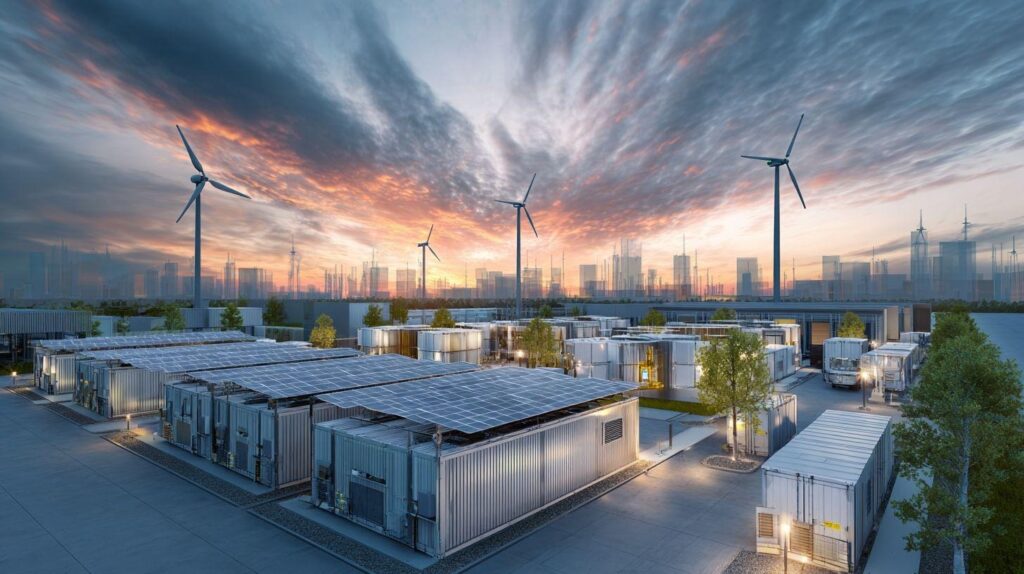
California’s SGIP provides $1/kWh storage rebates for battery systems in microgrids. This cuts opex for energy arbitrage and backup power. It promotes self-consumption in high-energy-cost areas.
New York’s Reforming the Energy Vision allocates $200M for microgrids. Funds target resilience hubs against blackouts from extreme weather. Industrial sector players benefit from grid interconnection support.
Eligibility Checklist
- Project includes renewable energy like solar or wind with battery storage.
- Located in designated energy communities for bonus credits.
- Demonstrates energy resilience features like islanding capability.
- Meets IEEE 1547 standards for grid interconnection.
- Commits to ESG reporting on carbon emissions reduction.
Use this checklist to confirm qualification for regulatory incentives. Consult experts for site-specific assessments. It ensures access to grants and tax credits.
2024 policy updates streamline approvals for EV charging and V2G in microgrids. States now prioritize cybersecurity in DER projects. This boosts appeal for data centers seeking uptime SLAs.
Technological Advancements
Tesla Megapack v4 (2024) delivers 3.9MWh per unit with 97% roundtrip efficiency. AI controllers like AutoGrid optimize 15% additional savings via predictive load balancing. These innovations drive business investment in power microgrids for energy independence.
Businesses adopt these technologies to enhance energy resilience against grid failures. For example, manufacturing facilities use them for operational continuity during blackouts. This shift supports sustainability goals and reduces reliance on the utility grid.
Key technological advancements include several breakthroughs that enable scalable microgrids. They integrate renewable energy sources like solar power and wind power with battery storage. Deployment timelines now allow faster ROI through modular designs.
Vendors compete fiercely, offering plug-and-play solutions for hybrid microgrids. Companies compare options based on efficiency, scalability, and integration with existing infrastructure. This competition accelerates the energy transition for commercial buildings and data centers.
Key Advancements in Microgrid Technology
- LFP batteries provide long-life storage with thousands of cycles, ideal for daily cycling in industrial sector applications.
- AI energy management systems (EMS) enable predictive maintenance and load balancing for peak shaving.
- V2G technology supports bi-directional charging, as seen with the Nissan Leaf, turning EVs into grid assets.
- Digital twins using tools like HOMER Pro simulate microgrid performance for optimized design.
- Solid-state inverters from ABB achieve high efficiency, minimizing losses in AC and DC microgrids.
- Blockchain for P2P trading facilitates peer-to-peer energy sales, promoting the prosumer model.
Vendor Comparison
| Vendor | Key Product | Strengths | Typical Use Case |
| Tesla | Megapack v4 | High capacity, AI integration | Data centers, utilities |
| ABB | Solid-state inverters | Superior efficiency, grid support | Commercial buildings |
| Schneider Electric | EMS platforms | IoT sensors, SCADA compatibility | Hospitals, manufacturing |
| Siemens | Microgrid controllers | Islanding capability, V2G ready | Critical infrastructure |
| AutoGrid | AI optimization | Predictive analytics, VPP support | EV charging networks |
Businesses select vendors based on TCO and LCOE. For instance, Tesla excels in large-scale battery storage, while ABB leads in power electronics.
Deployment Timelines
Modern microgrid projects deploy in 6-12 months with modular designs. Pilot projects start with nanogrids, scaling to full hybrid systems. System integrators handle EPC, ensuring grid interconnection per IEEE 1547.
Initial setup focuses on on-site generation and battery storage. Phase two adds V2G and AI EMS for demand response. Full operation achieves black start capability within the first year.
Experts recommend starting with digital twins for simulation to shorten timelines. This approach minimizes capex risks and supports ESG goals through reduced carbon emissions. Ongoing O&M ensures long-term energy security.
Frequently Asked Questions
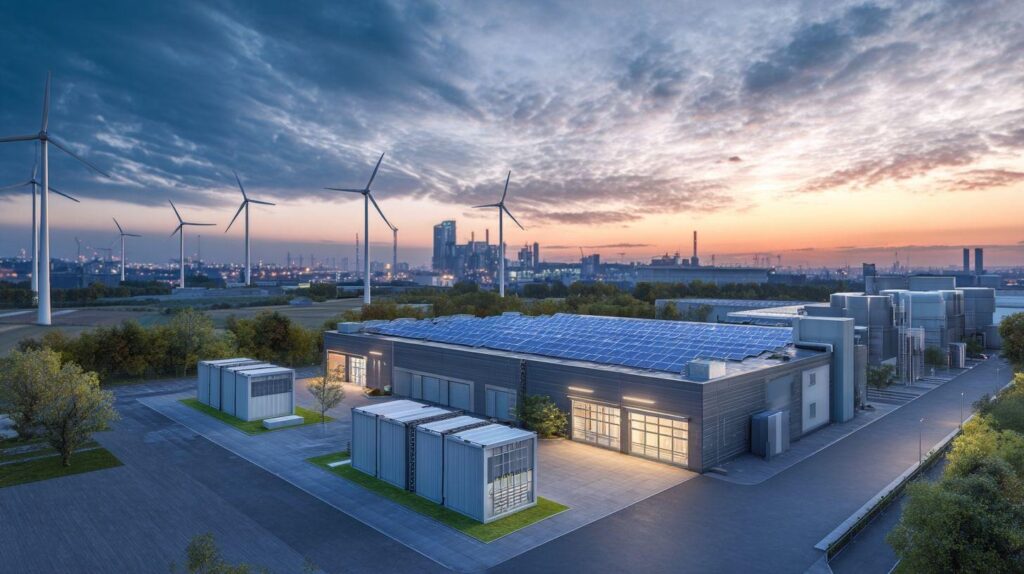
Why Businesses are Investing in Their Own Power Micro-Grids?
Businesses are investing in their own power micro-grids to achieve energy independence, reduce reliance on unstable utility grids, and mitigate risks from power outages, which can cost millions in downtime for critical operations like manufacturing and data centers.
What Cost Savings Drive Businesses to Invest in Power Micro-Grids?
One key reason why businesses are investing in their own power micro-grids is the potential for significant long-term cost savings through solar, wind, or battery storage integration, bypassing rising utility rates and demand charges while generating their own clean power.
How Do Power Micro-Grids Enhance Business Reliability?
Why businesses are investing in their own power micro-grids includes improved reliability; these self-contained systems with renewables and backups ensure uninterrupted operations during grid failures caused by storms, cyberattacks, or overloads, safeguarding revenue and reputation.
Why Are Sustainability Goals Pushing Businesses Toward Power Micro-Grids?
With increasing regulatory pressure and consumer demand for green practices, why businesses are investing in their own power micro-grids is to meet net-zero emissions targets using decentralized renewable energy sources, reducing carbon footprints and earning ESG credentials.
What Role Do Government Incentives Play in Power Micro-Grid Investments?
Government tax credits, grants, and rebates for renewables make why businesses are investing in their own power micro-grids financially viable, accelerating ROI on installations that combine solar panels, energy storage, and smart controls for efficient power management.
How Do Power Micro-Grids Future-Proof Businesses Against Energy Challenges?
Anticipating volatile energy markets and climate impacts, why businesses are investing in their own power micro-grids is for future-proofing; these scalable systems allow real-time energy optimization, peak shaving, and integration with EVs, ensuring adaptability to evolving demands.