
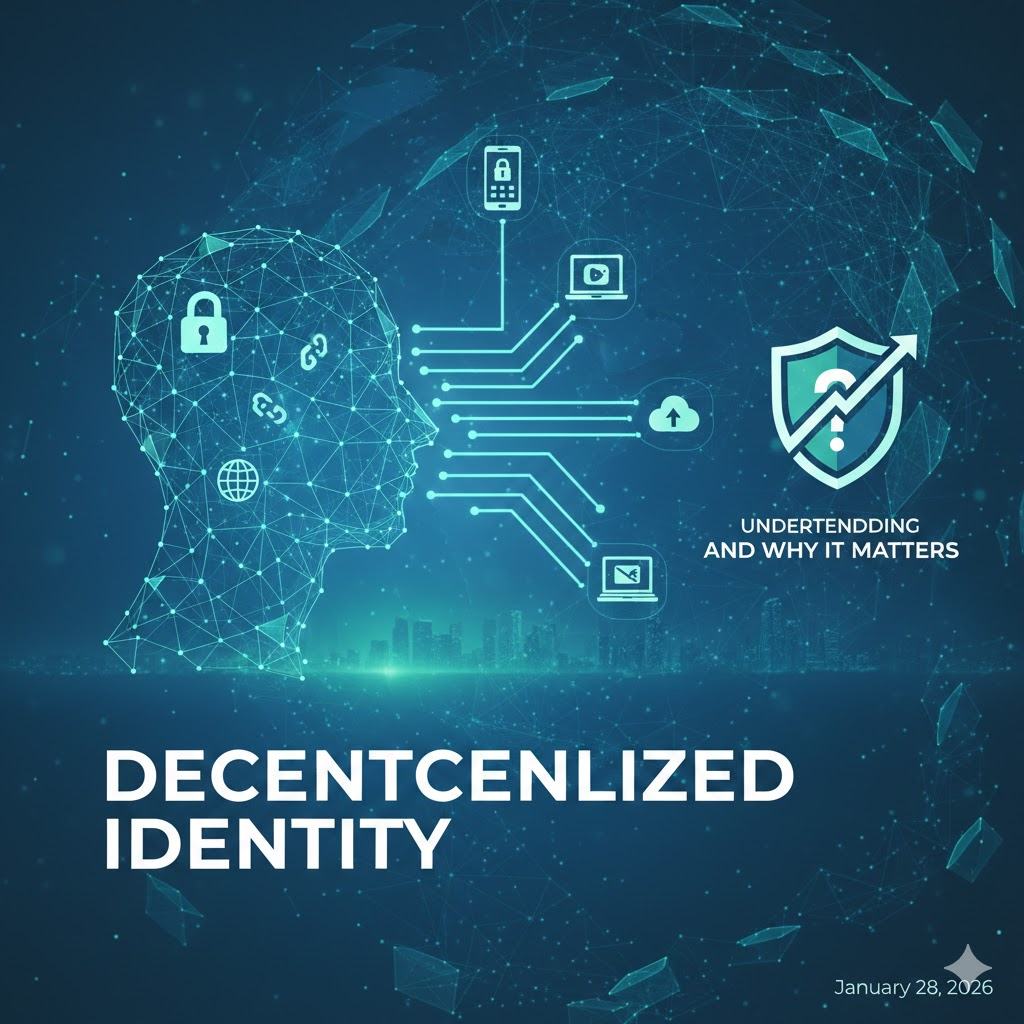
Digital identity has become a core part of everyday life. From logging into apps and opening bank accounts to verifying age or signing documents, our identities are constantly being shared, stored, and verified online. Yet most digital identity systems today are centralized, fragmented, and vulnerable to misuse.
Decentralized identity offers a new approach—one that gives individuals control over their personal information while reducing reliance on centralized databases. As privacy concerns and digital fraud continue to grow, understanding decentralized identity is becoming increasingly important.
What Is Decentralized Identity?
Decentralized identity is a digital identity model where individuals own and control their identity data instead of corporations or governments acting as the primary gatekeepers.
Rather than storing identity information in a single centralized database, decentralized identity systems use distributed technologies—often blockchain—to allow users to manage credentials securely and selectively.
Key elements include:
- Self-sovereign identity (SSI): Users control their own identity
- Verifiable credentials: Digitally signed proofs issued by trusted entities
- Decentralized identifiers (DIDs): Unique identifiers controlled by the user
How Traditional Digital Identity Systems Work
In traditional systems, organizations create and store identity data on centralized servers. Users are required to repeatedly share personal information to access services.
This model creates several problems:
- Data breaches expose sensitive information
- Users have limited control over how data is used
- Identity verification is repetitive and inefficient
- Central points of failure increase security risks
Decentralized identity aims to solve these issues by shifting ownership to the individual.
How Decentralized Identity Works
Decentralized identity systems operate on a simple principle: verify without over-sharing.
Here’s how it typically works:
- A trusted issuer (government, bank, university) issues a digital credential
- The credential is stored in a digital wallet controlled by the user
- When verification is required, the user shares only necessary information
- The verifier confirms authenticity without accessing the issuer’s database
Blockchain or distributed ledgers are often used to anchor trust, not to store personal data directly.
Why Decentralized Identity Matters
1. Greater Privacy and Control
Decentralized identity allows users to decide:
- What data to share
- With whom
- For how long
This reduces unnecessary exposure of personal information and strengthens privacy.
2. Reduced Identity Fraud
Centralized databases are prime targets for hackers. Decentralized identity removes single points of failure, making large-scale identity theft far more difficult.
Verifiable credentials also reduce the risk of fake identities and forged documents.
3. Streamlined Digital Access
Instead of creating new accounts for every service, users can reuse verified credentials across platforms. This simplifies onboarding while maintaining security.
For businesses, this means:
- Faster customer verification
- Lower compliance costs
- Improved user experience
4. Global Accessibility
Decentralized identity can help people without formal documentation gain access to financial services, education, and healthcare.
In regions where traditional identity systems are limited, decentralized identity offers a digital-first alternative that is portable and inclusive.
Use Cases of Decentralized Identity
Financial Services
Banks and fintech platforms can verify customers more securely while reducing data storage risks and regulatory burdens.
Healthcare
Patients can control access to medical records and share them securely with providers without duplicating data.
Education and Employment
Universities can issue digital diplomas and certificates that employers can instantly verify without contacting the institution.
Government Services
Decentralized identity can support digital voting, benefits distribution, and public services while enhancing transparency and trust.
The Role of Blockchain in Decentralized Identity
Blockchain provides:
- A tamper-resistant trust layer
- Public verification without exposing private data
- Decentralized governance mechanisms
Importantly, personal data is not stored directly on the blockchain. Instead, cryptographic proofs are used to confirm authenticity.
Challenges and Limitations
Despite its promise, decentralized identity faces hurdles:
- Technical complexity for non-technical users
- Regulatory uncertainty in some regions
- Interoperability between platforms
- User responsibility for securing credentials
Solving these challenges is essential for mass adoption.
Why Decentralized Identity Matters for the Future
As digital interactions increase, identity becomes the foundation of trust. Decentralized identity aligns with a future where individuals:
- Own their data
- Control access
- Reduce dependency on centralized intermediaries
It supports privacy, security, and efficiency in an increasingly digital world.
Frequently Asked Questions
Is decentralized identity the same as blockchain identity?
Not exactly. Blockchain is often used as the infrastructure, but decentralized identity focuses on user-controlled identity regardless of the underlying technology.
Can decentralized identity replace passwords?
Yes, in many cases. Verifiable credentials and cryptographic proofs can reduce or eliminate the need for passwords.
Is decentralized identity secure?
When implemented correctly, it is more secure than centralized systems because it reduces data exposure and single points of failure.
Who issues identity credentials?
Trusted entities such as governments, banks, employers, or educational institutions can issue verifiable credentials.
Will decentralized identity become mainstream?
Adoption is growing, especially in finance, healthcare, and government services. Widespread use depends on usability and regulatory alignment.
Final Thoughts
Decentralized identity represents a major shift in how trust and verification work online. Instead of being passive data sources, individuals become active owners of their digital identity.
As privacy concerns rise and digital services expand, decentralized identity offers a more secure, transparent, and user-centric approach. It is not just a technical upgrade—it is a rethinking of how identity should work in the digital age.
Understanding this concept today prepares individuals and organizations for a future where control over identity is no longer centralized, but personal.