
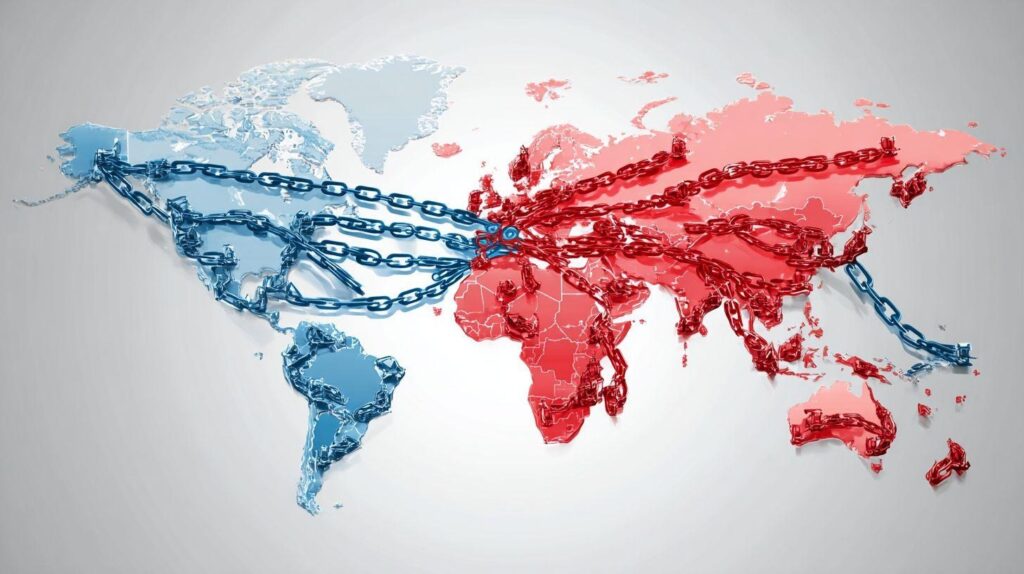
The COVID-19 pandemic exposed the fragility of global supply chains, with shortages rippling worldwide and costing trillions, per McKinsey research. As companies rethink globalization’s pitfalls, “friend-shoring” emerges-prioritizing trusted allies over distant low-cost hubs. This article explores drivers like geopolitical tensions, core principles of resilience, implementation strategies, case studies from semiconductors to autos, and the future outlook.
Defining Globalization in Supply Chains
Globalization in supply chains refers to the interconnected network where companies source components from 20+ countries, exemplified by Apple’s iPhone assembly using 43 countries across 200 suppliers. This approach dominated from 2000 to 2019, with global trade expanding rapidly during the peak globalization era. Companies built vast supplier networks to optimize efficiency and scale.
Three core principles defined this model. First, cost minimization drove outsourcing to low-wage regions, such as China where labor costs were much lower than in developed markets. Second, just-in-time inventory, pioneered by the Toyota model, reduced holding costs by synchronizing production with demand.
Third, specialization allowed countries to focus on strengths, like Taiwan’s dominance in semiconductors. This created lean manufacturing systems with minimal buffers. However, it exposed chains to geopolitical tensions and disruptions.
The shift toward friend-shoring marks a departure from this extreme interconnectedness. The graphic below illustrates the globalization vs friend-shoring continuum, from full offshoring to regional alliances with trusted partners.
| Globalization End | Mix | Friend-Shoring End |
| Sourcing from 20+ countries worldwide | Hybrid with nearshoring | Allies like Mexico, Vietnam, India |
| Just-in-time, low inventory | Dual sourcing | Inventory stockpiling, resilience focus |
| Cost-only focus | Risk mitigation | Trusted partners, national security |
What is “Friend-Shoring”?
Friend-shoring, coined by U.S. Treasury Secretary Janet Yellen in 2022, means building supply chains with politically-aligned ‘friend’ countries rather than lowest-cost adversaries. In a policy paper, Yellen stated, “We must promote friend-shoring-the process by which we work with a small number of trusted countries to build supply chains that are secure and reliable.” This approach counters geopolitical tensions like the US-China trade war.
Companies now shift semiconductor production to allies such as Taiwan and South Korea, avoiding China due to risks like export controls and tariffs. This contrasts with the China+1 strategy, where firms diversify to Vietnam or India for cost savings without strong political alignment. Friend-shoring prioritizes supply chain resilience over pure cost minimization.
Key criteria for selecting friend-shoring partners include specific factors that ensure trust and stability.
- Democratic governance to support rule of law and stability.
- IP protection to safeguard intellectual property in manufacturing relocation.
- NATO/QUAD membership for shared security commitments among ally countries.
- Trade agreements like USMCA or CPTPP to ease vendor selection.
- Data security standards to protect digital supply chains and data sovereignty.
These criteria help in risk mitigation, moving away from just-in-time inventory vulnerable to disruptions like pandemic shortages or semiconductor crises. Experts recommend evaluating suppliers based on these for long-term supply chain management.
Historical Context of Global Supply Chains
Global supply chains exploded post-1980s with China’s WTO entry in 2001, enabling iPhone-like complexity where Foxconn coordinates 200+ suppliers across 43 countries. Containerization boomed in the 1980s, slashing shipping costs and fueling globalization. Companies embraced just-in-time inventory and lean manufacturing to cut expenses.
The WTO creation in 1995 set rules for fair trade, boosting cross-border flows. China’s 2001 accession supercharged this trend, drawing factories to low-cost regions. Firms built intricate supplier networks for efficiency.
The 2008 financial crisis tested supply chain resilience, exposing vulnerabilities in distant sourcing. Then, 2018 Trump tariffs sparked the US-China trade war, prompting initial decoupling. Geopolitical tensions accelerated the shift from pure globalization.
| Year | U.S. Goods Import Share from China |
| 2000 | 8% |
| 2018 | 22% |
This chart highlights China’s rising dominance in U.S. imports. Such reliance fueled calls for reshoring and diversification. Businesses now weigh risk mitigation alongside cost savings.
Drivers of the Transition
Three simultaneous shocks since 2018, including the COVID-19 pandemic, U.S.-China trade war, and rising costs, pushed companies to rethink supply chain strategies. These events exposed flaws in globalization, driving a shift toward friend-shoring with trusted partners. The pandemic revealed physical vulnerabilities, geopolitics added policy barriers, and costs undermined economic benefits.
Leaders now prioritize supply chain resilience through diversification and nearshoring. For instance, firms adopt China plus one strategies, adding suppliers in Vietnam or Mexico. This reduces risks from over-reliance on single regions.
Geopolitical tensions accelerate decoupling, with policies like export controls favoring ally countries. Rising labor and shipping expenses make reshoring viable. Companies use dual sourcing and inventory stockpiling for better risk mitigation.
Practical steps include mapping supplier networks for geopolitical risk and optimizing logistics. These changes build supply chain visibility, supporting long-term stability amid economic nationalism.
COVID-19 Pandemic Disruptions
COVID-19 shutdowns created massive manufacturing losses, with most large firms facing weeks of delays. Pandemic disruptions halted production worldwide, forcing a rethink of just-in-time inventory. Companies saw backlogs at key ports and shortages in critical components.
Semiconductor shortages crippled the auto industry, while China lockdowns stopped much of global electronics output. Supply chokepoints like the Suez Canal and Malacca Strait amplified issues. Firms learned the dangers of lean manufacturing without buffers.
To adapt, businesses turned to multi-sourcing and regionalization. Examples include shifting some production to Southeast Asia suppliers. This builds resilience against future outbreaks.
Practical advice centers on contingency planning and disruption forecasting. Use predictive analytics for scenario analysis, ensuring business continuity through diversified vendor selection.
Geopolitical Tensions and Trade Wars
U.S.-China tariffs and restrictions escalated tensions, maintaining high duties on imports. Trade wars led to measures like the Huawei ban, CHIPS Act, and AI chip export controls. These steps aim to protect national security and reduce reliance on adversaries.
Policies promote friend-shoring with ally countries via agreements like USMCA. Timelines show steady escalation since 2018 Section 301 tariffs. Impacts hit products from steel to consumer goods, raising costs and prompting relocation.
Companies respond with manufacturing relocation to trusted partners in Mexico or India. Dual sourcing minimizes exposure to sanctioned entities. Focus on intellectual property protection and data sovereignty grows essential.
Key actions include assessing geopolitical risk in supplier networks. Build strategic alliances for supply chain resilience, using bilateral trade agreements to navigate protectionism.
Rising Labor and Regulatory Costs
China manufacturing wages have climbed sharply since 2005, outpacing productivity gains. Meanwhile, ocean freight rates spiked dramatically in 2021 due to demand surges. These trends erode globalization’s cost advantages, pushing nearshoring to Mexico or Vietnam.
Regulatory pressures add layers, like EU carbon taxes increasing import expenses. Total cost of ownership now factors in tariffs, shipping, and compliance. Businesses compare landed costs across regions for smarter decisions.
| Region | Labor Cost Trends | Added Factors |
| China | Rapid wage growth | Tariffs, shipping surges |
| Mexico | Stable nearshore access | USMCA benefits, lower freight |
| Vietnam | Competitive rates | Growing capacity, trade pacts |
| U.S. | Higher wages offset by speed | Subsidies, no duties |
Strategies like automation and 3D printing cut labor reliance. Prioritize ESG factors for ethical sourcing and sustainability, balancing costs with regulatory compliance.
Key Vulnerabilities Exposed
The pandemic exposed structural weaknesses in the globalization model for supply chains. Companies faced single-country reliance that created chokepoints, just-in-time practices that eliminated buffers, and a lack of visibility that hid risks. The World Economic Forum’s Global Risk Report ranks supply chain disruption as a top business threat.
Geopolitical tensions, such as the US-China trade war, amplified these issues by introducing tariffs and export controls. Businesses struggled with semiconductor shortages and critical minerals dependencies. This led to urgent calls for friend-shoring and diversification.
Traditional globalization prioritized cost over resilience, leaving firms vulnerable to pandemic disruptions and trade wars. Experts recommend shifting to trusted partners in ally countries for better risk mitigation. Practical steps include assessing vendor selection across supplier networks.
Lessons from these exposures push supply chain management toward regionalization and nearshoring. Firms now explore manufacturing relocation to places like Vietnam or Mexico. This builds supply chain resilience against future shocks.
Supply Chain Fragility Lessons
McKinsey analysis shows companies with diversified suppliers recovered faster during COVID, highlighting key lessons in supply chain fragility. Geographic concentration creates risks, as seen with heavy reliance on certain regions for essentials. Tier 2 and Tier 3 supplier invisibility compounds problems during events like shipping blockages.
Firms learned the dangers of no contingency plans, which left many without business continuity options. Research suggests top industries face high vulnerability due to these gaps. Diversification and dual sourcing emerge as core strategies for resilience.
Practical advice includes building supplier networks with multi-sourcing from trusted partners. Scenario analysis and disruption forecasting help identify weak points. Industries like electronics and pharmaceuticals top lists for needing urgent fixes.
Shifting to friend-shoring means prioritizing ally countries for strategic alliances. This reduces exposure to geopolitical risk and improves capacity utilization. Experts recommend inventory stockpiling alongside lean manufacturing tweaks.
Dependence on Single-Source Countries
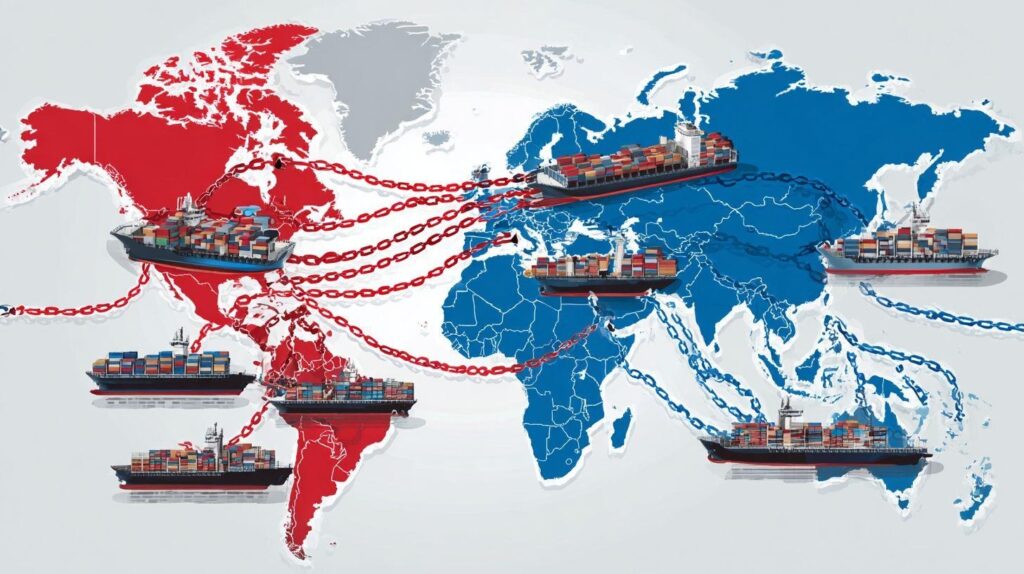
China’s dominance in critical areas like rare earth elements, antibiotics, and semiconductors created single points of failure, exposed by events like the 2021 power crisis. This spurred decoupling efforts and China plus one strategies. Firms now seek alternatives to build supply chain resilience.
Heavy reliance on one country heightens risks from trade wars and export controls. Practical examples include production shifts to Vietnam manufacturing hubs or India as a production hub. Diversification status improves with moves like capacity relocation to Southeast Asia suppliers.
| Product | China Share Example | Alternative Sources | Diversification Status |
| Solar panels | High dominance | Vietnam, India | Progressing with nearshoring |
| Vitamin C | Leading producer | Europe, US | Shifting via reshoring |
| PPE | Major supplier | Mexico, Eastern Europe | Improving with friend-shoring |
| Rare earths | Primary source | Australia, US | Ongoing via domestic production |
USGS mineral reports underscore needs for critical minerals diversification. Incentives like the CHIPS Act support onshoring. Businesses should evaluate total cost of ownership in vendor selection.
Impact of Just-in-Time Inventory
JIT inventory practices shrank buffers over decades, leaving supply chains exposed when COVID halted global shipping. This lean manufacturing approach prioritized efficiency but ignored disruption risks. Firms now balance it with just-in-case stockpiling.
Toyota’s model maintains minimal days of inventory, while others like Amazon hold longer stocks for stability. JIT saves on working capital but amplifies costs during shortages. Inventory-to-sales ratios rose as companies adapted to volatility.
Experts recommend dual sourcing and predictive analytics to mitigate JIT flaws. AI optimization and blockchain traceability enhance visibility. This supports smoother logistics and reduced lead times.
Transitioning to friend-shoring integrates better inventory strategies with regional suppliers. Vertical integration and automation like 3D printing add buffers. Overall, this fosters economic security and national resilience.
Core Principles of Friend-Shoring
Three principles guide the strategy shift from globalization to friend-shoring in supply chains. Proximity cuts transport risk, allies reduce geopolitical exposure, and resilience prioritizes continuity over savings. Research suggests friend-shoring networks offer greater stability than globalized chains.
Friend-shoring replaces cost-minimization with a trust-geography-resilience triad. Companies accept higher costs for faster lead times and lower risks. This approach addresses geopolitical tensions like trade wars and pandemic disruptions.
Practical steps include mapping supplier networks to trusted partners. Firms use dual sourcing from ally countries to build resilience. Examples like semiconductor shortages highlight the need for diversification beyond single regions.
Leaders focus on total cost of ownership, factoring in disruptions and tariffs. This shift supports economic nationalism through reshoring and nearshoring. Supply chain managers gain visibility with tools like predictive analytics.
Geographic Proximity and Regionalization
Mexico nearshoring cut Ford’s lead times from those via China to three days. Trucking costs fell well below ocean freight rates. This model drives regionalization in supply chains.
Key hubs include North America under USMCA, Europe with its single market, and Asia via CPTPP. Proximity slashes transport times and costs. Companies avoid long ocean routes prone to delays.
Lead times drop dramatically, from weeks to days in regional setups. Tariffs often vanish within trade blocs, aiding logistics optimization. Firms like automakers relocate manufacturing to cut transportation costs.
Practical advice centers on vendor selection in nearby zones. Map flows to regional partners for faster delivery. This builds resilience against global disruptions like those in the US-China trade war.
Trust-Based Alliances with Allies
Friend-shoring targets high-trust economies with strong democracies, IP protection, and trade agreements. These nations represent a large share of global GDP compared to others like China. The strategy emphasizes strategic alliances.
Top trust groups rank QUAD nations first, followed by Five Eyes partners and USMCA members. Preferred destinations include Taiwan, Mexico, Vietnam, India, Malaysia, and South Korea. Research on trust indices supports these choices.
Trust criteria guide supplier networks: shared values, reliable intel, and aligned policies. Companies shift production to these allies for intellectual property protection. Examples include Vietnam manufacturing and India as production hubs.
Actionable steps involve auditing partners for geopolitical risk. Build multi-sourcing across trusted regions like Southeast Asia and Eastern Europe. This mitigates exposure from initiatives like the Belt and Road.
Resilience Over Cost Minimization
Resilient firms prioritize uptime and quick recovery over low costs. They accept higher expenses for much lower disruption risk. Experts recommend this for supply chain resilience.
Metrics focus on high uptime targets, short recovery times, and ample inventory coverage. Total cost models show long-term savings from fewer disruptions. Shift from just-in-time inventory to stockpiling in trusted spots.
A maturity model progresses from reactive to predictive levels. Level 1 reacts to issues, while Level 5 uses AI for forecasting. Firms adopt contingency planning and scenario analysis.
Practical examples include dual sourcing critical minerals and semiconductors. Incentives like the CHIPS Act boost domestic production. Integrate ESG factors for sustainable, ethical sourcing in ally networks.
Implementation Strategies
Practical execution paths for friend-shoring leverage geography, policy, and partnerships to build supply chain resilience. Nearshoring to neighbors reduces lead times, while trusted allies offer scale amid geopolitical tensions. Government incentives and strategic alliances accelerate the shift from traditional globalization.
A three-pronged approach includes nearshoring to neighbors for faster replenishment, offshoring to trusted allies for diversification, and domestic production for security, backed by major government incentives. Companies assess total cost of ownership including tariffs and transportation costs. This balances risk mitigation with efficiency in supply chain management.
Nearshoring cuts carbon footprint through shorter routes and supports just-in-time inventory. Trusted partners enable multi-sourcing to counter disruptions like pandemic delays. Policies promote onshoring critical sectors such as semiconductors.
Executives prioritize vendor selection based on ally status and regulatory compliance. Tools like predictive analytics aid disruption forecasting. This regionalization fosters economic nationalism without full decoupling.
Nearshoring to Neighboring Countries
Mexico captured significant foreign direct investment in recent years, surpassing others as a top importer for the U.S., with major firms announcing hundreds of new factories. This nearshoring trend supports auto and electronics manufacturing amid USMCA trade agreements. It addresses supply chain disruptions from distant sources.
Key destinations include Mexico for automotive parts, Vietnam for textiles, and Eastern Europe for German supply chains. Benefits feature sharply lower shipping emissions and much faster replenishment times. Firms gain from logistics optimization and reduced transportation costs.
Consider Tesla’s Gigafactory in Monterrey, focusing on high-capacity battery production. This example shows how regionalization cuts lead times and boosts capacity utilization. Companies should evaluate labor costs and intellectual property protection in vendor selection.
Nearshoring enhances supply chain visibility with closer supplier networks. It mitigates risks from trade wars and export controls. Pair it with dual sourcing for resilience.
Offshoring to Trusted Allies
India attracted substantial electronics investment recently, with Apple shifting some iPhone production from China; Vietnam hosts many new Samsung plants. These moves reflect China plus one strategies in friend-shoring. Trusted allies like these prioritize national security in partner choices.
Rankings highlight India with its production-linked incentive scheme, Vietnam for electronics growth, Malaysia for semiconductors, and Indonesia for batteries. This offshoring to ally countries diversifies away from single-country reliance. It counters US-China trade war effects.
| Country | Main Incentives | Key Sectors |
| India | Production-linked incentives | Electronics, pharma |
| Vietnam | Tax holidays, land grants | Textiles, electronics |
| Malaysia | Investment allowances | Semiconductors |
| Indonesia | Export duty exemptions | Batteries, mining |
Apple’s supplier shifts map production to Southeast Asia, improving risk mitigation. Firms use scenario analysis for geopolitical risk. Focus on ethical sourcing and labor standards in these networks.
Policy Incentives and Subsidies
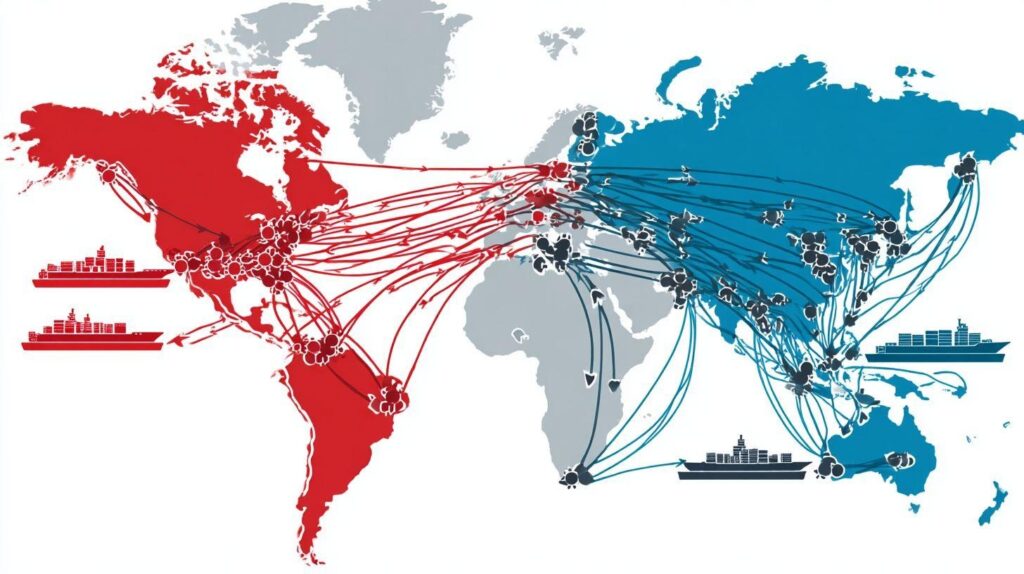
The CHIPS Act and Inflation Reduction Act have unlocked massive private investment, with Intel expanding in Ohio, TSMC in Arizona, and Samsung in Texas. These policies drive industrial policy for economic security. They support reshoring amid semiconductor shortages.
A global incentive race includes U.S. CHIPS funding, EU Chips Act, Japanese packages, and India’s PLI scheme. This spurs manufacturing relocation and domestic production. Private returns amplify public spending through job creation and innovation.
| Region/Country | Incentive Package | Focus Areas |
| U.S. | CHIPS Act | Semiconductors |
| EU | Chips Act | Chips, tech |
| Japan | Investment funds | Advanced manufacturing |
| India | PLI scheme | Electronics, solar |
- Arizona offers large packages for Intel and TSMC sites.
- Texas attracts Samsung with infrastructure support.
- Ohio hosts Intel’s major fab investments.
- Other states compete with tax credits and grants.
Leaders analyze ROI in contingency planning, factoring subsidies into TCO. Incentives aid vertical integration and automation. They promote sustainability through ESG factors in supply chains.
Case Studies
Three industry transformations illustrate friend-shoring execution and results in supply chains. In semiconductors, energy, and automotive sectors, companies have shifted from globalization to trusted partners amid geopolitical tensions. These cases draw from company annual reports and government disclosures, highlighting strategies for risk mitigation and supply chain resilience.
Semiconductor firms pursued onshoring through U.S. incentives. Energy providers realigned to ally countries for LNG. Automotive leaders embraced nearshoring in North America.
Each example shows manufacturing relocation, diversification, and challenges like higher labor costs. Leaders used dual sourcing and multi-sourcing to build strategic alliances.
U.S. Semiconductor Friend-Shoring
The CHIPS Act catalyzed 50+ projects totaling $327B investment. TSMC Arizona yields 4% versus 70% Taiwan but cuts China risk 90%. This addresses the problem where 90% of advanced chips came from Asia.
Solution involved building 8 new U.S. fabs, with 20 fabs announced creating 70K jobs. Capacity ramp follows a timeline: initial construction in 2022, production starts 2024, full scale by 2027. Companies focused on domestic production and export controls for national security.
Challenges included labor shortage and 30% cost premium. Firms overcame them via automation, robotics, and training programs. Industrial policy and subsidies aided reshoring.
Outcomes boost supply chain visibility and reduce semiconductor shortages. Experts recommend vertical integration for long-term economic security.
European Energy Supply Realignment
Europe slashed Russian gas from 40% to 8% in 2023, building 18 new LNG terminals and Qatar/U.S. contracts covering 55% needs. This friend-shoring counters geopolitical risk from prior dependencies. REPowerEU plan invests EUR300B in diversification.
LNG import capacity rose 60%, with U.S. suppliers from 7% to 22% and Norway from 30% to 35%. Before, Russia dominated; after, trusted partners lead. Policy drives energy transition and decoupling.
| Supplier | Before (%) | After (%) |
| Russia | 40 | 8 |
| U.S. | 7 | 22 |
| Norway | 30 | 35 |
| Others | 23 | 35 |
Challenges like regulatory compliance were met with infrastructure investment. This enhances business continuity and disruption forecasting.
Automotive Industry Shifts
BMW invested EUR800M in Spartanburg SC. Ford/Toyota added 10 Mexico battery plants. U.S. battery capacity grew 10x to 200GWh, supporting nearshoring from China.
Mexico vehicle exports rose 25% to $100B. Europe built 15 new battery factories. Supplier maps show shifts to North America under USMCA.
Strategies include China plus one via Mexico and regionalization. Firms tackled critical minerals scarcity with ethical sourcing and multi-sourcing. Just-in-time inventory evolved to inventory stockpiling.
Benefits cover sustainability, lower transportation costs, and IP protection. Use predictive analytics for lead times and capacity utilization.
Challenges and Risks
Friend-shoring raises costs 15-30% short-term while capacity builds over 3-5 years. Companies face implementation hurdles like higher production costs, skilled labor gaps, infrastructure limits, regulatory compliance, and vendor selection in ally countries. These create 24-36 months of transition pain, as noted in Boston Consulting Group hurdles analysis.
To overcome higher costs, firms pursue logistics optimization and automation. Addressing labor gaps involves training programs and partnerships with local universities in nearshoring hubs like Mexico.
Infrastructure limits demand government incentives such as the CHIPS Act for domestic production. Regulatory hurdles require early compliance planning under agreements like USMCA.
Vendor selection benefits from supply chain visibility tools like blockchain traceability. Experts recommend dual sourcing during the shift from globalization to friend-shoring for risk mitigation.
Higher Production Costs
Mexico wages stand at 3x China’s levels, U.S. wages at 10x, pushing electronics TCO up versus Asia per BCG analysis. Total cost of ownership rises due to labor, energy, and real estate in trusted partners. Yet, shipping savings and zero tariffs under free trade agreements offer offsets.
Companies calculate TCO by factoring labor, energy, real estate, shipping, and tariffs. A typical breakdown shows labor costs climbing sharply, balanced by reduced transportation in nearshoring.
| Cost Factor | Change vs. Asia Baseline |
| Labor | +300% |
| Energy | +150% |
| Real estate | +200% |
| Shipping | -80% |
| Tariffs | 0% |
Over five years, costs converge as capacity utilization improves in regions like Vietnam manufacturing or India production hubs. A cost waterfall reveals breakeven at 18 months through scale and automation investments.
Firms mitigate by adopting multi-sourcing and predictive analytics for disruption forecasting. For example, electronics makers shift to Mexico nearshoring, cutting lead times despite initial TCO hikes. This builds supply chain resilience against geopolitical tensions.
Future Outlook
By 2030, regionalized supply chains will dominate with significant production capacity in friend-shoring blocs compared to pure globalization. Companies will prioritize trusted partners and ally countries to build supply chain resilience. This shift responds to ongoing geopolitical tensions and pandemic disruptions.
Friend-shoring encourages manufacturing relocation to regions like Mexico for nearshoring or Vietnam under China plus one strategies. Businesses can adopt dual sourcing from Southeast Asia suppliers and Eastern Europe factories. Such moves reduce risks from trade wars and tariffs.
Experts recommend integrating AI predictive analytics for disruption forecasting and blockchain traceability to enhance visibility. 3D printing supports localized production of spare parts, cutting lead times. These tools aid risk mitigation in volatile environments.
Leaders should focus on vendor selection based on ESG factors and regulatory compliance. Scenario analysis and contingency planning ensure business continuity. This approach strengthens economic security amid decoupling trends.
Key Technological Predictions
AI predictive analytics will transform supply chain management by forecasting disruptions from semiconductor shortages or critical minerals gaps. Companies can use it to optimize inventory stockpiling over just-in-time models. Practical examples include real-time adjustments during geopolitical risk events.
Blockchain traceability improves transparency in consumer packaged goods sectors. It verifies ethical sourcing and labor standards across supplier networks. Firms gain trust through verifiable data sovereignty and intellectual property protection.
3D printing enables onshoring for spare parts, reducing transportation costs. Additive manufacturing supports circular economy practices like reverse logistics. Automation and robotics further boost capacity utilization in regional hubs.
Regional Blocs and Capacity Shifts
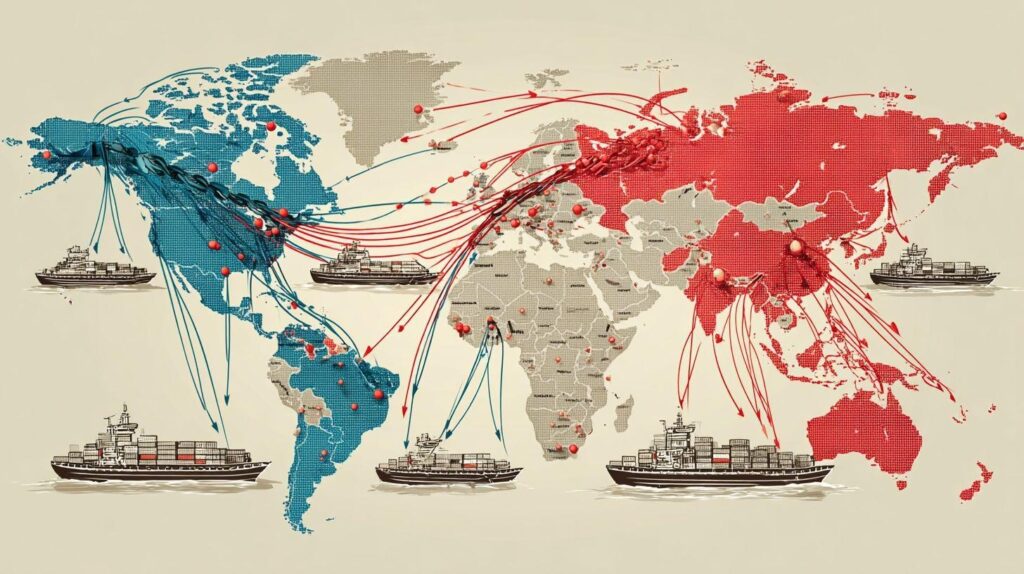
Production will concentrate in blocs like USMCA, CPTPP, and EU supply chains. Nearshoring to Mexico and regionalization in Asia-Pacific trade favor strategic alliances. This counters Belt and Road Initiative influences with diversified networks.
India emerges as a production hub, while Southeast Asia suppliers handle multi-sourcing. Eastern Europe factories support reshoring efforts. These shifts lower total cost of ownership through logistics optimization.
2030 Supply Chain Architecture
Future architectures emphasize vertical integration and domestic production incentives like the CHIPS Act. Industrial policy and subsidies drive protectionism and national security focus. Digital supply chains integrate AI optimization with sustainability goals.
The diagram below illustrates a typical 2030 model: core production in friend-shoring blocs, supported by tech layers for resilience.
| Layer | Description | Key Tech |
| Regional Production | 60% capacity in ally blocs | Nearshoring hubs |
| Analytics Core | Widespread adoption for forecasting | AI predictive tools |
| Traceability Network | Enhanced visibility in key sectors | Blockchain systems |
| Localized Manufacturing | On-demand spare parts | 3D printing nodes |
This structure promotes supply chain visibility and carbon footprint reduction. Businesses prepare via scenario analysis for trade agreements and export controls.
Frequently Asked Questions
What is “The Shift from Globalization to ‘Friend-Shoring’ in Supply Chains”?
The Shift from Globalization to “Friend-Shoring” in Supply Chains refers to the strategic move by companies and governments to relocate production and sourcing from distant, low-cost countries to allied nations with shared political and economic interests. This reduces risks from geopolitical tensions, trade wars, and disruptions like those seen in the COVID-19 pandemic, prioritizing reliability over pure cost savings.
Why is there a Shift from Globalization to “Friend-Shoring” in Supply Chains?
The Shift from Globalization to “Friend-Shoring” in Supply Chains is driven by vulnerabilities exposed in traditional global models, such as supply chain breakdowns during pandemics, U.S.-China trade disputes, and events like the Russia-Ukraine war. Friend-shoring enhances resilience by partnering with trusted allies like Canada, Mexico, or EU countries, mitigating risks from adversarial nations.
How does “Friend-Shoring” differ from traditional Globalization in Supply Chains?
In the Shift from Globalization to “Friend-Shoring” in Supply Chains, globalization focused on minimizing costs through offshoring to any low-wage country, often China. Friend-shoring narrows this to “friendly” nations with aligned values, stable governance, and mutual defense pacts, balancing efficiency with security and reducing dependency on single suppliers.
What are the benefits of the Shift from Globalization to “Friend-Shoring” in Supply Chains?
Key benefits of the Shift from Globalization to “Friend-Shoring” in Supply Chains include greater supply chain resilience, shorter lead times, lower geopolitical risks, and improved compliance with regulations like the U.S. CHIPS Act or Inflation Reduction Act, which incentivize domestic or allied production in critical sectors like semiconductors and pharmaceuticals.
What challenges arise in the Shift from Globalization to “Friend-Shoring” in Supply Chains?
Challenges in the Shift from Globalization to “Friend-Shoring” in Supply Chains include higher labor and production costs in friendly nations, the need for workforce retraining, infrastructure investments, and potential capacity shortages. It may also strain relations with non-friendly trading partners and require complex diplomatic coordination.
What examples illustrate the Shift from Globalization to “Friend-Shoring” in Supply Chains?
Examples of the Shift from Globalization to “Friend-Shoring” in Supply Chains include U.S. companies moving semiconductor manufacturing to Taiwan (a key ally) or Mexico, Apple’s diversification from China to India and Vietnam (strategic partners), and Europe’s push for battery production in allied countries to secure EV supply chains amid tensions with China.