
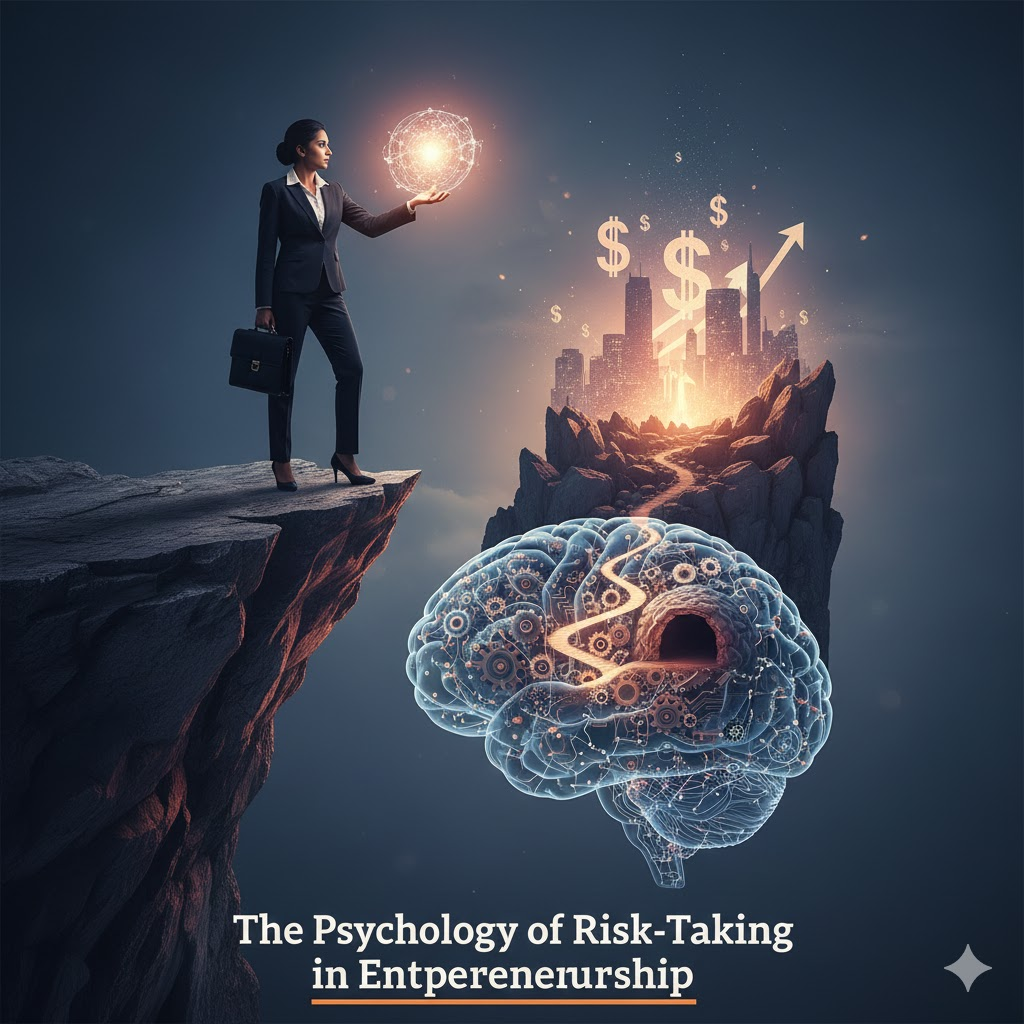
Risk is at the heart of entrepreneurship. Every decision to start a business, invest capital, or pursue a new market involves uncertainty. Yet successful entrepreneurs do not see risk the same way others do. Their ability to assess, accept, and manage uncertainty is shaped by a distinct psychological mindset that influences how they act, adapt, and grow.
How Entrepreneurs Perceive Risk Differently
Entrepreneurs tend to view risk as a manageable challenge rather than a threat. Instead of focusing on what could go wrong, they concentrate on potential upside and learning opportunities. This does not mean they ignore danger. Rather, they frame risk within a broader vision of growth and possibility.
This mindset allows them to move forward even when outcomes are uncertain. While many people seek stability, entrepreneurs often find motivation in ambiguity, seeing it as space for innovation and differentiation.
The Role of Optimism and Confidence
Optimism plays a powerful role in entrepreneurial risk taking. Founders who believe in their ideas are more willing to take bold steps, even when data is incomplete. This confidence helps them persist through setbacks and maintain momentum during difficult periods.
However, successful entrepreneurs balance optimism with realism. They remain open to feedback and are willing to adjust their assumptions. This combination of belief and adaptability reduces the likelihood of reckless decision making.
Fear, Failure, and Emotional Resilience
Fear is a natural response to risk, but entrepreneurs learn how to manage it. Rather than avoiding fear, they acknowledge it and take action despite discomfort. Emotional resilience allows them to recover from failures and continue moving forward.
Many entrepreneurs reframe failure as information rather than defeat. Each setback becomes a data point that improves future decisions. This psychological shift reduces the emotional cost of failure and encourages experimentation.
Control and Ownership of Outcomes
Entrepreneurs often possess a strong internal sense of control. They believe their actions directly influence outcomes, even in uncertain environments. This sense of ownership motivates them to take responsibility and stay proactive.
By focusing on what they can control, such as effort, strategy, and learning, entrepreneurs reduce anxiety associated with external factors. This mental approach makes risk feel more acceptable and less overwhelming.
Decision Making Under Uncertainty
Risk taking in entrepreneurship involves constant decision making with limited information. Entrepreneurs rely on a mix of intuition, experience, and data. Over time, repeated exposure to uncertainty strengthens judgment and improves pattern recognition.
Rather than waiting for perfect clarity, entrepreneurs act, observe results, and adjust quickly. This iterative approach turns uncertainty into a process of continuous learning rather than a barrier to progress.
Social and Environmental Influences
The environment around an entrepreneur can shape their willingness to take risks. Supportive networks, mentors, and role models increase confidence and normalize risk taking. Exposure to other entrepreneurs who have succeeded or failed provides perspective and reduces fear.
Cultural attitudes toward failure also play a role. In environments where failure is seen as part of growth, entrepreneurs are more willing to take calculated risks and innovate.
Balancing Risk and Sustainability
While risk is essential, long term success depends on balance. Entrepreneurs who thrive learn how to take calculated risks that align with their resources and goals. They test ideas on a small scale, gather feedback, and expand gradually.
This disciplined approach allows them to pursue opportunity without jeopardizing the survival of the business.
Conclusion
The psychology of risk taking in entrepreneurship is not about being fearless. It is about understanding uncertainty, managing emotions, and making thoughtful decisions in imperfect conditions. Entrepreneurs who develop resilience, confidence, and a learning oriented mindset are better equipped to navigate risk. By embracing uncertainty as part of the journey, they turn risk into a powerful driver of innovation and growth.