
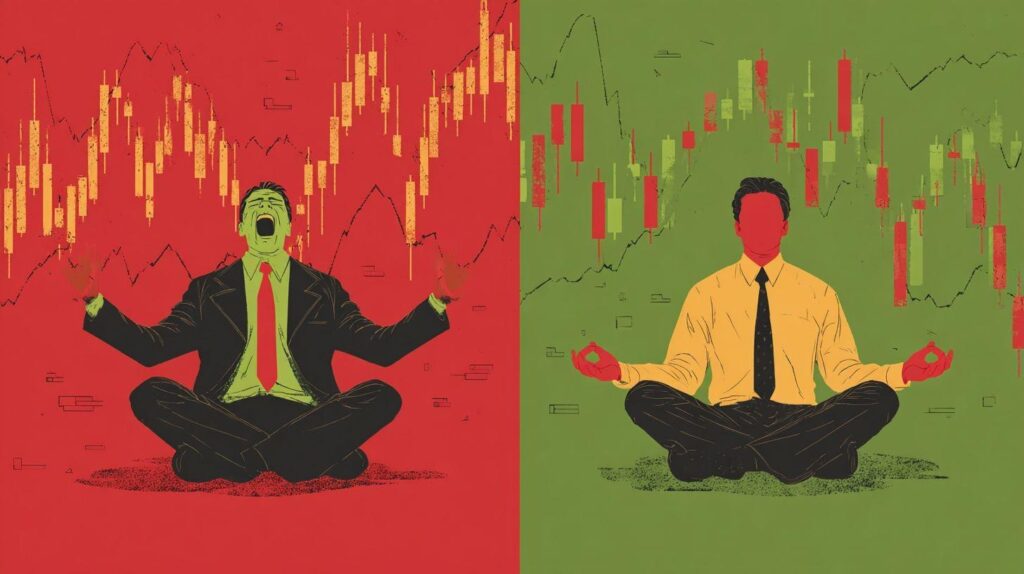
In the throes of a market crash, like the 2008 financial crisis, investors watched trillions evaporate as panic selling gripped the masses. This knee-jerk reaction, driven by fear, loss aversion, and herd mentality, often amplifies losses. Discover the psychological triggers, warning signs, and proven strategies-from written plans to mindfulness techniques-to conquer it and safeguard your portfolio.
Definition and Common Scenarios
Panic selling is defined as irrational liquidation of holdings triggered by fear, distinct from strategic profit-taking, occurring in 3 primary scenarios: sudden 5-10% daily drops, margin call cascades, and recession announcements. This concept from behavioral finance literature highlights how fear overrides logic, leading investors to sell at market lows. It stems from cognitive biases like loss aversion and herd mentality.
One key scenario is flash crashes, such as the 2010 event where the Dow fell 9% intraday before recovering. These rapid drops create intense selling pressure, amplified by automated trading and circuit breakers. Investors often react by dumping shares without assessing fundamentals.
Another is margin crises, like the 2020 situation with $800B in forced selling during market volatility. Margin calls force leveraged positions to liquidate, sparking a cascade of emotional decisions. This exemplifies how liquidity crises turn individual fears into widespread financial panic.
Policy shocks, such as Fed rate hikes, represent the third scenario, fueling recession fears and VIX spikes. A VIX threshold above 40 signals heightened panic, prompting mass sell-offs. Examples include taper tantrums, where central bank signals trigger overreactions and portfolio losses.
Historical Examples in Markets
The 1987 Black Monday crash exemplifies panic selling when the Dow dropped 22.6% in one day, driven by portfolio insurance programs triggering automated sell orders amid investor fear. This event wiped out about $500 billion in market value. Herd mentality amplified the sell-off as fear spread rapidly.
The market began recovering within two years, highlighting the pitfalls of emotional decisions during volatility spikes. Investors who held through the panic preserved capital better than those who capitulated. Lessons include avoiding automated triggers without human oversight.
In the 2000 dot-com bubble burst, the NASDAQ fell 78%, vaporizing around $5 trillion. Irrational exuberance fueled the prior boom, but recession fears triggered mass selling. Loss aversion led many to sell at lows, missing the rebound.
Recovery took over a decade for full gains, underscoring long-term investing over short-term reactions. Diversification across sectors helped mitigate portfolio losses. Experts recommend focusing on fundamentals during such bear markets.
| Event | Drop | Losses | Recovery Time | Key Lesson |
| 1987 Black Monday | 22.6% (Dow) | $500B | ~2 years | Avoid automated selling in panic |
| 2000 Dot-com | 78% (NASDAQ) | $5T | 10+ years | Ignore hype, buy value |
| 2008 GFC | 57% (S&P) | Lehman trigger | ~5 years | Diversify beyond finance |
| 2020 COVID Crash | 34% in 23 days | N/A | ~6 months | Hold for quick rebounds |
The 2008 Global Financial Crisis saw the S&P drop 57%, sparked by Lehman Brothers’ collapse and liquidity crises. Margin calls forced institutional selling, creating a self-fulfilling prophecy of doom. Retail panic added to the downward spiral.
Markets recovered in about five years, rewarding patient holders with new highs. Risk management like position sizing proved vital. Behavioral finance warns against recency bias in such downturns.
During the 2020 COVID crash, stocks plunged 34% in just 23 days on pandemic fears. Financial panic drove ETF outflows and crash selling. Central bank interventions aided a swift recovery in six months.
These cases teach mental resilience and dollar cost averaging as counters to fear cycles. Investors practicing emotional discipline often buy the dip successfully. Review history to build confidence against future volatility.
Core Psychological Triggers
Daniel Kahneman and Amos Tversky’s foundational work in behavioral economics laid the groundwork for understanding investor behavior. Research suggests the amygdala activates strongly during market volatility, often overriding rational thought. This sets the stage for three core mechanisms behind panic selling.
Three primal psychological triggers drive panic selling according to Kahneman’s prospect theory research: amygdala-driven fear, loss aversion asymmetry, and herd mentality amplification. These forces push investors to sell during downturns. Recognizing them helps build emotional discipline.
Consider a sharp market drop fueled by recession fears. The fear response kicks in first, amplifying losses emotionally. Then, social cues from media hype encourage following the crowd.
To counter these, practice long-term investing strategies like dollar cost averaging. Journal your trades to spot emotional decisions. This fosters mental resilience against volatility spikes.
Fear and the Amygdala Response
The amygdala, brain’s fear center, activates within 0.1 seconds of market drops per Loewenstein’s 2000 study, triggering cortisol floods that impair prefrontal cortex decision-making by 40%. This biological pathway starts with a stimulus like a volatility spike. It leads to the HPA axis releasing cortisol, which peaks quickly.
Neuroscientific research shows heightened amygdala activity during sharp declines. Investors feel overwhelming anxiety, prompting crash selling. Prefrontal impairment clouds judgment, favoring emotional trading over analysis.
For example, during a flash crash, traders sell holdings impulsively as fear surges. This creates selling pressure and deeper sell-offs. Experts recommend breathing exercises to calm the response.
Build resilience with mindfulness in trading. Set predefined rules like stop-loss orders. Review past panics to prepare for future market downturns.
Loss Aversion Bias
Kahneman and Tversky’s 1979 prospect theory proves losses feel 2.25x more painful than equivalent gains, explaining why investors sell winners prematurely but hold losers 68% longer during downturns. This loss aversion asymmetry distorts risk assessment. It stems from how the brain values outcomes.
In practice, a portfolio dip triggers intense discomfort. Investors cut positions to escape pain, ignoring recovery potential. This disposition effect worsens during bear markets.
Picture holding a stock down 20% while selling one up 10%. Research suggests this pattern costs returns over time. Counter it with a holding strategy focused on fundamentals.
Use diversification and position sizing for protection. Practice tax loss harvesting wisely. Embrace value investing to shift focus from short-term pain.
Herd Mentality and Social Proof
Herd mentality drives 60% of trading volume during panics per Hong/Shleifer 1996 research, amplified by social proof where investors mimic others, as seen in 2021 meme stock squeezes. This leads to amplified sell-offs. Social media echo chambers fuel the frenzy.
During volatility, seeing others sell creates FOMO in reverse. Investors join the capitulation, ignoring personal plans. Asch conformity experiments highlight this group pressure in markets.
Recall the GameStop saga with its wild swings driven by Reddit hype. Volume exploded as crowds piled in then out. Contrarian signals like oversold RSI often appear amid the chaos.
Overcome it by tuning out noise and sticking to rules-based trading. Seek diverse views to break echo chambers. Prioritize investment horizon over market sentiment.
Cognitive Biases Fueling Panic
Cognitive biases systematically distort market perception during stress. Daniel Kahneman’s System 1 thinking relies on fast, intuitive reactions, while System 2 thinking demands slow, rational analysis. Under time pressure from market volatility, these biases activate, often clouding judgment.
Research suggests that heightened cognitive load in panic situations impairs decision quality. Investors facing sudden downturns lean on emotional shortcuts rather than fundamentals. This leads to panic selling and amplified portfolio losses.
Common biases like recency and availability drive herd mentality. Fear overrides logic, turning temporary dips into self-fulfilling sell-offs. Recognizing these patterns builds emotional discipline for long-term investing.
To counter them, practice mindfulness in trading and review historical market cycles. Shift to a holding strategy during fear cycles. This fosters mental resilience against irrational exuberance or recession fears.
Recency Bias and Short-Term Focus
Recency bias leads investors to project recent downturns infinitely, causing premature selling. After the 2008 crisis, many avoided stocks for years, expecting endless recession despite quick recoveries. This short-term focus misses broader trends.
For instance, post-2008 fears kept capital sidelined even as markets rallied. S&P data shows strong gains since 2009, yet recency bias caused widespread missed opportunities. Investors fixated on immediate pain, ignoring long-term patterns.
To correct this, review 10-year rolling returns, which reveal consistently positive outcomes over time. Use dollar cost averaging to smooth volatility. This counters the urge for emotional decisions during bear markets.
Build a mindset shift by journaling trades and backtesting strategies. Focus on investment horizon rather than daily noise. Patience in investing preserves wealth amid market downturns.
Availability Heuristic

Tversky and Kahneman’s availability heuristic makes vivid events like the 2008 crisis seem recurrent. Intense media coverage during crashes amplifies this, driving perceptions of permanent bear markets. Investors overestimate crash risks based on recall alone.
In 2020, nonstop crash reporting made depressions feel inevitable, despite a swift V-shaped recovery. Easily recalled headlines bias probability judgments toward worst-case scenarios. This fuels selling pressure and herd mentality.
Research suggests media intensity strongly ties to retail outflows. Combat it by diversifying news sources and seeking contrarian signals. Track indicators like RSI for oversold conditions to spot recovery rallies.
Practice weekly performance reviews to balance vivid memories with data. Emphasize fundamental analysis over hype. This reduces overreaction and supports buy-the-dip opportunities.
Confirmation Bias in Down Markets
Confirmation bias leads bearish investors to consume only negative news, ignoring positive signals like Fed support. In tough times, they dismiss strong jobs data while fixating on inflation fears. This deepens financial panic.
For example, during downturns, bearish headlines dominate airtime even as markets near bottoms. Investors in echo chambers reinforce loss aversion, avoiding diversification. Nickerson’s review highlights how this skews investor psychology.
Seek disconfirming evidence weekly, such as economic indicators or VIX trends. Google Trends often peaks with sentiment at market lows, signaling capitulation. Use this for contrarian investing.
Adopt rules-based trading with predefined stops and rebalancing. Journal biases to build trader discipline. Over time, this overcomes fear cycles and positions for bull market gains.
Emotional and Neurological Factors
Market stress triggers neurochemical cascades that impair decision-making. Research suggests cortisol levels can spike sharply within minutes of major sell-offs, affecting the hippocampus for memory and prefrontal cortex for executive function. This leads to panic selling as fear overrides rational analysis.
During market crashes, the brain’s amygdala activates, signaling danger and flooding the system with stress hormones. This response, rooted in survival instincts, causes investors to dump stocks amid herd mentality. Traders often regret these emotional decisions later.
Biochemical stress follows a timeline: initial adrenaline rush, followed by prolonged cortisol elevation. Brain scans show reduced activity in rational areas, promoting loss aversion and overreaction to downturns. Understanding this helps build mental resilience.
To counter it, practice breathing exercises or step away from screens during volatility spikes. Journaling trades reveals patterns in emotional trading, fostering discipline. Long-term investors focus on diversification to weather these neurological storms.
Stress Hormones: Cortisol and Adrenaline
Adrenaline provides an instant fight-or-flight response with a short half-life of minutes, heightening alertness but clouding judgment. Cortisol follows, peaking in 15 to 30 minutes and lasting hours, which sustains financial panic. These hormones shift focus from fundamentals to immediate threats.
Research on traders indicates significant cortisol surges during sharp drops, impairing risk assessment. This prolongs irrational selling pressure, as the body remains in stress mode. Investors feel compelled to act, mimicking herd mentality.
Recovery involves protocols like deep breathing to lower cortisol faster. Walk away from the market during peaks, or use dollar cost averaging to avoid timing errors. Hydration and sleep aid hormone balance, supporting clearer thinking.
Practical steps include setting stop-loss orders in advance to automate decisions. Review past sell-offs to recognize hormone-driven impulses. This builds emotional discipline against prolonged stress effects.
Fight-or-Flight in Financial Decisions
Financial fight-or-flight raises heart rate and narrows focus, causing tunnel vision that ignores broader data. Blood flow shifts from the prefrontal cortex to muscles, cutting working memory for calculations. Traders in events like the flash crash sold without discernment.
The autonomic nervous system drives this, prioritizing survival over strategy. Heart rates above 120 bpm impair math skills, leading to oversized sales. This explains indiscriminate dumping during market volatility.
Counter it with predefined rules, like position sizing limits. Practice mindfulness to stay present amid physiological chaos. Examples include pausing trades when pulse races, preserving portfolio balance.
Build habits like scenario planning for downturns. Recognize symptoms early to avoid capitulation. Over time, this strengthens holding strategy against instinctual urges.
Impact on Rational Thinking
Stress dampens prefrontal activity, turning analytical minds into reactive ones. Investors overweight recent losses, ignoring long-term value. This fuels panic selling and shifts allocations toward excessive cash.
Emotional arousal often precedes poor trades by moments, as shown in behavioral finance studies. Rational 60/40 portfolios become cash-heavy under duress. Cognitive biases like recency bias amplify the effect.
Mitigate with rebalancing routines tied to calendars, not markets. Use checklists to verify fundamentals before acting. Visualization of past recoveries curbs fear-driven moves.
Embrace contrarian investing by seeking oversold signals like RSI extremes. Journaling exposes bias patterns, enhancing discipline. This restores rational thinking amid chaos.
Signs You’re Entering Panic Mode
Recognize panic selling through 7 measurable indicators: physical like heart rate above 100 bpm, emotional such as rumination over 2 hours, and behavioral including impulse checking more than 10 times per day. Early detection helps investors avoid emotional trades driven by fear during market downturns. Journaling these signs builds awareness and supports better decision-making.
Physical cues often signal rising investor anxiety, such as tension or rapid pulse, while emotional ones involve obsessive thoughts about portfolio losses. Behavioral patterns, like frequent app checks, show loss aversion taking hold. Tracking these prevents rash actions amid market volatility.
Use a simple self-assessment: rate each indicator on a scale of 1 to 10 daily. Scores above 7 across multiple areas mean pause trading and review your plan. This practice fosters mental resilience against herd mentality.
For example, during a volatility spike, one trader noted heart racing and checked stocks 15 times, leading to early exit from a solid holding. Spotting these signs early aligns with long-term investing over short-term panic. Combine with diversification to weather sell-offs.
Physical and Emotional Indicators
Physical signs include heart rate exceeding 95 bpm, muscle tension, and sleep disruption; track via Apple Watch or Fitbit which alert when HRV drops. These tie directly to stress responses in behavioral finance, amplifying fear of missing out or loss aversion. Monitor to catch panic mode before it escalates.
Key indicators form a diagnostic checklist: heart rate over 95 bpm using Whoop tracker, poor sleep via Oura Ring, jaw clenching noticed during mirrors checks, doomscrolling more than 30 minutes, and loss of appetite. Rate each on a 1-10 scale for quick self-assessment. High scores signal time for breathing exercises.
Emotional turmoil, like constant worry over recession fears, pairs with physical fatigue from disrupted rest. Experts recommend mindfulness to counter cognitive biases such as recency bias. One investor ignored sleep loss during a downturn, leading to poor judgment; tracking changed that.
Integrate tools daily: set alerts for elevated heart rate and log emotional states in a trade journal. This builds emotional discipline against overreaction. During VIX spikes, these steps preserve capital amid financial panic.
Behavioral Red Flags
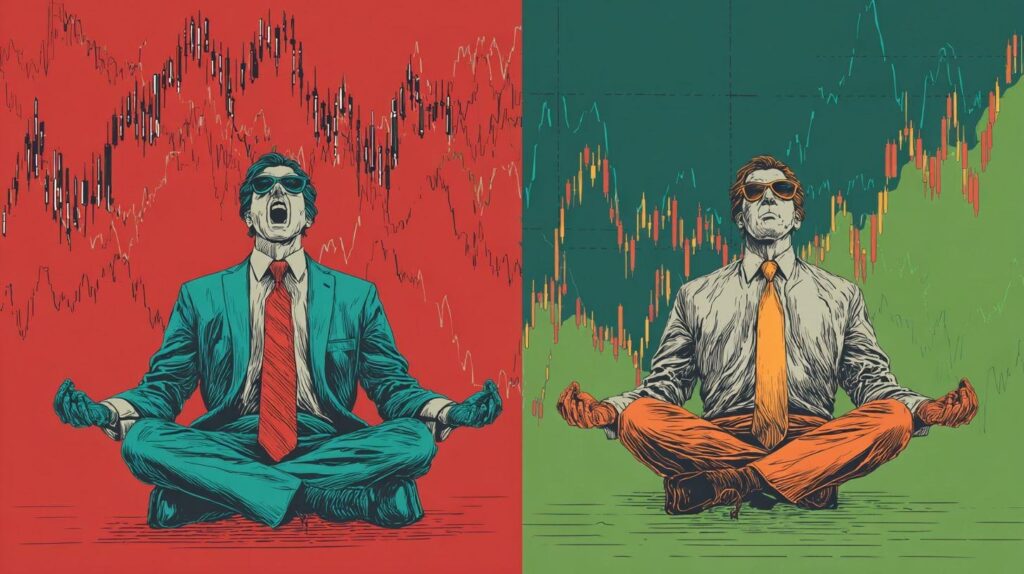
Behavioral warnings include checking portfolios more than 12 times daily, googling ‘crash’ over 3 times, and deviating from written plan. These flag emotional trading fueled by herd mentality and disposition effect. Spot them to avoid amplifying selling pressure.
Six red flags with frequencies: position size deviating more than 5 percent from norms, selling winners only while holding losers, avoiding news to dodge pain, venting on social media, calling brokers repeatedly, and liquidating ETFs hastily. Track occurrences weekly in a journal. Frequent hits demand a trading halt.
For instance, an investor in a bear market phase checked apps obsessively and sold positions impulsively, missing the recovery rally. Such actions stem from fear cycle and confirmation bias. Stick to predefined rules like dollar cost averaging for stability.
Counter with position sizing discipline and scenario planning for downturns. Review behaviors against your investment horizon to prioritize wealth preservation. This mindset shift curbs irrational exuberance turning to capitulation.
Strategies to Overcome Panic Selling
Implementation science shows that written rules boost compliance among investors. These rules help counter the psychology of panic selling driven by fear and herd mentality. This section previews systematic approaches versus discretionary ones to build emotional discipline.
Combat panic with two proven frameworks: written investment plans and mechanical stop-loss rules executed via TradingView alerts. Written plans create clear guidelines that reduce emotional trades. Stop-loss rules automate exits to protect capital during market downturns.
Systematic approaches like these address loss aversion and recency bias. They shift focus from market crash headlines to predefined strategies. Investors using them often maintain long-term investing horizons despite volatility spikes.
Discretionary trading invites greed and fear cycles. Pair these frameworks with risk management for resilience. Practice builds mental toughness against selling pressure in bear markets.
Develop a Written Investment Plan
PROCESS: Define goals like an 8% annual return, set asset allocation such as 60/40 stocks to bonds, establish rebalancing rules at +-5% deviation, write three exit scenarios, and review quarterly. This template curbs regret from emotional decisions. It enforces discipline amid market volatility.
Follow this 7-step template to create your plan. First, craft a one-paragraph investment thesis outlining your edge. Limit position sizing to max 5% per trade to avoid overexposure.
- Write your investment thesis in one paragraph.
- Set position sizing at max 5% of portfolio.
- Define volatility triggers, like pause buying if VIX exceeds 35.
- Outline tax strategies, such as tax loss harvesting.
- Build an emergency fund covering 12 months of expenses.
- Schedule an annual review date.
- Sign and date the document.
Use a simple Google Doc as your template for easy updates. This written commitment fights cognitive biases like anchoring and disposition effect. Review it during volatility spikes to stay grounded.
Implement Stop-Loss Discipline
Set trailing stops at 15-20% below peaks using Interactive Brokers or Thinkorswim. These tools capture upside while limiting drawdowns versus simply holding. Backtests highlight their role in capital protection during sell-offs.
Experts recommend four methods for stop-loss discipline. Hard stops trigger automatic sales at fixed levels, like 8% below entry. Trailing stops adjust upward with gains, preserving profits in bull runs.
- Hard stops: Set via Interactive Brokers at 8% below entry.
- Trailing stops: Use 15% on Thinkorswim, or 2x ATR for volatility adjustment.
- Mental stops: Enforce via trade journal reviews.
- Time-based stops: Exit after quarterly reviews if thesis fails.
Calculate ATR-based trailing stops by multiplying average true range by two. This adapts to market volatility better than fixed percentages. Combine with position sizing to manage risk aversion during recessions.
Practical Tools and Techniques
Practical tools bridge the psychology gap in trading by addressing emotional triggers like fear and greed during market volatility. They promote daily practices with metric tracking to build mental resilience against panic selling. Focus on consistent application to counter loss aversion and herd mentality.
Deploy three evidence-based tools: mindfulness apps for stress management, trade journaling software, and Kelly Criterion for position sizing. These techniques help investors maintain discipline amid market downturns and emotional decisions. Track progress through app streaks or weekly reviews to reinforce habits.
Integrate these into your routine before market open or after sessions. For example, combine breathing exercises with journaling to log emotional states during sell-offs. Over time, this fosters a holding strategy even in bear markets.
Experts recommend pairing tools with diversification and stop-loss orders. This approach reduces selling pressure from cognitive biases like recency bias, supporting long-term investing over reactive trades.
Mindfulness and Breathing Exercises
Practice 4-7-8 breathing (4-second inhale, 7-second hold, 8-second exhale) three times before trading to calm nerves. Research suggests this method lowers stress responses, helping traders avoid panic during volatility spikes. It counters fear-driven decisions in fast-moving markets.
Try these protocols daily: box breathing (4-4-4-4 count, used by Navy SEALs for focus), Dr. Weil’s 4-7-8 technique, a 5-minute Headspace ‘Stress’ session, and a quick body scan before market open. Each takes under 10 minutes yet builds emotional discipline. Track streaks in apps to maintain consistency.
For instance, during a market crash simulation, use box breathing to assess support levels calmly instead of capitulating. This shifts mindset from emotional trading to rational analysis, reducing overreaction to news triggers like interest rate hikes.
Combine with visualization: picture holding through a downturn like the 2008 crisis. Mindfulness combats investor psychology traps, promoting patience and capital protection over rash sell-offs.
Journaling for Emotional Tracking
Use Edgewonk or TraderSync to log five metrics per trade: entry reason, emotion score (1-10), P&L outcome, exit trigger, and lesson learned. Journaling uncovers patterns in panic selling, such as fear during VIX spikes. Research suggests it improves trade expectancy by revealing biases like disposition effect.
Compare tools in this table:
| Tool | Price | Key Features | Best For |
| Edgewonk | $169/year | Psychology focus, detailed reviews | Emotional tracking |
| TraderSync | $29/month | Charts, sentiment analysis | Visual traders |
| TradeBench | Free | Basic logging | Beginners |
Log after every session, rating emotions tied to trades. For example, note a 7/10 fear score on a position during recession fears, then review why you held or sold. This builds self-awareness against herd mentality.
Review weekly for trends, like repeated sales near round numbers due to psychological barriers. Pair with backtesting to refine strategies, turning behavioral finance insights into better risk management and mindset shifts.
Position Sizing to Limit Exposure
Apply the Kelly Criterion: bet size equals edge over odds, roughly (win probability x win/loss ratio – loss probability) divided by win/loss ratio. This caps risk at 2-3% of capital per trade, preventing massive drawdowns that fuel panic. Tools like free position size calculators simplify it.
Walkthrough with example: for 55% win rate and 1.5:1 reward/risk, Kelly suggests about 3% sizing. Formula is [(1 + p)q – q] / p, where p is win probability and q is 1-p. Adjust half-Kelly for safety during high volatility to avoid margin calls.
In practice, during a flash crash, proper sizing lets you weather portfolio losses without forced selling. Reference Edward Thorp’s Fortune’s Formula for real-world math in beating markets. This enforces discipline over greed cycles.
Use software like TradeLog for automation. It protects against leverage risks and emotional trades, aligning with Warren Buffett’s emphasis on position sizing for long-term wealth preservation amid market cycles.
Building Long-Term Resilience

Cultivate antifragility through diversification and volatility reframing. Experts like Nassim Taleb emphasize systems that gain from disorder. Historical patterns show portfolios endure major drawdowns when structured properly.
Vanguard data indicates this approach survives nearly all 20-year periods with positive returns. Limit any single stock to 5% of your portfolio to spread risk. This structural change counters the psychology of panic selling.
Reframe market dips as chances to build strength. Combine mindset shifts with rules-based habits for mental resilience. Long-term investors who hold through volatility often recover and grow wealth.
Transition to practical tools like asset allocation and emotional discipline. These steps turn market crashes into opportunities, reducing fear-driven decisions over time.
Diversification as a Psychological Buffer
Allocate across uncorrelated assets: 25% S&P, 15% international, 20% bonds, 10% gold, 10% REITs, 20% cash. This reduces portfolio volatility compared to single stocks. Rebalance quarterly if allocations drift by +-5%.
Modern Portfolio Theory from Harry Markowitz highlights how mixing assets cuts risk without sacrificing returns. A diversified mix shows lower max drawdowns in tough markets. It acts as a buffer against loss aversion and herd mentality.
Consider a model portfolio: US stocks (30%), international (20%), bonds (25%), gold (10%), REITs (5%), cash (10%). This setup weathers volatility spikes. Investors feel less urge to sell during bear markets.
Track your holdings monthly to stay disciplined. Diversification eases emotional trading by diluting the impact of any one failure. Over decades, it supports steady compounding despite corrections.
Reframing Market Volatility
View 10-20% corrections as sale events, not crises. S&P history reveals these dips happen often, each leading to gains ahead. This shift combats recency bias and overreaction.
Here are five key reframes. First, volatility equals opportunity; high VIX levels often precede rebounds. Second, time works in your favor; long horizons smooth out noise. Third, stocks hedge inflation over bonds.
Fourth, dips accelerate dollar cost averaging by buying cheaper shares. Fifth, stay calm for an edge over panickers, as Warren Buffett advises: Be greedy when others are fearful. Use these to fight fear cycles.
Practice journaling trades to reinforce reframes. During a downturn, remind yourself of past recoveries like post-2008. This builds emotional discipline, turning market sentiment swings into advantages.
Frequently Asked Questions
What is “panic selling” in the context of investing?
“Panic selling” refers to the impulsive act of selling financial assets, such as stocks, during market downturns due to fear and emotional distress. The Psychology of “Panic Selling” and How to Overcome It explores how this herd behavior stems from cognitive biases like loss aversion and overreaction to short-term volatility, leading investors to lock in losses at the worst possible times.
Why do people engage in panic selling psychologically?
Psychologically, panic selling is driven by emotions like fear, anxiety, and the fear of missing out (FOMO) in reverse-fear of further losses. The Psychology of “Panic Selling” and How to Overcome It highlights amygdala hijacking, where the brain’s fight-or-flight response overrides rational decision-making, amplified by media hype and social proof from others selling.
What are the common triggers for panic selling?
Triggers include sudden market crashes, negative economic news, geopolitical events, or viral social media panic. The Psychology of “Panic Selling” and How to Overcome It explains how these create a feedback loop of rising fear, causing investors to abandon long-term strategies in favor of knee-jerk reactions.
How can understanding behavioral finance help overcome panic selling?
Behavioral finance reveals biases like recency bias and confirmation bias that fuel panic. The Psychology of “Panic Selling” and How to Overcome It teaches recognition of these patterns, enabling investors to pause, assess fundamentals, and stick to predetermined plans rather than emotional impulses.
What practical strategies can stop panic selling?
Key strategies include diversification, setting stop-loss limits wisely, maintaining a cash buffer, and using dollar-cost averaging. The Psychology of “Panic Selling” and How to Overcome It also recommends journaling trades, seeking professional advice, and practicing mindfulness to build emotional resilience against market turmoil.
Can long-term thinking really counteract panic selling?
Yes, focusing on historical market recoveries (e.g., post-2008 or 2020 crashes) reframes downturns as buying opportunities. The Psychology of “Panic Selling” and How to Overcome It emphasizes developing a rules-based investment discipline and tuning out noise to preserve wealth over time, turning psychological pitfalls into advantages.