
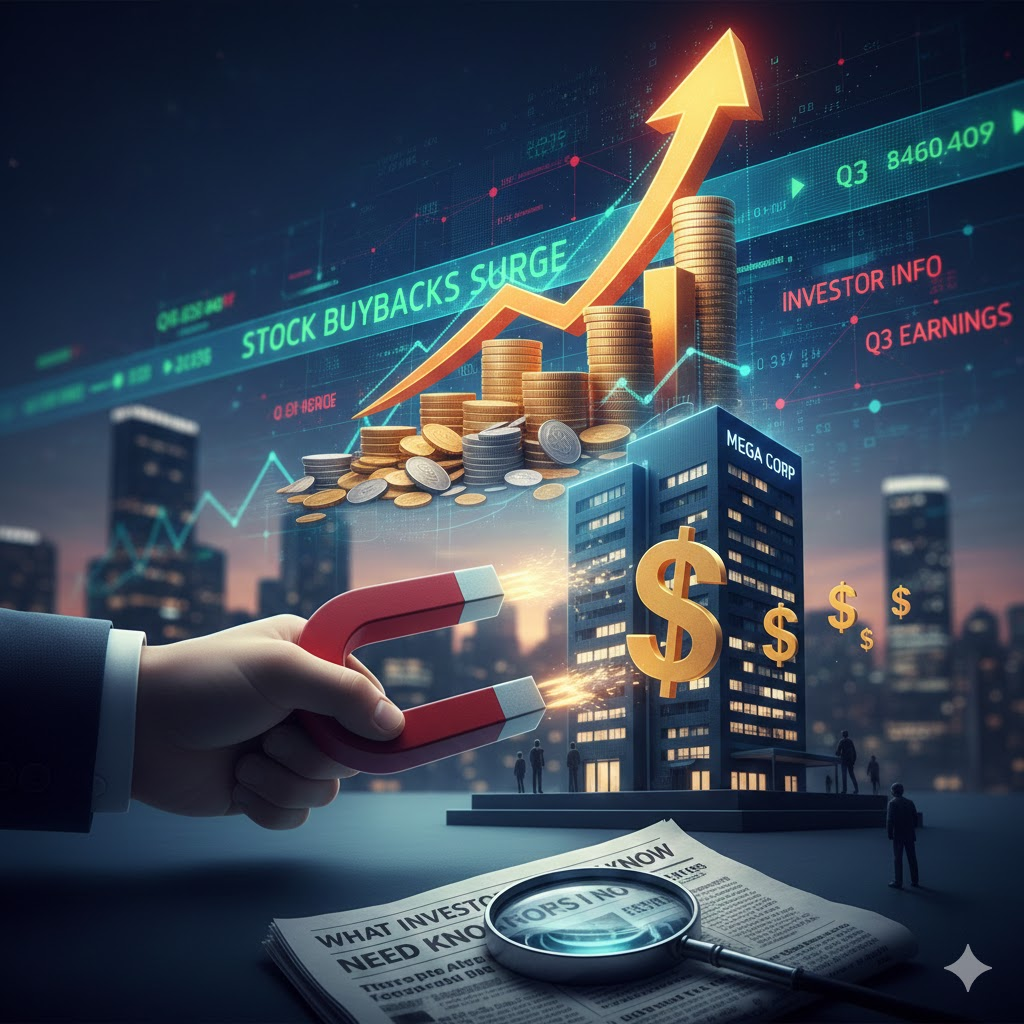
Stock buybacks are once again making headlines as companies increase share repurchase programs at a rapid pace. For investors, this trend raises important questions about market signals, company health, and long-term returns. Understanding why stock buybacks are surging and how they affect investments is essential for making informed decisions.
What Are Stock Buybacks
A stock buyback, also known as a share repurchase, occurs when a company buys back its own shares from the open market. This reduces the number of outstanding shares, often increasing the value of remaining shares. Companies typically fund buybacks using excess cash or borrowed capital.
Why Stock Buybacks Are Increasing
Several factors are driving the recent surge in stock buybacks.
Strong Corporate Cash Positions
Many companies are holding large cash reserves after years of strong earnings. Instead of expanding aggressively, businesses are choosing to return value to shareholders through buybacks.
Limited Growth Opportunities
In uncertain economic conditions, companies may delay major investments or acquisitions. Buybacks offer a controlled way to deploy capital when expansion risks are high.
Earnings Per Share Improvement
Reducing the number of outstanding shares boosts earnings per share, making financial performance appear stronger. This can support stock prices and improve investor confidence.
Market Volatility
During volatile markets, executives may believe their stock is undervalued. Buybacks signal confidence in the company’s future and can stabilize share prices.
How Stock Buybacks Impact Investors
Understanding the effects of buybacks helps investors evaluate whether they are beneficial or risky.
Potential Benefits
Stock buybacks can increase share value, improve financial ratios, and provide tax-efficient returns compared to dividends. Long-term investors may benefit if buybacks are executed at reasonable valuations.
Potential Risks
Buybacks funded by debt can weaken balance sheets. In some cases, companies prioritize short-term stock performance over long-term growth. Poorly timed buybacks may destroy shareholder value instead of creating it.
Buybacks vs Dividends
While both methods return capital to shareholders, buybacks offer flexibility. Dividends create ongoing obligations, while buybacks can be adjusted based on market conditions. Investors should evaluate how consistently and responsibly a company manages both.
What Investors Should Watch Closely
Before reacting to buyback announcements, investors should analyze key factors.
- Company debt levels and cash flow strength
- Timing of buybacks relative to stock valuation
- Management’s long-term growth strategy
- Balance between reinvestment and shareholder returns
Buybacks are most effective when combined with sustainable business growth.
Are Stock Buybacks a Positive Market Signal
Stock buybacks can signal confidence, but they are not always a sign of strength. In some cases, they reflect caution rather than optimism. Investors should avoid viewing buybacks in isolation and instead consider the broader financial and economic context.
Conclusion
The surge in stock buybacks reflects shifting corporate priorities amid market uncertainty. For investors, buybacks can offer opportunities, but they also require careful evaluation. By understanding why companies repurchase shares and how those decisions impact long-term value, investors can make smarter, more strategic investment choices.