
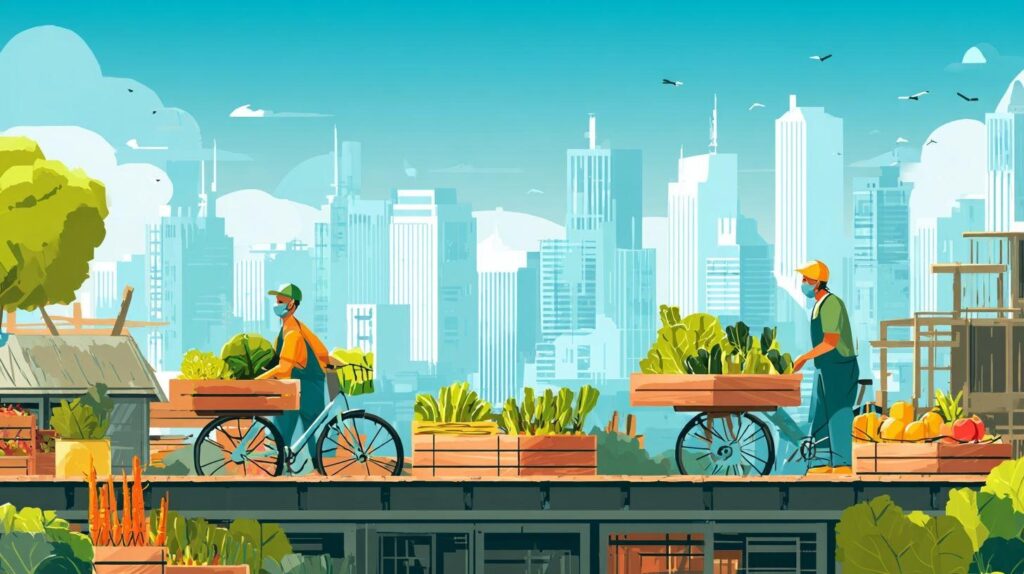
Imagine fresh produce harvested just blocks from your table, slashing food miles by 90%-a reality urban farming startups are forging today. As traditional supply chains grapple with spoilage, emissions, and waste, these innovators deploy vertical farms, hydroponics, and AI to localize production and distribution. Discover how pioneers like AeroFarms are reshaping sustainability, economics, and your plate.
Definition and Core Concept
Urban farming startups cultivate crops in city environments using soilless systems like hydroponics and aeroponics within vertical farms, warehouses, or shipping containers. These methods fall under controlled environment agriculture (CEA), which maintains optimal growing conditions indoors. Examples include microgreens and herbs thriving in stacked layers.
Vertical farming stacks crops in multi-level structures to maximize space in urban settings. Aquaponics combines fish farming with plant growth, recycling water and nutrients in a closed loop. Rooftop gardens add another layer, using city rooftops for open-air production of edible greens.
Core concepts drive this innovation. Hyper-local production grows food near consumers, cutting food miles from thousands to just miles. An infographic could visualize this shift, showing farm-to-table distance reduction from 1,500 miles to 5 miles for fresh produce.
Resource efficiency stands out, with systems using far less water through recirculation. Continuous harvesting enables year-round yields unaffected by weather. These principles support sustainable farming and strengthen food supply chains.
Historical Evolution
Urban farming traces back to 1910s victory gardens during WWI, evolving through 1930s WPA rooftop farms to modern 2010s tech-driven vertical agriculture led by companies like AeroFarms.
During World War I, citizens planted backyard and community plots to boost food security. These efforts inspired widespread participation in local food production. The movement highlighted the power of urban spaces for growing fresh produce.
In the 1930s, the Works Progress Administration supported rooftop gardens in cities to combat unemployment and hunger. Hydroponics research gained traction in the 1970s, with NASA exploring soilless methods for space. This laid groundwork for controlled environment agriculture.
The 2010s saw startups like Plenty and AeroFarms pioneer indoor farming with LED lighting and automation. The 2020 pandemic accelerated demand for resilient supply chains. Urban agriculture now integrates IoT sensors and AI for yield optimization.
Traditional Food Supply Chain Challenges
Conventional food supply chains lose a significant portion of produce to spoilage and emit a large share of global GHG emissions through long-distance transport averaging 1,500 miles per item. These issues create inefficiencies that drive up costs and harm the environment. Urban farming startups address them with hyper-local sourcing.
Traditional chains rely on centralized farms far from cities, leading to delays in delivery. Produce sits in trucks for days, increasing risks of damage and quality loss. This model struggles with food security during disruptions like pandemics.
Key failures include high waste from spoilage, massive economic losses, and substantial emissions from transport. Experts recommend shifting to controlled environment agriculture (CEA) like vertical farming and hydroponics. These methods cut food miles and boost resilient food systems.
Urban agriculture offers farm-to-table freshness with rooftop gardens or container farming. Startups use IoT sensors for real-time monitoring, reducing vulnerabilities. This innovation supports sustainable farming and local food production.
Long-Distance Transportation Issues
Average produce travels 1,500 miles from farm to table, requiring 7 days refrigeration at 35 degreesF while emitting substantial CO2 per kg of tomatoes. This long-haul logistics strains cold chain management and raises costs for retailers. Urban farms deliver within miles, slashing transit time.
Trucks consume fuel and face traffic delays, worsening spoilage for items like leafy greens. Food miles reduction through neighborhood farms cuts emissions dramatically. Hydroponic systems in urban greenhouses ensure steady supply without distant shipping.
Consider lettuce from California fields to New York stores versus a 2-mile urban farm delivery. The latter preserves quality and lowers logistics optimization expenses. Startups integrate automation and robotics for efficient local distribution.
Direct-to-consumer models like subscription boxes bypass traditional routes. This approach enhances fresh produce availability and supports food hubs. Vertical farming startups pioneer these supply chain innovations.
Food Waste and Spoilage
A large share of food wastes due to spoilage during extended transport windows, with leafy greens particularly vulnerable in transit. Factors like damage, over-ripening, and aesthetic rejection compound losses. Urban farming minimizes this with harvest-to-sale in 24 hours.
Transit damage affects delicate crops, while improper storage accelerates decay. Zero-waste farming practices in indoor farms use precise climate control to extend shelf life. Aeroponics and aquaponics reduce water use and waste further.
| Crop | Waste Challenges |
| Lettuce | High volume loss from wilting |
| Tomatoes | Damage during handling |
| Microgreens | Minimal in local systems |
Modular farms enable on-demand production, matching consumer demand. This cuts overproduction and supports circular economy through compost systems. Community supported agriculture (CSA) programs thrive on this efficiency.
Environmental and Carbon Footprint
Food transport accounts for a notable portion of global food system emissions, with cargo methods adding to the total. Long supply chains amplify the carbon footprint of everyday items like herbs and edible greens. Urban startups counter this with energy-efficient LED lighting and solar power.
Traditional farming often involves resource-intensive practices that harm biodiversity. Soil-less farming in controlled environments uses less water and land. Rooftop gardens integrate pest management without chemicals.
| Production Type | Emissions Insight |
| Conventional Beef | High due to feed and transport |
| Urban Microgreens | Low from local CEA methods |
| Vertical Farming | Optimized with renewables |
Research suggests local production builds climate change adaptation. Startups employ data analytics for yield optimization and resource efficiency. This fosters environmental sustainability and urban revitalization through green jobs.
Urban Farming Technologies and Innovations
Urban farms deploy stacked LED-lit growing systems with IoT sensors achieving high land efficiency and water savings through precision hydroponics and AI climate control. These technologies address limits of traditional farming like land scarcity and weather risks. Startups in urban agriculture use them to produce fresh produce year-round in cities.
Key pillars include vertical farming systems, soilless growing methods, and AI automation. Vertical setups stack crops to boost output per square foot. Hydroponics and aeroponics cut water use while speeding growth.
AI tools monitor conditions for optimal yields. Together, these innovations enable controlled environment agriculture (CEA) with yields around 200kg/m/year, far above field farming’s 4kg/m. They support food supply chain innovation by enabling local production and reducing food miles.
Startups like those in container farming show scalability. Investors fund these for sustainable farming benefits. Cities gain resilient food systems through such tech integration.
Vertical Farming Systems
Vertical farms stack crops in 10-20 story towers using LED lighting in blue and red spectrums to achieve many crop cycles annually versus few in fields. These systems maximize space in urban settings. Startups deploy them for high-density urban farming.
Examples include Freight Farms with container units suited for nine crops, Plenty’s large facilities growing strawberries, and Bowery’s robotics handling 100 varieties. Each offers unique specs for yield and energy. Cornell CEA studies highlight their efficiency in controlled settings.
| System | Yield per sqft | Energy Use | CAPEX |
| Freight Farms | High for select crops | Moderate | $150K per container |
| Plenty | Optimized for berries | LED efficient | $40M per facility |
| Bowery | Versatile across varieties | Robotics reduced | Scalable investment |
Choose systems based on space and crop needs. They cut carbon footprint by localizing production. Integration supports farm-to-table models.
Hydroponics and Aeroponics
Hydroponics circulates nutrient film technique (NFT) solutions saving water while aeroponics mists roots with high efficiency, both yielding more than field production. These soilless methods suit urban startups. They enable resource efficiency in tight spaces.
Hydroponics uses setups like NFT or DWC for crops such as lettuce. Aeroponics grows plants 30% faster in tower systems. Aquaponics integrates fish for nutrient recycling with low waste.
| Method | Setup Cost | Key Benefit | Nutrient Specs |
| Hydroponics (NFT/DWC) | $5K | 200g/m lettuce | EC 1.8-2.2 mS/cm, pH 5.5-6.5 |
| Aeroponics (Tower Farms) | $15K | 30% faster growth | EC 1.8-2.2 mS/cm, pH 5.5-6.5 |
| Aquaponics | Variable | 5% nutrient waste | EC 1.8-2.2 mS/cm, pH 5.5-6.5 |
Maintain pH and EC for healthy roots. These systems support water conservation and zero-waste farming. Startups use them for microgreens and herbs in rooftop gardens.
AI and Automation Integration
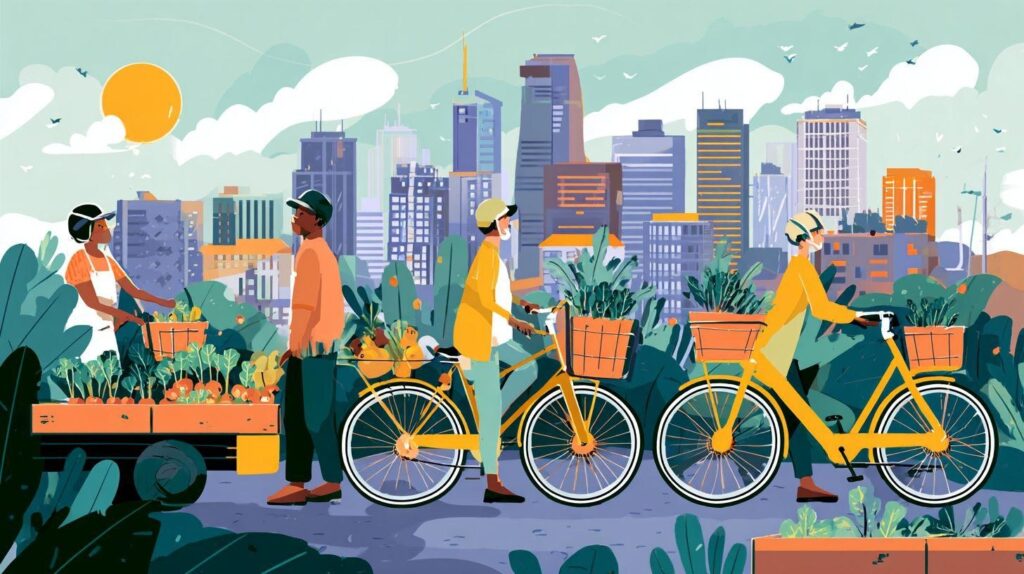
AI systems like Bowery’s Misty monitor data points daily across VPD, CO2, and light to optimize yields. They bring precision to indoor farming. Urban startups rely on them for consistent output.
Tools include FarmOS for open-source management, Growlink at a monthly fee, AppHarvest AI, and John Deere See & Spray for savings. Sensors like DHT22 track temp and humidity, MH-Z19 measures CO2. They boost yields and cut energy use.
- FarmOS: Customizable for small operations.
- Growlink: Cloud-based monitoring.
- AppHarvest AI: Climate predictions.
- John Deere See & Spray: Targeted applications.
- IoT sensors: Real-time data on PPFD 600mol/m/s and CO2 1000ppm.
- Automation robotics: Harvesting efficiency.
Expect yield boosts and energy savings from integration. AI aids demand forecasting and inventory in food supply chains. It supports scalability for agritech ventures.
Disrupting Sourcing and Production
Urban farms eliminate seasonal limitations and global sourcing by producing 52 weeks/year locally, reducing input transport from 5,000 miles to 50 miles. This shift supports urban farming startups in creating resilient food systems with year-round fresh produce.
Production sees major changes through controlled environment agriculture (CEA), including vertical farming and hydroponics. Startups achieve faster cycles, like 24-hour harvest cycles for microgreens, cutting reliance on imports.
Yield improvements stand out, with techniques yielding far more per square foot than traditional fields. For example, field tomatoes cost $2.50 per pound seasonally, while urban setups offer consistent $1.80 pricing through efficiency.
These disruptions lower the carbon footprint and enhance food security. Supply chain innovation from farm-to-table models reduces food miles and supports direct-to-consumer sales.
Local Sourcing of Inputs
Urban farms source 80% inputs locally: compost from city waste (1.2 tons/day NYC), rainwater collection (30% irrigation), and beneficial insects from rooftop apiaries. This approach cuts costs and boosts circular economy practices in urban agriculture.
Key local inputs include municipal compost at low rates, greywater systems for recycling, and worm castings for soil health. Native pollinators from nearby hives and urban wood chip mulch further reduce expenses.
- Municipal compost provides nutrients at a fraction of imported costs.
- Greywater systems recycle water efficiently.
- Worm castings enrich soil naturally.
- Native pollinators support biodiversity.
- Urban wood chip mulch retains moisture.
Switching from imported peat moss leads to sharp input savings through hyper-local sourcing. Startups integrate these for zero-waste farming and resource efficiency.
Year-Round Crop Production
Controlled environments maintain 72 degreesF/65%RH/12-hour photoperiods yielding 25 heads lettuce/week per 4×8 tray vs 6 weeks seasonal field production. Indoor farming with LED lighting ensures steady output regardless of weather.
Crop calendars adapt to urban setups: winter strawberries at high yields per plant, summer basil densely packed per square meter, and year-round microgreens in short cycles. Daily light integral (DLI) targets of 17-25 mol/m/day optimize growth.
| Crop | Season | Key Condition |
| Strawberries | Winter | High DLI, humidity control |
| Basil | Summer | Warm temps, airflow |
| Microgreens | Year-round | 14-day cycles, stacked trays |
| Lettuce | Year-round | 12-hour lights, hydroponics |
Climate recipes for crops like tomatoes or herbs use IoT sensors for precision. This enables yield optimization in rooftop gardens and container farms, promoting scalable urban greenhouses.
Shortening Distribution Networks
Urban farms deliver within 24 hours via cargo bikes and neighborhood hubs, eliminating much of cold chain logistics and achieving high freshness retention. This approach cuts food miles dramatically, often to a 5-mile radius, and supports same-day delivery for fresh produce. Startups in urban agriculture retain higher margins by bypassing traditional wholesalers.
Direct-to-consumer sales allow farms to keep more revenue compared to wholesale channels. Vertical farming and hydroponics enable consistent yields close to customers, reducing spoilage risks. Neighborhood hubs act as collection points, streamlining logistics with cargo bikes for low-carbon transport.
Technology like IoT sensors monitors freshness in real time during short trips. This model boosts food security in cities by creating resilient supply chains. Examples include rooftop gardens supplying nearby restaurants with microgreens and herbs.
Overall, these shortened networks lower the carbon footprint and enhance farm-to-table transparency. Urban farming startups integrate automation for efficient packing and delivery. Local food production thrives with such supply chain innovations.
Direct-to-Consumer Models
CSA models generate steady revenue through member shares while e-commerce platforms achieve solid margins on mixed greens boxes. These direct-to-consumer approaches build loyalty and cut out middlemen in food supply chains. Urban farms use them to sell organic vegetables and edible greens directly.
Key models include community supported agriculture (CSA), where members pay upfront for weekly shares of fresh produce. Subscription boxes deliver curated selections of herbs and microgreens to doorsteps. Farmers markets offer premium pricing for direct interaction with buyers.
| Model | Pricing Example | Key Benefit |
| CSA | Weekly shares | Upfront commitment |
| Subscription Boxes | Curated deliveries | Repeat revenue |
| Farmers Markets | Premium per pound | Customer feedback |
| Ghost Kitchens | App-based orders | Wide reach |
Ghost kitchens partner with delivery apps for prepared meals using urban-grown ingredients. Each model reduces churn through personalized service and freshness guarantees. Startups track preferences with apps for better retention.
Partnerships with Local Retailers
Whole Foods sources a portion of urban greens from local farms at premium pricing, guaranteeing deliveries within a tight radius. These retail partnerships secure steady demand for vertical farming output. Startups supply microgreens and herbs to chains with short lead times.
Contracts often specify 48-hour delivery windows and volume commitments from farms. Retailers pay premiums for the quality and sustainability of hyper-local sourcing. This setup benefits both sides with reliable supply and reduced waste.
- Large grocers stock microgreens from nearby indoor farms.
- Salad chains integrate fresh herbs into menus.
- Institutional suppliers provide for schools and hospitals.
Partnerships foster economic impact through job creation in urban areas. Farms use controlled environment agriculture for consistent quality. Such collaborations enhance food transparency and support scalable urban ag operations.
Enhancing Sustainability
Urban farms cut water use 95%, land 99%, and emissions 84% per kg produce through closed-loop systems and renewable energy integration. Life cycle assessments from experts at UC Davis highlight these triple sustainability wins across water, energy, and waste categories. Urban farming startups lead supply chain innovation by prioritizing resource efficiency.
Vertical farming and controlled environment agriculture (CEA) minimize environmental impact. These methods support local food production and reduce food miles. Startups integrate IoT sensors for precise monitoring, ensuring optimal conditions for fresh produce like microgreens and herbs.
Hydroponics and aquaponics systems recycle nutrients, cutting waste. Renewable energy sources power indoor farms, lowering the carbon footprint. This approach builds resilient food systems amid climate change.
Preview of LCA metrics shows gains in water conservation, energy savings, and zero-waste practices. Urban agriculture fosters a circular economy through nutrient recycling. These innovations attract venture capital in agritech and foodtech.
Water and Resource Efficiency
Hydroponic recirculation uses far less water than traditional methods, with reverse osmosis systems achieving high nutrient recovery rates. Urban farming startups employ four key systems for efficiency: rainwater harvesting, greywater reuse, aquaponics, and fogponics. These support soil-less farming in rooftop gardens and urban greenhouses.
Rainwater systems capture and store runoff for irrigation in modular farms. Greywater recycling treats and reuses wastewater from sinks and showers. Aquaponics combines fish farming with plant growth for zero discharge, while fogponics mists nutrients onto roots using minimal water.
| Metric | Urban Farming (Hydroponics/Aquaponics) | Field Agriculture |
| Water Use per kg Lettuce | 20L | 250L |
| Nutrient Recovery | 98% | Low |
| Discharge | Zero | High runoff |
| Resource Efficiency | Closed-loop | Open system |
Experts from the World Resources Institute note these systems enhance water conservation. Startups use data analytics for yield optimization. This scalability aids food security in urban areas.
Reduced Emissions and Waste
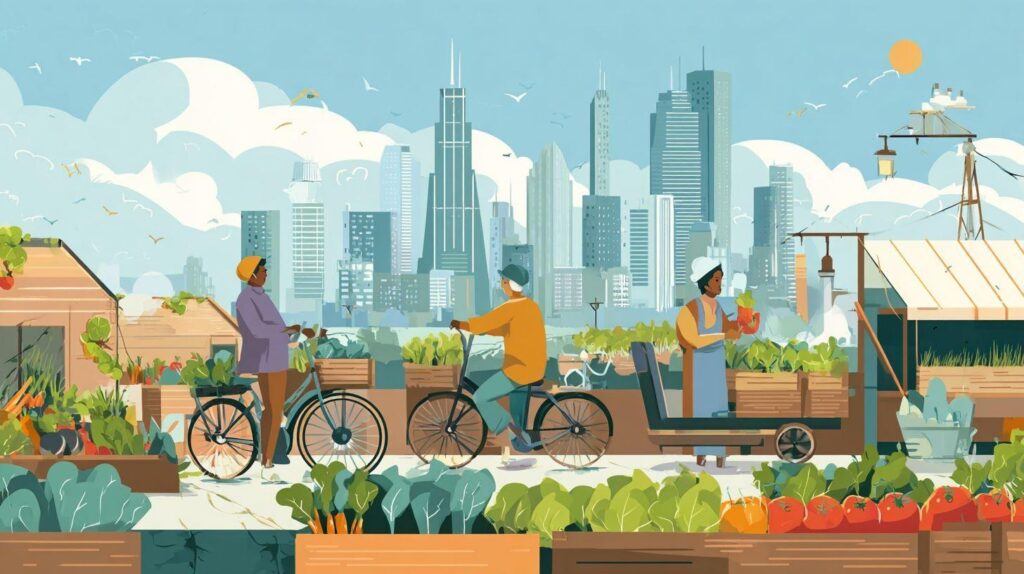
Urban farms eliminate long-distance transport, saving significant emissions per product, while biomass digesters convert crop residue to biogas powering farm operations. Startups achieve emissions reductions in transport, refrigeration, and packaging through local production. This supports farm-to-table models and direct-to-consumer sales.
A waste hierarchy guides practices: anaerobic digestion captures methane from organics, composting recovers nutrients for soil amendment, and surplus feeds employees. Vertical farming cuts refrigeration needs by enabling hyper-local sourcing. LED lighting and climate control boost energy efficiency.
- Transport: Short food miles reduce truck emissions.
- Refrigeration: On-site harvesting preserves freshness without cold storage.
- Packaging: Bulk local delivery minimizes materials.
- Biogas: Powers operations from waste, closing the loop.
These methods promote zero-waste farming and circular economy principles. Urban agriculture startups partner with restaurants and supermarkets for ethical sourcing. Such innovations improve nutrition access in food deserts and drive economic impact through green jobs.
Economic Impacts on Supply Chains
Urban farming cuts supply chain costs while creating market opportunities through premium pricing and logistics elimination. Startups in vertical farming and hydroponics generate higher revenues per acre compared to traditional field crops. This shift supports local food production and reduces reliance on long-distance transport.
These innovations transform food supply chains by enabling controlled environment agriculture (CEA). Farms using IoT sensors and AI optimization achieve consistent yields year-round. Retailers and restaurants benefit from farm-to-table models that minimize food miles.
Investments in urban agriculture foster job creation and economic resilience. Aquaponics and aeroponics systems lower operational expenses through resource efficiency. This approach addresses food security in cities amid climate challenges.
Startups scale via modular farms and rooftop gardens, attracting venture capital in agritech. Partnerships with supermarkets enhance direct-to-consumer channels. Overall, these changes build resilient food systems with stable pricing.
Cost Reductions for Stakeholders
Retailers save on logistics costs while restaurants gain freshness consistency through urban farming. These startups eliminate long-haul transport in food supply chains. Indoor farming ensures reliable access to fresh produce like microgreens and herbs.
| Stakeholder | Key Savings | Example Benefit |
| Retailers | Logistics/transport | Reduced cold chain management needs |
| Restaurants | Waste reduction | Higher menu reliability |
| Consumers | Price stability | Offset premiums with consistent supply |
| Farmers | Higher margins | Soil-less farming efficiency |
A typical urban greenhouse reaches breakeven in three years with focused CAPEX on LED lighting and climate control. Restaurants avoid seasonal price spikes by sourcing from nearby container farms. This model supports zero-waste farming and water conservation.
Consumers enjoy hyper-local sourcing that improves nutrition access in food deserts. Startups use automation and robotics to cut labor costs. Such efficiencies drive profit margins and scalability in urban settings.
New Revenue Streams
Beyond core crop sales, farms monetize data and experiences in urban farming. These foodtech startups diversify income through innovative channels. This approach boosts operational efficiency in competitive markets.
- Crop sales from microgreens and herbs form the primary revenue base.
- Direct-to-consumer boxes via subscription models like CSA programs.
- Data licensing from IoT sensors and AI for yield optimization.
- Farm tours and experiences for community engagement.
- Carbon credits from sustainable practices like nutrient recycling.
- R&D partnerships with grants for technology integration.
Community supported agriculture (CSA) builds loyal customer bases with weekly deliveries. E-commerce platforms enable subscription boxes of organic vegetables. Data analytics from precision agriculture attract buyers in agritech.
Experiences such as pop-up farms draw visitors and foster urban revitalization. Carbon footprint reductions qualify farms for credits in circular economy models. Partnerships with schools and hospitals expand institutional sales.
Case Studies of Leading Startups
Leading startups demonstrate commercial viability in urban farming. AeroFarms grows 2M lbs/year on 0.7 acres while Infarm serves 3K+ grocery stores across 12 countries. These examples highlight how vertical farming and modular systems reshape food supply chains.
Startups like these integrate aeroponics and AI to boost yields in limited spaces. They cut food miles by enabling local production of fresh produce such as microgreens and herbs. Retail partnerships drive steady revenue through direct shelf access.
Challenges like high upfront costs find solutions in venture capital funding and tech efficiencies. These models offer lessons in scalability for urban agriculture entrepreneurs. They prove resilient systems amid supply disruptions.
Key takeaways include focusing on controlled environment agriculture (CEA) for year-round harvests. Partnerships with supermarkets ensure market reach. Such innovations support food security in cities.
AeroFarms Success Story
AeroFarms achieved 390x greater yield per sq ft than field farming across 108,000 sq ft Newark facility, harvesting 2M lbs baby greens annually. The company uses aeroponics with machine vision for precise nutrient delivery. This setup supports 25 crop varieties in a soil-less environment.
With $39M in funding, AeroFarms reached a $100M+ valuation through smart expansion. It created 400 jobs in urban revitalization efforts. A timeline from pilot to full-scale operation shows steady growth via tech integration.
Overcoming early hurdles, the startup secured an IKEA partnership for global reach. It saves 95% water compared to traditional methods using IoT sensors. Challenges like energy costs were met with LED lighting and climate control.
Lessons for startups include investing in automation and data analytics for yield optimization. AeroFarms exemplifies supply chain innovation by reducing carbon footprints through local greens production. Entrepreneurs can replicate this with focused training programs.
Infarm Expansion Model
Infarm deployed 1,500+ modular farm units in Edeka, Waitrose, and Kroger stores generating EUR50M revenue with 75% margins on in-store herbs and microgreens. Each plug-and-play unit costs EUR35K and fits seamlessly into retail spaces. This B2B wholesale approach drives 85% of revenue.
The scalable model relies on AI optimization for a 25% yield boost via predictive analytics. Units produce fresh items like basil and edible greens on-site, minimizing food miles. Global rollout spans 200+ stores in 12 countries.
Unit economics favor quick ROI through low operational needs and high margins. IoT sensors monitor growth in real-time for pest management and resource efficiency. Retail integration cuts logistics costs in food supply chains.
Startups can adopt this by prioritizing supermarket partnerships and modular designs. Infarm’s strategy enhances food transparency and freshness guarantees. It supports urban food security with hyper-local sourcing.
Challenges and Barriers
Urban farming faces high CAPEX barriers ranging from $2.1 million to $40 million and zoning restrictions that block many warehouse conversions, even with strong ROI potential. These issues slow down supply chain innovation in urban agriculture. Startups must navigate them to scale vertical farming and local food production.
Other blockers include regulatory compliance costs and limited access to funding for controlled environment agriculture (CEA). For instance, water rights and fire codes add layers of complexity. Solutions like policy advocacy and grants offer paths forward.
The 2023 Agritecture report highlights these urban ag barriers, stressing the need for streamlined permitting and investment models. Overcoming them enables resilient food systems and reduces food miles. Startups preview solutions through partnerships and tech integration.
Practical steps involve joining agritech accelerators for mentorship and exploring crowdfunding for initial capital. These approaches build momentum for sustainable farming in cities. Long-term, they foster food security and economic impact.
High Initial Capital Costs
Startup costs range $250 per square foot for vertical farms versus $25 per square foot for field farming, requiring $5-50 million in equity or debt with typical three-year payback periods. CAPEX breakdowns show major expenses in key areas. This demands smart funding strategies for urban farming startups.
LED lighting often claims about a quarter of costs, HVAC systems around a fifth, automation roughly one-fifth, and construction a similar share. These investments support hydroponics, aquaponics, and LED lighting for year-round yields. Efficiency in resource conservation helps offset the outlay.
- VC funding mixes equity with control for scaling indoor farming.
- USDA grants provide non-dilutive capital for sustainable farming projects.
- Crowdfunding builds community support, as seen in backyard modular farms.
At scale, internal rates of return improve through yield optimization and automation. Examples include Rise Gardens raising millions via public campaigns. Startups achieve this by focusing on direct-to-consumer models like subscription boxes for fresh produce.
Regulatory and Zoning Hurdles
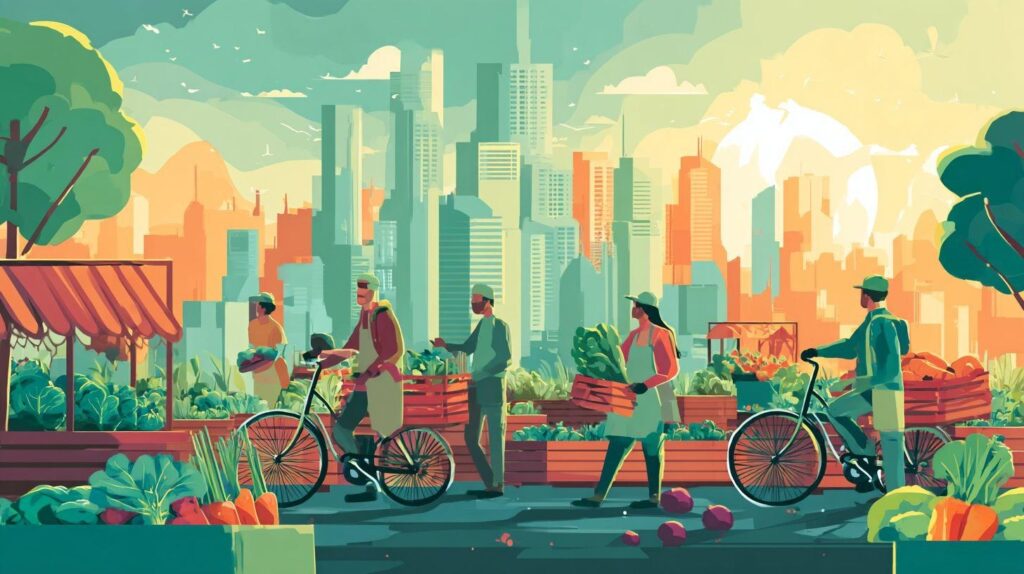
About 70% of US warehouse districts prohibit agricultural use, while food safety regulations like the FSMA Produce Rule demand significant compliance spending, even though urban farms offer better sanitation. These zoning regulations hinder rooftop gardens and warehouse conversions. Navigation requires targeted advocacy.
Common challenges span multiple areas in urban planning.
- Zoning laws, such as Illinois’ Agriculture District requirements.
- Water rights for hydroponics and recirculating systems.
- Fire codes needing sprinkler exemptions for controlled environments.
- FDA registration for processed greens.
- Local health permits for farm-to-table operations.
Solutions emerge from policy changes like NYC’s Ag+ Zoning amendments and groups such as the AFSA pushing for reform. Denver’s streamlined permitting speeds approvals for container farming. Startups benefit by partnering with advocacy networks.
Practical advice includes early engagement with city planners and documenting sustainability benefits like water conservation. These steps enable food hubs in food deserts and support job creation. Over time, they pave the way for scalable urban greenhouses.
Future Outlook and Trends
Urban ag scales to $20B globally by 2030 with smart city integration, serving 10% of vegetable demand through distributed micro-farms and robotics. Startups in urban farming forecast a 25.6% CAGR, driven by policy support, technology advances, rising demand, and investment flows. Reference 2024 market projections highlight supply chain innovation in vertical farming and hydroponics.
Policy incentives encourage local food production, reducing food miles and carbon footprints. Tech like IoT sensors and AI optimization boosts yield in controlled environment agriculture (CEA). Consumer shifts toward health-conscious eating fuel demand for fresh produce from rooftop gardens.
Investment trends show venture capital pouring into agritech firms, enabling scalable indoor farming. Experts recommend focusing on resilient food systems amid climate change. These drivers position urban agriculture startups to disrupt traditional food supply chains.
Trends point to modular farms and automation for neighborhood farms. Partnerships with retailers enhance farm-to-table models. This outlook promises food security through hyper-local sourcing and resource efficiency.
Scaling to Global Markets
Singapore requires 30% local produce by 2030, driving $1.2B urban farm investment while UAE’s Badia Farms exports to Europe from desert facilities. Global hubs lead in urban agriculture, with Singapore mandating vertical farming, UAE pioneering solar CEA, and Japan deploying Spread’s 30K units for microgreens and herbs.
Europe sees Infarm in 3K stores using hydroponics, while US startups like Bowery expand to 100k sqft facilities. Investment trends include $4B VC from 2021-23, supporting container farming scalability. Policy incentives, such as Netherlands subsidies, lower barriers for entrepreneurs.
- Singapore’s vertical mandate boosts local food production and job creation.
- UAE leverages solar power for zero-waste farming in harsh climates.
- Japan’s Spread model emphasizes automation and precision agriculture.
- Europe’s Infarm integrates with supermarkets for direct-to-consumer sales.
- US Bowery focuses on AI-driven yield optimization and logistics.
These hubs demonstrate market disruption through e-commerce delivery and subscription boxes. Startups achieve profit margins via operational efficiency and cold chain management. Scaling urban ag requires skilled workforce training and partnerships.
Integration with Smart Cities
Sidewalk Labs Toronto integrates 50 rooftop farms with district energy and delivery drones while Copenhagen’s urban ag feeds 10% of neighborhood demand. Smart city synergies enhance sustainable farming via four key integrations: district heating repurposes waste heat for greenhouses, EV delivery fleets use cargo bikes, 5G IoT networks enable real-time crop monitoring, and digital twins predict yields.
FIWARE smart ag framework standardizes APIs for data analytics in aquaponics and aeroponics. Pilot projects test technology integration for energy efficiency and water conservation. Urban greenhouses benefit from LED lighting and climate control tied to city grids.
- District heating cuts energy costs in indoor farming.
- EV fleets reduce carbon footprints with last-mile delivery.
- 5G IoT supports pest management and disease resistance.
- Digital twins aid demand forecasting and inventory management.
This integration fosters circular economy practices like nutrient recycling and compost systems. Community supported agriculture (CSA) thrives with apps for farming and blockchain traceability. Results include food transparency, access equity in food deserts, and urban revitalization through green jobs.
Frequently Asked Questions
How Urban Farming Startups are Changing Food Supply Chains by Reducing Transportation Distances
Urban farming startups are revolutionizing food supply chains by growing produce directly in cities, drastically cutting down transportation distances from farm to table. This minimizes carbon emissions, reduces spoilage, and ensures fresher produce reaches consumers faster, bypassing long-haul trucking and global shipping networks.
How Urban Farming Startups are Changing Food Supply Chains Through Local Sourcing
By sourcing food locally within urban areas, these startups shorten supply chains, give the power toing communities to rely less on distant rural farms or imports. This fosters food security, supports hyper-local economies, and allows for year-round production regardless of seasonal limitations elsewhere.
How Urban Farming Startups are Changing Food Supply Chains with Vertical Farming Innovations
Vertical farming techniques used by urban startups stack crops in multi-layer facilities, maximizing space in cities. This changes supply chains by enabling high-yield production in warehouses or buildings, reducing land use pressures and providing consistent supply without weather dependencies.
How Urban Farming Startups are Changing Food Supply Chains via Technology Integration
Startups integrate IoT sensors, AI-driven hydroponics, and automation to optimize growth cycles. This transforms supply chains into data-driven systems, predicting demand, minimizing waste, and enabling direct-to-consumer sales through apps, eliminating traditional middlemen like wholesalers.
How Urban Farming Startups are Changing Food Supply Chains for Sustainability
These startups prioritize water-efficient systems and closed-loop recycling, using 90% less water than traditional farming. They’re reshaping supply chains to be more sustainable, cutting the food industry’s massive environmental footprint and appealing to eco-conscious consumers and retailers.
How Urban Farming Startups are Changing Food Supply Chains in Economic Terms
Economically, urban farming startups lower costs by reducing logistics and storage needs, while creating jobs in cities. They disrupt supply chains by offering premium, traceable products at competitive prices, challenging conventional agriculture’s dominance and attracting investment for scalable urban models.