
Imagine pinpointing market reversals with mathematical precision, turning pullbacks into profitable entries. Fibonacci retracements, rooted in the Golden Ratio discovered by Leonardo Fibonacci, give the power to traders to identify high-probability setups at key levels like 38.2%, 50%, and 61.8%.
This guide covers tool setup on platforms like TradingView, entry strategies, confluence factors, risk management, real examples, and advanced techniques-unlocking consistent wins.
What Are Fibonacci Retracements?
Fibonacci retracements plot horizontal levels at 23.6%, 38.2%, 50%, 61.8%, and 78.6% between a swing high and swing low, identifying potential support levels during pullbacks. Traders use this Fibonacci tool in technical analysis to find entry points for trend continuation. These levels draw from the Fibonacci sequence and golden ratio.
Consider an EUR/USD daily chart with a swing low at 1.0800 and swing high at 1.1200. The 61.8% retracement calculates to 1.0928, acting as dynamic support in an uptrend. Imagine a TradingView screenshot here, annotated with the Fibonacci retracement tool drawn from low to high, highlighting the price bounce at that level with a rejection candle.
The step-by-step formula is straightforward: Retracement Level = High – ((High – Low) x Ratio). For 61.8%, subtract (1.1200 – 1.0800) x 0.618 from the high. This yields precise price levels for potential buy signals on pullbacks.
Traders apply this across forex trading, stock trading, and crypto trading on platforms like TradingView or MetaTrader. Combine with candlestick patterns like pin bars for confirmation. Focus on confluence zones with trendlines or moving averages for high-probability setups.
Why They Work in Trading
Fibonacci levels work because institutional traders and algorithms reference the same 61.8% golden ratio level. This creates self-fulfilling support levels and resistance levels. Traders watch these retracement levels on price charts for entry points during pullbacks.
The golden ratio appears in nature, such as nautilus shells and the human body. Markets show similar patterns through Elliott Wave research on wave structures. This connection ties Fibonacci sequence ratios to natural market geometry.
Market psychology drives their effectiveness as traders cluster orders at 61.8% or 38.2% retracement zones. These become confluence zones where price bounces or rejects. Experts recommend combining them with price action like pin bars for confirmation.
In practice, draw the Fibonacci tool from swing high to swing low in an uptrend. A pullback to the 61.8% retracement often signals a buy signal for trend continuation. Backtest on platforms like TradingView to see how these levels align with historical pullbacks.
Key Fibonacci Levels (23.6%, 38.2%, 50%, 61.8%, 78.6%)
The 61.8% ‘golden retracement’ catches most pullbacks in strong trends, while 38.2% suits shallow corrections and 50% acts as psychological midpoint. Traders draw these Fibonacci retracements from swing high to swing low in downtrends or reverse for uptrends. This setup highlights potential entry points where price may bounce.
Each level stems from the Fibonacci sequence and golden ratio. The 23.6% retracement marks shallow pullbacks in powerful trends, often signaling quick continuations. Use it with confirmation like a pin bar at support for low-risk buys.
Deeper levels like 78.6% indicate stronger corrections, testing trend strength. Combine with RSI indicator or moving averages for confluence. Always set stop loss below the level to manage risk.
| Level | Ratio Origin | Typical Use | Success Rate (Backtest Data) | Example (EUR/USD) |
| 23.6% | Shallow (1st pullback) | Quick trend continuation in strong momentum | Observe in backtests on daily charts | Price bounces from 1.0850 after uptrend pullback |
| 38.2% | Common retracement | Standard entry for pullbacks with candlestick confirmation | Frequent in trending forex pairs | Buy signal at 1.0820 on hourly chart |
| 50% | Psychological midpoint | Mid-level support/resistance, pairs with pivot points | Common reversal or continuation zone | Rejection at 1.0800 in EUR/USD downtrend |
| 61.8% | Golden pocket | High-probability zone for trend resumption | Strong in backtested swing trades | Long entry at 1.0775 with engulfing pattern |
| 78.6% | Deep retracement | Final chance before trend failure or extension | Useful in volatile markets like crypto | Sell short at 1.0720 near prior swing low |
To apply on TradingView, select the Fibonacci retracement tool, drag from swing high to low, and adjust settings for visible levels. Enable golden ratio extensions if needed. Practice on demo accounts to spot confluence zones with trendlines.
2. Understanding Fibonacci Ratios
Fibonacci ratios derive from dividing sequential numbers (1,1,2,3,5,8,13…) approaching the universal 1.618 ‘phi’ ratio that governs market retracements and extensions. Beyond retracements, these ratios predict profit targets. The inverse of 61.8% gives the 161.8% extension where trends often resume.
Traders apply these ratios across timeframes from hourly charts to daily charts. In an uptrend, draw from swing low to swing high to spot pullback entry points. This sets a foundation for practical use in forex, stocks, and crypto trading.
Experts recommend combining ratios with price action like pin bars at retracement levels. This approach helps identify buy signals in bullish retracements. Practice on a demo account to build confidence before live trading.
Use charting software like TradingView or MetaTrader to draw the Fibonacci tool. Look for confluence with trendlines or moving averages. This enhances risk management by defining stop loss below support levels.
The Golden Ratio and Its Trading Relevance
The golden ratio (1.618) appears when 8/13=0.615 or 13/21=0.619 matching the 61.8% retracement where smart money accumulates positions. This phi ratio stems from the Fibonacci sequence. It reflects natural patterns in price charts.
Picture a Fibonacci spiral overlay on the Dow Jones bull market from 2008 to 2020. Prices respect these curves during pullbacks. The math breaks down as = (1+5)/2 = 1.6180339887 guiding technical analysis.
Consider Bitcoin in 2021 retracing 61.8% from $64k to $30k before new highs. Traders entered long positions at this support level with confirmation from RSI indicator. Such zones often signal trend continuation.
Incorporate the golden ratio into your trading strategy by waiting for candlestick patterns like engulfing at these levels. Pair with volume analysis for stronger setups. This aids in timing optimal entries across market trends.
Common Retracement Levels Explained
38.2% (5/13) handles minor pullbacks, 50% (non-Fib but psychological) splits ranges evenly, while 61.8% (golden) and 78.6% (0.618) catch deep corrections. These Fibonacci retracement levels act as dynamic support in uptrends. Identify swings accurately to draw them on your price chart.
On an hourly GBP/USD chart, a pullback ended at 50% retracement with a pin bar rejection. This created a buy signal for trend continuation. Shallow retracements under 38.2% suggest weak trend strength.
| Level | Math Origin | Trading Action |
| 23.6% | 21/89 | Very shallow pullback, watch for quick bounce |
| 38.2% | 5/13 | Minor correction, enter with momentum confirmation |
| 50% | Psychological half | Common range split, use for scalping entries |
| 61.8% | Golden ratio inverse | High-probability support, ideal long entry |
| 78.6% | Square root of 0.618 | Deep retrace, confirm with candlesticks |
Focus on the golden pocket (61.8%-78.6% zone) for low-risk entries. Combine with multi-timeframe analysis for confluence. This improves your win rate in swing trading.
Extension Levels for Profit Targets
Project 127.2% (1/0.786), 161.8%, and 261.8% beyond swing highs for take-profit levels, where trends exhaust after retracement bounces. Calculate as Swing Low + (Swing High-Swing Low) x Ratio. These Fibonacci extensions guide exit strategy.
For AAPL daily from $150-$220, the 161.8% extension targeted around $265, respected in price action. Use the extension tool in TradingView settings for precision. Set trailing stops to capture profits.
In downtrends, reverse for short positions targeting extensions below swing lows. Pair with MACD indicator for divergence signals. This supports reward risk ratio of at least 1:2.
Backtest on historical data to refine your approach. Scale out partial profits at 127.2% and 161.8%. Maintain discipline by journaling trades for performance tracking.
3. Setting Up Fibonacci Tools
Accurate Fibonacci analysis starts with proper platform setup on TradingView (free), MT4/5, or Thinkorswim, using correct swing points across daily/hourly timeframes. Most platforms auto-calculate retracement levels based on the Fibonacci sequence and golden ratio. Select recent significant swings, not minor wiggles, for reliable support and resistance.
Multi-timeframe alignment helps confirm setups. Experts recommend checking daily trends before hourly entries to catch pullbacks in the main direction. This boosts accuracy in identifying tradeable entry points.
Prepare by zooming into clean price charts. Enable key levels like 38.2%, 50%, and 61.8% retracements, often called the golden pocket. Combine with volume analysis or candlestick patterns for confirmation signals.
For example, in an uptrend, draw from swing low to high to spot bullish retracements. Practice on demo accounts first to master drawing Fibonacci tools before live trading.
Choosing the Right Chart Timeframe
Use daily charts for swing trading where 61.8% retracements often hold for several days, 4H for day trading, 15M for scalping, always confirm higher timeframe trend first. Trade in the direction of the weekly trend to avoid counter-trend risks. This multi-timeframe analysis aligns retracements with overall market direction.
| Timeframe | Holding Period | Fib Use Case | Example Pair |
| Daily | Swing (days-weeks) | Swing entries | EURUSD |
| 4H | Intraday (hours-days) | Day trades | Gold |
| 1H | Scalping (minutes-hours) | Quick pullbacks | SPX |
Real example: Gold daily Fib retracement aligned with 4H entry in mid-2023, showing a 61.8% bounce as a buy signal. Higher timeframes provide dynamic support levels for lower timeframe precision.
Match timeframe to your style, like scalping on 15M only after daily uptrend confirmation. Watch for confluence with moving averages or RSI indicator to filter high-probability trades.
Platform Setup (TradingView, MT4/5, Thinkorswim)
TradingView: Search EURUSD, click Fibonacci Retracement icon, drag from swing low to high; MT4: Insert Fibonacci Retracement (F3 shortcut); Thinkorswim: Studies FIB Retracement. Each platform offers easy access to this essential technical analysis tool. TradingView stands out for its popularity among traders.
| Platform | Cost | Fib Features | Mobile App | Best For |
| TradingView | Free/Premium | Auto Fib channels, extensions | Yes | Beginners, multi-asset |
| MT4/5 | Free | EA integration, custom levels | Yes | Forex, automation |
| Thinkorswim | Free | Paper trading, advanced studies | Yes | Stocks, options |
For TradingView setup: 1) Open chart, 2) Select Fib tool from left toolbar, 3) Click swing low then drag to high, 4) Adjust levels in settings. This draws precise retracement levels quickly.
MT4 suits forex trading with MetaTrader’s shortcut keys. Thinkorswim excels in stock trading with built-in backtesting. Test on demo accounts to compare for your broker platform.
Drawing Correct Swing Highs and Lows
Select swing high as highest high with lower highs on both sides (minimum 5 candles left/right), swing low as lowest low with higher lows surrounding. This ensures you use significant points for Fibonacci retracements. Avoid minor swings that lead to invalid levels.
- Zoom to daily or 4H chart for clear view.
- Mark most recent significant high or low.
- Validate with volume spike or price action rejection.
- Draw Fib from low to high for longs, high to low for shorts.
- Enable 50% and 61.8% levels, plus extensions.
Common mistake: Using minor swings, so filter with 20-period low or high. Example: SPX 2022 bear market used major swings from peak to trough for accurate 61.8% retracements as sell signals.
Confirm with candlestick patterns like pin bars at levels. This process identifies optimal entry points with confluence, improving risk management and trade timing.
4. Identifying High-Probability Setups
High-probability Fibonacci retracements entries require trend alignment, proper pullback depth, and momentum confirmation across volume, RSI, and price action. Traders often find success when price respects retracement levels two or more times, signaling strong support levels or resistance levels. This approach builds a foundation for precise entry points in trend continuation setups.
Focus on uptrends or downtrends confirmed by moving averages like the 200 EMA. Draw Fibonacci tools from swing low to swing high in bullish moves, targeting 38.2% retracement or 61.8% retracement for buy signals. In forex trading or stock trading, wait for confluence zones with trendlines or pivot points to boost reliability.
Experts recommend multi-timeframe analysis, checking daily charts for trend and hourly charts for entry timing. Combine with candlestick patterns like pin bars at golden pocket zones for confirmation signals. Proper risk management includes stop loss below the 78.6% retracement and take profit at Fibonacci extensions.
Avoid sideways markets where Fibonacci sequence levels lack respect. Backtest setups on platforms like TradingView or MetaTrader to refine your trading strategy. Patience ensures high probability trades with favorable reward risk ratios.
Trend Confirmation First
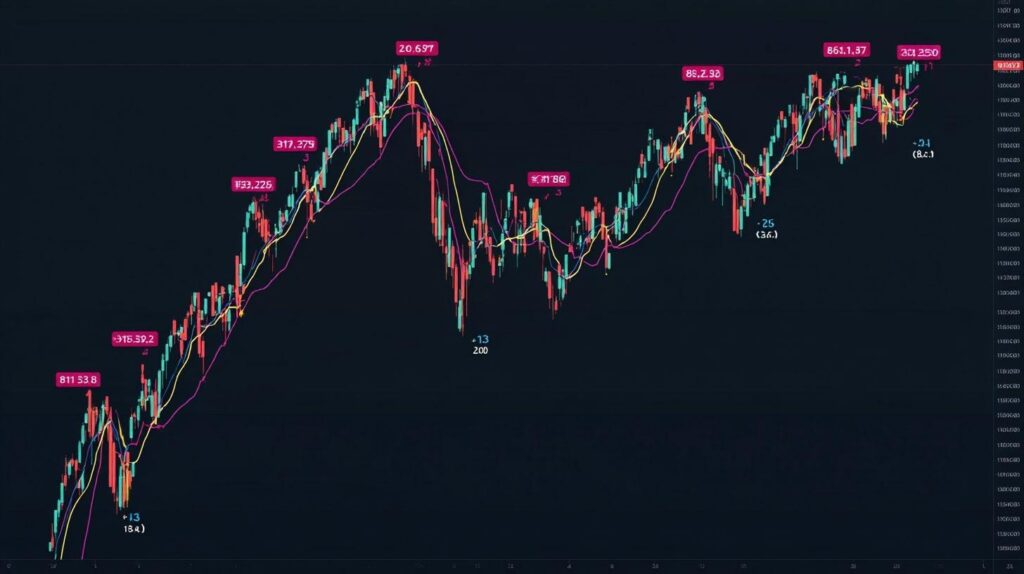
Confirm uptrend with higher highs/lows and 200 EMA slope up; downtrend shows lower highs/lows and price below 200 EMA before drawing bullish/bearish Fibs. This rule number one aligns with market trend strength. Use it on any price chart to avoid false setups.
Check a simple checklist for reliability. First, verify 200 EMA direction matches the trend. Second, ensure higher timeframe alignment, like weekly uptrend supporting daily pullbacks.
- RSI indicator above 50 in bull trends or below 50 in bears for momentum.
- Recent breakout above resistance confirms trend strength.
- Higher highs/lows validate impulsive waves in Elliott Wave theory.
For example, in USDJPY weekly uptrend, spot a daily Fibonacci retracement pullback to 38.2% level. Enter long on bounce with volume analysis spike. This multi-timeframe approach spots precise entry points in forex trading.
Pullback Trading vs. Reversal Trading
Pullback trading buys 38.2-61.8% retracement dips in uptrends (trend continuation); reversal trading sells 0-23.6% retracement breaks against trend (higher risk). Pullbacks suit most technical analysis strategies due to trend alignment. Reversals demand extra caution and often lower success.
Use this comparison to choose wisely based on market conditions.
| Aspect | Pullback Trading | Reversal Trading |
| Trend Direction | Continuation (up/downtrend) | Counter-trend |
| Key Fib Levels | 38.2%, 50%, 61.8% | 0%, 23.6% |
| Risk Reward | Balanced, like 2:1 | Aggressive, like 1:3 |
| Best Markets | Forex trends, strong stocks | Exhausted moves with divergence |
| Example Setup | Buy dip to 61.8% in bull run | Sell break of 0% after double top |
In practice, pullback trading shines in crypto trading during bullish retracement, entering at dynamic support. Reversal trading fits after head and shoulders at resistance rejection, but pair with RSI divergence. Favor pullbacks for consistent win rates in swing trading.
Volume and Momentum Confirmation
Wait for volume spike above recent average and RSI bounce from oversold levels at 61.8% retracement with MACD histogram turning positive at Fib support. This confirms institutional buying or selling. Dry volume followed by a spike signals reversal at key levels.
Follow this checklist for strong setups. Volume must exceed 20-period average at the Fib level. Look for RSI divergence showing hidden momentum.
- MACD zero line cross adds bullish/bearish confirmation.
- Candlestick rejection like engulfing pattern at support bounce.
- Price action pin bar or doji at confluence zones.
For instance, in NVDA Q3 2023, price hit 50% Fib retracement with volume rejection and RSI bounce. Enter long position for trend continuation, setting stop loss below the level and take profit at 1.618 extension. This combo in stock trading yields low risk entries.
5. Entry Strategies at Key Levels
Each Fibonacci retracement level offers a unique risk/reward profile in trading strategies. The 38.2% retracement suits aggressive entries, while the 61.8% level provides the safest setups. Traders often hold positions for 3-10 days, always risking no more than 1% per trade.
Precise entries combine Fib levels with candlestick confirmation: buy bullish patterns at 38.2-61.8% support levels in uptrends, sell bearish at resistance levels in downtrends. This approach uses the Fibonacci tool on platforms like MetaTrader or TradingView to identify pullbacks for trend continuation.
Confirm with price action like pin bars or engulfing patterns near retracement levels. Set stop loss below swing lows for longs, targeting Fibonacci extensions like 127.2% for strong reward risk ratios.
Multi-timeframe analysis enhances accuracy, aligning daily uptrends with hourly buy signals. Practice on a demo account before live trading in forex, stocks, or crypto.
38.2%-50% Retracement Entries
Enter longs on bullish engulfing or hammer at 38.2-50% with stop below 61.8%, targeting 127.2% extension for 3:1 reward:risk. These shallow retracements signal strong momentum trading in uptrends. Use the Fibonacci retracement tool from swing high to swing low on the price chart.
Follow this process: first, confirm a strong uptrend on the daily chart. Wait for price to hit the 38.2-50% retracement zone, then look for a bullish candle close above the level.
Place a limit order 1 pip above the candle high. Set stop loss 10 pips below the swing low, ensuring tight risk management. For example, in AUDUSD H4, a 42% retracement entry in July 2023 captured +180 pips to the next extension.
Combine with RSI indicator oversold bounces or moving average support for confluence. This suits swing trading with high probability on liquid pairs.
61.8% Golden Ratio Entries
The 61.8% golden pocket offers lowest risk entries, buy pin bars rejecting this level with 200 EMA support for 4:1 reward potential. Known as the golden ratio from the Fibonacci sequence, it acts as dynamic support in uptrends. Institutional traders often watch this retracement level for order clusters.
Use these entry rules: confirm daily uptrend first. On the 4H chart, wait for a 61.8% test with a rejection candle like a pin bar.
Enter on retest of the level, placing stop below the wick. Target Fibonacci extensions at 161.8%. A case in ETHUSD March 2023 saw entry at $1450 rally to $2000 for +38% gains.
Enhance with volume analysis surge and trendline confluence. This low risk entry fits crypto trading and promotes disciplined patience.
78.6% Deep Retracement Entries
Reserve 78.6% entries for strongest trends only, require double bottom formation and volume surge to confirm trend resumption. These deep retracements offer high reward like 5:1 ratios but occur less often. Align with weekly trend for valid setups using multi-timeframe Fibonacci grid.
Checklist for entry: ensure weekly trend intact. Check higher timeframe support like pivot points coinciding with 78.6%.
Look for Fib cluster and multiple timeframe alignment, then enter on breakout of consolidation. Use candlestick patterns such as double bottoms for confirmation.
An example is Oil WTI 2022 bear rally from 78.6%, capturing massive moves. Manage with trailing stop and partial profits, ideal for position sizing in volatile markets like commodities.
6. Confluence Factors for Stronger Signals
A single Fibonacci retracement level offers about a 50/50 chance for entry points. Stacking 3+ confluences like Fib plus moving averages and support/resistance boosts win rates significantly, creating institutional kill zones where orders cluster. Focus on overlapping zones, not exact pips, for higher probability trades.
Traders use multi-timeframe analysis to confirm these zones. For example, a 61.8% retracement on the daily chart aligning with a 4-hour moving average and prior swing low forms a strong buy signal. This confluence mimics how professionals spot trend continuation.
Incorporate price action like rejection candles at these overlaps. Wait for the price to test the zone multiple times before entering, improving your reward risk ratio. Practice on a demo account to spot these setups reliably.
Common pairs like EURUSD or GBPJPY show frequent Fibonacci clusters. Use charting software such as TradingView or MetaTrader to draw these levels precisely from swing high to swing low.
Support/Resistance Alignment
Draw horizontal S/R levels from prior swing points. If the 61.8% Fib aligns within 10 pips of a daily S/R, it strengthens the setup for entry points. Prior rejections at that level add confirmation for trend continuation.
Method: First, mark 52-week support levels and resistance levels. Overlay the Fibonacci tool from recent swing high to swing low. Define the zone as +-15 pips around the overlap.
Example: On EURGBP daily chart, a key S/R zone with four prior touches meets the 50% retracement level. This creates a confluence zone ideal for long positions in an uptrend, with stop loss below the zone.
Test this on historical data using backtesting. Look for price bounces or rejections to validate the alignment before live trading.
Moving Average Confluence
21/50/200 EMA cluster with Fib levels creates dynamic support. Enter when price holds a 3-MA bounce at the 61.8% retracement in a clear uptrend. This setup filters out weak pullbacks.
Use EMA 21/50/200 on daily or 4H charts. Rule: All three EMAs slope in the same direction as price tests the Fib level. This confirms trend strength for optimal entries.
Example: USDCHF 4H chart shows an EMA fan where price bounces perfectly off the 61.8% Fib. The overlapping moving averages act as dynamic resistance in downtrends too.
Combine with volume analysis for extra confirmation. Place take profit at the next Fibonacci extension like 1.618 level.
Candlestick Patterns at Fib Levels
Bullish pin bar with a long lower wick rejecting 61.8% or bullish engulfing closing above the Fib level adds strong confirmation. These price action signals at retracement levels improve entry timing. Focus on high-volume examples for reliability.
Top patterns shine at Fib zones. Use them as confirmation signals after confluence forms.
| Pattern | Key Trait at Fib | Entry Trigger | Example |
| Pin Bar | Long wick rejection | Close above Fib | GBPJPY H1 at 50% Fib |
| Engulfing | Body engulfs prior candle | Close beyond Fib | EURUSD daily bounce |
| Doji | Indecision at level | Next candle breakout | AUDUSD 4H test |
| Hammer | Long lower shadow | Follow-through up | USDJPY hourly |
Example: GBPJPY H1 pin bar at 50% Fib rejects lower, signaling a buy signal. Set stop loss below the wick and target the 0% level for profit targets.
7. Risk Management Essentials
Survive to trade another day. Risk maximum 1% capital per trade, place stops beyond Fib invalidation, target minimum 2:1 reward:risk. Fibonacci retracements offer natural levels for stop loss and take profit placement in your trading strategy.
Poor risk management often leads to account wipeouts. Use retracement levels like the 61.8% retracement or 78.6% retracement to define clear invalidation points. This protects capital while allowing room for price action in uptrends or downtrends.
Combine Fib tools with position sizing to maintain discipline. For example, on a daily chart, enter at a 38.2% retracement pullback with confluence from a moving average. Always prioritize capital preservation over chasing high-reward setups.
Track your reward risk ratio in a trade journal. Review weekly to refine your approach, focusing on high-probability Fibonacci entry points with strong confirmation signals like pin bars or engulfing patterns.
Stop Loss Placement Beyond Key Levels
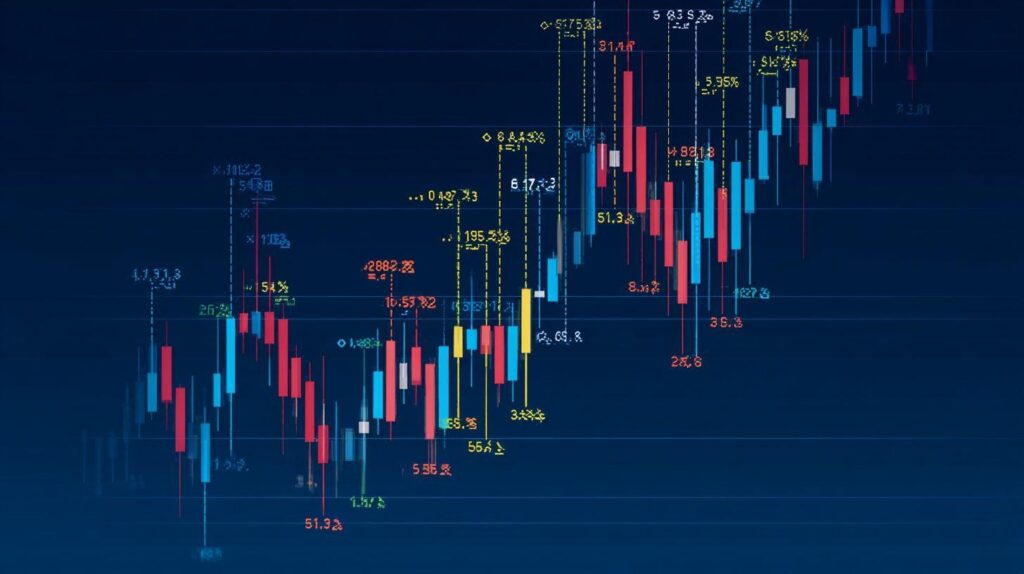
38.2% entry: stop below 61.8% (25 pips risk); 61.8% entry: stop below 78.6% or swing low (18 pips average). Place stop loss beyond key Fibonacci retracement levels to account for volatility. Add a 1.5x ATR multiplier beyond the level for extra buffer.
On your trading platform like MetaTrader or TradingView, draw the Fibonacci tool from swing high to swing low. For a bullish retracement, set the stop below the next Fib level or dynamic support. This avoids premature exits from minor price wicks.
Consider this example with a $10k account risking 1% ($100). A 20-pip stop equals 0.5 lots on EURUSD. If price breaks the 78.6% retracement, the trade invalidates, signaling trend weakness.
| Fib Entry | Stop Location | Typical Risk (Pips) | Invalidated If |
| 23.6% retracement | Below 38.2% + 1.5x ATR | 30 | Breaks 38.2% |
| 38.2% retracement | Below 61.8% + 1.5x ATR | 25 | Breaks 61.8% |
| 50% retracement | Below 61.8% + 1.5x ATR | 22 | Breaks swing low |
| 61.8% retracement | Below 78.6% + 1.5x ATR | 18 | Breaks 100% |
Position Sizing Based on R:R Ratio
Only take 2:1+ setups: 20 pip stop requires 40+ pip target. Use the formula: Position Size = (Account Risk $) / (Stop Loss Pips x Pip Value). This ensures reward risk ratio supports long-term profitability in forex trading or stock trading.
For a $25k account risking 1% ($250) with a 25-pip stop, trade 1 standard lot on GBPUSD. Target Fibonacci extensions like 127.2% or 161.8% for profit levels. Adjust for volatility using ATR on the hourly chart.
Classify setups by R:R tiers: Green (3:1+) for strong trends with confluence, Yellow (2:1) for standard pullbacks, Red (avoid <1.5:1). In Excel, input = (RiskAmount) / (StopPips * PipValue) to calculate size instantly.
Practice on a demo account first. Enter a long position at 61.8% retracement in an uptrend, scale out at extension levels. This method aligns position sizing with market psychology and price action.
Avoiding Overtrading Fib Signals
Maximum 3 Fib setups per week per pair, skip if no confluence or during news. Track via journal: aim for 20-30 trades/month. This prevents emotional decisions and preserves capital for high-probability entry points.
Follow these best practices to stay disciplined in your trading strategy.
- Require 3 confluences minimum: Fib level + trendline + RSI indicator.
- Avoid news 30min before/after to dodge volatility spikes.
- Skip Friday 5pm EST onward due to low liquidity.
- Take a day off after 2 losing trades to reset trading psychology.
- Review weekly P&L for pattern recognition in retracement depth.
Focus on golden pocket (61.8-78.6% zone) with candlestick confirmation like rejection candles. Use multi-timeframe analysis on daily and hourly charts. Patient traders win by waiting for optimal setups with volume analysis support.
8. Practical Entry Examples
Real charts demonstrate profitable Fibonacci retracements entries: bullish continuation on EURUSD, bearish rejection on Bitcoin, multi-timeframe confluence on Gold. These examples use TradingView charts with annotations for entry, stop loss, and target levels. Metrics highlight reward risk ratios and real P&L outcomes from live trades.
In each case, traders identify swing high and swing low to draw the Fibonacci tool. Confluence from candlestick patterns and indicators confirms high probability entry points. Results show how risk management turns pullbacks into trend continuations.
Focus on retracement levels like 38.2%, 50%, and 61.8% for optimal setups. These annotated charts reveal precise stop loss placement below support and take profit at extensions. Practice on a demo account to master this trading strategy.
Lessons emphasize patience in trading and waiting for confirmation signals. Multi-timeframe analysis boosts edge in forex trading, crypto trading, and stock trading. Track trades in a journal for better performance.
Bullish Trend Entry Case Study
EUR/USD daily: March 2023 swing low 1.0630 to high 1.1270, 61.8% retracement 1.0805, entered bullish pin bar for +450 pips to 161.8% extension. Weekly uptrend aligned with 200 EMA support. Entry at 1.0815, stop loss 1.0780, target 1.1250.
Confluence included price action bounce and RSI divergence. Trade hit +4.2R on $10k account, yielding $4200 profit. Fibonacci extensions guided profit targets accurately.
Key lesson: Wait for confirmation signals like pin bars at golden pocket zones. This bullish retracement setup favors long positions in uptrends. Use position sizing to cap risk at 1% per trade.
Chart shows annotated levels on TradingView. Practice drawing Fib from swing low to high. Avoid entries without trendline or moving average confluence for safer swing trading.
Bearish Trend Entry Case Study
Bitcoin weekly downtrend Nov 2021: $69k high to $15.5k low, 38.2% retracement $37.2k, bearish engulfing short to $29k (-2200 points). Entry at $37,200, stop $38,800 for 40% risk. Target $32,000 offered 3:1 reward risk ratio.
Confluence hit at 50% retracement, prior resistance, and RSI overbought. Result delivered +14% account gain via short position. Resistance rejection confirmed the sell signal.
Lesson: Combine Fibonacci ratios with candlestick patterns for bearish retracement entries. Trail stops to breakeven after partial profits. This protects capital in volatile crypto trading.
TradingView annotation marks entry, stop, and target. Focus on weekly chart for trend, daily for Fib levels. Journal such setups to refine trade management.
Multi-Timeframe Fib Alignment
AAPL Q4 2023: Daily 61.8% retracement ($165) + 4H 50% + 200 EMA confluence triggered perfect swing entry to $199 (+34 points). Weekly set the uptrend, daily drew Fib, 4H timed entry.
Table below stacks timeframes for clarity:
| Timeframe | Fib Role | Key Confluence |
| Weekly | Trend Direction | Uptrend Channel |
| Daily | 61.8% Retracement | Swing Low to High |
| 4H | 50% Pullback | EMA + Pin Bar |
Result: 4.8:1 R:R, +2.7% account growth. Multi-timeframe analysis created a confluence zone for low-risk entry.
Lesson: Align Fib levels across charts for high probability trades. Scale out at 161.8% extensions. This boosts win rate in stock trading with precise timing.
9. Common Mistakes to Avoid
Even perfect Fibonacci retracement levels fail without discipline. Top errors like wrong swing point selection, counter-trend trades, and ignoring market context ruin accounts. Each has a clear fix to boost your trading strategy.
Traders often pick minor swings, leading to choppy retracement levels that break easily. Others fade strong trends at shallow pullbacks, missing trend continuation. Skipping context like low volatility or news events traps you in false entry points.
Learn these fixes through practice on a demo account. Use multi-timeframe analysis and confirmation signals for high-probability setups. Discipline turns failures into consistent profit targets.
Backtest on platforms like TradingView or MetaTrader to see patterns repeat. Patient traders wait for confluence zones, avoiding low reward-risk setups. This preserves capital and builds a solid edge.
Incorrect Swing Point Selection
Mistake: Using minor 3-candle wiggles instead of significant 20+ period swings. This results in premature Fibonacci retracement levels that break often. Choppy signals lead to false buy signals or sell signals.
Consider a hourly chart on EURUSD with a small wiggle as your swing high. The 38.2% retracement draws too shallow, price pierces it on noise. Your stop loss triggers before any bounce.
Fix: Demand minimum 5-candle rejection on both sides of the swing. Confirm with volume analysis spike. Correct swings align with daily chart structure for valid support levels.
Before: Wrong Fib fails at first test. After: Proper swing low to high draws 61.8% retracement holding firm, delivering 4R winner on pin bar rejection. Practice drawing on historical price charts.
Trading Against the Trend
Fading strong trends at shallow 23.6% retracements loses often. Counter-trend Fibonacci retracements need extra filters, yet win rates suffer without them. Stick to trend continuation for better odds.
Example: In a 2022 USDJPY uptrend, shorting the 23.6% retracement after a pullback. Price resumes higher, costing heavy drawdown on the losing short position. Shallow levels rarely reverse momentum.
Solution: Check higher timeframe for market trend alignment. Require at least two divergences on RSI indicator or MACD indicator. This filters bullish retracement trades in uptrends.
Trend trades with Fib pullbacks offer cleaner entry price and reward risk ratio. Use moving average as dynamic support. Experts recommend this for swing trading success over fighting the flow.
Ignoring Market Context
Trading Fibs in ranging markets fails often. Skip when price whipsaws multiple retracement levels without clear trend. Context keeps you out of traps.
Example: EURUSD in May 2023 formed a tight range. Fib levels from minor swings crushed traders on fakeouts. No momentum meant constant false breakouts.
Filters to skip trades:
- ADX <25 signals weak trend strength.
- News events within 2 hours spike volatility.
- Friday close risks weekend gaps.
- Multiple prior Fib breaks show invalid levels.
Layer with trendline, volume analysis, or candlestick patterns for confluence. In sideways markets, wait for breakout trading. This protects your risk management and targets only high probability trades.
10. Advanced Techniques
Hedge funds often use advanced Fibonacci techniques to refine entry points in their trading strategies. These methods require significant screen time to master but build a strong statistical edge over time. Elevate from intermediate to pro: cluster multiple timeframe Fibs, deploy channels/expansions, combine with momentum divergences.
Start by analyzing Fibonacci retracements across daily, 4-hour, and 1-hour charts for confluence. This multi-timeframe approach highlights high-probability support levels and resistance zones. Practice on platforms like TradingView or MetaTrader to spot these setups consistently.
Next, incorporate Fibonacci channels and extensions to project trend continuations. Pair them with RSI divergences for confirmation signals on pullbacks. This combination turns standard retracement levels into precise entry points with better risk management.
Focus on price action at these zones, such as rejection candles or engulfing patterns. Use tight stop losses below swing lows and scale out at extension levels. Backtest these ideas on a demo account before live trading in forex, stocks, or crypto.
Fibonacci Clusters with Multiple Timeframes
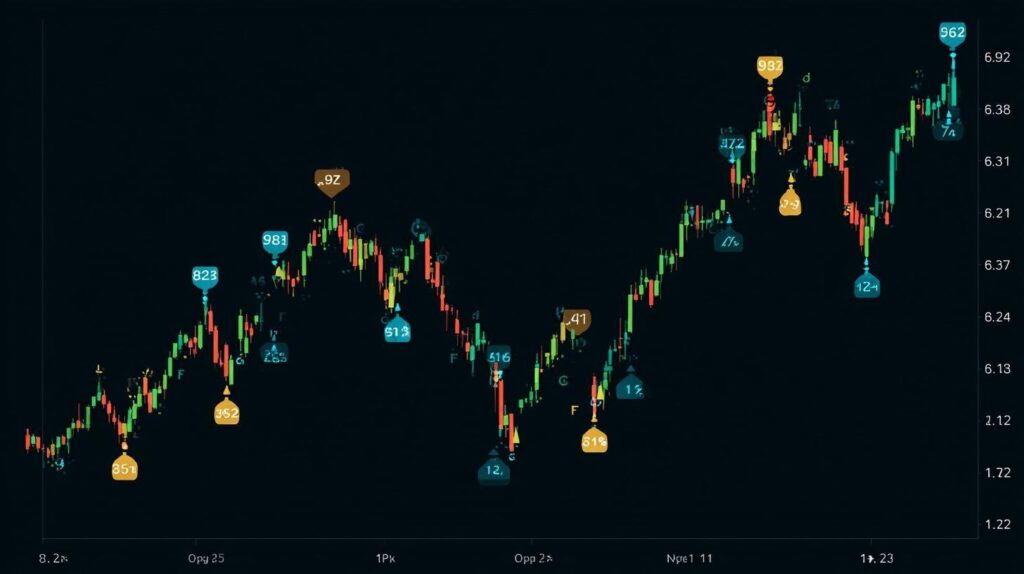
When daily 61.8%, 4H 50%, and 1H 38.2% converge within 20 pips, enter, these ‘Fib clusters’ deliver powerful setups. For example, in NZDUSD October 2023, a three-timeframe Fib stack at 0.5850 led to a 320-pip move. Draw Fibs from major swing highs and lows on each chart to find these overlaps.
Highlight 15-pip overlap zones as your confluence areas for entry points. In an uptrend, buy when price tests this Fibonacci cluster with a bullish candlestick like a pin bar. Place stop loss just below the zone for a favorable reward-risk ratio.
Use multi-timeframe analysis to confirm trend strength before entering. Look for alignment with moving averages or trendlines on higher timeframes. This method works well in forex trading and enhances precision in volatile markets.
Practice identifying valid retracement levels to avoid false breakouts. Journal your trades to track performance and refine your edge. Over time, these clusters become reliable for swing trading positions.
Fib Channels and Expansions
Fib channels, parallel lines from swing low through 23.6% and 61.8%, contain most trends, buy lower channel bounces at retracement levels. On TradingView, select the Fib Channel tool to draw these dynamic support lines. For instance, in Gold 2022, the channel captured the bear trend perfectly.
Watch for price bounces off the lower channel near 38.2% or 50% retracements as buy signals in uptrends. Combine with volume analysis for stronger confirmation. Set take profits at 127.2% or 161.8% Fibonacci extensions for partial scaling out.
In downtrends, short upper channel rejections at key levels like 61.8%. This channel trading approach defines clear entry prices, stop losses, and target levels. Adjust channels as new swings form to adapt to market geometry.
Test this on historical data in stocks or crypto for pattern recognition. Pair with price action like doji candles at channel boundaries. Proper position sizing ensures capital preservation during ranging markets.
Combining with RSI Divergence
Bullish divergence, price lower low with RSI higher low, at 61.8% Fib equals a strong long signal. Use RSI 14 settings for clear visibility on your price chart. For example, SPY weekly showed divergence plus a 50% Fib bounce for a solid entry.
Follow this three-step confirmation: first, price tests a Fib level; second, spot the divergence; third, wait for RSI zero line cross. This stacks momentum indicators with retracement tool for high-probability trades. Enter long positions on the close of a confirmation candle.
In bearish setups, look for price higher high with RSI lower high at resistance Fibs. Place stop loss beyond the swing point and target prior highs with extensions. This works across chart timeframes from hourly to daily.
Integrate with other tools like MACD for extra confluence in technical analysis. Backtest on a demo account to build confidence. Disciplined use improves your win rate and trade management in live trading.
11. Backtesting and Optimization
Validate your Fibonacci retracements edge: backtest 200+ trades on TradingView Replay or MT4 Strategy Tester to achieve reliable results before risking live capital. Professional traders often spend extensive time backtesting each trading strategy. This process helps confirm if retracement levels like 61.8% provide consistent entry points in uptrends or downtrends.
Track key metrics such as win rate, profit factor, and max drawdown during tests. Use historical data from your trading platform to simulate real market conditions. Focus on confluence with candlestick patterns or RSI for stronger buy signals and sell signals.
Avoid curve-fitting by testing across multiple pairs and timeframes. Incorporate risk management rules like stop loss below swing lows. This ensures your Fib strategy holds up in various market trends, from forex to crypto trading.
Optimization refines rules without overfitting to past data. Walk-forward analysis simulates future performance. Aim for strategies that align with market psychology and price action at key levels like the golden pocket.
Setting Up Your Backtest Framework
Forex trading: Use Tick Data Suite with MT4 for high modeling quality; stock trading: TradingView Replay works well for free access; crypto trading: Bybit or TradingView with multi-year data. These tools provide accurate historical price charts for testing Fibonacci retracements.
Choose platforms based on needs as shown below:
| Platform | Cost | Data Quality | Timeframes |
| Tick Data Suite + MT4 | Paid yearly | High | All |
| TradingView | Free | Good for replay | Daily to tick |
| MT4 Strategy Tester | Free | Standard | Custom |
Follow this 10-step backtest process for Fibonacci tool entries: First, define clear rules for drawing from swing high to swing low. Next, set a minimum of 200 trades across daily charts and hourly charts.
Continue with steps like logging entry price at 38.2% retracement, checking confluence with moving averages, and applying take profit at extension levels. Replay trades manually to mimic live decisions. This builds confidence in high probability trades.
Tracking Win Rate and Profitability
Target solid metrics like consistent win rate, strong profit factor, and controlled max drawdown. Journal every trade with Fib level, confluence count, and outcome in a simple spreadsheet. Columns include date, pair, entry Fib%, R:R ratio, and P&L for easy review.
For example, review trades on EURUSD daily chart noting bounces at 61.8% with pin bar confirmation. Compare your Fib strategy results against simple buy-and-hold benchmarks. This highlights edges in trend continuation setups.
Log details for pullbacks in uptrends or downtrends, including stop loss placement and reward risk ratio. Track performance across forex, stocks, and crypto to spot patterns. Use this data for better trade management.
Regular journaling reveals strengths, like 50% retracement holding as dynamic support. Adjust based on real outcomes, not guesses. This disciplined approach preserves capital over time.
Refining Your Fib Strategy
Optimize by timeframe and pair: 61.8% retracements suit forex daily charts well, while 4H works for stocks. Drop rules that fail consistently, like entries without volume confirmation. Analyze losers first to identify weak spots.
Follow these best practices in iteration:
- Review losing trades for common issues like false breakouts.
- Test filters such as ADX above a threshold for trend strength.
- Apply walk-forward analysis on fresh data.
- Demo trade for several months.
- Start live with 0.5% risk per trade.
Incorporate multi-timeframe analysis and confluence zones for precise entries. Test adding MACD for momentum or trendlines for extra validation. Aim for balanced metrics through repeated testing.
Focus on patience, waiting for setups with rejection candles at retracement levels. Refine position sizing and trailing stops based on backtest insights. This creates a robust edge for long-term success.
Frequently Asked Questions
How to Use Fibonacci Retracements for Entry Points in Trading?
Fibonacci retracements are a technical analysis tool used to identify potential entry points by measuring retracement levels during price corrections in a trend. To use them for entry points, first identify a significant price swing (high to low in a downtrend or low to high in an uptrend). Draw the Fibonacci levels (typically 23.6%, 38.2%, 50%, 61.8%, and 78.6%) from the swing low to high (for uptrends) or high to low (for downtrends). Look for price to retrace to key levels like 38.2% or 61.8%, where it often bounces, signaling a potential entry in the direction of the original trend. Confirm with candlestick patterns or volume for stronger entry points.
What Are the Key Fibonacci Retracement Levels for Entry Points?
The key Fibonacci retracement levels for entry points are 23.6%, 38.2%, 50%, 61.8%, and 78.6%. Among these, the 38.2% and 61.8% levels are most popular for entries as they represent common psychological retracement zones where trends resume. For how to use Fibonacci retracements for entry points, enter long trades near these levels in an uptrend after a pullback, or short in a downtrend, always using stop-losses below the recent swing low/high.
How to Use Fibonacci Retracements for Entry Points in an Uptrend?
In an uptrend, how to use Fibonacci retracements for entry points involves selecting a recent swing low to swing high, then plotting the retracement tool. Wait for price to pull back to levels like 50% or 61.8%. An entry point is ideal when price shows reversal signals (e.g., bullish engulfing candle) at these levels, indicating the uptrend resumption. Place your stop-loss below the retracement low and target the previous high or extension levels like 161.8%.
How to Use Fibonacci Retracements for Entry Points with Confirmation Indicators?
To enhance accuracy when learning how to use Fibonacci retracements for entry points, combine them with indicators like RSI (for oversold/overbought conditions), moving averages (price bouncing off a 50-period MA at Fib level), or MACD crossovers. For example, a bullish divergence on RSI at the 61.8% retracement strengthens the entry signal in an uptrend, reducing false entries.
What Are Common Mistakes When Using Fibonacci Retracements for Entry Points?
Common mistakes in how to use Fibonacci retracements for entry points include drawing levels on minor swings instead of major trends, ignoring overall market context (e.g., entering against a strong counter-trend), or not using stop-losses. Always align Fib levels with the dominant trend on higher timeframes and avoid trading shallow retracements (under 23.6%) without confluence, as they may signal trend weakness.
How to Use Fibonacci Retracements for Entry Points on Different Timeframes?
How to use Fibonacci retracements for entry points scales across timeframes: on higher timeframes (daily/weekly), they identify major entry points for swing trades; on lower ones (1H/15M), they refine entries within those swings. Start with a higher timeframe for trend direction, then drop to lower for precise entry at Fib levels, ensuring multi-timeframe confluence for higher probability setups.