
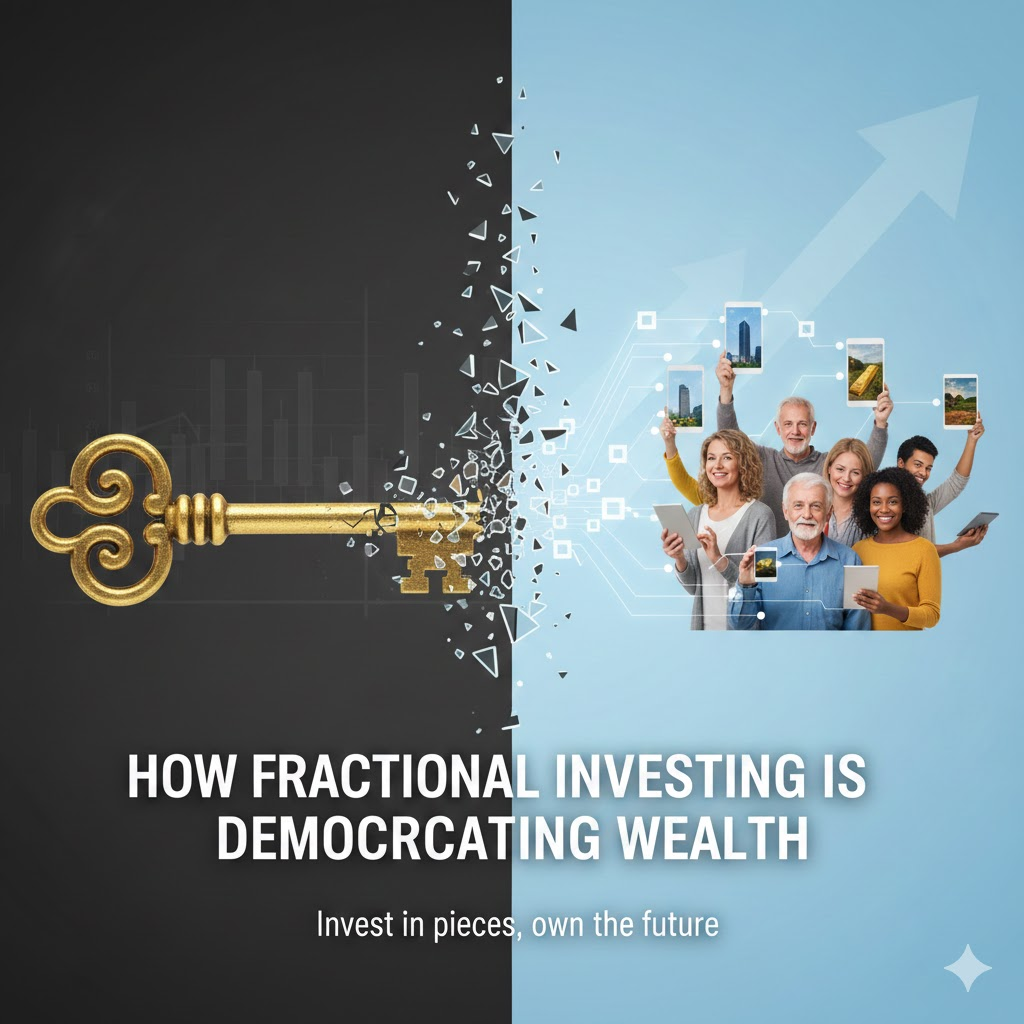
For decades, investing in high quality assets was often limited to those with significant capital. Expensive stocks, real estate, and premium funds created barriers that kept many people on the sidelines. Fractional investing is changing this reality. By allowing investors to buy small portions of assets, it is opening the door to wealth building for a much broader audience.
What Fractional Investing Means
Fractional investing allows individuals to purchase a fraction of an asset rather than the entire unit. Instead of needing a large sum to buy a full share of a high priced stock or a whole property, investors can start with much smaller amounts.
This approach lowers the entry threshold and makes investing more accessible to people at different income levels.
Breaking Down Traditional Barriers
High asset prices have long been a major obstacle to participation in wealth creation. Fractional investing removes this barrier by letting investors allocate money based on what they can afford rather than the price of the asset.
This shift is especially impactful for younger investors and first time participants. It allows them to begin investing early, which is one of the most powerful drivers of long term wealth.
Enabling Better Diversification
Fractional investing makes diversification easier. Instead of concentrating funds in one or two assets, investors can spread their money across multiple stocks, sectors, or asset classes.
This reduces risk and creates more balanced portfolios. Even with limited capital, investors can gain exposure to large, established companies that were previously out of reach.
Technology as the Driving Force
The rise of digital investment platforms has made fractional investing widely available. Mobile apps and online brokerages now offer user friendly tools that simplify the investment process.
These platforms often provide educational resources, real time tracking, and automated investing options. Together, they empower individuals to make informed decisions and stay engaged with their financial goals.
Expanding Access Beyond Stocks
Fractional investing is not limited to equities. It is increasingly being applied to real estate, exchange traded funds, and even alternative assets. This expansion gives investors access to asset classes that were once restricted to institutions or high net worth individuals.
By broadening access, fractional investing supports more inclusive participation in economic growth.
Encouraging a Long Term Investment Mindset
Starting small helps reduce fear and hesitation around investing. Fractional investing allows individuals to learn through experience without committing large sums.
This gradual approach encourages consistency and patience. Over time, small investments can grow significantly through compounding and disciplined contribution.
Potential Challenges to Consider
While fractional investing offers many benefits, it is not without challenges. Transaction fees, platform limitations, and limited voting rights in some cases can affect the overall experience.
Investors still need to understand fundamentals and avoid treating fractional investing as speculation. Education and thoughtful strategy remain essential.
The Broader Impact on Wealth Creation
Fractional investing is reshaping the financial landscape by making wealth building more inclusive. It shifts investing from an exclusive activity to a habit that more people can adopt.
As participation increases, financial literacy and engagement grow alongside it. This collective shift has the potential to reduce wealth gaps and create broader economic resilience.
Conclusion
Fractional investing is playing a key role in democratizing wealth by lowering barriers, enabling diversification, and encouraging early participation. By combining technology with accessibility, it empowers individuals to take control of their financial futures. Over time, this inclusive approach can transform how wealth is created and shared across society.