
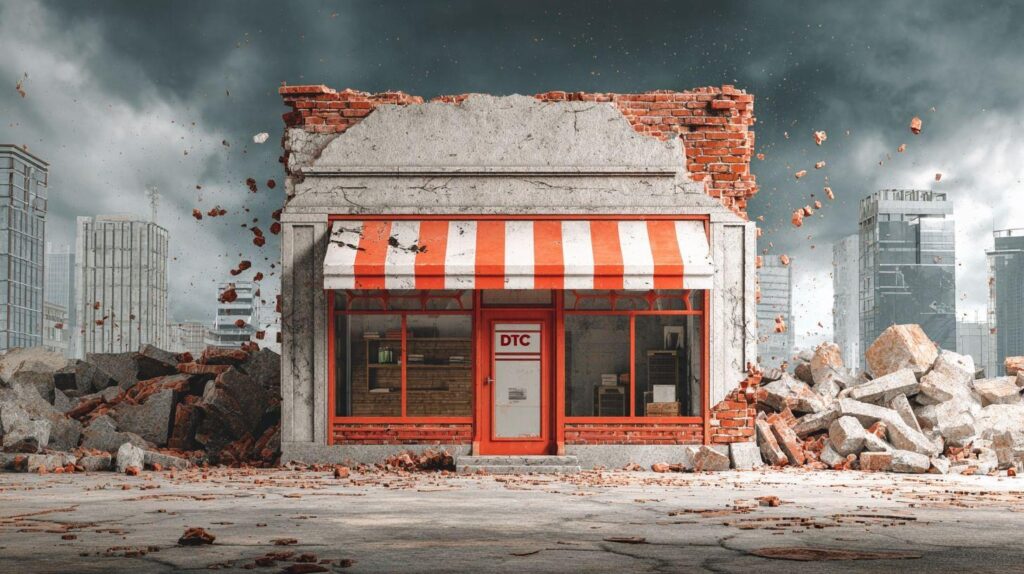
Warby Parker disrupted eyeglasses giants like LensCrafters by selling direct-now, DTC brands are toppling big-box retail empires. As e-commerce surges, these agile challengers seize market share through data mastery, middleman elimination, and tech innovations like Shopify and AI. Discover their pricing tactics, marketing prowess, and rapid innovation shaking Walmart and Target to the core. The retail revolution is here-what’s next?
Defining DTC Brands and Big-Box Retailers
DTC brands sell directly online without intermediaries, such as Warby Parker and Glossier, while big-box retailers operate massive physical stores with 100,000+ SKUs, like Walmart with 142,000 stores globally. This core difference shapes their business models and how they reach consumers. DTC focuses on digital channels for a streamlined experience.
Big-box retailers rely on vast inventories and physical footprints to drive sales volume. They stock thousands of products from multiple vendors in one location. This approach supports one-stop shopping but often leads to crowded aisles and longer decision times for shoppers.
In contrast, DTC brands build direct relationships through online platforms. They use first-party data from customer interactions to refine offerings. This enables quick adaptations to trends without the constraints of physical stock.
| Aspect | DTC Brands | Big-Box Retailers |
| Sales Channel | Direct sales online | Third-party retail in stores |
| Data Access | First-party data from customers | Limited data via intermediaries |
| Pricing Strategy | Agile pricing adjustments | Fixed pricing models |
| Revenue Example | Unicorn valuation $47B (Brandless peak) | $611B (Walmart 2023) |
The table highlights key contrasts in operations. DTC brands excel in personalization and speed, challenging big-box dominance. Big-box players leverage scale but face e-commerce disruption from agile DTC competitors.
Historical Context of Retail Evolution
Sears filed Chapter 11 in 2018 after 132 years, losing ground to Amazon’s dominant e-commerce presence. Toys R Us collapsed in 2017 under heavy debt. These failures marked the brick-and-mortar decline for traditional retailers.
The retail industry began shifting with key milestones. In 1994, Amazon launched, pioneering online retail and e-commerce disruption. This introduced direct sales models that bypassed physical stores.
| Year | Event | Impact on Retail |
| 1994 | Amazon launch | Sparked e-commerce growth, challenging big-box retailers like Walmart. |
| 2007 | iPhone enables mobile commerce | Boosted app-based shopping and mobile commerce for digital natives. |
| 2011 | Warby Parker DTC launch | Showed DTC brands could disrupt eyewear with home try-on and transparent pricing. |
| 2018 | Sears/Toys R Us bankruptcies | Highlighted vulnerabilities of category killers to online competition. |
| 2023 | DTC brands hold significant CPG market share per McKinsey | Demonstrated DTC scaling through subscription models and personalization. |
These events fueled retail transformation. DTC brands like Dollar Shave Club and Casper mattresses used social media ads and influencer partnerships. They built brand loyalty by focusing on customer experience over shelf space.
Big-box retailers faced foot traffic drop and inventory management issues. DTC leveraged first-party data for product innovation and agile manufacturing. This timeline shows how consumer brands gained ground against retail giants like Target and Costco.
Scale of the Challenge Today
DTC brands raised $20B+ in VC funding during the 2021 peak. These brands now hold 12% of the $1.8T US retail market. In contrast, big-box retailers face a 35% decline in same-store sales.
A bar chart illustrates this shift clearly. It shows DTC growth at 25% CAGR towering over big-box stagnation at -2% CAGR. eMarketer projects DTC reaching 22% market share by 2025.
Brands like Warby Parker and Dollar Shave Club drive this momentum through direct sales and subscription models. They bypass traditional retail by focusing on customer experience and personalization. Big-box giants such as Walmart and Target struggle with foot traffic drops and inventory management issues.
This e-commerce disruption forces retail transformation. DTC leverages social media ads and influencer partnerships for rapid scaling. Meanwhile, retailers like Costco and Best Buy grapple with omnichannel retail demands and same-day delivery expectations.
Core Advantages of DTC Brands
DTC brands own the full customer journey, eliminating retail friction and capturing 3x higher LTV through direct relationships. This control leads to stronger brand loyalty and repeat business. Bain & Company notes DTC customer retention at 36% versus 23% for retail, showing clear measurable outcomes in retention and revenue.
Direct access to customers allows DTC brands to gather first-party data for targeted marketing. Big-box retailers like Walmart and Target rely on fragmented data from loyalty programs. DTC approaches foster higher lifetime value through personalized experiences.
By cutting out middlemen, DTC brands achieve better supply chain efficiency and pricing transparency. Examples include Warby Parker glasses and Dollar Shave Club razors, which offer premium quality at lower costs. This model drives e-commerce disruption against retail giants.
Overall, these advantages enable agile manufacturing and rapid product iteration. DTC brands build direct feedback loops for innovation, challenging traditional retail transformation. Consumers benefit from customized options and ethical sourcing practices.
Direct Customer Relationships and Data Ownership
DTC brands like Glossier capture first-party data directly, enabling 40% higher CLV through personalized re-engagement. Big-box retailers access far less, often limited to loyalty cards. This data ownership powers effective DTC marketing via email and SMS.
Tools like Klaviyo for email automation, priced from $20 to $500 monthly, help DTC brands segment audiences. Attentive handles SMS campaigns for timely outreach. These create direct sales channels beyond Shopify stores.
Casper mattresses use customer data to boost repeat purchases through tailored recommendations. This builds brand loyalty in niche markets like mattresses. Direct relationships reduce acquisition costs compared to retail arbitrage.
Gen Z shoppers value this transparency, preferring brands with strong customer experience. DTC models excel in omnichannel retail by owning the journey from awareness to purchase. Retailers struggle with incomplete data profiles.
Elimination of Retail Middlemen
DTC eliminates retail margins of 40-60%; Everlane shows true costs with $78 factory price matching $78 retail versus $150 in department stores. This transparency appeals to millennial consumers seeking value. DTC brands retain more profit for reinvestment.
| Supply Chain Step | Margin Taken |
| Manufacturer | 0% |
| Wholesaler | 30% |
| Retailer | 40% |
| DTC Direct | 0% |
DTC achieves 65% gross margins versus 35% in retail channels. Allbirds shoes priced at $100 yield $60 profit directly, compared to $35 through retail. This funds innovations like sustainable materials.
Without middlemen, DTC brands control inventory management and pricing. They avoid slotting fees and promotional allowances paid to giants like Costco. Direct sales enhance price competition and product quality.
Customization and Personalization at Scale
Stitch Fix uses AI for high style matching, generating substantial revenue versus big-box apparel’s high return rates. This personalization drives customer retention in fashion. DTC brands scale custom experiences affordably.
Function of Beauty offers custom shampoos starting at $29 based on quizzes. Customers answer questions on hair needs, then AI matches ingredients. This process lifts conversions through relevant products.
- Customer quiz gathers preferences.
- AI analyzes for product matching.
- Personalized delivery boosts satisfaction.
- Repeat orders build recurring revenue.
Research suggests personalization can significantly lift revenue. DTC tools like these outperform retail giants in brand storytelling. Examples include subscription models for ongoing customization, fostering loyalty among digital natives.
Technology as the Great Equalizer

Shopify powers 1.7 million DTC stores generating over $200 billion in gross merchandise value annually, leveling the playing field against Walmart’s massive tech stack. This access to tech democratization lets direct-to-consumer brands launch with minimal costs. Platforms starting at $29 per month rival the billion-dollar IT budgets of big-box retailers.
Small consumer brands now build sophisticated e-commerce sites in hours, not months. Tools handle payments, inventory, and shipping without enterprise-level spending. This shift challenges retailers like Target and Costco by enabling agile direct sales.
DTC brands use these platforms for customer experience enhancements, such as personalized recommendations and seamless checkouts. Big-box chains struggle to match this speed in their omnichannel retail efforts. The result is stronger brand loyalty among digital natives.
Examples like Warby Parker show how eyewear direct sales thrive on simple tech stacks. Retail giants face pressure to innovate as DTC disrupts traditional foot traffic. Supply chain efficiency becomes a key battleground.
E-Commerce Platforms and Shopify Dominance
Shopify powers 28% of top US DTC sites among the top 1 million, ahead of WooCommerce at 20%, with basic plans at $29 per month versus Magento’s $2,000-plus enterprise pricing. These affordable options fuel e-commerce disruption. DTC brands set up stores quickly to compete with retail giants.
| Platform | Pricing | Setup Time |
| Shopify | $29-2,000/mo | 1 hour |
| WooCommerce | Free + hosting | Days |
| BigCommerce | $29-299/mo | Hours |
| Magento | $2,000+/mo | 3 months |
Allbirds generated hundreds of millions in revenue using Shopify Plus for scalable operations. This platform supports subscription models and global shipping. Brands avoid the complexity of big-box IT systems.
New DTC entrants focus on niche markets like sustainable shoes. Platforms integrate SEO and social media ads easily. This direct feedback loop speeds product iteration over retail planograms.
AI-Driven Marketing and Customer Insights
Klaviyo AI flows generate higher open rates for DTC versus big-box ESPs. Glossier’s personalization drives strong returns on ad spend through first-party data. These tools build brand loyalty faster than traditional retail methods.
| Tool | Pricing | Key Benefit |
| Klaviyo | $20-500/mo | 32% higher open rates |
| Attentive SMS | $0.03 per message | 98% open rates |
| Reclaim.ai | Varies | Inventory predictions |
Shopify integrates with Klaviyo to double average order value via targeted emails. DTC marketing emphasizes personalization over mass promotions. Retailers lag in using customer data for dynamic pricing.
Brands like Dollar Shave Club use AI for recurring revenue campaigns. Email ROI outpaces big-box efforts through precise segmentation. This approach lowers acquisition costs and boosts lifetime value.
Logistics Innovations like DTC Fulfillment
ShipBob 3PL cuts DTC fulfillment from five days to two at lower costs than big-box distribution centers. Providers enable same-day delivery promises that challenge Walmart’s speed. Consumer brands gain supply chain efficiency without owning warehouses.
| Provider | Key Feature | Cost Advantage |
| ShipBob | $5 per order | 25% savings |
| Deliverr | 2-day guarantee | Fast scaling |
| Flexe | Flexible warehousing | On-demand space |
Casper uses ShipBob for significant logistics savings, supporting mattress direct sales. DTC fulfillment hits high on-time rates through real-time tracking. Big-box retailers face inventory management hurdles.
Innovations like 3PL work together with Shopify for seamless operations. Brands offer free shipping and easy returns to win Gen Z shoppers. This retail transformation pressures hypermarkets on customer experience.
Pricing and Margin Strategies
DTC brands maintain higher margins than big-box retailers through direct pricing control and recurring revenue models. They often achieve better profitability by skipping intermediaries. This approach allows for transparent pricing that builds consumer trust.
Harvard Business Review highlights DTC pricing agility providing a margin advantage. Direct sales cut out retail markups and distribution costs. Brands like Everlane and Dollar Shave Club use this to compete against Walmart and Target.
Subscription models boost customer retention and lifetime value. Dynamic pricing tools enable quick adjustments to demand. These strategies drive e-commerce disruption in the retail industry.
Big-box retailers face pressure from DTC price competition and agile manufacturing. DTC brands leverage first-party data for personalization. This shifts power toward direct-to-consumer brands challenging retail giants.
Cutting Out Retail Markups
Everlane’s radical transparency shows $78 production cost for $78 retail versus Macy’s $150 for the same quality. DTC brands eliminate wholesale and retail layers. This creates significant pricing savings passed to consumers.
Consider the pricing waterfall: DTC totals $40 COGS plus $20 marketing for $78 retail. Big-box paths add $30 wholesale and reach $150 retail. Savings reach 48 percent through direct sales.
Consumer studies note preference for transparent pricing. Brands build brand loyalty by sharing costs openly. This challenges big-box retailers reliant on markups.
DTC examples like Warby Parker glasses show similar strategies. They offer premium quality at lower prices. Retail transformation favors these consumer brands with supply chain efficiency.
Subscription Models for Recurring Revenue
Dollar Shave Club hit high annual recurring revenue via subscriptions with strong retention before its acquisition. Platforms like Recharge and Bold Subscriptions support these models. They provide reliable uptime for recurring revenue.
Subscription boxes increase lifetime value compared to one-time purchases. Brands like BarkBox focus on retention through curated deliveries. This builds customer loyalty absent in big-box shopping.
Tools enable easy management of subscription models. DTC brands lower acquisition costs with repeat business. Examples include Casper mattresses and Allbirds shoes bundles.
Big-box retailers struggle to match this customer retention. DTC uses email marketing and personalization for engagement. This drives retail evolution toward direct feedback loops.
Dynamic Pricing and Flash Sales

Fashion Nova uses dynamic pricing with increases during peak demand. This approach generates rapid growth compared to competitors. Tools like Prisync and Competera make it accessible for DTC.
A/B testing shows revenue lifts from dynamic pricing. Flash sales convert better than standard promotions. DTC brands adjust prices in real-time using customer data.
Examples include limited editions and flash sales on Shopify stores. This creates urgency and boosts sales velocity. Big-box retailers lag in this price agility.
Incorporate live shopping on social media for flash events. Pair with influencer partnerships for reach. These tactics enhance brand competition against retail giants like Target.
Marketing Revolution
DTC brands spend 3x less on marketing (12% of revenue vs retail 25%) but achieve 4x ROAS through precision targeting. According to eMarketer, DTC digital ad efficiency shows 320% higher ROI compared to traditional channels. This shift allows direct-to-consumer brands to challenge big-box retailers like Walmart and Target with smarter spending.
Precision targeting uses first-party customer data from online interactions. Brands like Warby Parker focus on niche audiences via social media ads. This approach cuts acquisition costs while boosting conversions in the retail transformation.
Traditional ads from big-box retailers rely on broad TV and print campaigns. DTC leverages e-commerce disruption with real-time analytics from tools like Google Analytics. The result is higher engagement and loyalty among Gen Z shoppers.
Social platforms and email enable personalized outreach. Brands build direct relationships, avoiding retail giants’ middlemen. This marketing ROI edge fuels growth for consumer brands like Dollar Shave Club.
Social Media and Influencer Power
Glossier generated $100M via 5,000 micro-influencers (1k-10k followers) at $100/CPM vs $30/CPM macro. Platforms deliver strong ROI: TikTok Shop (9x), Instagram Commerce (6x), Facebook Ads (4x). These tools give the power to DTC brands to outpace big-box retailers in social media ads.
Micro-influencers offer authentic endorsements for beauty products like Glossier’s skincare. Tools such as Aspire ($500/mo) and Upfluence (commission-based) simplify partnerships. Kylie Cosmetics built a $1B empire through Instagram influencer reach.
Big-box stores like Costco struggle with influencer authenticity. DTC uses influencer partnerships for targeted campaigns on TikTok Shop. This drives viral growth and challenges traditional retail foot traffic.
Track performance with platform analytics for optimization. Focus on engagement rates over follower count. This strategy enhances brand loyalty among digital natives.
Content Marketing Over Traditional Ads
Everlane’s blog content ranks #1 for ‘ethical fashion’ (200k monthly visits) vs paid search costs. Channels like SEO (64% traffic, $0 CAC), UGC (28% conv rate), and Email (42x ROI) outperform traditional ads. Content marketing helps DTC brands disrupt the retail industry.
Tools including Ahrefs ($99/mo) aid SEO optimization for terms like ethical sourcing. Hotjar ($39/mo) analyzes user behavior on sites. Glossier sources 50% of content from UGC, building trust through customer stories.
Big-box retailers like Home Depot spend heavily on paid search. DTC prioritizes organic traffic with blog posts on sustainability practices. This lowers costs and improves customer experience.
Create value-driven content like Everlane’s transparent pricing guides. Combine with email marketing via Klaviyo for repeat visits. The approach fosters long-term engagement over one-off ads.
Community Building and Brand Loyalty
Lululemon’s ambassador program (10k instructors) drives 30% of sales vs big-box 3% loyalty program participation. Tools like Swell ($99/mo referrals) and Yotpo ($19/mo loyalty) boost retention. DTC excels in community building to challenge retailers.
Private Discord communities offer exclusive drops, lifting retention by creating belonging. NPS scores for DTC often exceed retail benchmarks. This playbook turns customers into advocates.
Big-box chains like Target see low program engagement. DTC uses ambassadors for authentic promotion, like Lululemon’s yoga instructors. Referral programs via Swell encourage sharing among millennial consumers.
Measure success with metrics like repeat purchase rates. Host virtual events for feedback loops. Strong communities enhance lifetime value and customer retention in online retail.
Product Innovation and Speed
Direct-to-consumer brands launch products 12x faster, often in 6 weeks compared to 18 months for big-box retailers, by using Shopify stores and 3D printing for niche validation. This speed gives DTC brands a clear edge in product innovation. Reference BCG notes this agility leads to significant market share gains for DTC players challenging retailers.
Big-box retailers like Walmart and Target face slow supply chains and heavy inventory commitments. DTC brands avoid these hurdles with agile manufacturing and direct feedback loops. They test ideas quickly through pre-orders and social media ads.
Tools like print-on-demand services enable rapid prototyping without large upfront costs. Brands such as Warby Parker and Allbirds shoes exemplify this approach. They iterate based on real customer data, disrupting traditional retail cycles.
This e-commerce disruption forces retail giants to rethink their pace. DTC success in speed builds brand loyalty and captures niche markets faster. Consumer brands focusing on direct sales stay ahead in the retail transformation.
Agile Development and Rapid Iteration
Allbirds iterated 17 wool shoe prototypes in 9 months using customer data versus Nike’s typical 24-month cycles. This highlights DTC brands’ strength in agile development. They run processes like Shopify pre-orders, gather feedback, and iterate in just 4 weeks.
Tools such as Printful for print-on-demand and Fictiv for 3D printing make this possible. Brands collect first-party data from email marketing and reviews to refine products. This direct feedback loop improves customer experience over big-box methods.
Many DTC versions of products see clear gains in satisfaction through these cycles. Rapid iteration helps build personalization and loyalty. Examples include Glossier beauty iterating on user input from Instagram commerce.
Big-box retailers struggle with long vendor negotiations and shelf space limits. DTC agility challenges this by enabling made-to-order items. This approach boosts supply chain efficiency and reduces waste in the retail industry.
Niche Products vs. Mass-Market Assortments
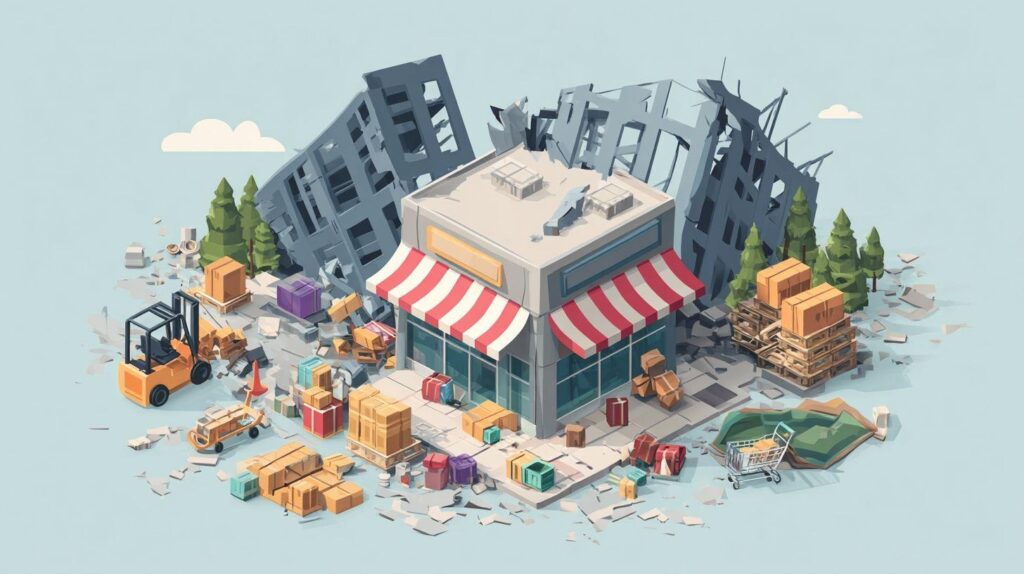
Liquid Death sells $4.50 sparkling water to Gen Z with strong growth versus Coke’s mass-market struggles. DTC brands focus on niche products with 3-10 SKUs and high margins. This contrasts big-box assortments of 10,000 SKUs and lower margins.
Strategy acts as category killers in reverse, dominating one SKU perfectly. Chamberlain Coffee achieved major growth by owning its niche. Brands like Dollar Shave Club used subscription models for razor focus.
Big-box retailers like Costco and Target spread thin across categories. DTC excels with transparent pricing and premium quality for digital natives. Niche focus builds brand storytelling and values alignment.
This model drives customer retention and lifetime value. Examples show DTC dominating millennial consumers and Gen Z shoppers. It challenges retail giants by prioritizing depth over breadth in product innovation.
Case Studies of DTC Success
Warby Parker, with its $3B valuation, proves DTC brands can scale to IPO while capturing 5% of the $35B eyewear market from Luxottica. Other DTC leaders like Dollar Shave Club and Casper show similar disruption against big-box retailers.
These cases highlight e-commerce disruption through direct sales, home try-ons, and subscription models. Metrics in sub-sections reveal customer growth, margins, and sales impacts on retail giants.
Dollar Shave Club’s acquisition and Casper’s omnichannel retail push demonstrate brand loyalty via personalization. Warby Parker details follow, with specifics on 1.5M customers and 20% margins.
Success stems from customer experience focus, supply chain efficiency, and social media ads, challenging Walmart and Target in niche markets.
Warby Parker vs. LensCrafters
Warby Parker grew from a $120k college project to a $3B IPO in 2021, capturing 10% market share from Luxottica’s LensCrafters. This DTC brand targeted high prices in eyewear dominated by EssilorLuxottica’s 80% control.
The problem was clear: consumers faced markups on frames and lenses at chains like LensCrafters. Warby Parker’s solution offered home try-on kits and glasses for $95, bypassing retail middlemen with transparent pricing.
Key metrics include 1.5M customers served and 20% margins, far above retail’s typical 8%. Implementation relied on Shopify stores and ShipBob for fulfillment, enabling agile supply chains.
Competition felt the hit, with LensCrafters seeing -12% US sales from 2019-2022. Warby Parker built loyalty through free shipping, easy returns, and virtual try-ons, accelerating retail transformation for Gen Z shoppers.
- Home try-on reduced purchase risk with five frames shipped free.
- Subscription models for contacts boosted recurring revenue.
- Social media ads and influencer partnerships drove viral growth.
Frequently Asked Questions
How Direct-to-Consumer Brands are Challenging Big-Box Retailers?
Direct-to-Consumer (DTC) brands are challenging big-box retailers by cutting out middlemen, offering personalized experiences, and leveraging data-driven marketing. Brands like Warby Parker and Casper bypass traditional retail channels to sell directly online, providing lower prices, faster delivery, and tailored customer interactions that big-box giants like Walmart and Target struggle to match at scale.
What Strategies Are Direct-to-Consumer Brands Using to Challenge Big-Box Retailers?
How Direct-to-Consumer Brands are Challenging Big-Box Retailers involves strategies like subscription models, social media advertising, and seamless e-commerce platforms. DTC companies build loyal communities through influencer partnerships and user-generated content, contrasting with the impersonal shopping experience of big-box stores and eroding their market dominance.
Why Are Big-Box Retailers Struggling Against Direct-to-Consumer Brands?
Big-box retailers face pressure because how Direct-to-Consumer Brands are Challenging Big-Box Retailers highlights DTC’s agility in responding to consumer trends. DTC brands offer niche products with superior customer service, such as free returns and customization, while big-box chains deal with high overhead costs, slow inventory turnover, and less engaging in-store experiences.
How Do Direct-to-Consumer Brands Achieve Lower Prices Than Big-Box Retailers?
By eliminating distributors and physical stores, how Direct-to-Consumer Brands are Challenging Big-Box Retailers allows for cost savings passed directly to consumers. DTC operations focus on efficient supply chains and digital marketing, enabling competitive pricing without the real estate and staffing expenses that burden big-box retailers like Best Buy or Home Depot.
What Role Does Technology Play in How Direct-to-Consumer Brands Challenge Big-Box Retailers?
Technology is central as how Direct-to-Consumer Brands are Challenging Big-Box Retailers through AI personalization, mobile apps, and analytics for inventory management. DTC brands use customer data to predict preferences and optimize logistics, outpacing big-box retailers’ slower adoption of tech and providing a frictionless shopping journey.
Can Big-Box Retailers Respond to How Direct-to-Consumer Brands are Challenging Them?
Yes, big-box retailers can adapt by launching their own DTC channels or acquiring DTC brands, but how Direct-to-Consumer Brands are Challenging Big-Box Retailers demands cultural shifts toward customer-centricity. Examples include Target’s partnerships with DTC upstarts, yet DTC’s direct relationships and innovation speed continue to intensify the competition.