
Raising capital is one of the biggest challenges for startups and early stage businesses. While venture capital and traditional loans are common options, they are not always the best or most accessible choices. Many founders today are exploring alternative funding methods that offer flexibility, reduced risk, and better control.
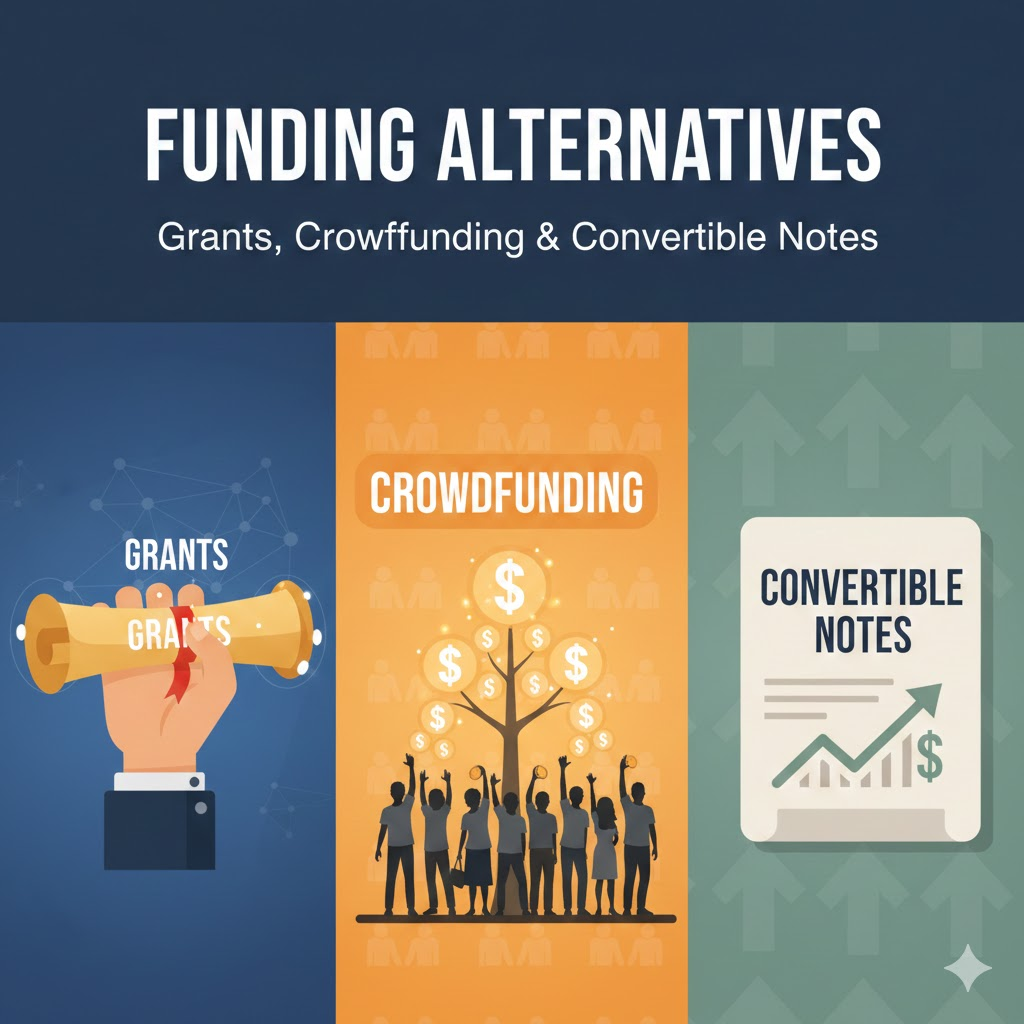
Grants, crowdfunding, and convertible notes have emerged as popular funding alternatives. Understanding how each works helps founders choose the right path based on their stage, goals, and risk tolerance.
Why Founders Are Exploring Funding Alternatives
Reduced Pressure Compared to Traditional Funding
Alternative funding options often come with fewer growth pressures and less dilution. This allows founders to focus on building sustainable businesses rather than chasing aggressive targets.
Better Fit for Early Stage Startups
Startups without traction or revenue may struggle to attract investors. Funding alternatives can provide early capital to validate ideas and build momentum.
Startup Grants Explained
What Are Startup Grants
Grants are non repayable funds provided by governments, institutions, or private organizations to support innovation, research, or economic development.
They do not require equity or repayment, making them highly attractive.
Advantages of Grants
Grants allow founders to retain full ownership. They reduce financial risk and provide credibility when secured from reputable organizations.
They are ideal for research driven, social impact, or innovation focused startups.
Limitations of Grants
Grant applications can be time consuming and competitive. Funds are often restricted to specific use cases and require detailed reporting.
Grants may not be suitable for fast scaling needs.
Crowdfunding as a Funding Option
What Is Crowdfunding
Crowdfunding involves raising small amounts of money from a large number of people, usually through online platforms.
It can be reward based, equity based, or donation based depending on the model.
Benefits of Crowdfunding
Crowdfunding validates demand early. It builds community and creates early adopters who support the product or mission.
It also offers marketing exposure alongside funding.
Challenges of Crowdfunding
Running a successful campaign requires strong storytelling and promotion. Not all campaigns reach their goals.
Equity crowdfunding involves regulatory compliance and shareholder management.
Convertible Notes for Early Stage Funding
What Are Convertible Notes
Convertible notes are short term debt instruments that convert into equity at a later funding round. They are commonly used in early stage fundraising.
Instead of setting a valuation upfront, conversion happens during future investment.
Key Features of Convertible Notes
Convertible notes often include a discount rate or valuation cap to reward early investors. They also have maturity dates and interest terms.
This structure simplifies early fundraising discussions.
Pros of Using Convertible Notes
They are faster to execute than priced equity rounds. Founders delay valuation discussions until more traction is achieved.
Convertible notes are widely understood by angel investors.
Cons of Convertible Notes
Poorly structured notes can create future complications. If no funding round occurs before maturity, repayment may be required.
Founders must manage expectations carefully.
Comparing Grants Crowdfunding and Convertible Notes
Ownership and Dilution
Grants involve no dilution. Crowdfunding may involve equity dilution depending on the model. Convertible notes lead to dilution in future rounds.
Understanding ownership impact is critical.
Speed of Access to Capital
Convertible notes are usually the fastest. Crowdfunding takes preparation and campaign time. Grants often take the longest due to approval processes.
Risk and Obligation
Grants carry the least financial risk. Crowdfunding requires delivery on promises. Convertible notes create future financial obligations.
Choosing the Right Funding Alternative
Match Funding to Business Stage
Idea stage startups may benefit from grants or reward based crowdfunding. Early traction startups often use convertible notes.
Growth stage companies may combine multiple funding methods.
Consider Long Term Strategy
Funding decisions affect future flexibility. Founders should think beyond immediate cash needs and consider long term implications.
Seek Professional Advice When Needed
Legal and financial guidance helps avoid costly mistakes, especially with equity related funding.
Common Mistakes Founders Make
Choosing Funding Based Only on Speed
Fast money is not always smart money. Long term alignment matters more than quick access.
Ignoring Compliance and Legal Requirements
Crowdfunding and convertible notes involve regulations. Ignoring these can lead to serious issues later.
Overfunding Too Early
Raising more than needed can reduce discipline and increase expectations.
Conclusion
Funding alternatives such as grants, crowdfunding, and convertible notes provide founders with flexible ways to finance their startups. Each option has unique benefits and limitations, and no single method fits every business.
Smart founders choose funding based on their stage, goals, and values. By understanding these alternatives clearly, startups can secure capital while maintaining control, reducing risk, and building sustainable growth paths.