
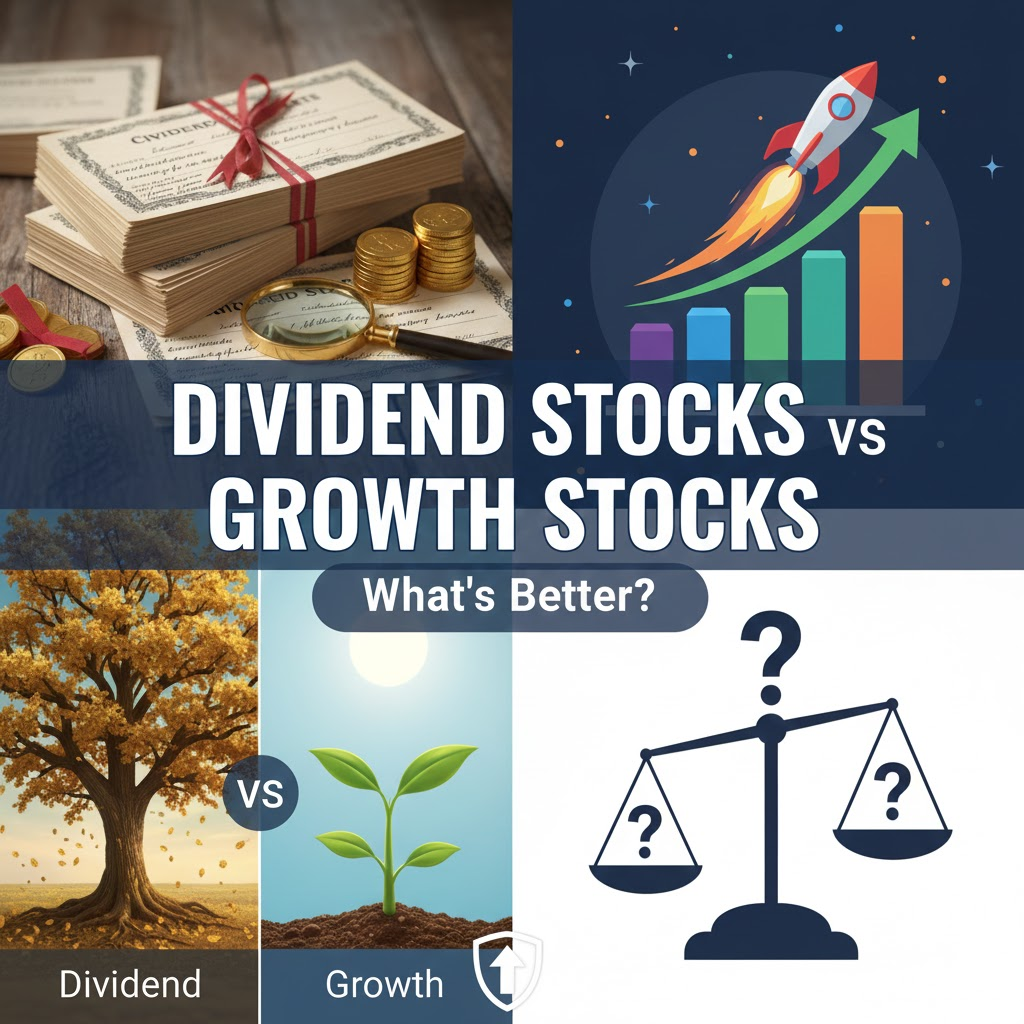
Choosing between dividend stocks and growth stocks is a common dilemma for investors. Both offer different benefits and risks, and the better option often depends on financial goals, risk tolerance, and investment horizon. Understanding how each works can help investors build a strategy that aligns with their needs.
What Are Dividend Stocks
Dividend stocks are shares of companies that regularly distribute a portion of their profits to shareholders. These payments provide a steady income stream and are often associated with mature, stable businesses.
Investors often choose dividend stocks for predictable returns and lower volatility. They can be especially attractive to those seeking income or portfolio stability.
What Are Growth Stocks
Growth stocks represent companies focused on expanding revenue and market share. Rather than paying dividends, these companies reinvest profits into innovation, expansion, or acquisitions.
Growth stocks aim to deliver returns primarily through price appreciation. They are often associated with higher risk but also higher potential rewards.
Income vs Capital Appreciation
The core difference between dividend and growth stocks lies in how returns are generated. Dividend stocks offer regular income, which can be reinvested or used for cash flow needs. Growth stocks rely on long term price increases to create value.
Investors must decide whether they prioritize steady income or long term capital growth.
Risk and Volatility Considerations
Dividend stocks tend to be less volatile because they are often backed by established companies with consistent earnings. Their regular payouts can provide a cushion during market downturns.
Growth stocks can experience sharper price swings. Market expectations play a major role in valuation, making them more sensitive to changes in sentiment or economic conditions.
Performance Over Time
Growth stocks often outperform during strong economic periods when investors favor innovation and expansion. Dividend stocks tend to perform better during uncertain or slow growth environments, as income stability becomes more attractive.
Over long periods, both have contributed meaningfully to portfolio growth, especially when dividends are reinvested.
Tax and Cash Flow Factors
Dividend income may be subject to taxation depending on jurisdiction, which can affect net returns. Growth stocks may offer tax efficiency if gains are realized later.
Cash flow needs also matter. Investors who rely on investment income may prefer dividends, while those with stable income sources may focus on growth.
Matching Stocks to Life Stages
Younger investors with longer time horizons often lean toward growth stocks, as they can tolerate volatility and benefit from compounding over time. Investors closer to retirement may prioritize dividend stocks for income and stability.
However, these are guidelines rather than rules. Individual circumstances should always guide decisions.
The Case for a Blended Approach
For many investors, the best strategy is not choosing one over the other but combining both. A balanced portfolio that includes dividend and growth stocks can provide income, growth, and risk diversification.
This approach allows investors to benefit from multiple market conditions.
Conclusion
There is no single answer to whether dividend stocks or growth stocks are better. Each serves a different purpose within a portfolio. The right choice depends on financial goals, risk tolerance, and time horizon. By understanding the strengths of both, investors can make informed decisions and build portfolios that support long term success.