

As blockchain and cryptocurrency continue to dominate technology and finance headlines in 2026, the two terms are often used interchangeably. However, while closely connected, blockchain and cryptocurrency are not the same thing.
Understanding the difference between blockchain and cryptocurrency has become increasingly important for readers following policy decisions, market trends, and global adoption of digital technologies.
This explainer breaks down how they differ, how they work together, and why the distinction matters today.
Understanding Blockchain and Cryptocurrency
Blockchain is the underlying technology that enables secure, decentralized record keeping. It is a digital ledger that stores data across a distributed network of computers.
Cryptocurrency, on the other hand, is a digital asset that uses blockchain technology to function as a medium of exchange or store of value.
In simple terms, blockchain is the system, while cryptocurrency is one of the applications built on top of that system.
Why the Difference Matters in 2026
The distinction between blockchain and cryptocurrency has become more relevant as governments and enterprises adopt blockchain without necessarily embracing crypto assets.
Many countries are exploring blockchain-based solutions for public services, supply chains, and digital identity systems, even while maintaining strict controls on cryptocurrencies.
At the same time, crypto markets continue to react strongly to regulatory news, technological upgrades, and institutional investment.
Understanding the difference helps readers better interpret news developments and policy debates.
What Blockchain Does That Cryptocurrency Does Not
Blockchain is not limited to financial transactions.
It can be used to store medical records securely, track goods across supply chains, manage intellectual property rights, and verify digital identities.
Blockchain supports smart contracts, which automatically execute agreements when predefined conditions are met.
These features make blockchain attractive to industries focused on data integrity, transparency, and automation.
What Cryptocurrency Does That Blockchain Alone Cannot
Cryptocurrency introduces digital value transfer into the blockchain ecosystem.
It enables peer-to-peer payments without banks or payment processors.
Cryptocurrencies also serve as incentives for network participants who validate transactions and maintain blockchain security.
In decentralized finance platforms, cryptocurrencies are used for lending, borrowing, trading, and earning interest.
Without cryptocurrency, many public blockchains would struggle to operate efficiently.
Key Differences Between Blockchain and Cryptocurrency
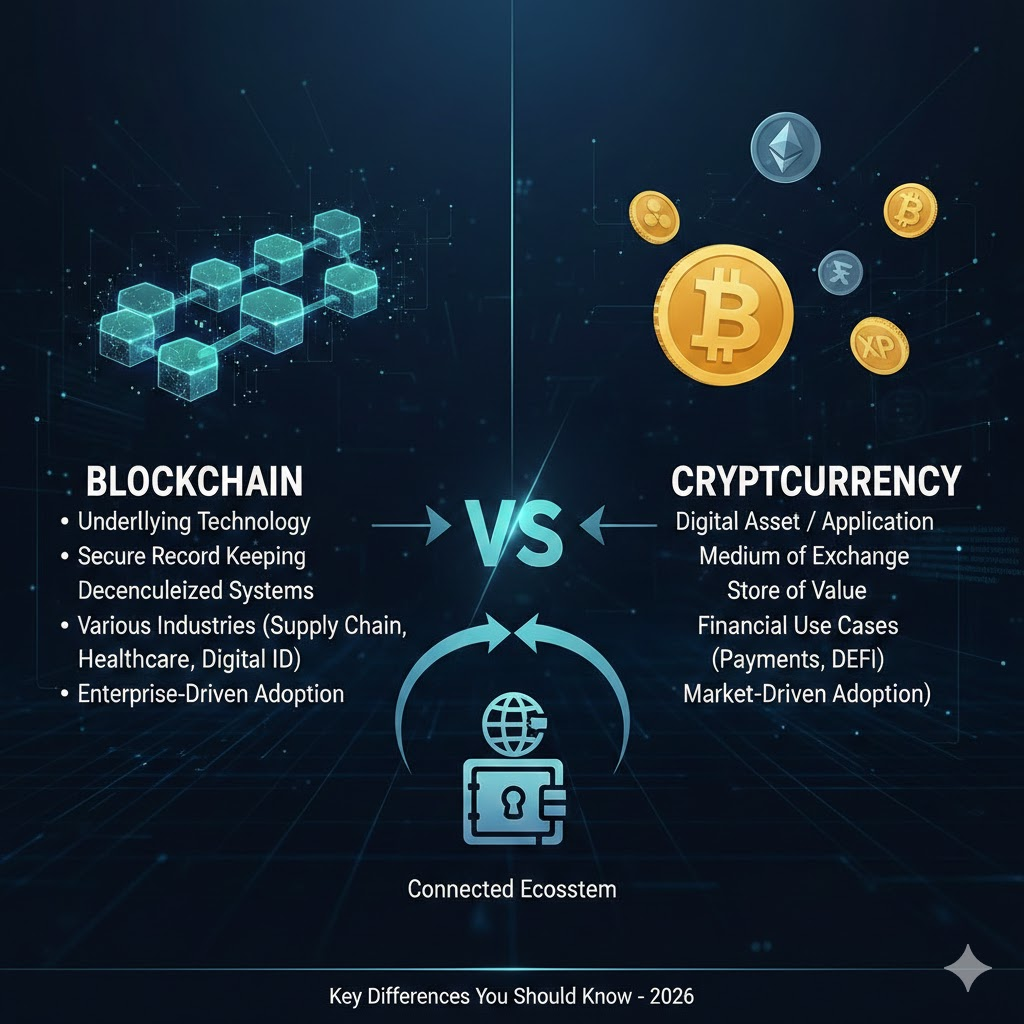
Blockchain is a technology, while cryptocurrency is a product built using that technology.
Blockchain can exist without cryptocurrency, but cryptocurrency cannot exist without blockchain.
Blockchain is used across multiple industries, while cryptocurrency is primarily focused on financial use cases.
Blockchain adoption is often enterprise-driven, while cryptocurrency adoption is largely market-driven.
These differences explain why blockchain faces less resistance from regulators compared to cryptocurrencies.
How They Work Together
Blockchain and cryptocurrency function as a connected system.
Blockchain provides the infrastructure that records and secures transactions.
Cryptocurrency provides the economic layer that powers participation and value exchange.
Together, they create decentralized ecosystems where users can interact without intermediaries.
This relationship continues to evolve as new blockchain models and digital assets emerge.
Regulation and Public Perception
Blockchain generally receives positive attention from policymakers due to its potential to improve transparency and efficiency.
Cryptocurrency faces closer scrutiny due to concerns about volatility, consumer protection, and illicit use.
In 2026, many regulatory frameworks aim to separate blockchain innovation from crypto market risks.
This regulatory distinction is shaping how companies and governments approach adoption.
Use Cases Making Headlines
Blockchain is being tested for voting systems, land registries, and healthcare data management.
Cryptocurrency is driving headlines through market movements, exchange approvals, and institutional investments.
Both are influencing the future of digital infrastructure, but in different ways.
What Experts Say About the Future
Industry experts predict blockchain will become a foundational layer for digital services.
Cryptocurrency is expected to mature with improved compliance, reduced volatility, and clearer regulation.
Rather than competing, blockchain and cryptocurrency are likely to continue evolving together.
For news readers, understanding both concepts separately provides clearer insight into where technology and finance are heading.
FAQs
Is blockchain the same as cryptocurrency?
No. Blockchain is the technology, while cryptocurrency is one application built on it.
Can blockchain exist without cryptocurrency?
Yes. Many private and enterprise blockchains operate without digital currencies.
Why do governments support blockchain but regulate crypto?
Blockchain improves efficiency and transparency, while crypto raises concerns about volatility and misuse.
Do all cryptocurrencies use blockchain?
Most do, though some newer systems use alternative distributed ledger technologies.
Which is more important for the future?
Experts believe both are important, serving different roles in the digital economy.