
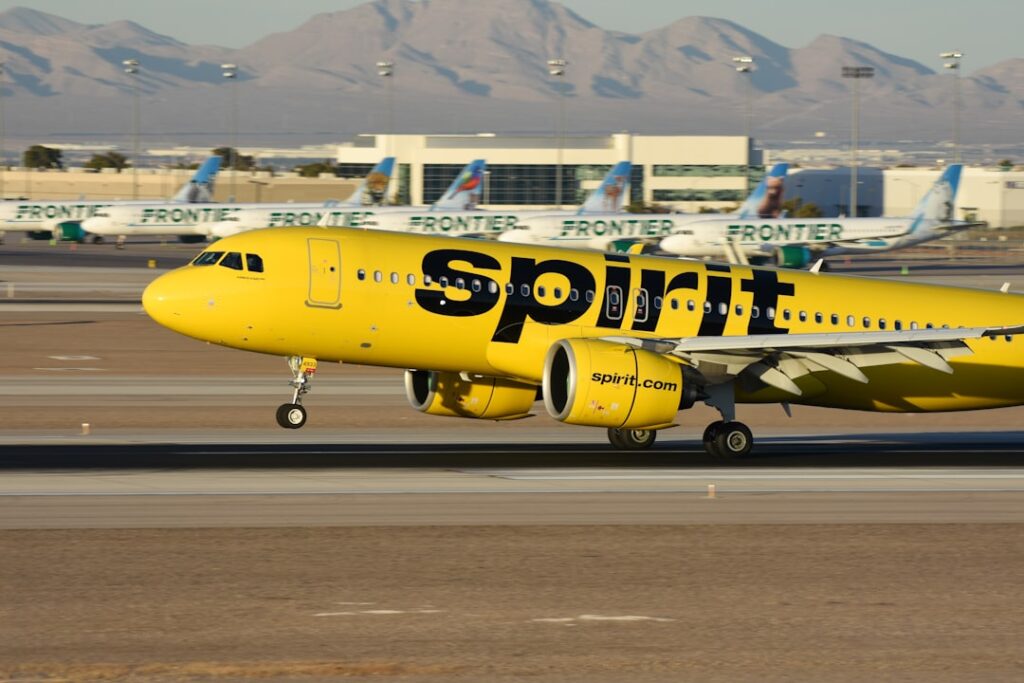
From Childhood Dream to Viral Moment: Can an Influencer Save Spirit Airlines?
Sometimes the most audacious business ideas emerge from the most unexpected places—in this case, from a voice actor with a lifelong passion and a massive social media following. Hunter Peterson, who has spent decades dreaming of launching his own airline, now believes the universe has handed him the ultimate opportunity. With Spirit Airlines’ recent collapse leaving a gaping hole in the ultra-low-cost carrier market, Peterson’s proposal to acquire the defunct airline and restructure it as a community-owned enterprise has ignited something rarely seen in the aviation industry: genuine public enthusiasm.
What makes Peterson’s vision particularly intriguing isn’t just the audacity of the proposal—it’s the operational model he envisions. Drawing inspiration from the Green Bay Packers, the only publicly owned franchise in the National Football League, Peterson imagines an airline structured around community ownership and stakeholder investment. In a landscape where consumers have grown increasingly frustrated with industry consolidation, surprise fees, and perceived indifference toward passenger welfare, the idea of an airline answerable to its customers rather than distant shareholders has struck a powerful chord.
The Desperation Behind the Dream
The viral nature of Peterson’s proposal tells us something far more significant than one man’s childhood ambition finally coming to fruition. It reveals the depths of frustration Americans harbor toward commercial aviation as it currently exists. Spirit Airlines, despite its controversial reputation for nickel-and-diming passengers, filled a crucial niche in the market. For millions of budget-conscious travelers, Spirit represented their only affordable option for air travel. When the airline ceased operations, it didn’t just eliminate a carrier—it removed a lifeline for a segment of the traveling public that the major carriers have increasingly abandoned.
The internet’s enthusiastic response to Peterson’s proposal demonstrates that consumers are hungry for alternatives. They’re willing to embrace unconventional solutions because conventional solutions have failed them. The major airlines have spent years optimizing their business models for shareholder returns rather than customer satisfaction, resulting in shrinking seat width, mounting ancillary fees, and deteriorating service quality. Into this vacuum steps Peterson with a fundamentally different proposition: an airline that answers to the people who fly it.
Could Community Ownership Actually Work in Aviation?
The Packers precedent is compelling but not without complications. While Green Bay’s community ownership model has succeeded spectacularly in the NFL, the airline industry operates under dramatically different constraints. Airlines require enormous capital investments, operate on razor-thin margins, and face relentless pressure from fuel costs, labor negotiations, and regulatory compliance. The Packers benefit from a monopolistic league structure; Spirit would enter a market dominated by four mega-carriers that control approximately 80 percent of domestic flights.
Nevertheless, Peterson’s proposal taps into something real: the possibility that a genuinely customer-centric airline could thrive. A community-owned carrier would have incentives aligned with passenger interests rather than purely extractive fee structures. Such an airline could compete on service quality, transparency, and fair pricing rather than attempting to squeeze passengers for every possible dollar through hidden charges and upselling tactics.
What Happens Next?
While Peterson’s proposal remains in the realm of wishful thinking—he would need access to billions of dollars and regulatory approval to pursue it seriously—the conversation itself matters. It signals that the current state of American aviation has become so unsatisfactory that people are genuinely excited about alternative business models, no matter how unconventional. The enthusiasm demonstrates that the market is ripe for disruption, and consumers are ready to support carriers that treat them with respect and transparency.
Whether or not Peterson ever acquires Spirit’s assets, his proposal serves as a wake-up call to the airline industry. When a voice actor’s casual suggestion about community-owned aviation generates massive public support, it’s worth examining why. The answer lies not in Peterson’s charisma or social media reach, but in the collective exhaustion of a traveling public that has given up on the incumbent carriers to do better. They’re now looking for someone—anyone—willing to try something different.
This report is based on information originally published by Fast Company. Business News Wire has independently summarized this content. Read the original article.