
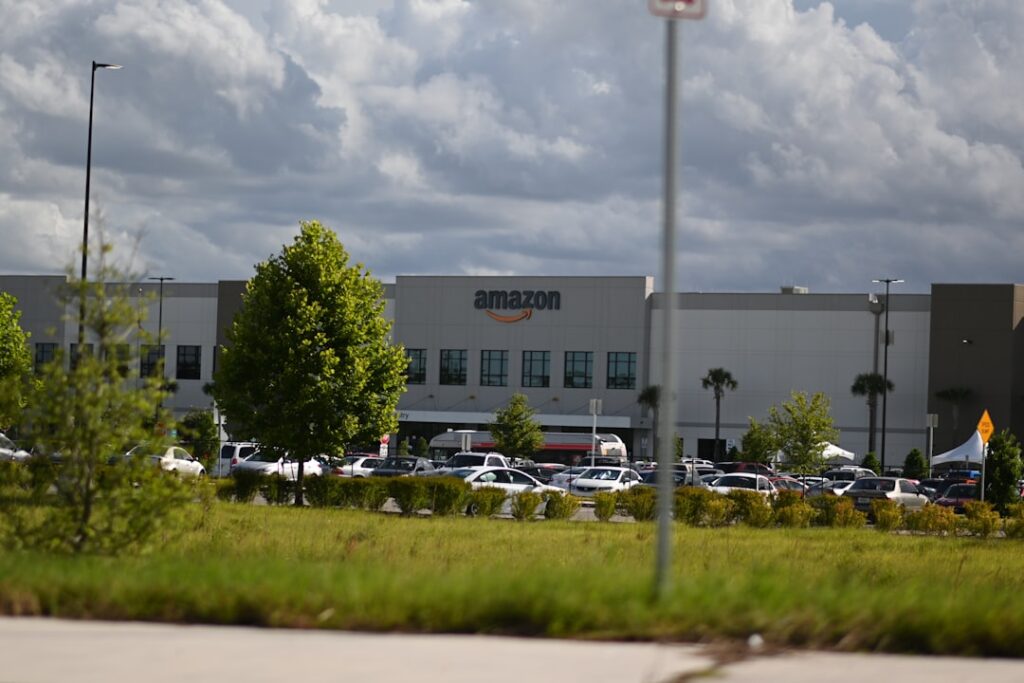
Amazon’s Logistics Play: A Game-Changer for Global Commerce
In a strategic maneuver that signals Amazon’s continued expansion beyond retail, the tech behemoth has launched Amazon Supply Chain Services—a comprehensive offering that opens its formidable global logistics network to third-party businesses. This move represents far more than a simple service extension; it’s a direct challenge to the entrenched dominance of traditional shipping carriers like UPS and FedEx, and it could fundamentally reshape how businesses approach their supply chain operations.
For decades, companies have relied on established logistics providers to handle warehousing, distribution, and last-mile delivery. Amazon, however, has spent years building an infrastructure so efficient and extensive that it arguably rivals—if not surpasses—the capabilities of traditional carriers. Now, the company is monetizing that advantage by extending access to external merchants and enterprises.
What Amazon Supply Chain Services Actually Offers
Amazon Supply Chain Services isn’t simply a rebranding of existing Fulfillment by Amazon (FBA) offerings. Instead, it represents a more sophisticated, end-to-end solution designed to appeal to a broader range of businesses across various industries and operational scales. The service encompasses warehousing, inventory management, order fulfillment, and delivery coordination—essentially the entire backbone of modern supply chain operations.
For businesses accustomed to managing these functions independently or through multiple vendors, the prospect of consolidating everything under one roof presents significant appeal. Amazon’s infrastructure spans continents, featuring strategically positioned fulfillment centers, sorting facilities, and last-mile delivery capabilities that took years and billions of dollars to construct.
The accessibility of this network to non-Amazon businesses represents a paradigm shift. Previously, companies without the scale or capital to build competing infrastructure had limited options. Now, they can tap into Amazon’s logistics prowess without the company’s retail overhead or competitive conflicts.
The Competitive Implications Are Staggering
Make no mistake: this launch directly threatens the revenue streams of UPS, FedEx, and other established logistics providers. These companies have historically dominated B2B shipping and supply chain management, commanding premium pricing because they maintained the most extensive networks. Amazon’s entry into this space introduces a formidable competitor with superior technology, data analytics capabilities, and operational efficiency metrics.
What makes Amazon particularly dangerous to incumbents isn’t just its logistics infrastructure—it’s the intelligence that infrastructure generates. Amazon’s supply chain systems leverage artificial intelligence and machine learning to optimize routes, predict demand, and minimize costs in ways traditional carriers are only beginning to implement. By extending these capabilities to third-party businesses, Amazon effectively democratizes competitive advantages that previously belonged to the tech-enabled few.
For UPS and FedEx, the timing couldn’t be more challenging. Both companies have been navigating post-pandemic operational pressures, labor cost increases, and shifting demand patterns. Now they must defend against a competitor with deeper pockets, superior technology, and a willingness to operate at razor-thin margins to capture market share.
Why Businesses Should Pay Attention
For companies evaluating their logistics partners, Amazon Supply Chain Services demands serious consideration. The offering could significantly reduce supply chain costs, improve delivery speeds, and provide real-time visibility into inventory and shipments—capabilities that represent genuine competitive advantages.
However, businesses must weigh the potential benefits against concerns about consolidating critical operations with a single provider, particularly one that competes directly with many merchants. Dependency on Amazon for logistics creates complexity that some companies may find unacceptable, regardless of the operational benefits.
Additionally, Amazon’s pricing structure remains somewhat opaque. The company will need to demonstrate that its logistics services offer genuine value propositions rather than serving as loss-leader offerings designed to extract higher margins elsewhere.
The Broader Strategic Vision
This launch reflects Amazon’s larger strategic ambitions. By transforming its internal logistics advantage into a revenue-generating service line, the company diversifies income streams beyond retail and cloud computing. Supply chain services represent a massive untapped market, particularly in developing economies and for small-to-medium enterprises that lack logistics sophistication.
Amazon has consistently demonstrated an ability to monetize its internal infrastructure—think AWS, Amazon advertising, and Alexa—by transforming cost centers into profit generators. Supply Chain Services follows this well-established playbook, leveraging investments originally made to support Amazon’s own retail operations.
What Comes Next
As Amazon Supply Chain Services gains traction, expect aggressive responses from UPS, FedEx, and other logistics providers. These companies will likely invest heavily in technology upgrades, pricing adjustments, and service innovations designed to retain customers and differentiate themselves from Amazon’s offering.
The logistics industry stands at an inflection point. Amazon’s entry raises the competitive bar substantially, forcing established players to innovate faster or face market share erosion. For businesses, this competitive intensity ultimately benefits them through better services and more favorable pricing.
What remains to be seen is whether Amazon can maintain profitability while aggressively competing in logistics—a notoriously low-margin business. If the company succeeds, it will have achieved yet another market transformation. If it struggles, the logistics industry may have weathered its most significant competitive challenge in generations.
This report is based on information originally published by TechCrunch. Business News Wire has independently summarized this content. Read the original article.