
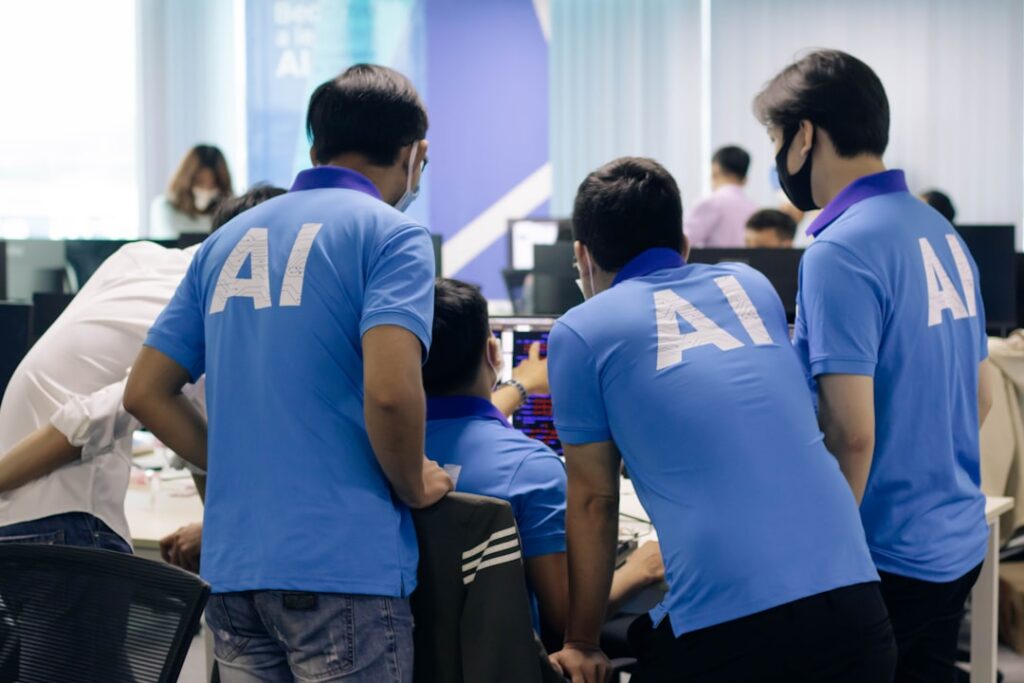
The Human Advantage in an AI World
The rise of artificial intelligence has sparked legitimate concerns about job displacement and workforce obsolescence. But according to LinkedIn co-founder Ryan Roslansky and fellow leader Aneesh Raman, worry about being replaced by machines misses the bigger picture entirely. In their thought-provoking new book, Open to Work: How to Get Ahead in the Age of AI, the executives make a compelling case that human beings possess irreplaceable qualities that will remain central to professional success—no matter how sophisticated AI becomes.
Rather than frame AI as an existential threat to workers, Roslansky and Raman propose a more nuanced view: technology and humanity don’t have to be at odds. Instead, the professionals who thrive in coming years will be those who lean into their distinctly human capabilities while strategically leveraging AI tools to amplify their impact.
The Five Skills That Separate Humans from Machines
At the core of their book lies a deceptively simple but powerful framework: five foundational skills that distinguish human professionals from artificial intelligence. These aren’t technical competencies or industry-specific expertise—they’re deeply human attributes that machines, by their very nature, cannot authentically develop or express.
The five pillars identified by the LinkedIn leaders are curiosity, courage, creativity, compassion, and communication. While these concepts may sound familiar, the authors dig deeper into why each one matters profoundly in a world increasingly populated by intelligent algorithms and automated systems.
Curiosity: The Engine of Human Growth
Curiosity represents the fundamental drive to question, explore, and understand the world around us. While AI systems can process vast amounts of information and identify patterns humans might miss, they lack the intrinsic motivation to ask “why?” or “what if?”—questions that spark innovation and discovery. Professionals who cultivate genuine curiosity position themselves to identify emerging opportunities and pivot when market conditions change.
Courage: Making Bold Decisions Under Uncertainty
In an age of data-driven decision-making, courage might seem counterintuitive. Yet the ability to take calculated risks, advocate for unpopular ideas, and move forward despite uncertainty remains distinctly human. AI can analyze probabilities, but it cannot make the leap of faith that characterizes true leadership and entrepreneurship. This willingness to be vulnerable and embrace failure as part of growth cannot be automated.
Creativity: Envisioning What Doesn’t Yet Exist
While AI excels at recombining existing patterns and optimizing known solutions, human creativity involves imagining entirely new possibilities. Artists, designers, strategists, and innovators across industries rely on their ability to envision futures that don’t yet exist and bring those visions into reality. This capacity for original thought and artistic expression lies at the heart of human value creation.
Compassion: The Foundation of Meaningful Connection
Perhaps no skill separates humans from machines more clearly than the ability to genuinely empathize with others. Compassion drives ethical decision-making, builds trust in teams, and creates psychological safety that allows humans to collaborate effectively. In an increasingly digital workplace, the professionals who can authentically connect with colleagues, clients, and customers will always command premium value.
Communication: Translating Ideas into Shared Understanding
Finally, communication goes far beyond simply transmitting information. It involves understanding your audience, adapting your message, reading emotional subtext, and building rapport. Effective communicators don’t just share facts—they inspire, persuade, and motivate others to action. This nuanced, context-aware form of communication remains a distinctly human strength.
The Practical Path Forward
Roslansky and Raman aren’t suggesting that workers ignore technological literacy or avoid learning AI tools. Rather, they advocate for a balanced approach where professionals develop both technical competencies and human capabilities. The workers who will prosper aren’t those who resist AI, nor are they those who abandon their humanity in pursuit of efficiency.
Instead, the future belongs to those who can integrate AI into their work while deliberately cultivating their unique human strengths. This means being intentional about developing curiosity through continuous learning, channeling courage into strategic risk-taking, nurturing creativity through diverse experiences, practicing compassion in workplace relationships, and refining communication skills across all formats and audiences.
A Realistic Vision of Tomorrow’s Workplace
The LinkedIn executives’ perspective offers a refreshing counterpoint to doomsday narratives about AI eliminating careers. Their vision isn’t about fighting technological change but about understanding what makes human workers irreplaceable—and then doubling down on those strengths.
As organizations increasingly adopt AI and automation, the demand for uniquely human skills will likely increase rather than diminish. Companies will still need leaders who can inspire teams, strategists who can imagine bold new directions, team members who treat each other with genuine care, and communicators who can translate complex ideas into compelling narratives.
The message from the top of LinkedIn is clear: your differences aren’t liabilities to overcome in an AI-driven world. They’re your greatest competitive advantage. The professionals who recognize this and intentionally develop their human capabilities while embracing technological tools will find themselves not displaced by AI, but elevated by it.
This report is based on information originally published by Fast Company. Business News Wire has independently summarized this content. Read the original article.