
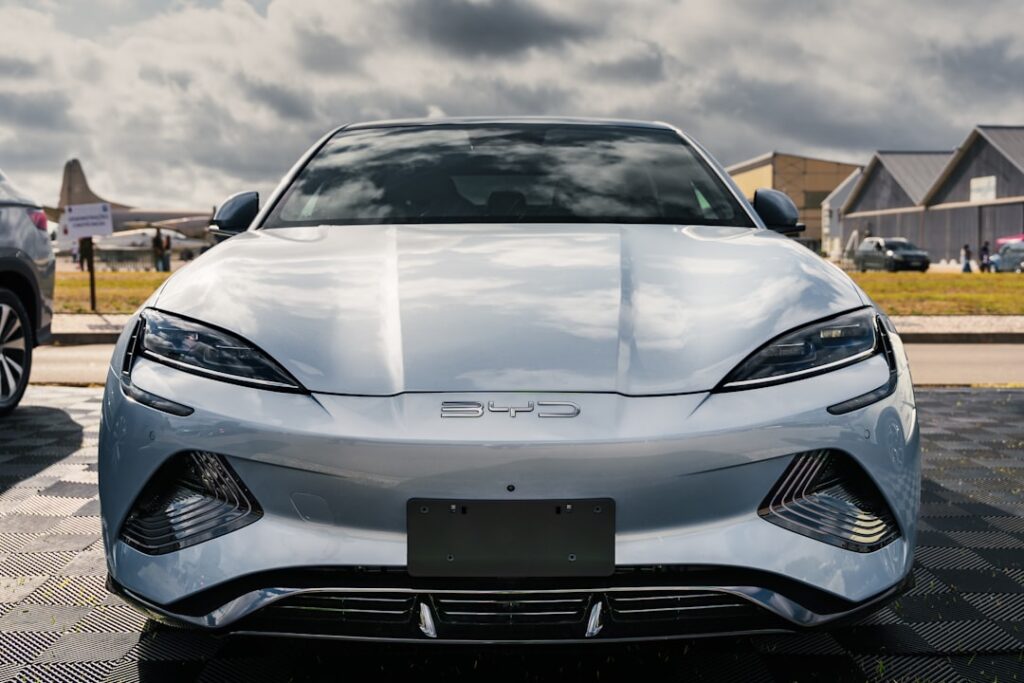
BYD’s Global Strategy Takes Shape Without American Anchor
As crude oil prices continue their upward trajectory, putting pressure on consumers worldwide, one of China’s most formidable automotive manufacturers is making headlines with a provocative statement: it doesn’t need the United States to achieve remarkable success. BYD, already a titan in the electric vehicle sector, is doubling down on its conviction that the seismic shift away from gasoline and diesel engines presents opportunities far too substantial to require American market participation.
This declaration represents more than simple corporate bravado. It reflects a fundamental reassessment of global automotive dynamics, where the traditional Western dominance in the industry faces unprecedented challenges from Eastern innovation and manufacturing prowess. BYD’s confidence stems from tangible market realities that favor its position and business model.
The Rising Cost of Petroleum Fuels Strategic Positioning
The timing of BYD’s announcement carries particular significance in the context of volatile energy markets. With petroleum prices climbing steadily, the economic advantage of electric vehicles becomes increasingly compelling to consumers across every income bracket. This macroeconomic backdrop creates precisely the conditions that benefit manufacturers like BYD, which have invested heavily in battery technology and EV production capacity.
The company’s strategic positioning capitalizes on what industry analysts call an inflection point—a moment when electric vehicles transition from niche luxury products to essential transportation options. As fuel costs bite deeper into household budgets and business operating expenses, the total cost of ownership increasingly favors battery-powered alternatives. BYD has positioned itself at the forefront of this transition, boasting production capabilities that rival or exceed most competitors globally.
The Global Energy Transition Creates New Winners
Beyond mere economic calculations, BYD’s confidence reflects broader geopolitical and environmental trends reshaping the automotive landscape. Governments worldwide are accelerating emissions reduction timelines, implementing stricter regulations on internal combustion engines, and providing financial incentives for electric vehicle adoption. These policies create a supportive ecosystem for companies like BYD that have already built their future around battery-powered transportation.
The company’s assertion that it can thrive without the American market underscores a fundamental shift in global automotive power dynamics. Traditionally, success in the US market served as a validation of quality and desirability, often determining whether a manufacturer could achieve true international prominence. BYD’s claim challenges this assumption directly, suggesting that other markets—particularly in Asia, Europe, and emerging economies—offer sufficient scale and growth potential to sustain extraordinary profitability.
Market Opportunities Beyond North America
The numbers support this perspective. China’s domestic EV market represents the world’s largest, with millions of vehicles sold annually. European nations are pursuing aggressive electrification goals with substantial government support. Many developing economies are leapfrogging traditional automotive infrastructure entirely, moving directly toward electric mobility solutions. These markets collectively represent consumption opportunities vastly larger than what the American market could offer.
BYD’s manufacturing expertise and battery production capabilities position it advantageously for these markets. The company has demonstrated remarkable ability to scale production, improve efficiency, and reduce costs—capabilities essential in emerging and price-sensitive markets where affordability determines adoption rates.
The Confidence Game in Competitive Markets
BYD’s declaration also carries psychological weight in competitive international markets. By publicly stating its independence from American success, the company signals confidence and stability to investors, partners, and consumers. This messaging proves particularly valuable as electric vehicle manufacturers compete fiercely for supply chain partnerships, talent acquisition, and consumer loyalty across global markets.
The statement reflects broader trends in global business where emerging market companies increasingly demonstrate the ability to build world-class enterprises without reliance on traditional Western markets. This represents a significant evolution in international commerce and industrial strategy.
Looking Forward in the Energy Transition
As the world continues its shift away from fossil fuels, driven by environmental imperatives, economic pressures, and technological advancement, companies positioned at the forefront of battery-powered transportation will likely command disproportionate advantages. BYD’s confidence appears justified by market fundamentals, manufacturing capabilities, and the inexorable momentum of global energy transition trends that show no signs of reversing.
<SOURCE_ATTRIBUTION: This report is based on information originally published by BBC News. Business News Wire has independently summarized this content. Read the original article.