
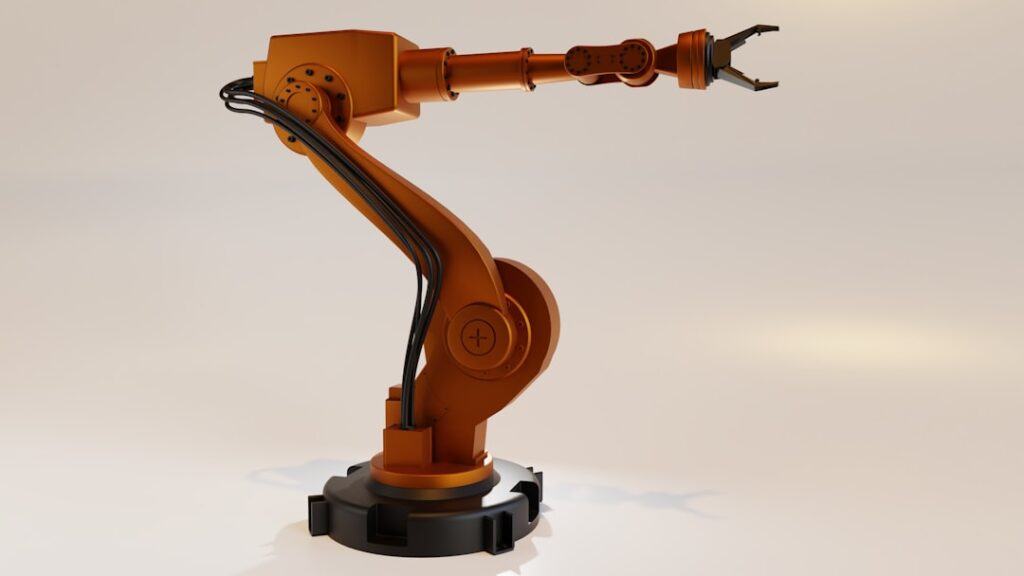
When Robots Bridge the Skills Gap
Columbus, Ohio-based Path Robotics has cracked a problem that’s been keeping manufacturing executives up at night: how do you build the future when you don’t have enough people to build it? The company’s answer comes in the form of autonomous welding machines that can navigate jobsites and shipyards independently, performing the precision metalwork that has traditionally required years of training and irreplaceable human expertise.
This isn’t merely a Silicon Valley fantasy projected onto an industrial backdrop. The welding shortage represents one of the most pressing challenges confronting American manufacturing today—a quiet crisis that threatens to undermine the nation’s competitive advantage in everything from infrastructure to defense. While venture capitalists pour billions into shiny startups promising revolutionary data centers and cutting-edge defense technology, the unglamorous reality persists: someone has to physically make these devices. And right now, there simply aren’t enough skilled workers willing to pick up a welding torch.
A Crisis Hiding in Plain Sight
The American Welding Society has sounded the alarm with stark projections: the United States will need more than 320,000 new welding professionals by 2030. That breaks down to roughly 80,000 new welders required annually—a staggering number that the current pipeline of vocational training programs and trade schools shows little sign of meeting. The gap between demand and supply grows wider each year, creating a bottleneck that threatens to slow down virtually every sector of advanced manufacturing.
The problem compounds itself in insidious ways. As existing welders retire faster than replacements enter the field, the remaining workers find themselves in increasingly high demand, commanding premium wages while projects languish for lack of personnel. Construction companies and shipyards have begun turning down lucrative contracts simply because they lack the human capital to fulfill them. Meanwhile, manufacturers considering expansion or relocation weigh the harsh reality that their ability to execute depends on finding welders in markets where they’re increasingly scarce.
The Robot Answer to a Human Problem
Path Robotics approaches this challenge with an elegant, if somewhat unsettling, solution. Their autonomous welding machines eliminate the need for human welders to be physically present on a jobsite, performing complex metalwork with the precision and consistency that human workers—however skilled—struggle to match across extended shifts and difficult conditions.
The technology represents more than just labor substitution. These robots can operate in environments that are dangerous, uncomfortable, or simply impractical for humans to work in for extended periods. They don’t require breaks, don’t experience fatigue-related quality degradation, and can work continuously around the clock if needed. For industries like shipbuilding and heavy construction, where welding requirements are both massive and mission-critical, autonomous systems could mean the difference between completing projects on schedule and watching them drag across months or years.
Manufacturing’s Competitive Necessity
The broader implications extend far beyond individual companies or jobsites. The United States’ ability to maintain and grow its advanced manufacturing base depends on solving the talent acquisition problem that welding represents. Every major infrastructure project, every defense contract, every industrial expansion ultimately relies on the availability of workers who can perform skilled metalwork. Without them, American manufacturers cede ground to international competitors who have either solved this challenge or have access to cheaper labor markets.
Path Robotics’ technology doesn’t eliminate the need for human expertise entirely. Someone still needs to program the machines, maintain them, diagnose problems, and make decisions about complex projects that require human judgment. But it fundamentally reshapes the labor equation, allowing one skilled technician to oversee multiple autonomous systems performing actual welding work. This multiplier effect could help stretch the limited pool of available welders further than it’s ever stretched before.
The Future Taking Shape
Whether autonomous welding robots represent the complete answer to America’s manufacturing talent crisis remains uncertain. But they certainly represent a significant piece of the puzzle at a moment when the puzzle is becoming increasingly urgent to solve. As the venture capital world continues obsessing over headline-grabbing technologies and investor-friendly narratives, companies like Path Robotics are tackling the far less glamorous but infinitely more practical challenge of actually making things.
The autonomous welding robot may not be the future that technology enthusiasts imagined, but it might just be the future that American manufacturing desperately needs.
This report is based on information originally published by Fast Company. Business News Wire has independently summarized this content. Read the original article.