
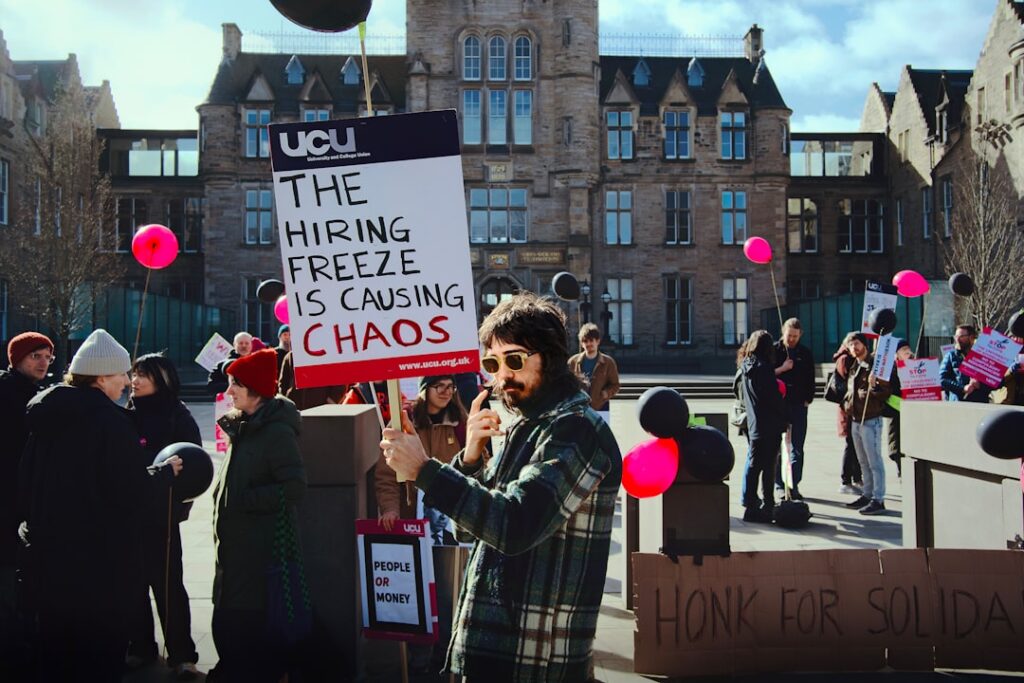
University Workers Demand Cost of Living Wage Recognition
A significant labor dispute is unfolding across Britain’s higher education institutions as thousands of university employees represented by the Unite union have initiated coordinated strike action. The industrial action centers on a fundamental issue that has gripped workers across the nation: wages that fail to keep pace with the escalating cost of living. Among those affected are library staff, museum professionals, finance administrators, and information technology personnel who form the backbone of university operations.
The strike represents a crucial moment in the ongoing conversation about worker compensation and economic security in the United Kingdom. While academic staff often capture headlines, the support workers who maintain university infrastructure—from cataloging library collections to managing financial systems to ensuring IT networks function reliably—rarely receive equivalent attention for their contributions. Unite has mobilized these workers to assert their value and demand recognition through improved remuneration.
The Scope of Strike Action
The industrial action encompasses a diverse workforce across multiple professional categories. Library staff manage research resources and student support services. Museum professionals curate collections and facilitate public engagement with cultural heritage. Finance teams handle the complex budgetary operations essential to institutional functioning. IT specialists maintain the digital infrastructure that has become indispensable to modern academic operations, especially following the lessons learned during pandemic-era remote working.
This cross-functional coalition demonstrates the breadth of concern regarding wage stagnation across university employment. The involvement of workers from different departments suggests that cost of living anxieties transcend individual job categories and reflect systemic challenges affecting the entire support workforce.
Understanding the Cost of Living Crisis
The term “weighting” in labor disputes refers to additional compensation designed to offset regional cost variations or, in this case, the general inflation affecting all workers. The Unite union’s emphasis on cost of living adjustment highlights the gap between current compensation levels and the actual expenses workers face for housing, transportation, food, utilities, and other essentials.
In recent years, inflation has outpaced wage growth across numerous sectors, leaving workers struggling to maintain their standard of living. University support staff, despite holding skilled professional positions, have not seen their compensation adjusted proportionally to match these economic realities. This disparity creates financial stress and, ultimately, impacts staff morale and institutional productivity.
Why University Support Staff Matter
While universities are often defined by their academic mission and student experience, the reality is that institutional excellence depends fundamentally on well-functioning support systems. Libraries serve as research hubs. Museums engage communities and preserve cultural knowledge. Finance departments ensure institutional stability and compliance. IT infrastructure enables everything from academic research to administrative operations.
When these workers face financial hardship, it inevitably affects their ability to perform at peak efficiency. Staff struggling with cost of living pressures experience stress that impacts job satisfaction, productivity, and retention. Universities increasingly face challenges in recruiting and retaining quality support staff, partly due to compensation packages that lag behind inflation and comparable positions in other sectors.
The Broader Labor Market Context
This strike occurs within a larger landscape of labor activism across the United Kingdom, where workers in education, healthcare, transportation, and other sectors have sought to address wage stagnation. The coordination between Unite and university workers reflects growing recognition that organized labor action remains an effective mechanism for addressing compensation grievances.
Universities, as major employers and publicly funded or substantially subsidized institutions, occupy a unique position in this conversation. Their responses to worker demands will signal their commitment to supporting those who sustain their operations and, by extension, their commitment to addressing broader economic inequality.
Looking Forward
The strike action initiated by Unite members at universities across the nation represents more than a simple wage dispute. It reflects fundamental questions about economic justice, worker dignity, and institutional values. Whether university leadership will engage meaningfully with these demands, implement cost of living wage adjustments, or hold firm against concessions remains to be seen. What is clear is that university support workers have determined their concerns warrant collective action and public attention.
<SOURCE_ATTRIBUTION: This report is based on information originally published by BBC News. Business News Wire has independently summarized this content. Read the original article.