
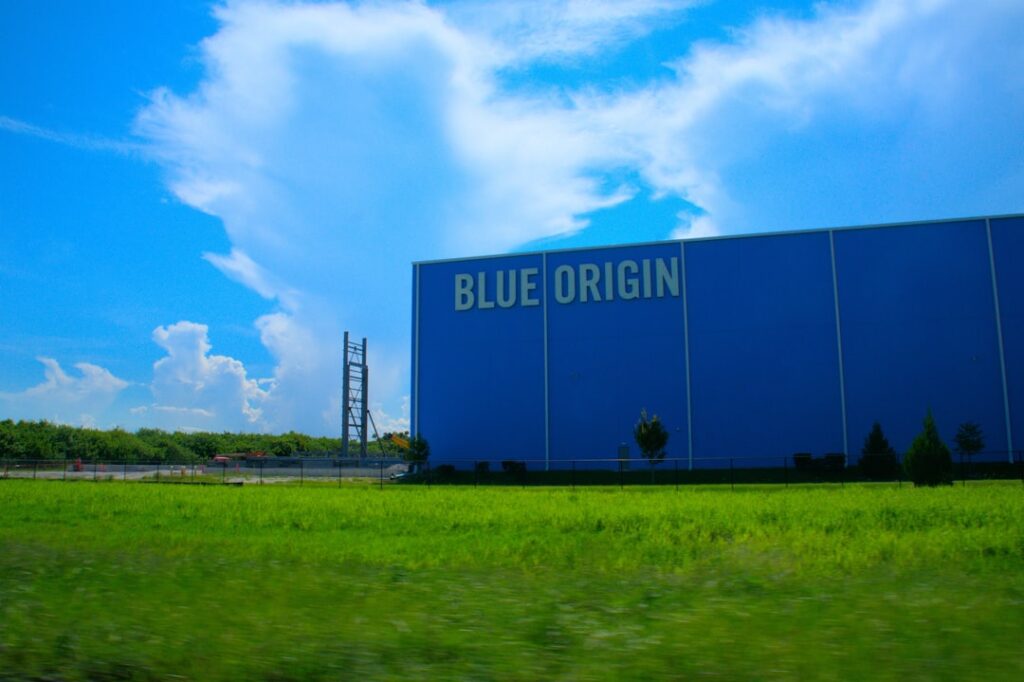
Blue Origin’s New Glenn Stumbles in Critical Test Flight
The aerospace industry’s attention has turned sharply toward Blue Origin following a significant operational misstep that underscores the unforgiving nature of space launch operations. During its third orbital flight, the New Glenn heavy-lift rocket—a centerpiece of Blue Origin’s commercial spaceflight ambitions—placed a customer satellite into an incorrect orbit, marking the system’s first major failure. This incident threatens to ripple across the broader landscape of America’s space exploration agenda, particularly NASA’s renewed commitment to lunar missions and the incoming Trump administration’s space priorities.
The New Glenn represents years of development and considerable financial investment by Blue Origin, the aerospace venture founded by Jeff Bezos. The vehicle is engineered to compete in the heavy-lift launch market alongside SpaceX’s Falcon Heavy, offering commercial operators and government agencies a critical capability for deploying large payloads to orbit. The system’s failure to precisely insert its customer payload into the designated orbital parameters constitutes a serious operational shortfall that demands immediate investigation and remediation.
Implications for NASA’s Lunar Ambitions
The timing of this malfunction carries particular weight within the context of NASA’s broader objectives. The agency has designated the New Glenn as a potential platform for supporting lunar logistics and deep-space exploration missions. As the Trump administration ramps up its rhetoric around returning American astronauts to the Moon, the reliability of domestic heavy-lift capabilities becomes increasingly critical. Any extended delays or additional developmental setbacks could compress already aggressive timelines and force policymakers to reconsider their strategic approach to space exploration.
Blue Origin has invested substantially in New Glenn’s development, viewing it as essential to maintaining its competitive position in the commercial space sector. The company operates under intense pressure to demonstrate the system’s reliability and operational maturity. This first major failure, while perhaps inevitable in the course of any complex aerospace program, nonetheless represents a moment of genuine concern for stakeholders who have placed confidence in the system’s readiness.
The Broader Context of Launch Vehicle Development
It bears noting that operational setbacks during the early stages of any new launch system’s deployment are not uncommon in aerospace history. SpaceX encountered multiple failures during the development phases of its Falcon 9 rocket before achieving the consistent reliability the industry now associates with that vehicle. Similarly, other heavy-lift systems have experienced integration challenges, orbital insertion errors, and other technical difficulties during their respective development cycles. The critical distinction, however, lies in how manufacturers respond to these challenges and how quickly they can implement corrective measures.
For Blue Origin, the immediate priority centers on conducting a comprehensive root-cause analysis to identify what prevented the New Glenn from executing its nominal insertion sequence. Engineers must determine whether the fault originated in ground operations, flight software, propulsion systems, guidance and navigation components, or some combination of factors. The thoroughness and speed with which the company addresses these questions will significantly influence customer confidence and program trajectory.
Commercial and Strategic Consequences
Beyond the technical dimensions, this incident carries commercial implications. Customers entrusting their expensive satellites to any launch provider—whether a government agency or commercial operator—require confidence in that provider’s ability to deliver payloads safely to specified orbital parameters. A single significant failure can trigger contract reviews, schedule reassessments, and requests for enhanced verification procedures that accumulate into substantial delays and cost increases.
The New Glenn program serves as a critical lynchpin in Blue Origin’s broader spaceflight strategy. The company operates multiple divisions spanning commercial crew transport, suborbital tourism experiences, and large-scale satellite constellation development. Any erosion in New Glenn’s operational credibility ripples across these interconnected business lines and affects Blue Origin’s ability to pursue future contracts and partnerships.
Looking Forward
Blue Origin faces a demanding path forward. The company must demonstrate that the New Glenn’s failure represents an isolated incident amenable to engineering solutions rather than a symptom of fundamental design or operational deficiencies. The eyes of NASA, commercial customers, and the broader aerospace industry now focus intently on how Blue Origin responds to this challenge. The resolution of this incident will help determine whether the New Glenn emerges as a reliable foundation for America’s space exploration ambitions or whether questions about its viability prompt reconsideration of strategic launch vehicle portfolios.
As space operations grow increasingly central to American economic competitiveness and national security, the stakes surrounding heavy-lift launch reliability have never been higher. Blue Origin’s response to this setback will reverberate throughout the industry and influence decisions affecting lunar exploration timelines, commercial spaceflight operations, and the competitive dynamics between American aerospace providers.
This report is based on information originally published by TechCrunch. Business News Wire has independently summarized this content. Read the original article.