
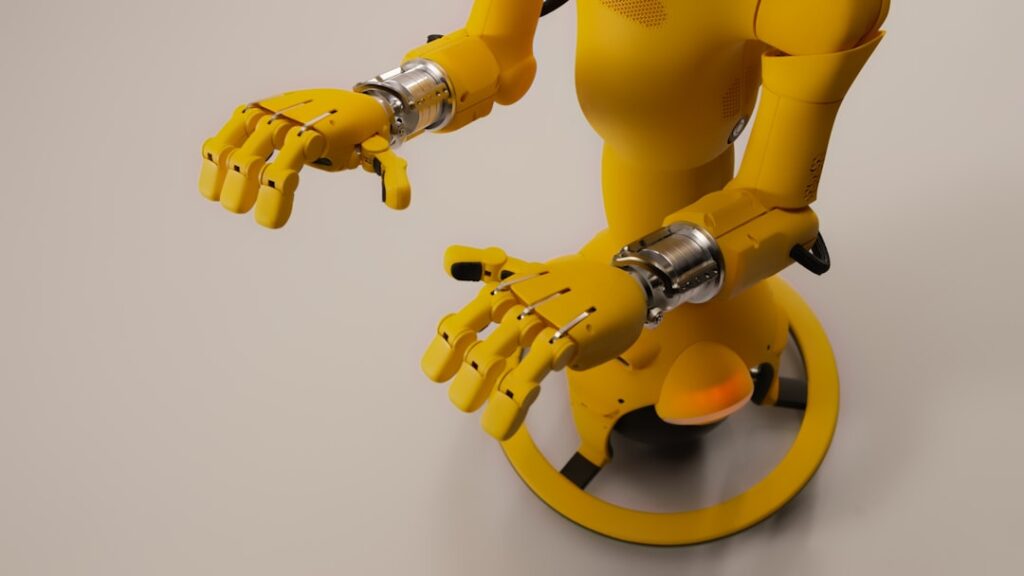
The Robot Revolution That Actually Stuck
In an industry littered with failed ventures and abandoned prototypes, Chef Robotics stands apart. While competitors have vanished into the startup graveyard, this San Francisco-based company is not merely surviving—it’s thriving. The firm, which specializes in deploying artificial intelligence-guided robotic arms for food production environments, recently announced an aggressive expansion strategy designed to serve a dramatically broader customer base than ever before.
The distinction matters tremendously in a sector that has historically struggled with viability. Food robotics promised revolutionary change but frequently delivered disappointing results, with numerous well-funded startups failing to achieve meaningful commercial traction. Chef Robotics has managed to navigate these treacherous waters differently, and industry observers are paying close attention to understand how and why.
Surviving Where Others Failed
The robotics food production space has become notorious for its graveyard of failed companies. Startups that raised substantial capital, attracted prominent investors, and generated significant media attention have nonetheless crumbled under the weight of technical challenges, regulatory hurdles, and market adoption barriers. Some struggled with robotic precision in delicate food handling. Others couldn’t achieve the cost economics necessary to convince food producers to swap human workers for machines.
Chef Robotics took a different approach entirely. Rather than attempting to reinvent the entire food production ecosystem, the company focused on solving genuine, immediate problems that food manufacturers actually faced. This pragmatic orientation toward real-world challenges proved instrumental in establishing credibility and achieving early wins with customers.
The Technology That Powers Growth
At the core of Chef Robotics’ success lies sophisticated artificial intelligence paired with advanced robotic hardware. The company’s AI-guided robot arms represent a significant leap forward in precision, adaptability, and cost-effectiveness. These systems can handle diverse food preparation tasks with consistency and reliability that rivals human workers while operating continuously without fatigue or performance degradation.
The artificial intelligence component represents the true differentiator. Rather than relying on rigid, pre-programmed movements that require expensive reconfiguration for different tasks, Chef Robotics’ AI systems learn and adapt. This flexibility allows food production facilities to deploy the same robotic platform across multiple applications, maximizing return on investment and reducing per-unit costs significantly.
Expansion Into New Markets
The company’s recent announcement signals confidence in its market position and technological capabilities. Chef Robotics is actively pursuing opportunities to serve a substantially wider array of customers across different segments within the food production industry. Rather than remaining confined to narrow applications within specific verticals, the expanded strategy targets establishments ranging from high-volume manufacturing facilities to specialized food preparation environments.
This diversification strategy addresses a critical vulnerability that plagued many competitor companies. By limiting themselves to single-use cases or narrow customer segments, earlier food robotics ventures found themselves vulnerable to market shifts and customer consolidation. Chef Robotics’ broader approach creates multiple revenue streams and reduces dependency on any single customer category.
Why the Market Is Finally Ready
Several factors have converged to make this moment viable for Chef Robotics’ expansion ambitions. Labor shortages in food production have intensified significantly, making automation increasingly attractive to facility operators. Simultaneously, artificial intelligence has advanced dramatically, enabling the kind of adaptive, flexible robotic systems that Chef Robotics now deploys. Production costs for robotic hardware have declined substantially, improving unit economics for end users.
Additionally, the regulatory environment has become more supportive of food robotics applications. Initial skepticism about food safety, contamination risks, and regulatory approval has given way to clearer standards and established pathways for implementation. This regulatory clarity removes a major obstacle that previously hindered market adoption.
Looking Forward
Chef Robotics’ resurgence demonstrates that not all robotics ventures are destined for failure. Companies that combine sophisticated technology with practical market focus, realistic customer expectations, and sustainable business models can achieve genuine success. As the company executes on its expansion plans, industry observers will be watching closely to see whether Chef Robotics can avoid the pitfalls that claimed so many competitors.
The broader implications extend beyond one company’s success. If Chef Robotics can prove that food production robotics represents a viable, scalable market opportunity, it may catalyze renewed investor interest and entrepreneurial energy in the space. That could ultimately reshape how food production operates across the industry for years to come.
This report is based on information originally published by TechCrunch. Business News Wire has independently summarized this content. Read the original article.