
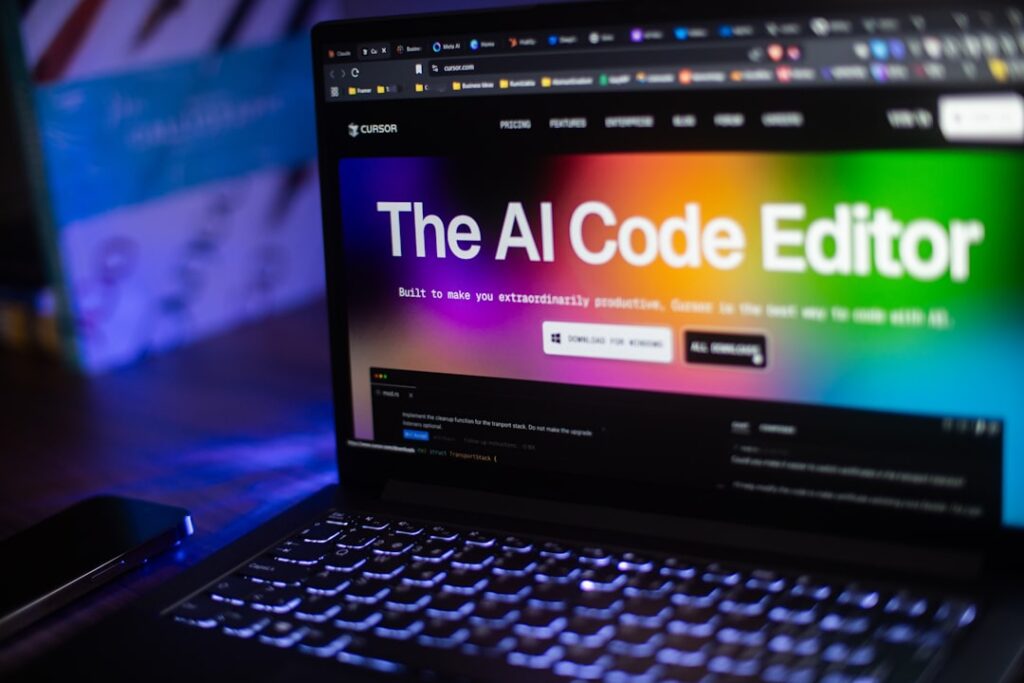
Cursor’s Meteoric Rise: $50B Valuation Reflects AI Boom in Developer Tools
The artificial intelligence landscape continues its dizzying ascent, and nowhere is that momentum more apparent than in the enterprise development space. According to sources familiar with the matter, Cursor—the increasingly influential AI-assisted coding platform—is currently engaged in advanced fundraising discussions that could land the company north of $2 billion in new capital while commanding a staggering $50 billion valuation. This would represent yet another milestone in the relentless march of AI-native companies toward hypergrowth status, and it signals something more fundamental: enterprises are voting with their wallets, and they’re betting heavily on artificial intelligence to transform how code gets written.
The fundraising push comes at a moment when venture capital remains cautiously optimistic about AI’s practical applications, particularly those that promise immediate, measurable productivity gains. Unlike speculative AI bets of years past, Cursor has built something tangible—a tool that developers actually use, and one that demonstrably accelerates the coding process. The market is rewarding that focus with exceptional capital availability and valuation premiums that would have seemed unthinkable just a few years ago.
Heavyweight Backers Return to the Table
The funding round is expected to be led by two major institutional players: Andreessen Horowitz (a16z) and Thrive Capital. Both firms are returning backers, meaning they’ve already bet on Cursor’s vision and are doubling down on their conviction. This continuation of support from sophisticated venture firms carries significant weight in the startup ecosystem. When established investors return to a company at dramatically higher valuations, it typically signals that the business is delivering on its promise—and then some.
Andreessen Horowitz has become synonymous with backing transformative infrastructure plays, and Thrive Capital has developed a reputation for identifying and nurturing companies at inflection points. Their involvement suggests that Cursor has crossed critical thresholds in terms of product-market fit, customer retention, and enterprise adoption. These aren’t firms known for throwing money at hype; they invest in demonstrated traction and market dominance trajectories.
Enterprise Growth Becomes the Story
What truly separates Cursor from the crowded AI tooling landscape is its enterprise traction. The company hasn’t simply captured hobbyists or individual developers—it has successfully penetrated corporate environments where procurement is rigorous, security requirements are stringent, and purchasing decisions involve multiple stakeholders. This is where valuations escape the realm of speculation and enter the territory of revenue-based justification.
The surge in enterprise adoption reflects a broader corporate realization: AI coding assistants aren’t a luxury or a nice-to-have feature. They’re becoming essential infrastructure for competitive software development. In an environment where skilled developer talent remains scarce and expensive, tools that measurably improve productivity and code quality become strategic assets rather than convenient conveniences. Companies that have implemented Cursor report meaningful acceleration in development cycles, which translates directly to faster time-to-market and ultimately to competitive advantage.
The Broader Market Context
Cursor’s fundraising trajectory reflects a maturing market for developer-focused AI. The early hype cycle has given way to a period of selective investment in companies with proven unit economics and sustainable growth patterns. Valuations are becoming tethered to revenue, user engagement metrics, and enterprise customer concentration—the traditional markers of genuine business value rather than speculative frenzy.
The $50 billion valuation places Cursor in rarefied territory, aligning it with some of the most successful software companies in history at comparable stages. This isn’t merely symbolic; it reflects investor confidence that the company will eventually generate returns commensurate with that valuation. In the context of AI infrastructure plays, such confidence isn’t freely given—it’s earned through demonstrated market dominance and clear paths to scale.
What’s Next for the Industry
This funding round will likely serve as a market signal to the broader venture ecosystem. When companies like Cursor achieve $50 billion valuations with this kind of capital backing, it validates the entire category and encourages competitors, both established and nascent, to accelerate their own development efforts. The result will be intensified competition, but also broader adoption as companies continue their AI-first transitions.
For developers and enterprises watching from the sidelines, Cursor’s success offers a clear message: AI-augmented development isn’t a future possibility—it’s the present reality, and it’s being aggressively funded and deployed across the enterprise landscape right now. The question is no longer whether AI will transform software development, but rather how quickly teams can adapt to work alongside these increasingly capable tools.
As Cursor enters what appears to be its next growth phase with substantial new capital, the company will face the dual challenge of scaling its product to meet enterprise demand while fending off intensifying competition. But with backing from the venture world’s heaviest hitters and clear evidence of product-market fit, the company appears well-positioned for what could be one of the most important chapters in AI-native software company history.
This report is based on information originally published by TechCrunch. Business News Wire has independently summarized this content. Read the original article.