
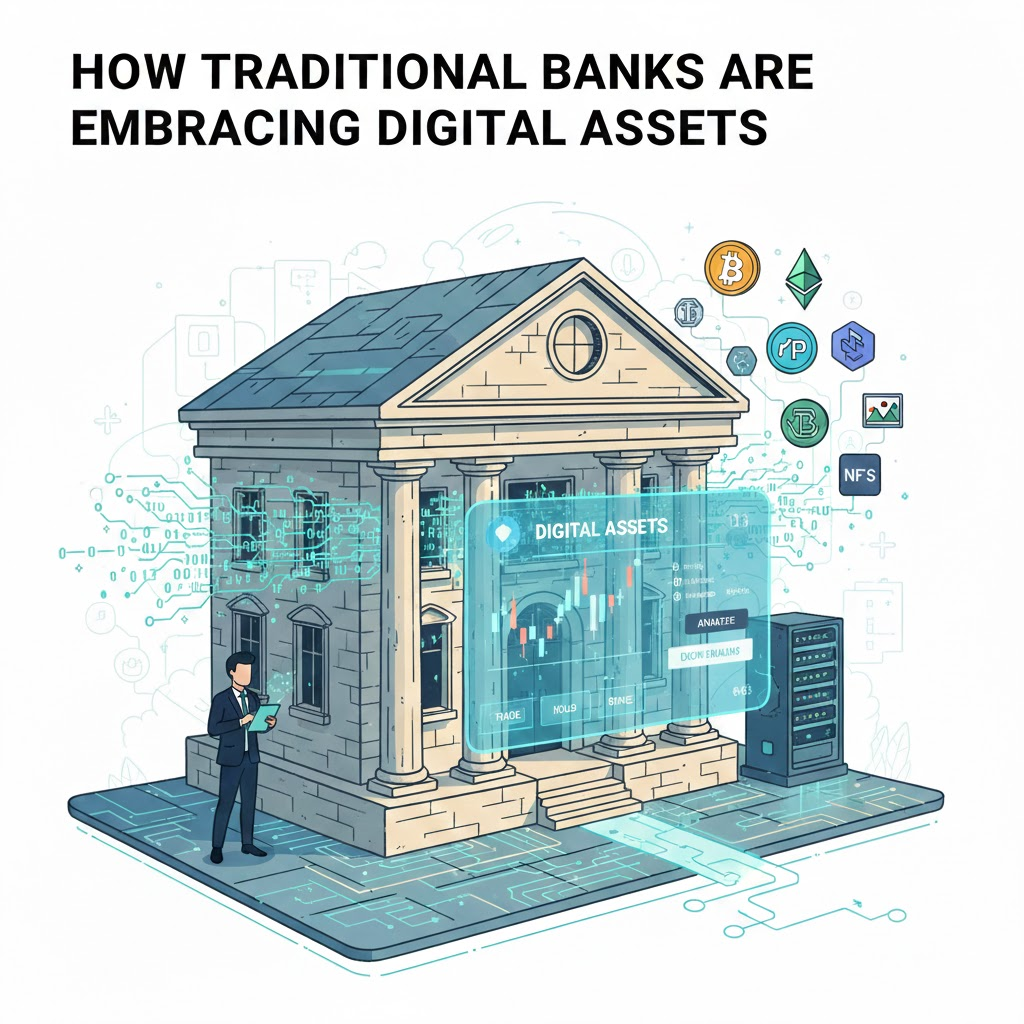
In recent years, the financial world has seen a significant shift as traditional banks once cautious or even skeptical about cryptocurrencies and blockchain technology begin to embrace digital assets. This adoption reflects evolving customer demand, regulatory clarity, and the need to innovate in a competitive digital era. As digital assets move from niche markets into mainstream finance, banks are redefining their services to include crypto trading, tokenization, and blockchain-based products.
Why Banks Are Turning to Digital Assets
Banks are adopting digital assets not just for innovation’s sake, but to meet real market needs and capture new revenue streams:
- Customer Demand: Both retail and institutional clients increasingly want exposure to digital assets, prompting banks to offer crypto-related services to remain competitive.
- Regulatory Progress: Clearer frameworks like Europe’s MiCA support banks in offering regulated crypto services with reduced legal risk.
- New Business Opportunities: Digital assets open up revenue from custody, trading, tokenized securities, and blockchain settlement services.
Digital Asset Custody and Trading Services
One of the first ways banks entered the digital asset space was by offering custody services secure storage and management of cryptocurrencies for clients. These services appeal especially to institutional investors who require regulated, high-security solutions.
The Bank of New York Mellon (BNY Mellon) launched a digital asset custody platform that allows clients to hold Bitcoin, Ethereum, and other digital assets alongside traditional holdings.
Several banks have also integrated direct trading services and blockchain-based platforms that let clients buy, sell, and manage digital assets from their standard banking interfaces, reducing friction between traditional and digital finance.
Tokenization of Assets
Tokenization representing real-world assets as digital tokens on a blockchain is another breakthrough area where banks are innovating. Tokenized assets can include everything from money market funds to real estate, offering increased liquidity and divisibility.
Banks such as UBS and BBVA have launched pilot projects and platforms for tokenized financial products. For example:
- UBS has introduced uMINT, a tokenized version of its money market fund.
- BBVA is experimenting with blockchain token issuance through collaboration with Visa.
These initiatives show how banks are combining trusted financial infrastructure with blockchain technology to create innovative investment products.
Strategic Partnerships with Crypto Firms
Traditional banks are also forming strategic partnerships with crypto-native companies to accelerate their digital asset offerings. For example, JPMorgan Chase partnered with Coinbase to enable customers to connect bank accounts to crypto wallets and potentially convert rewards points into digital assets.
Partnerships like these help banks leverage the technological expertise of crypto platforms while maintaining compliance and customer trust.
Stablecoins and Payments Innovation
Another area gaining traction is stablecoins digital assets pegged to a stable value like the U.S. dollar. Banks and financial consortiums in Europe are collaborating to launch MiCAR-compliant euro-pegged stablecoins that enable faster, cheaper cross-border payments.
Stablecoin initiatives aim to modernize payment rails while staying within regulatory frameworks, offering banks an edge in cross-border settlements and 24/7 payment services.
Regulatory Approvals and New Banking Charters
The regulatory environment is evolving to support banks’ digital asset ambitions. In the U.S., crypto-focused entities backed by traditional financial firms are seeking bank trust charters, allowing them to operate nationally with compliance oversight.
Such developments signal that regulators and banks are working toward integrating digital assets into mainstream financial systems, balancing innovation with risk management.
Challenges Banks Still Face
Despite progress, adopting digital assets is not without challenges:
- Security Risks: Cryptocurrencies attract cyber threats, requiring banks to invest heavily in advanced security and risk infrastructure.
- Regulatory Complexity: Different regions have varying rules for digital assets, making global rollout complex for multinational banks.
- Legacy Technology Integration: Many banks must modernize core systems to fully support blockchain and tokenization technologies.
The Road Ahead: Hybrid Financial Services
The future of banking looks increasingly hybrid. Traditional institutions are integrating digital assets within their existing ecosystems rather than replacing current services. This blended model lets customers manage fiat and digital assets in a unified platform, meeting diverse financial needs while leveraging blockchain innovation.
For banks, the goal isn’t to mimic crypto exchanges but to provide regulated, secure, and trustworthy digital asset services backed by decades of financial experience and oversight.
Conclusion
Traditional banks have come a long way from being skeptics of digital assets. Today, they are actively building infrastructure, launching custody services, exploring tokenization, and partnering with crypto platforms to serve a new generation of clients. This evolution reflects a broader shift in finance where blockchain technology and digital assets are becoming integral to mainstream financial services.
As regulatory frameworks continue to mature and customer demand grows, traditional banks that successfully embrace digital assets will not just stay competitive they will help define the future of finance.
Frequently Asked Questions (FAQ)
1. What does it mean for banks to embrace digital assets?
It means banks are integrating cryptocurrencies and blockchain technology into their services, offering products like crypto custody, trading, tokenized instruments, and stablecoin solutions.
2. Why are traditional banks entering the digital asset space?
Banks are responding to customer demand, seeking new revenue streams, and aiming to stay competitive in a digitized financial landscape.
3. What are tokenized assets?
Tokenized assets are real-world financial products, such as funds or equities, represented digitally on a blockchain, enhancing liquidity and fractional ownership.
4. How are banks partnering with crypto firms?
Banks collaborate with crypto companies to access technology and platforms that support digital asset trading and wallet integration, improving service offerings.
5. Are these digital asset services safe?
Banks implement strong security and compliance measures to protect digital assets, but risks remain, so customers should understand the safeguards in place.
6. What role do stablecoins play in banking?
Stablecoins enable faster and cheaper digital payments and settlements, often backed by traditional assets to maintain price stability.
7. Can retail customers access crypto services through traditional banks?
Yes, some banks now allow customers to buy, sell, or hold digital assets through their existing accounts or integrated platforms.
8. How does regulation impact bank adoption of digital assets?
Clear regulatory frameworks provide legal certainty, making it easier for banks to offer digital asset services and protect customers.
9. Will blockchain replace traditional banking systems?
Blockchain will likely complement rather than replace traditional banking, creating hybrid systems that leverage both trust and innovation.
10. What’s next for banks and digital assets?
Expect deeper integration of blockchain technology, more tokenized products, and broader use of digital currencies for payments and financial services.