
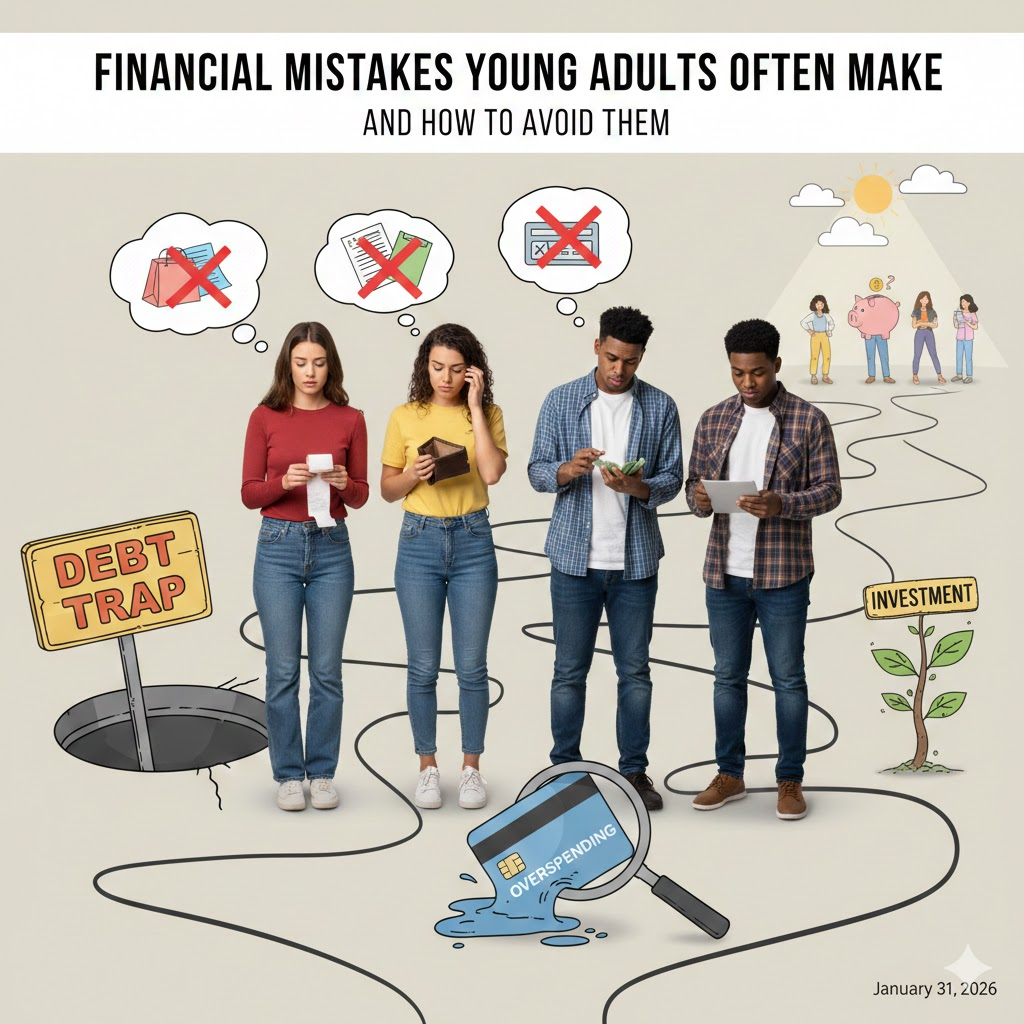
Stepping into adulthood brings a new sense of freedom. Along with that freedom comes financial responsibility. For many young professionals, the early working years come with first salaries, first credit cards, and first big purchases. While this stage of life is exciting, it is also when some of the most common and costly money mistakes happen.
These early financial decisions can shape your long term stability. The positive side is that most of these mistakes are avoidable. With basic planning and awareness, young adults can build strong financial habits that last for decades.
1. Living Without a Budget
Many young adults start earning and spending without a clear plan. Daily coffees, weekend outings, subscriptions, and impulse shopping slowly drain income. Without tracking where money goes, it becomes difficult to save or invest.
How to avoid it
Create a monthly budget that lists income, fixed expenses, and flexible spending. Track every expense for at least a few months. This visibility helps control spending and frees up money for savings and investments.
2. Ignoring an Emergency Fund
Unexpected expenses like medical bills, car repairs, or sudden job loss can hit anyone. Young adults often assume they canj credit cards or family support if something goes wrong. This thinking leads to debt when emergencies arrive.
How to avoid it
Build an emergency fund that covers three to six months of essential expenses. Start small and automate monthly transfers into a separate savings account. This fund should be used only for true emergencies.
3. Relying Too Much on Credit Cards
Credit cards offer convenience, rewards, and short term flexibility. But treating them as extra income instead of borrowed money creates serious debt. Paying only the minimum amount due leads to large interest charges.
How to avoid it
Use credit cards only for planned spending. Always pay the full balance every month. If you already carry debt, prioritise clearing it before adding new purchases.
4. Delaying Investing and Retirement Savings
Retirement feels distant when you are in your twenties, so investing often gets postponed. This delay costs valuable years of compound growth.
Even small early investments can grow into large sums over time.
How to avoid it
Start investing as soon as you have regular income. Use employer retirement plans if available and take full advantage of matching contributions. Low cost index funds are a good starting point for beginners.
5. Not Understanding Loans and Interest
Student loans, personal loans, and buy now pay later services are easy to access. Many young adults focus only on the monthly payment without understanding the total repayment cost.
Interest can quietly extend repayment for many years.
How to avoid it
Before taking any loan, check the interest rate, total repayment amount, and loan term. Make extra payments when possible to reduce interest and finish repayment sooner.
6. Overspending to Match a Lifestyle
Social media and peer comparison create pressure to spend on travel, gadgets, and luxury experiences. This lifestyle inflation eats into savings and pushes people into unnecessary debt.
How to avoid it
Spend based on your income and goals, not on comparison. Choose experiences that fit your budget. Long term financial security is more valuable than short term appearances.
7. Neglecting Credit Score Health
A good credit score is important for renting homes, getting loans, and sometimes even employment checks. Late payments and high credit card balances damage this score quickly.
How to avoid it
Pay every bill on time. Keep credit card usage low compared to the credit limit. Check your credit report regularly and correct any errors immediately.
8. Avoiding Financial Education
Money topics can feel confusing, so many young adults avoid learning about investing, taxes, or insurance. This lack of knowledge leads to poor decisions and missed opportunities.
How to avoid it
Spend time improving your financial literacy. Read trusted financial news websites, follow expert guidance, or take short online courses. Understanding basics builds confidence and smarter decision making.
9. Not Having Clear Financial Goals
Saving money without a purpose feels difficult and unmotivating. Without goals, it is easy to dip into savings for unnecessary spending.
How to avoid it
Set clear financial goals such as building an emergency fund, becoming debt free, or buying a home. Break large goals into monthly targets and track progress regularly.
10. Ignoring Insurance Protection
Young adults often skip insurance because they feel healthy and low risk. But accidents or illness can create huge financial pressure overnight.
How to avoid it
Maintain essential health insurance and review other coverage based on your personal needs. Insurance protects savings from unexpected life events.
Building Strong Financial Habits Early
Financial success is less about earning a huge income and more about consistent smart habits. Budgeting, saving, investing early, and avoiding unnecessary debt create long term freedom.
Young adulthood is the best time to build this foundation. Small disciplined actions today can prevent large financial stress later.
Taking control of money early turns your first paychecks into lasting wealth instead of lasting worry.
Frequently Asked Questions
What is the most common financial mistake young adults make?
Living without a budget. Not tracking expenses leads to overspending and lack of savings.
How much should young adults save each month?
Aiming for around 20 percent of income is ideal, but starting with any consistent amount is more important.
When should I start investing for retirement?
As soon as you begin earning regularly. Early investing benefits from long term compound growth.
Is credit card debt really harmful?
Yes. High interest makes repayment slow and expensive, and it damages your credit score.
How big should an emergency fund be?
Three to six months of essential living costs provides strong protection against unexpected events.
Should I pay off debt or invest first?
Clear high interest debt first, but still invest enough to receive any employer retirement match.
How can I improve my credit score?
Make all payments on time, reduce outstanding balances, and avoid too many new credit applications.
Do young adults really need insurance?
Basic health insurance is essential. Other coverage depends on personal risk and responsibilities.
What are good first investments for beginners?
Low cost index funds or exchange traded funds offer simple and diversified long term growth.
How can I stay motivated to manage money wisely?
Set clear goals, track progress, and celebrate milestones like debt payoff or reaching savings targets.