
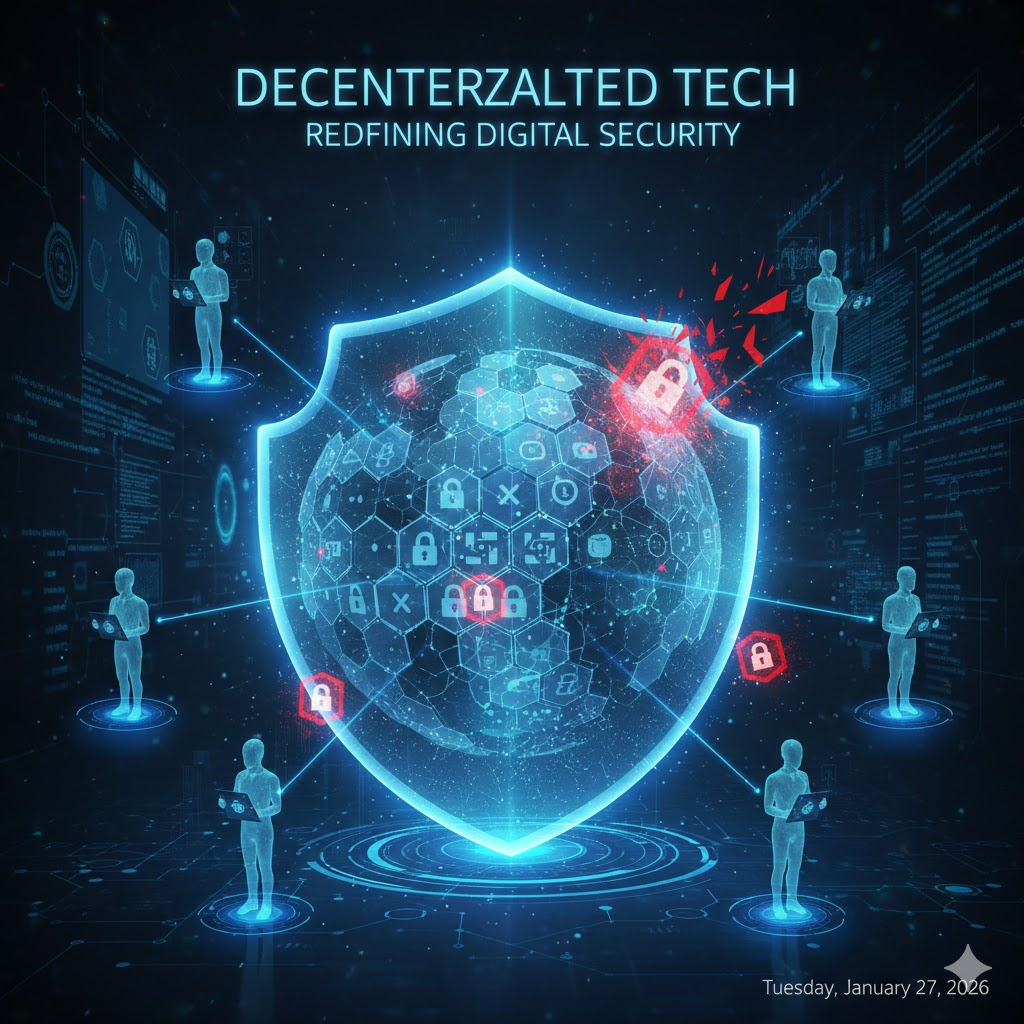
In an increasingly digital world, traditional security measures are struggling to keep pace with sophisticated cyber threats. Centralized systems, where data is stored and controlled by a single entity, can become prime targets for hackers. Enter decentralized technology—a game-changer in digital security. By distributing data across networks, leveraging blockchain, and enabling peer-to-peer verification, decentralized systems are redefining how we protect sensitive information online. This guide explores how decentralized tech is transforming digital security and what it means for businesses and individuals.
Understanding Decentralized Technology
Decentralized technology removes the need for a central authority by distributing control across a network. In this model, data and operations are shared among multiple nodes, making systems more transparent, resilient, and secure.
Core Features:
- Distributed Data: Information is stored across multiple nodes rather than a single server.
- Peer-to-Peer Verification: Transactions or actions are validated by network participants, not a central authority.
- Immutability: Data recorded in decentralized networks, especially on blockchains, cannot be easily altered.
- Transparency: Participants can independently verify activity without relying on a central entity.
How Decentralization Enhances Digital Security
1. Reducing Single Points of Failure
Centralized systems are vulnerable because a single breach can compromise the entire network. Decentralization spreads data across nodes, making attacks far more difficult.
Benefit: Even if one node is hacked, the network remains intact and operational.
2. Immutable Records
Blockchain-based systems create permanent, tamper-proof records of all transactions. This immutability helps prevent fraud and ensures accountability.
Benefit: Users can verify transactions without relying on intermediaries.
3. Enhanced Privacy and Control
Decentralized networks often allow users to maintain control over their data through cryptographic keys, reducing the reliance on third-party data custodians.
Benefit: Individuals and organizations can minimize data leaks and unauthorized access.
4. Trust Without Intermediaries
Decentralized tech uses consensus mechanisms, such as proof-of-work or proof-of-stake, to validate transactions. This reduces the need for centralized trust, which is often a weak point in security.
Benefit: Secure transactions and operations without relying on a single point of authority.
5. Resilience Against Attacks
Distributed networks are more resistant to Distributed Denial of Service (DDoS) attacks, ransomware, and other cyber threats.
Benefit: Systems remain operational even under targeted attacks, increasing uptime and reliability.
Practical Applications in Digital Security
- Cryptocurrency and Blockchain Payments: Secure financial transactions without banks.
- Decentralized Identity (DID): Users control their digital identity, reducing identity theft risks.
- Secure Voting Systems: Transparent and tamper-proof voting through blockchain.
- Healthcare Data Management: Protects sensitive patient data while enabling authorized access.
- Supply Chain Integrity: Verifies authenticity and tracks products from source to end-user.
Challenges and Considerations
While decentralized technology offers stronger security, it comes with its own set of challenges:
- Scalability Issues: Distributed networks may struggle with high transaction volumes.
- Regulatory Uncertainty: Many governments are still defining laws around decentralized tech.
- Complexity: Adoption requires understanding cryptography, network protocols, and blockchain.
- Energy Consumption: Certain consensus mechanisms, like proof-of-work, can be resource-intensive.
Conclusion: The Future of Digital Security
Decentralized technology is not a passing trend—it represents a paradigm shift in how we secure digital assets and information. By reducing reliance on central authorities, enhancing privacy, and creating immutable records, decentralized systems offer a more resilient and transparent approach to cybersecurity. As adoption grows across finance, healthcare, governance, and more, understanding decentralized security principles will be essential for both businesses and individuals navigating the digital world.
FAQs: Decentralized Tech and Digital Security
Q1: What is decentralized technology?
A1: Decentralized technology distributes data and control across a network of nodes instead of relying on a single central authority, increasing security and transparency.
Q2: How does decentralization improve security?
A2: It reduces single points of failure, creates immutable records, enhances privacy, and enables trust without intermediaries.
Q3: What are common applications of decentralized tech in security?
A3: Blockchain payments, decentralized identity, secure voting, healthcare data management, and supply chain verification are key applications.
Q4: Are decentralized systems completely immune to cyberattacks?
A4: No system is completely immune, but decentralization makes networks far more resilient to attacks like DDoS, ransomware, and fraud.
Q5: What challenges exist with decentralized security solutions?
A5: Scalability, regulatory uncertainty, technical complexity, and energy consumption are the main challenges.
Q6: How can businesses implement decentralized security?
A6: Start by identifying critical data, exploring blockchain or distributed ledger solutions, adopting decentralized identity systems, and consulting cybersecurity experts familiar with decentralized networks.