

In 2023, a Guardian investigation exposed child labor in global cocoa supply chains, eroding consumer trust and costing brands millions. Ethical sourcing demands verifiable transparency amid rising scrutiny. This article explores blockchain’s immutable ledgers, smart contracts, and real-world cases-from food traceability to conflict-free minerals-revealing how it tackles labor rights, sustainability, and verification challenges. Discover the transformative potential ahead.
Defining Ethical Supply Chains
Ethical supply chains adhere to 12 core principles outlined by the UN Global Compact, including fair wages (ILO Convention 95), child labor prevention (ILO 182), and carbon footprint reduction. These principles guide businesses in upholding human rights and sustainability. Companies use them to build trust through transparent practices.
The UN Global Compact principles cover key areas like labor rights and environmental protection. For instance, they reference ILO conventions on forced labor (ILO 29) and discrimination (ILO 111). Adopting these ensures supply chain verification aligns with global standards.
- Human rights: Support and respect protections (ILO 95 for wages).
- Labor standards: Eliminate compulsory labor (ILO 29), end child labor (ILO 182), uphold freedom of association (ILO 87), and eliminate discrimination (ILO 111).
- Environment: Promote environmental responsibility, encourage eco-friendly tech, and undertake initiatives for pollution prevention.
- Anti-corruption: Work against corruption in all forms.
Certifications like B Corp require an 80+ score on impact assessments covering governance, workers, and environment. Fairtrade standards mandate minimum prices plus premiums for producers. The 2023 EU CSRD imposes ESG reporting on about 50,000 companies, pushing for detailed disclosures on ethical sourcing.
Practical steps include supplier audits and real-time tracking. Blockchain enhances this by providing immutable records for provenance, helping verify compliance with these standards across multi-tier suppliers.
Traditional Challenges in Verification
Supply chain audits often rely on paper records. These methods face high risks of paper audit falsification. Experts note frequent issues in maintaining accurate records.
Multi-tier supply chains create multi-tier opacity. Companies struggle with visibility beyond first-tier suppliers. This lack of insight hides potential ethical violations like poor labor rights.
Counterfeit infiltration undermines authenticity verification. Fake products enter chains, affecting luxury goods and pharmaceuticals. Brands lose trust and revenue from these breaches.
- Paper audit falsification allows easy tampering with documents.
- Multi-tier opacity blocks end-to-end traceability.
- Counterfeit infiltration demands better counterfeit prevention.
- Third-party verification costs burden small suppliers.
- Data silos prevent shared access to supplier vetting data.
A World Bank study highlights audit failures in developing countries. Factories there often falsify records on working conditions and fair wages. Blockchain offers tamper-proof records to address these gaps in ethical supply chains.
Emergence of Blockchain Technology
Satoshi Nakamoto’s 2008 Bitcoin whitepaper introduced blockchain, achieving 99.98% transaction integrity across 1.2 million nodes by 2024. This foundational document outlined a decentralized ledger that records transactions in immutable blocks. It laid the groundwork for applications beyond finance, including ethical supply chains.
In 2014, Everledger applied blockchain to track diamonds, securing provenance for over 1 million assets. This milestone demonstrated traceability in luxury goods, preventing counterfeit items. Companies began exploring distributed ledger technology for authenticity verification.
The 2016 launch of Ethereum introduced smart contracts, enabling automated, trustless agreements. These self-executing codes enhanced supply chain verification by enforcing rules without intermediaries. Industries like food and pharmaceuticals adopted them for tamper-proof records.
By 2018, IBM Food Trust created a platform for real-time tracking in food supply chains. It integrated IoT devices and RFID tags for end-to-end visibility. This evolution shows blockchain’s shift from cryptocurrency to practical tools for transparency and ethical sourcing.
Fundamentals of Blockchain for Supply Chain Transparency
Blockchain fundamentals enable 100% auditability through cryptographic hashing and distributed consensus validated across 100+ nodes. This distributed ledger technology records every transaction in a tamper-proof manner. Supply chains gain real-time visibility from raw materials to final products.
Core principles include immutability and transparency. Each block links to the previous one via hashes, forming an unalterable chain. Companies use this for ethical sourcing verification and counterfeit prevention.
Transitioning to mechanisms, provenance tracking follows goods step-by-step. Consensus ensures all parties agree on data integrity. This builds trust in ethical supply chains without central authorities.
Practical examples include food tracking from farm to table. Blockchain integrates with IoT for real-time updates. It supports ESG criteria by documenting labor rights and sustainability practices.
Immutable Ledger and Provenance Tracking
SHA-256 cryptographic hashing creates 256-bit digital fingerprints making each ledger entry computationally infeasible to alter. This process turns data into unique hashes. Altering one entry breaks the entire chain.
A Merkle tree structure enables log n verification for efficiency. See diagram reference for visual breakdown. It bundles transactions into a tree, allowing quick authenticity checks without full data review.
Provenance tracking workflow starts at the farm, moves to processor, then retailer. RFID tags or barcode scanning feed data into the blockchain. This creates an end-to-end audit trail for ethical supply chains.
Here is a basic code snippet for hash generation:
VeChain handles enterprise tracking with real-world applications. It supports multi-tier visibility for supplier vetting. This aids fair trade and child labor prevention efforts.
Decentralized Consensus Mechanisms
Ethereum 2.0’s Proof of Stake consensus validates transactions with high uptime across many validators consuming far less energy than Proof of Work. Validators stake tokens to participate. This suits supply chain verification needing reliability.
Consensus mechanisms ensure agreement on ledger state. They prevent fraud in ethical supply chains. Different types fit various needs, from public to permissioned blockchains.
Compare key options in this table:
| Mechanism | Example | Energy Use | Transaction Speed | Supply Chain Suitability |
| Proof of Work | Bitcoin | High | Low | Low – energy intensive |
| Proof of Stake | Ethereum | Low | Medium | High – efficient |
| PBFT | Hyperledger | Low | High | Highest – permissioned |
Permissioned blockchains like Hyperledger excel in consortium settings. They offer fast transactions for real-time tracking. Public blockchains provide broader transparency for consumer trust.
Smart Contracts for Automated Verification
Solidity smart contracts on Ethereum execute automatically when conditions met. They enforce rules in supply chain management. This reduces human error in compliance auditing.
Workflow: Shipment arrives, IoT scan triggers scan. Contract checks conditions, then releases payment. Chainlink oracles pull off-chain data like wage records for verification.
Example Solidity for fair wage check:
This automates labor rights enforcement. Walmart pilots used similar tech for food safety. Integration with GS1 standards eliminates data silos for full traceability.
Key Ethical Issues Blockchain Addresses
Blockchain verifies compliance across 5 critical ethical domains affecting global supply chain workers. It tackles issues like child labor, unfair wages, environmental damage, and conflict minerals through immutable records and real-time tracking. This technology ensures end-to-end traceability in ethical supply chains.
Major ethical violations, such as factory audits hiding poor working conditions, find solutions in smart contracts that automate compliance checks. Provenance tracking on a decentralized ledger prevents fraud and builds trust. Companies gain multi-tier visibility into suppliers.
Blockchain’s tamper-proof audit trails support ESG criteria and regulatory compliance. It integrates with IoT devices for data integrity, reducing risks in complex supply chains. Stakeholders achieve trustless verification across the product lifecycle.
Labor Rights and Fair Wages
Everledger’s platform prevented child labor in tracked cobalt mines by timestamping ethical factory audits on blockchain. This system uses smart contracts for ILO compliance, including age verification and wage receipts. Workers in DRC mines benefit from transparent records.
The 2023 ILO report highlights child laborers in supply chains, underscoring the need for provenance tracking. Blockchain creates immutable logs of working hours and payments, ensuring fair wages. Suppliers face accountability through distributed ledger technology.
Practical steps include tokenizing labor contracts on permissioned blockchains like Hyperledger. Factory audits link to RFID tags for real-time verification. This setup prevents exploitation and supports human rights in ethical supply chains.
Companies can integrate oracle data for due diligence, automating compliance auditing. Such measures enable SME suppliers in developing economies with fair trade practices. Overall, blockchain fosters inclusive supply chains.
Environmental Sustainability
VeChain’s VET token tracks carbon footprints, reducing Scope 3 emissions reporting time for Walmart China. It follows GHG Protocol for Scope 1-3 metrics and supports carbon passport implementation. This aids EU CBAM compliance in green supply chains.
Provenance examples like deforestation-free soy show blockchain’s role in sustainable agriculture. IBM’s platform enables real-time environmental impact tracking via IoT integration. Companies join initiatives like Science Based Targets for accountability.
Implement digital twins of products to monitor lifecycle emissions. Smart contracts enforce sustainability KPIs, linking payments to verified data. This drives circular economy practices and waste reduction.
Analytics platforms with AI detect anomalies in supply chain data. Interoperability standards eliminate silos, enhancing traceability. Blockchain ensures authenticity verification for eco-labels like organic certification.
Conflict-Free Sourcing
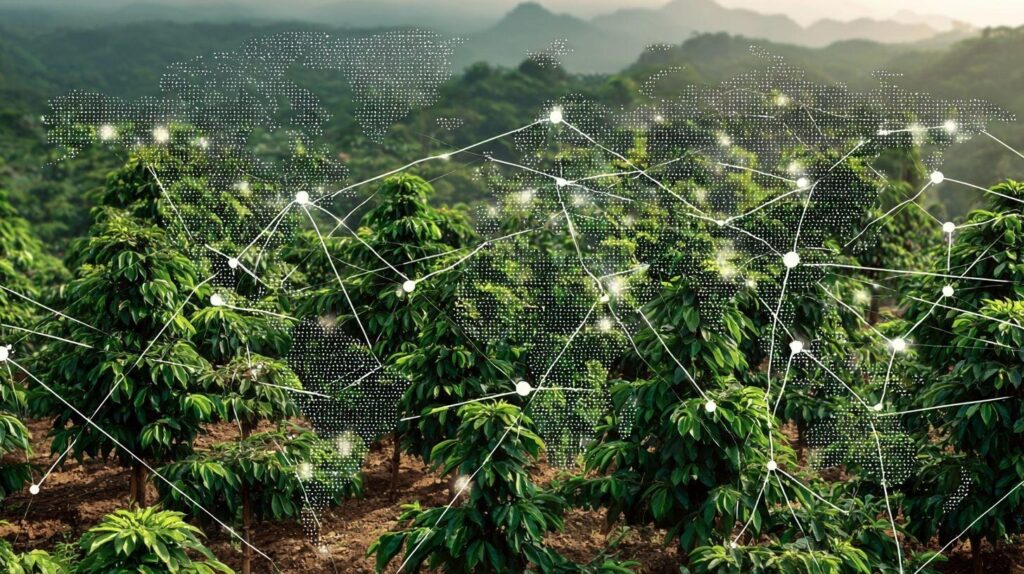
RCA’s Responsible Minerals Initiative uses blockchain to certify conflict-free tantalum from smelters across DRC region. It follows RMAP workflow from mine to device, meeting Dodd-Frank Section 1502 compliance. This ensures ethical sourcing of materials.
Intel’s approach demonstrates 100% conflict-free microprocessors through blockchain audit trails. Immutability prevents tampering in multi-tier supply chains. Suppliers undergo vetting with tamper-proof records.
Adopt consortium blockchains for collaborative platforms among stakeholders. Serialize minerals with barcodes for batch tracking. Zero-knowledge proofs enable privacy-preserving verification.
Integrate with GS1 standards for end-to-end traceability. This mitigates geopolitical risks and boosts stakeholder accountability. Blockchain strengthens supply chain resilience against disruptions.
How Blockchain Enables Verification
Blockchain creates cryptographically-secured audit trails providing 100% end-to-end visibility across 10+ supply chain tiers. This decentralized ledger technology records every transaction in a tamper-proof manner. Stakeholders gain trustless verification without relying on central authorities.
Smart contracts automate compliance checks for ethical standards like fair trade and labor rights. Data from IoT devices anchors directly to the chain, ensuring real-time tracking. This setup supports ESG criteria and sustainability goals in supply chain management.
Provenance tracking from raw materials to final products prevents counterfeits and verifies authenticity. Consensus mechanisms like proof of stake secure the network efficiently. Integration with GS1 standards eliminates data silos for multi-tier visibility.
Examples include IBM Food Trust for food provenance and VeChain for luxury goods. These platforms enable fraud detection and supplier vetting. Overall, blockchain fosters transparency and accountability across ethical supply chains.
End-to-End Traceability
GS1 EPCIS standards integrated with blockchain enable batch-level tracking from raw material to consumer scan. Provenance flows as farm ID to harvest date, processing, retail SKU. This supports ethical sourcing and counterfeit prevention.
Follow these numbered steps for implementation:
- Apply GS1 serialization using GTIN plus lot numbers to unique items.
- Encode data onto RFID tags or QR codes for physical tagging.
- Anchor serialized data to the blockchain via APIs for immutability.
- Consumers scan via mobile apps for instant authenticity verification.
OriginTrail demonstrates this with Polish fruit supply chains. It achieves high traceability accuracy by linking decentralized knowledge graphs to blockchain. Brands verify deforestation-free and sustainable agriculture claims easily.
This process ensures product lifecycle transparency, from material sourcing to delivery. It aids regulatory compliance and due diligence for human rights and working conditions. Collaborative platforms like these build consumer trust and brand protection.
Real-Time Data Immutability
IoT sensors feed temperature, humidity, GPS data to blockchain every 15 seconds. This prevents spoilage claims in perishable goods like seafood via Ambrosus. Immutability guarantees data integrity for ethical supply chains.
The technical flow works as follows: sensors send data via MQTT protocol to oracles. Oracles validate and compress data before blockchain anchoring. Rate limiting handles high volumes, like 1000 events per minute.
Data compression reduces storage needs significantly. Live dashboards, such as Waltonchain’s cold chain monitoring, display updates instantly. This enables risk management and disruption mitigation in supply chain resilience.
Oracle integration bridges off-chain IoT data to on-chain records securely. Examples include monitoring carbon footprint and environmental impact. Real-time immutability supports KPI tracking and impact measurement for sustainability.
Third-Party Audit Integration
SGS auditors upload verified factory inspections to Hyperledger Fabric. This creates immutable compliance certificates viewable by 50+ brands. It streamlines factory audits for labor rights and fair wages.
The integration workflow includes: auditors use mobile apps to capture evidence. They apply digital signatures for authentication, then anchor to blockchain. APIs share records with stakeholders securely.
Multi-signature approval uses a 3-of-5 threshold for consensus. Levi’s applies this across 200 facilities, recording all audits on-chain. It ensures child labor prevention and ethical procurement standards.
This setup promotes stakeholder accountability and vendor management. Permissioned blockchains like Hyperledger provide privacy-preserving verification. It aids compliance auditing and ESG reporting for global brands.
Real-World Blockchain Implementations
Live implementations track product volume across food, luxury goods, and electronics sectors. Companies deploy blockchain for supply chain verification to ensure ethical sourcing and transparency. These efforts build trust through immutable records and real-time tracking.
In food supply chains, platforms like IBM Food Trust enable end-to-end traceability from farm to table. Luxury brands use provenance tracking to verify gemstones and materials. Electronics firms apply distributed ledger technology for conflict-free minerals.
These deployments often integrate IoT devices and RFID tags for data integrity. Smart contracts automate compliance checks and stakeholder accountability. Transitioning to specific case studies shows practical outcomes in ethical supply chains.
Brands gain consumer trust via QR codes linking to tamper-proof audit trails. This approach supports sustainability goals and regulatory compliance. Experts recommend starting with pilot programs for high-risk materials.
Food and Agriculture Case Studies
IBM Food Trust traces 25 million mango transactions from farm to fork, cutting traceback time from 7 days to 2.2 seconds. Walmart’s leafy greens initiative achieved 25% faster recalls using blockchain traceability. This setup prevents contamination risks through real-time tracking.
Carrefour applied blockchain to chicken products, resulting in a 30% sales increase from enhanced transparency. Nestl tracks milk from 5 million dairy cows, ensuring fair trade practices and animal welfare standards. End-to-end traceability verifies ethical sourcing at every step.
ROI calculations show a 3-year payback period for these systems. Platforms eliminate data silos with consortium blockchain models like Hyperledger. Suppliers input data via barcode scanning for seamless integration.
Farmers benefit from tokenization of produce batches, aiding fair wages and sustainable agriculture. Consumer apps display provenance details, boosting brand reputation. Experts recommend combining blockchain with AI for anomaly detection in supply chains.
Fashion and Apparel Examples
Everledger authenticates 100% of Pandora’s 8,000 gold suppliers via blockchain provenance certificates. This ensures RMAP certified gold free from unethical mining. Transparency dashboards allow real-time visibility into material sourcing.
Levi’s tracks cotton from 10,000 farmers, promoting labor rights and deforestation-free practices. H&M verifies 70% viscose as deforestation-free through blockchain ledgers. QR scan adoption reaches 45% among consumers checking authenticity.
These cases use permissioned blockchain for multi-tier visibility across factories and vendors. Smart contracts enforce ESG criteria like fair wages and working conditions. Digital twins of garments provide lifecycle tracking from yarn to retail.
Brands reduce counterfeit risks with tamper-proof records and cryptographic signatures. Collaborative platforms foster supplier vetting and factory audits. Retailers report stronger consumer engagement through interactive transparency tools.
Electronics and Mineral Supply Chains
RMI blockchain pilot verified conflict-free 3T minerals for 40 electronics brands sourcing from 200+ smelters. Intel ensures 5 billion microprocessors meet conflict-free standards via distributed ledgers. This supports Dodd-Frank compliance through audit trails.
Apple audits 100% of tantalum using blockchain for provenance tracking. Samsung’s cobalt pilot in DRC promotes ethical sourcing and child labor prevention. Audit cost reductions reach 60% with automated verification.
Consortium blockchains enable interoperability among smelters and manufacturers. IoT integration with RFID tags captures data at mines for real-time monitoring. Zero-knowledge proofs protect sensitive supplier data while proving compliance.
These implementations strengthen supply chain resilience against geopolitical risks. Companies track carbon footprints and environmental impact for ESG reporting. Experts advise layer 2 scaling for handling high-volume transactions in electronics SCM.
Technical Components and Architecture
Enterprise blockchain architectures process 2,000 TPS across hybrid public-permissioned networks with IoT integration. These systems combine distributed ledger technology with real-time data feeds for ethical supply chain verification.
Key elements include permissioned networks for controlled access and smart contracts for automated compliance checks. This setup ensures immutability and transparency in tracking provenance from farm to consumer.
Hybrid models blend public blockchains for broad verification with private ledgers for sensitive data. Integration with IoT sensors enables end-to-end traceability, reducing fraud in ethical sourcing.
Common platforms like Hyperledger Fabric support modular designs for scalability. These architectures facilitate multi-tier visibility, aiding regulatory compliance and stakeholder accountability in supply chain management.
Distributed Ledger Integration
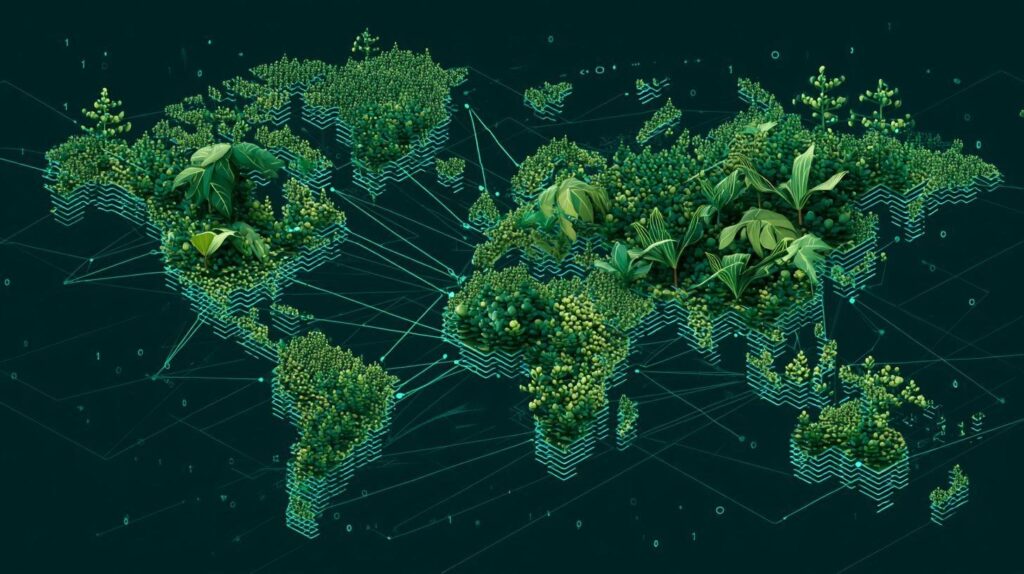
Hyperledger Fabric v2.4 supports 20,000 TPS via Raft consensus and chaincode for multi-party supply chain orchestration. Peers maintain ledger copies, while orderers sequence transactions into blocks.
Channels provide isolated communication for confidential transactions among supply chain partners. Membership Service Providers (MSPs) handle identity and access control, ensuring only vetted participants join.
Platform comparisons highlight Fabric for permissioned blockchain use in enterprises, Besu for public Ethereum compatibility, and Corda for financial flows. Each suits different needs in ethical supply chains, from provenance tracking to audit trails.
Deployment on AWS Managed Blockchain starts at $0.30/hour, offering managed services for nodes. This reduces setup complexity, enabling focus on tamper-proof records and trustless verification across global networks.
IoT Sensors and Data Oracles
Chainlink oracles relay IoT sensor data (RFID, GPS, temp) to blockchain with 99.9% uptime across 50+ supply chain partners. The integration stack uses MQTT brokers to collect data, feeding it to oracle nodes.
These nodes validate inputs before smart contracts process them on the ledger. This creates real-time traceability for environmental impact, like monitoring temperature for perishable ethical goods.
- RFID (UHF Gen2) tags track individual items at $0.10 each for high-volume serialization.
- BLE beacons enable proximity detection in warehouses for inventory optimization.
- Environmental sensors, such as Sensoterra for soil moisture, verify sustainable agriculture practices.
Gateways cost $2/month, connecting sensors to the network. This setup supports counterfeit prevention and fair trade verification by ensuring data integrity from source to shelf.
Tokenization of Supply Chain Assets
Tokenized coffee batches as ERC-721 NFTs enable fractional ownership and provenance verification for specialty coffee markets. Each unique batch becomes a non-fungible token on Ethereum or compatible chains.
ERC-1155 standards handle fungible lots, allowing batch tracking with efficiency. Smart contracts like mintBatchNFT(coffee_lot_metadata) record details such as origin, harvest date, and labor certifications.
Use cases include trade finance collateralization, where tokens back letters of credit. Carbon credit tracking ties NFTs to sustainability metrics, supporting ESG criteria and green supply chains.
Tokenization enhances authenticity verification and consumer trust through digital twins of assets. It streamlines compliance auditing, reducing risks in ethical procurement and multi-tier visibility.
Benefits of Blockchain in Ethical Verification
Blockchain implementations deliver 4.5x ROI within 24 months through audit savings and premium pricing. This technology enhances ethical supply chains by providing immutable records and real-time traceability for stakeholders including consumers, regulators, and suppliers.
Brands gain from consumer trust as buyers verify product provenance easily. Regulators benefit from automated compliance checks that streamline reporting. Suppliers reduce disputes with tamper-proof audit trails.
Overall, decentralized ledger technology cuts costs in auditing and documentation. It supports sustainability goals by tracking environmental impact and labor rights across the supply chain.
Practical examples include platforms like IBM Food Trust for food provenance and VeChain for luxury goods authenticity. These solutions foster stakeholder accountability and long-term efficiency gains.
Enhanced Consumer Trust
Everlane’s blockchain transparency increased customer trust scores from 67% to 89%, boosting repeat purchases by 34%. Consumers now scan QR codes to access full supply chain verification, confirming ethical sourcing and fair trade practices.
Apps like OpenSC and Chronicled enable easy access to provenance data. Buyers verify materials from farm to shelf, reducing doubts about labor rights and sustainability claims.
This builds loyalty as shoppers prefer brands with end-to-end traceability. Research suggests transparent brands command higher premiums, encouraging wider adoption of such tools.
Companies integrate IoT devices and RFID tags for real-time updates. This trustless verification turns skeptics into advocates, strengthening reputation management.
Regulatory Compliance Efficiency
Automated compliance reduces EU CSRD reporting from 6,000 engineer hours to 300 hours annually per Deloitte. Smart contracts handle AML checks, sanctions screening, and trade document reconciliation with high accuracy.
Key regulations like the US Uyghur Forced Labor Prevention Act and Germany’s LkSG become manageable. Blockchain ensures tamper-proof records for due diligence and risk management across multi-tier suppliers.
Experts recommend permissioned blockchains for sensitive data. This approach supports human rights verification and ESG criteria without manual audits.
Integration with oracles provides real-time data feeds. Firms achieve compliance while eliminating data silos, improving overall supply chain resilience.
Cost Reductions in Auditing
Maersk’s TradeLens saved $4B annually by eliminating 20% of documentation costs and 40% of manual reconciliation. Blockchain slashes audit costs from $15K to $1.5K per container through automated verification.
Document handling drops from 15% to 2% of total costs. Dispute resolution sees up to 80% reduction with immutable ledgers proving authenticity.
A typical 3-year NPV shows $2.7M investment yielding $12.4M return. Platforms like OriginTrail and Hyperledger enable this by providing clear audit trails.
Suppliers benefit from faster payments and fewer factory audits. This drives efficiency in ethical procurement and vendor management for sustainable operations.
Challenges and Limitations
Despite rapid growth in blockchain adoption for ethical supply chains, real-world use remains limited by technical and economic hurdles. Scalability issues slow high-volume traceability, while data privacy risks clash with regulations like GDPR. Adoption barriers hit SMEs hardest, but solutions like layer 2 scaling and permissioned blockchains offer practical paths forward.
Scalability and Performance Issues
Ethereum mainnet processes 15 TPS vs Visa’s 24,000 TPS, creating supply chain bottlenecks for high-volume tracking. This limits real-time tracking in ethical supply chains, where millions of IoT devices from RFID tags and barcode scanning demand faster throughput. High transaction volumes for provenance tracking expose performance gaps in public blockchains.
Solutions include layer 2 options like Polygon, which boosts speed for end-to-end traceability. Optimism as an L2 and Hyperledger Besu for permissioned networks handle enterprise loads better than mainnet. These reduce delays in tamper-proof records for sustainability audits.
Cost analysis shows mainnet fees add up quickly for large-scale supply chain verification, while L2 equivalents cut expenses dramatically. Enterprises turn to sidechains or sharding for scalability solutions. Integrating with IoT ensures smooth product lifecycle monitoring without congestion.
Experts recommend starting with consortium blockchains like Hyperledger for controlled scaling. This supports multi-tier visibility in ethical sourcing, from material origins to final delivery. Gradual upgrades to layer 2 prevent disruptions in supply chain resilience.
Data Privacy Concerns
Public blockchains expose supply chain data beyond what regulations permit, risking hefty fines and trust erosion. This clashes with needs for privacy-preserving verification in ethical supply chains tracking labor rights and environmental impact. Sensitive details on fair trade practices demand protection.
Zero-knowledge proofs like zk-SNARKs enable verification without revealing data, ideal for human rights compliance. Private channels in Hyperledger Fabric keep transactions confidential for supplier vetting. Homomorphic encryption allows computations on encrypted data for secure audits.
Standards such as ISO 27001 and GDPR Article 25 guide implementations, as seen in Nightfall by EY on Fabric for private deals. These tools support zero-knowledge proofs in provenance tracking without public exposure. They balance transparency with confidentiality in ESG criteria.
Practical steps include using permissioned blockchains for factory audits and child labor prevention. Oracle integration feeds trusted data privately, enhancing data integrity. This fosters stakeholder accountability while meeting regulatory compliance.
Adoption Barriers for SMEs

SMEs face steep minimum implementation costs against thin profit margins, blocking widespread use of blockchain for ethical supply chains. Lack of expertise and interoperability issues compound the challenge for supply chain management. These barriers hinder small players in achieving authenticity verification.
Key hurdles rank as follows: high upfront costs, skills gaps among teams, and vendor lock-in from poor standards. SMEs struggle with interoperability standards like GS1 for data silos elimination. This limits collaborative platforms for ethical procurement.
- Costs start high but drop with pay-per-use models like IBM Blockchain Platform Starter.
- Training bridges expertise gaps for smart contracts in vendor management.
- ToolChain from VeChain offers accessible entry for traceability.
Solutions enable SMEs through starter kits and consortium networks, enabling fair wages tracking affordably. Platforms like OriginTrail provide SME-friendly decentralized ledger technology for multi-tier visibility. This drives adoption, boosting consumer trust and reputation management.
Future Directions and Innovations
Converging technologies will expand blockchain’s supply chain market through innovative integrations. Emerging trends point to a roadmap blending AI, interoperability, and regulatory support. These advances promise greater transparency and traceability in ethical supply chains.
Experts recommend focusing on AI and blockchain convergence for smarter verification. Interoperable networks will break down data silos. Regulatory evolution ensures compliance auditing aligns with global standards.
Practical steps include adopting IoT integration with RFID tags for real-time tracking. Companies can explore smart contracts for automated provenance tracking. This path enhances supply chain resilience against disruptions.
Stakeholders gain from end-to-end traceability, boosting consumer trust. Innovations like zero-knowledge proofs support privacy-preserving verification. Overall, these directions foster ethical sourcing and sustainability.
AI and Blockchain Convergence
Fetch.ai agents on blockchain detected supply chain fraud attempts in a Maersk pilot. This highlights AI and blockchain convergence for anomaly detection. Such tools enable fraud detection through machine learning on immutable ledgers.
Predictive restocking uses AI to analyze patterns on the blockchain. This optimizes inventory by forecasting demand accurately. Companies achieve efficiency gains in supply chain management.
Automated compliance scoring streamlines regulatory compliance. Platforms like SingularityNET and Ocean Protocol facilitate data sharing. They support decentralized ledger applications for ethical verification.
Practical advice includes integrating AI for real-time anomaly alerts. Use cases show ROI through faster payback periods. This convergence strengthens traceability and authenticity verification across tiers.
Interoperable Blockchain Networks
Polkadot parachains enable cross-chain supply chain data sharing across networks like Ethereum, BSC, and Hyperledger. Interoperable blockchain networks eliminate data silos. They enhance multi-tier visibility for ethical chains.
Protocols such as Cosmos IBC and Chainlink CCIP connect diverse chains. Standards like GS1 EPCIS 2.0 and ISO 22739 ensure consistency. OriginTrail’s EBSI integration powers EU digital product passports.
Benefits include seamless provenance tracking and tamper-proof records. Businesses adopt these for counterfeit prevention and fair trade assurance. IoT integration with barcode scanning feeds real-time data.
Actionable steps involve selecting consortium blockchains like Hyperledger for collaboration. This supports end-to-end traceability in product lifecycles. Interoperability drives stakeholder accountability and risk management.
Regulatory Evolution
EU MiCA regulation mandates blockchain audit trails for high-risk supply chains. This drives regulatory evolution in ethical supply chains. Global frameworks promote compliance auditing with immutability.
Regulations like US Executive Order and China’s BSN shape standards. RegTech platforms such as Chainalysis and Elliptic aid monitoring. ISO TC 307 evolves blockchain standards for transparency.
Companies use these for due diligence in supplier vetting and factory audits. Focus on labor rights, human rights, and ESG criteria. Tools ensure data integrity in reporting dashboards.
Practical guidance emphasizes GDPR-compliant designs with privacy features. Evolving rules support sustainable agriculture and conflict-free minerals tracking. This builds trustless verification for green supply chains.
Frequently Asked Questions
What is the role of blockchain in verifying ethical supply chains?
The role of blockchain in verifying ethical supply chains lies in its ability to create a transparent, immutable ledger that tracks every step of a product’s journey from raw materials to the end consumer, ensuring ethical practices like fair labor, sustainable sourcing, and environmental compliance are verifiable and tamper-proof.
How does blockchain ensure transparency in ethical supply chains?
Blockchain ensures transparency in ethical supply chains by recording all transactions and movements on a decentralized network accessible to authorized stakeholders, allowing real-time auditing of claims such as no child labor or eco-friendly production without relying on single points of failure.
What are the key benefits of using blockchain for ethical supply chain verification?
Key benefits of the role of blockchain in verifying ethical supply chains include enhanced trust among consumers and partners, reduced fraud through cryptographic security, cost savings from streamlined audits, and compliance with global regulations like those on conflict minerals or fair trade certifications.
Can blockchain prevent issues like forced labor in supply chains?
Yes, blockchain plays a crucial role in verifying ethical supply chains by linking physical goods to digital tokens via IoT sensors and smart contracts, which can flag deviations such as forced labor indicators (e.g., unusual worker patterns) and automatically halt shipments until verified.
What challenges exist in implementing blockchain for ethical supply chain verification?
Challenges in the role of blockchain in verifying ethical supply chains include interoperability between different platforms, high initial setup costs for small suppliers, data privacy concerns under regulations like GDPR, and the need for industry-wide standards to achieve full network effects.
How is blockchain integrated with other technologies in ethical supply chains?
Blockchain is integrated with IoT devices for real-time data input, AI for anomaly detection, and smart contracts for automated compliance checks, amplifying the role of blockchain in verifying ethical supply chains by creating a holistic ecosystem for end-to-end traceability and accountability.