
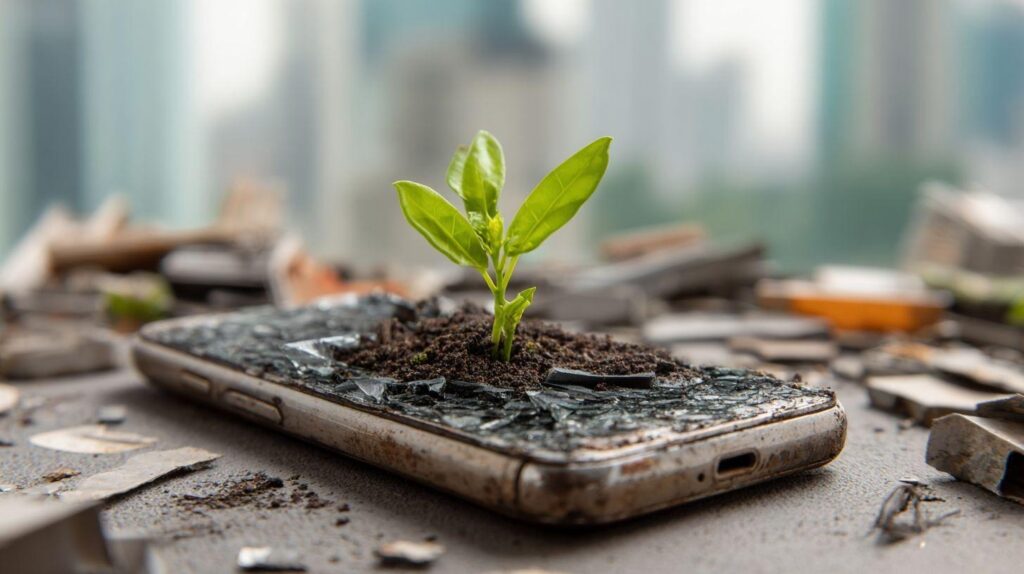
In a world hooked on fast fashion and disposable gadgets, startups like Patagonia prove sustainability drives enduring success. Yet, planned obsolescence dominates, eroding profits and the planet. Discover how to redefine your venture: craft circular models, source regenerative materials, secure impact funding, market transparently, scale modularly, and track holistic KPIs. Build a legacy that outlasts trends-what’s your first step?
Defining True Sustainability Beyond Greenwashing
True sustainability follows the Cradle-to-Cradle framework, measuring full lifecycle impact via LCA tools like SimaPro rather than vague ‘eco-friendly’ claims. Startups in a disposable world must avoid greenwashing by adopting verifiable standards. This approach builds trust and long-term viability for your sustainable startup.
The five key pillars provide a roadmap for authentic sustainability. First, pursue Cradle-to-Cradle certification with its three levels: Basic, Silver, and Gold. These assess material health, product reusability, and renewable energy use in manufacturing.
Second, track Triple Bottom Line metrics balancing People, Planet, and Profit. Conduct Lifecycle Assessments using software like SimaPro or GaBi to quantify environmental impact from raw materials to end-of-life. Third, aim for B Impact Assessment scores above 80 points toward B Corp certification.
Fourth, align with Science-Based Targets initiative (SBTi) for validated emission reduction goals. Patagonia exemplifies this: the brand commits to 100% renewable energy by 2025, powering factories with solar and wind while using recycled materials. Emulate such transparency to foster circular economy practices in your eco-friendly business.
- Cradle-to-Cradle: Certify products for safe, cyclical use across three progressive levels.
- Triple Bottom Line: Measure social equity, environmental health, and financial returns equally.
- Lifecycle Assessment: Use SimaPro or GaBi for data-driven insights on resource efficiency.
- B Impact Assessment: Score 80+ on governance, workers, community, environment, and customers.
- SBTi Validation: Set net-zero aligned targets for carbon footprint reduction.
The Disposable Culture Challenge: Fast Fashion to Fast Tech
Consumers replace smartphones every 2.5 years despite much functionality remaining, fueling a massive e-waste crisis while fast fashion discards billions of garments yearly after single use. This disposable culture drives waste across sectors and challenges sustainable startups to rethink business models. Building in a throwaway economy demands focus on durable products and circular economy principles.
Fast fashion floods markets with cheap clothing, encouraging quick turnover and massive landfill contributions. Startups can counter this by adopting slow fashion practices like ethical sourcing and timeless designs. Examples include brands using organic cotton or recycled materials to promote longevity over trends.
In tech planned obsolescence, devices fail prematurely due to design or software limits, pushing constant upgrades. Companies face fines for such tactics, yet the cycle persists. Sustainable alternatives like the Fairphone offer modular, repairable phones with multi-year lifespans, supporting right-to-repair movements.
Single-use packaging and food waste add to the burden, with plastics overwhelming oceans and edible food rotting in bins. Reusable systems from innovators like Loop provide returnable containers for everyday goods. Startups should prioritize compostable packaging and zero-waste strategies to cut environmental impact.
Economic Incentives for Longevity vs. Planned Obsolescence
Planned obsolescence generates higher short-term margins but reduces lifetime customer value compared to durable goods. Companies using this approach push frequent replacements, like fast fashion items or disposable electronics. This tactic boosts immediate profits yet harms long-term growth in a sustainable startup.
Building for longevity shifts focus to durable products, such as repairable appliances or modular clothing. Customers keep items longer, fostering loyalty in a disposable world. Eco-friendly businesses thrive by prioritizing circular economy principles over throwaway culture.
Consider a side-by-side view of these models. The table below contrasts key metrics for clarity.
| Planned Obsolescence | Longevity | |
| Margins | High margins 25-35% | Steady margins with repeat value |
| Customer Churn | 40% | $500 LTV vs $150 |
| Brand Trust | -15% | 65% retention |
| Loyalty | Low repeat business | +28% brand loyalty |
Durable goods often show stronger returns over time. For instance, ROI calculations reveal they achieve 3.2x lifetime value within 36 months, versus 1.4x for disposables. Startups embracing repairable goods attract conscious consumers and secure funding from impact investors.
To build a sustainable startup, audit your supply chain for longevity potential. Offer spare parts and upcycling services to extend product life. This approach aligns with triple bottom line goals, balancing people, planet, and profit.
Circular Economy Principles for Startups
Apply Ellen MacArthur Foundation’s 6 principles: Design out waste, virgin materials secondary, keep products in use, regenerate systems, track via blockchain, extend use phases. These guide sustainable startups to thrive in a disposable world. They shift focus from linear take-make-waste to circular economy models.
Startups can build resource efficiency by prioritizing these steps. This approach cuts environmental impact and boosts long-term viability. Real-world tools make implementation straightforward.
Incorporate cradle-to-cradle thinking from day one. Use practical examples to design eco-friendly business operations. This fosters green entrepreneurship with scalable sustainability.
The waste hierarchy tops the list: prevent waste first, then reduce, reuse, recycle, recover, and dispose as last resort. For a clothing startup, prevent by using organic cotton in durable designs. Reduce fabric scraps through precise cutting patterns.
Next, conduct material flow analysis with Sankey diagrams on Vizzu.io. This visual tool maps inputs and outputs in your supply chain. A food startup might spot excess packaging waste this way.
Embrace closed-loop design like Fairphone’s modular phones, where parts swap easily. This supports repairable goods and fights planned obsolescence. Startups in electronics gain from right-to-repair movements.
Develop Digital Product Passports per EU regulation 2024 standards. These track product lifecycles digitally for recycling. A furniture brand could log materials for easy disassembly.
Use blockchain traceability like IBM Food Trust for supply chains. This ensures ethical sourcing in agritech ventures. Customers verify regenerative agriculture claims transparently.
Finally, adopt regenerative metrics via the 1% for Planet model. Donate profits to biodiversity projects. Measure success with impact KPIs beyond profit, aligning with triple bottom line.
Product-as-a-Service vs. Ownership Models
Product-as-a-Service (PaaS) models boost asset utilization while cutting customer costs, according to research from McKinsey. These approaches shift from one-time purchases to ongoing access, fitting a sustainable startup in a disposable world. They promote the circular economy by keeping products in use longer.
In traditional ownership models, customers pay upfront and bear full responsibility for maintenance and disposal. This leads to low utilization rates and high waste risks in a throwaway economy. PaaS flips this by offering subscriptions, ensuring providers handle upkeep and recycling.
Real-world examples include Grover for tech leasing, Humm for furniture rentals, and Michelin tires charged per kilometer. These models extend product lifecycles and reduce environmental impact. Startups can adopt PaaS to build customer loyalty through flexible, eco-friendly access.
| Aspect | Ownership Model | PaaS Model |
| Cost Structure | Upfront $1,000 payment | Subscription $40/month |
| Utilization | 20% average use | 85% optimized use |
| Product Lifecycle | High waste risk at end-of-life | 10x longer lifetime with refurbishing |
| Customer Benefits | Full control but high risk | Low entry cost, maintenance included |
Consider a hybrid model for your sustainable startup: sell the product upfront with an optional maintenance subscription. This combines ownership appeal with service reliability, encouraging repairable goods and reducing throwaway habits. It supports long-term viability while appealing to conscious consumers.
Designing for Durability, Repairability, and Recyclability
Use Autodesk Fusion 360’s Design for Disassembly (DfD) tools to achieve high disassembly rates, qualifying for EU Right-to-Repair scores above 8.0/10. This approach supports sustainable startups in a disposable world by prioritizing products that last. It reduces environmental impact through easier repairs and recycling.
Adopt these five key design principles to build durability, repairability, and recyclability into your products. Each principle includes practical metrics to guide your eco-friendly business toward the circular economy.
- Modular architecture, like the Framework Laptop, allows users to swap components easily without specialized tools.
- Standard fasteners, avoiding proprietary screws, make repairs accessible to anyone with basic kits.
- Spare parts availability with a 7-year commitment ensures long-term use and cuts down on waste.
- Repair scores above 7/10 on iFixit guides validate your design’s user-friendliness.
- Material passports documenting 100% recyclable content enable full lifecycle tracking and reuse.
A strong case study is the Precious Plastic shredder designs, shared openly for 3D printing. Communities worldwide use these to process plastic waste locally, promoting zero waste and resource efficiency. This model inspires green entrepreneurship by turning trash into usable materials.
Integrate these principles early in your lifecycle assessment to foster long-term viability. Experts recommend testing prototypes with real users to refine repairability, boosting customer loyalty in conscious consumerism.
Supply Chain Transparency and Traceability Tools
Deploy SAP Responsible Design & Production ($15K+/year) or Sourcemap ($5K setup) to achieve 100% Tier 2 supplier visibility within 6 months. These tools map your sustainable supply chain from raw materials to finished goods. They help startups in a disposable world verify ethical sourcing and reduce environmental impact.
Transparency builds trust with conscious consumers who demand cradle-to-cradle accountability. For example, track bamboo products or recycled plastics back to their origins. This supports circular economy goals like zero waste and resource efficiency.
Choose tools based on your scale and needs, from free open-source options to enterprise platforms. A typical setup involves 2-week API integration plus supplier onboarding. Train teams on data entry to ensure accurate lifecycle assessments.
Integrate with blockchain for immutable records, aligning with ESG investing standards. This fosters long-term viability for your eco-friendly business. Regular audits maintain authenticity and avoid greenwashing.
| Tool | Price | Key Features | Best For | Pros/Cons |
| IBM Food Trust | $100K enterprise | Blockchain tracking, food safety, supplier collaboration | Food and agritech startups | Pros: Secure, scalable. Cons: High cost, complex setup |
| Circulor | $50K minerals | Mineral traceability, battery supply chains, ESG reporting | Cleantech and electronics | Pros: Mineral-specific, audit-ready. Cons: Niche focus, pricey |
| Sourcemap | $5K | Interactive maps, carbon footprint, Tier 2+ visibility | General manufacturing | Pros: Affordable, user-friendly. Cons: Less blockchain depth |
| Provenance | $2K/mo | Product passports, consumer apps, storytelling | Fashion and consumer goods | Pros: Engaging UI, marketing boost. Cons: Subscription model |
| OpenSC | Free OSS | Open-source blockchain, customizable APIs, community support | Bootstrapped green startups | Pros: No cost, flexible. Cons: Requires dev resources |
Partnering with Regenerative Agriculture and Mining
Regenerative farms sequester 1.5 tons CO2e/hectare annually vs. conventional’s 0.4 tons emitted, according to the Rodale Institute 30-Year Trial. This makes them ideal partners for a sustainable startup aiming to cut its carbon footprint in a disposable world. By sourcing from these operations, you build a regenerative supply chain that restores soil and supports long-term viability.
Choose partners committed to regenerative agriculture and ethical mining to align with circular economy principles. Key examples include General Mills with their 1M regen acres initiative, Patagonia Provisions sourcing 100% regenerative products, and Regenerative Organic Certified farms that prioritize soil health. Add B Corp suppliers for verified social responsibility and Fair Carbon credits to offset emissions transparently.
Evaluate suppliers with a simple scorecard template to ensure quality partnerships. Weight criteria as follows: soil health (40%), biodiversity (30%), water conservation (20%), and economics (10%). This tool helps measure environmental impact and fosters ethical sourcing.
| Criteria | Weight | Examples of Metrics |
| Soil Health | 40% | Organic matter levels, cover cropping practices |
| Biodiversity | 30% | Pollenator habitats, native plant diversity |
| Water | 20% | Irrigation efficiency, watershed protection |
| Economics | 10% | Fair wages, community reinvestment |
Use this scorecard in supplier audits to promote resource efficiency and avoid greenwashing. Startups like those in plant-based foods or biodegradable materials gain customer loyalty through such transparent practices. It supports scalable sustainability from MVP to growth.
Avoiding Extractive Practices: Certifications to Pursue
Secure Regenerative Organic Certification ($2K-$10K depending on size) requiring 3-year soil regeneration proof beyond USDA Organic. This certification pushes your sustainable startup toward true regenerative agriculture, restoring soil health in a disposable world. It sets a foundation for authentic sustainability beyond basic organic standards.
Pursue certifications strategically to build long-term viability and attract ESG investors. Start with targeted ones like GOTS for textiles or FSC for timber in year one. These steps enhance your sustainable supply chain and demonstrate commitment to ethical sourcing.
By year two, aim for B Corp certification, which evaluates your overall impact on people and planet. Follow with ROC in year three for deeper regenerative proof. This roadmap minimizes greenwashing avoidance and boosts brand authenticity.
| Certification | Cost | Timeline | Scope | ROI |
| ROC | $5K | 12mo | Regenerative soil, beyond organic | Premium pricing, impact investing appeal |
| B Corp | $5K recert 3yr | 6-12mo | Triple bottom line: people, planet, profit | Customer loyalty, venture capital access |
| GOTS | $3K | 6-9mo | Textiles, organic fibers | Market access for ethical apparel |
| FSC | $2K | 3-6mo | Timber, sustainable forestry | Biodiversity protection, supply chain trust |
| Fairtrade | $4K | 9-12mo | Fair labor, ethical sourcing | Social responsibility, conscious consumerism |
Integrate these into your business plan green for scalable sustainability. For example, a fashion startup might combine GOTS with B Corp for zero-waste patterns using organic cotton. Track progress with KPI sustainability to measure ROI from green initiatives.
Zero-Waste Manufacturing Techniques
Precious Plastic’s open-source machines process 100kg/hour converting waste to filament, generating $2-5/kg revenue. This approach fits perfectly into building a sustainable startup amid a disposable world. It turns plastic waste into valuable products like 3D printing filament.
Start your zero-waste roadmap with a structured 7-step plan. Conduct a waste audit first, taking about one week using tools like LeanPath for around $10K. This identifies key waste streams in your operations.
Move to closed-loop recycling with free Precious Plastic designs next. Form industrial symbiosis partnerships with local factories to exchange byproducts. These steps boost resource efficiency and cut environmental impact.
- Waste audit: Track all waste for one week with LeanPath ($10K setup) to pinpoint inefficiencies.
- Closed-loop recycling: Use Precious Plastic’s free open-source machines for in-house processing.
- Industrial symbiosis: Partner with nearby factories to reuse their waste as your inputs.
- Upcycling revenue: Sell processed materials, targeting $/ton pricing for profit.
- Composting infrastructure: Set up on-site systems for organic waste conversion to soil.
- Digital waste tracking: Implement Net0 for $500/mo to monitor and optimize flows.
- Zero Waste certification: Achieve SWAN 2% standards to validate your efforts.
Upcycling turns waste into revenue, like making furniture from factory scraps. Composting handles organics, while digital tools ensure transparency. Certification builds trust for eco-friendly business growth in the circular economy.
Remote-First and Energy-Efficient Workspaces
Remote-first reduces carbon footprint while Passive House design cuts energy use versus standard buildings. This approach supports sustainable startups in a disposable world by minimizing office needs and promoting low-carbon operations. Teams stay productive with digital tools that track environmental impact.
Adopt a remote stack like Notion for collaboration and Carbon Interface API for emissions tracking. These tools enable resource efficiency without physical spaces. Leaders can monitor usage from anywhere to align with net zero emissions goals.
Pursue LEED v5 certification for any physical office, aiming for paths that cost about $0.10 per square foot. Pair this with renewable energy procurement through platforms like LevelTen Energy. Such steps ensure energy efficiency and appeal to ESG investors.
- Install IoT monitoring systems like Verdigris, starting around $5K, to optimize power use in real time.
- Offer commuter benefits such as 50% transit pass subsidies to cut travel emissions.
- Design workspaces with Passive House standards for superior insulation and natural ventilation.
- Integrate green roofs or living walls to boost biodiversity protection.
Follow this workspace optimization checklist to build resilient, eco-friendly business models. Remote-first setups foster green entrepreneurship by reducing overhead and emphasizing people, planet, profit. Track progress with KPIs for long-term viability.
Metrics for Measuring Operational Footprint

Track Scope 1-3 emissions using Normative.io ($99/mo for 100 employees) achieving 95% accuracy vs. manual estimates. This tool simplifies tracking for a sustainable startup in a disposable world. It helps founders quantify their carbon footprint without complex spreadsheets.
Build a KPI dashboard with key metrics to monitor your environmental impact. Focus on carbon intensity (tCO2e/$M revenue) to link emissions to business growth. Pair it with water usage intensity (m3/$M) for resource efficiency insights.
Include waste diversion rate (% landfill) to push toward zero waste goals. Track renewable % from energy bills to prioritize renewable energy. Add employee Scope 3 from commute data for a full operational view.
| Metric | Formula | Example Application |
| Carbon Intensity | tCO2e / $M revenue | Compare year-over-year for low-carbon operations |
| Water Usage Intensity | m / $M revenue | Track in manufacturing for water conservation |
| Waste Diversion Rate | (1 – % to landfill) x 100 | Aim high with upcycling and recycling |
| Renewable % | Renewable kWh / Total kWh | Shift to solar power or wind energy |
| Employee Scope 3 | Avg. commute emissions per employee | Encourage public transit or remote work |
Tools like Sweep ($300/mo) and Planetly ($200/mo) offer similar dashboards. Choose based on team size and needs for scalable sustainability. Regularly review these KPIs to align with circular economy principles.
Impact Investors and Green Venture Capital
Target funds like Lowercarbon Capital ($800M AUM) or Pale Blue Dot ($275M) requiring IRIS+ metrics and 1.5 degreesC alignment. These impact investors prioritize startups tackling the disposable world with scalable sustainability. They seek ventures reducing environmental impact through circular economy models.
Prepare your pitch with SBTi targets and a B Impact score >100. Funds expect clear evidence of carbon footprint reduction and resource efficiency. Highlight how your eco-friendly business aligns with net zero emissions and cradle-to-cradle design.
Focus on ESG investing criteria in your deck. Show triple bottom line commitments to people, planet, and profit. Use lifecycle assessments to prove long-term viability in green entrepreneurship.
| Fund | Focus | Check Size | Success Rate | Example Investments |
| Lowercarbon Capital | Deep Tech | $5-15M | Selective | Cleantech innovation, carbon capture |
| Obvious Ventures | Circular Economy | $2-10M | Competitive | Zero waste systems, upcycling platforms |
| Impact Engine | B2B SaaS | $1-5M | High scrutiny | Sustainable supply chain software, impact measurement tools |
Research these funds’ portfolios for alignment. Tailor your pitch to their thesis, like Lowercarbon’s emphasis on deep tech for climate action. Build relationships through warm intros at sustainability conferences.
Experts recommend quantifying your ROI on green initiatives early. Demonstrate traction with KPIs like reduced plastic use or energy efficiency gains. This positions your sustainable startup for funding in a throwaway economy.
Bootstrapping with Sustainable Revenue Streams
Patagonia bootstrapped via retail arbitrage then Fair Trade certification premiums generating higher margins. This approach shows how a sustainable startup can thrive in a disposable world by focusing on ethical sourcing and premium pricing. Early cash flow from such tactics funds growth without heavy investor reliance.
Begin with a bootstrapping playbook to build steady revenue. Pre-sell your minimum viable product using simple landing pages and payment tools to validate demand. This lean method ensures resource efficiency and aligns with circular economy principles from day one.
Explore diverse models like subscription boxes for recurring income from eco-friendly goods, or affiliate partnerships to promote aligned products. A service-to-product pivot lets you test ideas with clients before scaling manufacturing. These strategies support long-term viability and reduce environmental impact.
- Pre-sell MVP with landing pages and integrated payments.
- Launch subscription box model for steady cash flow.
- Form affiliate partnerships for passive revenue.
- Pivot from services to scalable products.
- Adopt B Corp premium pricing for ethical differentiation.
Use a basic cash flow projection template to track inflows and outflows. List monthly revenues from pre-sales and subscriptions, subtract costs like ethical sourcing, and forecast six months ahead. This tool helps maintain low-carbon operations by avoiding overproduction.
Crowdfunding Campaigns That Align with Values
Allbirds raised $1.4M on Kickstarter with 8,642 backers using regenerative wool transparency as core hook. This approach shows how sustainable startups can fund eco-friendly business ideas in a disposable world. Transparency builds trust with conscious consumers seeking authentic sustainability.
Start with a campaign checklist to ensure alignment with values like ethical sourcing and circular economy principles. Select platforms carefully, produce compelling videos, design rewards that promote zero waste, add ESG transparency, and plan post-campaign engagement. This structure supports long-term viability for green entrepreneurship.
Here is a practical checklist for launching your campaign:
- Platform selection: Choose Kickstarter or Indiegogo based on fee structures and audience fit for sustainable ventures.
- Video production: Allocate a modest budget, such as around $2K, for a clear story highlighting environmental impact and carbon footprint reduction.
- Rewards ladder: Offer tiers from $25 to $500 with durable products, like biodegradable materials or upcycled goods, to encourage conscious consumerism.
- ESG transparency page: Detail your commitment to people, planet, and profit through lifecycle assessment and fair trade practices.
- Post-campaign CRM: Use tools like ConvertKit, starting at $29/mo, to nurture backer relationships and foster customer loyalty.
Aim for strong early momentum, such as significant funding on day one, and stretch goals to surpass targets. This drives overfunding while avoiding greenwashing. Track progress with impact measurement to maintain brand authenticity in funding sustainable ventures.
Storytelling Around Lifecycle Impact
Everlane’s ‘Radical Transparency’ calendar displays factory costs plus margins, driving strong growth from 2016 to 2019. This approach shows how storytelling around lifecycle impact builds trust in a sustainable startup. Customers connect with brands that reveal the full journey of their products.
Start with LCA infographics using tools like Flourish.studio for $25 a month. These visuals break down lifecycle assessment from raw materials to disposal. They make complex environmental impact data easy to grasp for conscious consumers.
Next, create factory tour videos shot on an iPhone 16 Pro for high quality at low cost. Show ethical sourcing and sustainable supply chain practices in action. Real footage fosters authenticity and counters greenwashing avoidance.
Embed a carbon footprint calculator as a website widget for user interaction. Pair it with ingredient transparency via an INCI decoder for beauty products. Release annual lifecycle reports as PDFs hosted on Notion to track progress over time.
A/B test formats to see what resonates, like infographics versus videos. This refines your transparent communication and boosts customer loyalty in a disposable world. Focus on cradle-to-cradle narratives to highlight long-term viability.
Transparency in Digital and Physical Branding
Deploy QR codes linking to blockchain-verified journeys using Arianee ($5K setup) achieving 23% conversion uplift. This approach builds trust in your sustainable startup by showing customers the full story behind each product. It counters the disposable world with clear proof of ethical sourcing and lifecycle details.
A Digital Product Passport, mandated by EU 2024 regulations, tracks items from raw materials to end-of-life. Pair it with NFC chips from Avery Dennison at $0.10 per unit for easy scanning. These tools enable supply chain traceability, appealing to conscious consumers who value authenticity.
Integrate blockchain certificates via Arianee and carbon labels from ClimatePartner to display your carbon footprint. Add open book accounting to reveal financial commitments to sustainability. Such transparency fosters customer loyalty in a market wary of greenwashing.
For physical examples, consider TOMS water bottle tracking, where QR codes reveal regenerative agriculture sources and recycling paths. Use these in your eco-friendly business to promote cradle-to-cradle design. This strategy supports long-term viability by engaging stakeholders in your circular economy vision.
Community Building Over Mass Advertising
Patagonia’s ‘Don’t Buy This Jacket’ campaign generated $10M sales via backlash while building 1M+ Worn Wear community members. This approach shows how a sustainable startup can thrive in a disposable world by fostering genuine connections instead of relying on paid ads. Brands like Patagonia prioritize long-term viability through authentic engagement.
Start with a community growth playbook to build loyalty around repairable goods and circular economy principles. Launch a Discord server to connect early users, run an ambassador program with commissions for referrals, and host local repair workshops. Add user-generated content contests and co-creation beta testing to deepen involvement.
Track success with key metrics like high Net Promoter Scores and strong referral traffic. These efforts boost customer loyalty eco practices and reduce reliance on throwaway marketing. Focus on conscious consumerism to create resilient communities that support your eco-friendly business.
Experts recommend integrating stakeholder engagement early to avoid greenwashing. For example, invite users to share upcycling stories or test modular designs. This builds a brand authenticity that drives organic growth and aligns with right-to-repair values.
Modular Growth Strategies
Use ShipBob’s 40+ warehouses for 2-day delivery while cutting emissions 32% vs. single DC model. This approach supports scalable sustainability in a disposable world by distributing production and logistics closer to customers. It reduces your startup’s carbon footprint through resource-efficient networks.
Start with a scaling checklist to build modular growth. Focus on microfactory networks producing 100-500 units per facility for localized, low-waste manufacturing. Pair this with 3D printing hubs via APIs like Xometry for on-demand, eco-friendly production using biodegradable materials.
Next, integrate fulfillment partners such as ShipBob at around $5 per order to handle shipping efficiently. Explore white-label partnerships for shared resources and licensing models with 5% royalties to expand without heavy capital. These steps promote a circular economy by minimizing inventory waste.
- Microfactory network for small-batch, local production.
- 3D printing hubs to cut material overuse.
- Fulfillment partners for green logistics.
- White-label deals for rapid scaling.
- Licensing with royalties for passive growth.
Advance through growth phases: local testing, regional expansion, then national reach. This phased model ensures long-term viability for your sustainable startup, adapting to conscious consumerism while avoiding planned obsolescence.
Vertical Integration for Control
Allbirds controls 60% of its supply chain via in-house merino farm plus knitting mills, reducing lead times and emissions. This approach shows how a sustainable startup can gain control in a disposable world. Vertical integration builds resilience against supply disruptions.
Start with a step-by-step integration roadmap to manage key areas. First, secure material control like farming for organic wool or textiles from regenerative sources. This ensures ethical sourcing and cuts environmental impact from long-distance shipping.
Next, handle critical manufacturing such as final assembly in owned facilities. Then, own last-mile logistics with an electric fleet for low-carbon deliveries. Finally, create a retail experience through pop-ups that educate on sustainability.
Weigh options using a simple risk matrix. High control demands high capital expenditure but offers supply chain traceability. Low control keeps risk and costs down but exposes you to external volatility.
| Approach | Control Level | Capital Needs | Risk Profile |
| Full vertical integration | High | High capex | Low external risk |
| Partial outsourcing | Medium | Medium capex | Balanced risk |
| Full outsourcing | Low | Low capex | High external risk |
Experts recommend starting small, like partnering for local sourcing before full ownership. This path supports circular economy goals and long-term viability for your eco-friendly business.
Avoiding Growth Traps That Lead to Unsustainability
Basecamp capped 100K customers avoiding VC pressure, maintaining $100M ARR with 0% churn. This approach shows how sustainable startups thrive without chasing endless scale in a disposable world. Founders can build long-term viability by dodging common pitfalls.
Many startups fall into growth traps that undermine their eco-friendly business model. Rapid expansion often leads to resource waste and mission drift. Focus on scalability with sustainability to stay resilient.
Here are five key traps and practical solutions to avoid them. Each promotes circular economy principles like resource efficiency and ethical sourcing.
- VC dilution: Stay bootstrapped until under $5M revenue to retain control. This funds green innovation without investor demands for quick exits.
- Supplier dependency: Multi-source from at least three vendors for supply chain resilience. This ensures ethical sourcing and reduces environmental impact from disruptions.
- Feature bloat: Align development with OKRs to keep products lean. Prioritize minimalism and durability over constant updates.
- Market expansion too fast: Limit to one geography per year for deep market fit. This supports local sourcing and cuts carbon footprint from hasty global moves.
- Mission drift: Conduct quarterly values audits to check alignment. Reaffirm commitment to triple bottom line of people, planet, and profit.
Implementing these steps builds an antifragile startup ready for a throwaway economy. Experts recommend regular reviews to measure impact and adjust course.
KPIs Beyond Profit: Planetary and Social Metrics
Track 1% shadow accounting: Planetary (CO2e <$50/ton), People (living wage gap 0%), Profit (ROIC >15%) using Klipfolio ($100/mo). This approach lets sustainable startups monitor triple bottom line metrics without heavy overhead. It builds accountability in a disposable world.
Focus on planetary KPIs like carbon intensity, water risk, and biodiversity impact. Measure carbon footprint through lifecycle assessments of your products. Track water usage in supply chains to ensure resource efficiency.
For people KPIs, prioritize diversity ratio, employee NPS, and community investment. Calculate diversity by tracking representation across roles and demographics. Use employee surveys for NPS to gauge wellbeing and retention.
Profit KPIs include sustainable ROIC and customer LTV. Compute ROIC by dividing net operating profit after taxes by invested capital, adjusted for green initiatives. Extend LTV through loyalty from eco-friendly practices like durable products.
Planetary KPI Framework
Start with carbon intensity, measured as CO2e emissions per revenue dollar. Conduct regular audits on low-carbon operations, such as switching to renewable energy sources like solar power. This reduces environmental impact in your sustainable startup.
Assess water risk by mapping usage in production and sourcing. Implement water conservation through rainwater harvesting or greywater systems. Experts recommend annual reviews to align with planetary boundaries.
Evaluate biodiversity impact via supply chain traceability. Choose ethical sourcing like regenerative agriculture to protect ecosystems. Tools like blockchain enhance transparency for green entrepreneurship.
People KPI Framework
Maintain a diversity ratio by setting inclusive hiring goals. Track metrics across gender, ethnicity, and background in your team. This fosters equitable growth and social responsibility.
Measure employee NPS with quarterly anonymous surveys. Address feedback to close living wage gaps and boost wellbeing. High scores correlate with resilient business models.
Quantify community investment as a percentage of profits reinvested locally. Support initiatives like urban forestry or skill-building programs. This strengthens stakeholder engagement for long-term viability.
Profit KPI Framework
Calculate sustainable ROIC by factoring in costs of circular economy practices. Invest in upcycling or zero-waste processes that yield returns over time. Balance short-term dips with scalable sustainability.
Track customer LTV for eco-conscious buyers. Offer repairable goods or subscription models to extend value. Loyal customers in the thrift economy drive recurring revenue.
| KPI Category | Key Metrics | Benchmarks vs. Industry Leaders |
| Planetary | Carbon intensity, Water risk, Biodiversity impact | Patagonia tracks full lifecycle CO2e; Interface aims for net zero via reforestation |
| People | Diversity ratio, Employee NPS, Community investment | Ben & Jerry’s reports 40% diverse leadership; Allbirds surveys for 70+ NPS |
| Profit | Sustainable ROIC, Customer LTV | TOMS achieves high LTV through ethical apparel; Everlane sustains ROIC via transparent pricing |
Build a dashboard template in tools like Klipfolio. Include real-time charts for each KPI, with alerts for thresholds. Compare against leaders like B Corps to guide your green innovation.
B Corp Certification and Annual Impact Reports

B Corp certified firms achieve 2.4x revenue growth vs. uncertified according to a Daniel Kuhlmann study from 2022. This certification signals commitment to the triple bottom line of people, planet, and profit. It helps sustainable startups stand out in a disposable world.
The certification roadmap starts with the free B Impact Assessment, which scores your business above 80 points. Companies like Allbirds scored 141, while Ben & Jerry’s reached 152. This step evaluates your environmental impact and social responsibility.
Next, meet the legal requirement using a template that costs around $500 to adjust your governing documents. Recertify every three years for about $5K to maintain standards. Publish an Annual Impact Report with tools like Canva templates to share progress transparently.
These steps build long-term viability through authentic sustainability. They attract impact investors and foster customer loyalty in conscious consumerism. Track KPIs like carbon footprint reduction to strengthen your reports and avoid greenwashing.
Adapting to Evolving Regulations and Consumer Demands
EU CSRD mandates Scope 3 reporting for 50K+ firms by 2026. Early compliance yields 15% valuation premium. Sustainable startups must track these shifts to build long-term viability in a disposable world.
Key regulations shape the regulatory calendar. The 2024 EU Digital Passport tracks product lifecycles. By 2025, CSRD Phase 2 expands reporting, followed by 2026 SEC Climate Rules and 2027 CBAM tariffs on carbon-intensive imports.
An adaptation framework helps green entrepreneurship stay ahead. Use a policy tracker like Bloomberg Law. Combine it with scenario planning for three climate futures and consumer sentiment tools like Brandwatch.
Finish with an annual compliance audit. For example, a fashion startup might assess supply chain traceability against CBAM rules. This ensures scalable sustainability and avoids greenwashing while meeting conscious consumerism demands.
- Monitor the regulatory calendar quarterly to anticipate changes like EU Digital Passport requirements.
- Run scenario planning exercises imagining high, medium, and low carbon futures.
- Track consumer sentiment on platforms to align with demands for ethical sourcing and zero waste.
- Conduct annual compliance audits with external experts to verify ESG alignment.
Understanding Sustainability in a Disposable Economy
In a world where 92 million tons of textiles are discarded annually (Ellen MacArthur Foundation, 2017), true sustainability requires rejecting planned obsolescence and embracing circular principles over superficial greenwashing.
Disposable culture promotes throwaway products like single-use plastics and fast fashion items that quickly end up in landfills. This clashes with sustainable business models that prioritize durability and reuse. Startups must navigate this tension to build lasting value.
The Ellen MacArthur Foundation’s circular economy report outlines a shift from linear take-make-waste systems to closed-loop designs. UN SDG 12 stresses responsible consumption, urging businesses to reduce environmental impact. Yet, the fast fashion market thrives on cheap, short-lived goods.
Contrast this with the vast potential in circular opportunities, where innovative startups can capture value through upcycling and recycling. Practical steps include designing repairable goods and using biodegradable materials. This approach fosters long-term viability in a disposable world.
2. Crafting a Sustainable Business Model
Adapt the business model canvas for sustainability by integrating tools like the Doughnut Economics framework and Circular Startup Tracker methodology. These approaches help startups balance planetary boundaries with human wellbeing. A 2023 PwC survey highlights that 78% of consumers prefer sustainable brands.
Replace linear ‘take-make-waste’ models with circular models proven to unlock $4.5T economic opportunity through leasing, remanufacturing, and closed-loop systems. This shift supports resource efficiency and reduces environmental impact in a disposable world. Startups can build long-term viability by designing for reuse from the start.
Begin with a lifecycle assessment of your products to identify waste points. For example, a fashion startup might lease apparel instead of selling it outright, extending product life through repairs. This fosters customer loyalty via eco-friendly business practices.
Use the triple bottom line of people, planet, and profit to evaluate ideas. Incorporate ethical sourcing and renewable energy in operations. Track progress with KPIs for carbon footprint and zero waste goals to ensure scalable sustainability.
2.1 Embracing Circular Economy Principles
Circular economy principles turn waste into resources through closed-loop systems. Design products for disassembly and upcycling, like modular electronics with easy repairability. This counters planned obsolescence in the throwaway economy.
Implement cradle-to-cradle design by using biodegradable materials or recycled inputs. A coffee startup could use spent grounds for compostable packaging. Such steps minimize plastic reduction and support biodiversity protection.
Partner for industrial symbiosis, where one company’s byproduct fuels another’s process. Explore leasing models for durable goods, such as tool rentals. These create resilient business models resilient to supply chain disruptions.
2.2 Integrating Doughnut Economics
Doughnut Economics guides startups to thrive within planetary boundaries while meeting social foundations. Map your model to avoid overshoot in resource use and ensure fair trade practices. This framework promotes regenerative business over endless growth.
Assess operations against the doughnut’s ceiling and floor. For instance, a food tech startup might focus on vertical farming to cut food miles and enable plant-based alternatives. Prioritize community impact through local sourcing.
Embed wellbeing metrics alongside profits. Use it for SWOT eco-analysis in your business plan. This ensures green entrepreneurship aligns with long-term planetary health and stakeholder engagement.
2.3 Leveraging Circular Startup Tracker
The Circular Startup Tracker methodology scores your business on circularity across value chain stages. It highlights gaps in sustainable supply chains and low-carbon operations. Apply it to refine your MVP green product for maximum resource efficiency.
Track metrics like material recirculation rates and energy efficiency. An apparel brand could score high by using organic materials and offering repair services. This data strengthens pitch decks for impact investing.
Iterate based on tracker insights with PDCA cycles for continuous improvement. Integrate IoT for eco-monitoring of product lifecycles. Such tools build antifragile startups ready for climate risks and conscious consumerism.
3. Sourcing Ethical and Regenerative Materials
Blockchain platforms like IBM Food Trust and Circulor provide supply chain verification, essential for building trust in a disposable world. Start with the sourcing hierarchy: prioritize regenerative materials, then certified sustainable, recycled, and virgin as a last resort. Follow GRI 308 standards for supplier environmental assessment to ensure transparency.
The EU Deforestation Regulation sets a 2025 compliance deadline for imports, pushing sustainable startups toward ethical sourcing. Regenerative agriculture restores soil health, while certified options like FSC wood verify responsible practices. This approach supports circular economy principles and reduces environmental impact.
Practical steps include mapping your supply chain and auditing suppliers for regenerative materials like organic cotton or hemp. Partner with fair trade networks for social responsibility. Use lifecycle assessments to measure carbon footprint and track improvements over time.
For a green entrepreneurship edge, integrate local sourcing to cut food miles and support community impact. Examples include bamboo products for durability or recycled plastics from ocean cleanup. This builds long-term viability and attracts ESG investing.
Building a Lean, Low-Waste Operation
Lean principles, adapted for sustainability, help startups thrive in a disposable world. Drawing from the Toyota Production System’s evolution toward zero-waste factories, these methods align with the EU Circular Economy Action Plan. They promote resource efficiency and cut environmental impact from the start.
Implement lean manufacturing reducing waste while cutting energy using tools like PlanetTogether APS software. This approach minimizes excess inventory and optimizes production schedules. Startups can apply it to create an eco-friendly business with low-carbon operations.
Focus on cradle-to-cradle design to ensure products enter closed-loop systems. Use modular components for easy disassembly and upcycling. This builds long-term viability through circular economy practices.
Track progress with lifecycle assessments to measure carbon footprint and resource use. Engage teams in kaizen events for continuous improvement. Such steps foster green entrepreneurship and scalable sustainability.
Funding a Sustainable Venture
Impact VCs deployed $16B across 1,200 climate tech startups in 2023, marking 3x growth from 2020. The funding landscape now favors sustainability with higher returns for green investments. Green bonds and impact investing assets continue to expand, supporting eco-friendly businesses in a disposable world.
Startups building toward a circular economy attract capital by showing clear environmental impact. Focus on ESG investing criteria to align with investor priorities. Practical steps include crafting a pitch deck that highlights your carbon footprint reduction and long-term viability.
Bootstrap your sustainable startup initially to prove concept before seeking venture capital. Use crowdfunding platforms for eco-projects, emphasizing authentic sustainability over greenwashing. Examples like vertical farming ventures demonstrate how ROI on green initiatives draws patient capital.
Prepare for impact measurement with KPIs tied to zero waste and resource efficiency. Engage stakeholders early for community impact buy-in. This approach builds resilient models that thrive amid throwaway economy critiques.
6. Marketing for Conscious Consumers
Move from mass advertising to community-led growth. Consumers increasingly trust peer recommendations over traditional brand messages. The rise of the creator economy favors micro-influencers with small, engaged audiences.
Research suggests consumers change habits for sustainability when brands communicate authentically. Focus on genuine stories that highlight your eco-friendly business practices. This builds trust in a disposable world.
Partner with creators who align with your values, such as those promoting zero-waste lifestyles or circular economy principles. Host virtual events or challenges to spark user-generated content. Track engagement to refine your approach.
Emphasize transparent communication about your supply chain and environmental impact. Share behind-the-scenes looks at ethical sourcing or upcycling processes. This fosters customer loyalty among conscious consumers.
Building Authentic Partnerships

Create collaborations with micro-influencers who embody green entrepreneurship. Choose partners whose followers value durable products over fast fashion. Co-create content like unboxing videos for your biodegradable packaging.
Offer affiliate programs that reward honest reviews. Encourage them to demonstrate product longevity, such as repairable goods. This drives organic reach without paid ads.
Measure success through community feedback and repeat purchases. Adjust partnerships based on what resonates with your audience.
Leveraging User-Generated Content
Encourage customers to share their experiences with your sustainable startup. Use branded hashtags like #MySustainableSwap for stories on switching from throwaway items. Feature top submissions on your channels.
Run contests for the best upcycling ideas using your products. This promotes collaborative consumption and educates on resource efficiency. It turns customers into advocates.
Integrate UGC into email newsletters and social feeds. This amplifies reach while reinforcing your commitment to authentic sustainability.
Content That Educates and Inspires
Produce guides on topics like reducing plastic waste or adopting minimalism. Use short videos explaining your carbon footprint reductions. Make learning fun with infographics on lifecycle assessments.
Host webinars on conscious consumerism, featuring experts in regenerative agriculture. Invite audience questions to build engagement. Position your brand as a thought leader.
Share progress reports on goals like net zero emissions. This transparency avoids greenwashing and strengthens long-term viability.
Scaling Without Compromising Principles
Sustainable brands often outpace conventional ones due to customer loyalty and efficiency gains. Platform scaling cuts marginal carbon emissions by optimizing resources. The Basecamp model shows controlled growth through focused features and minimal overhead, keeping principles intact in a disposable world.
Scale via modular platforms like BigCommerce Sustainability API maintaining high uptime while tracking Scope 3 emissions. These tools enable scalable sustainability by integrating carbon tracking into e-commerce without custom builds. Startups can expand sales channels while monitoring their full environmental impact.
Adopt a circular economy approach during growth by prioritizing modular design and resource efficiency. Partner with suppliers offering ethical sourcing and recycled materials to maintain low-carbon operations. This ensures long-term viability as demand rises.
Measure success with impact KPIs like reduced carbon footprint and waste diversion rates. Basecamp-style limits on user growth prevent rushed decisions that harm values. Focus on triple bottom line metrics for people, planet, and profit to build a resilient business model.
Measuring Long-Term Success
Sustainable startups tracking planetary KPIs achieve higher valuation multiples. True success goes beyond short-term profits to embrace the triple bottom line of people, planet, and profit. In a disposable world, eco-friendly businesses must measure impact to ensure long-term viability.
Standards like GRI and SASB help track sustainability metrics rigorously. EU regulations now require large firms to report on these frameworks. Startups can adopt them early to attract ESG investors and build trust.
Focus on key indicators such as carbon footprint, resource efficiency, and social responsibility. Use lifecycle assessments to evaluate products from cradle-to-cradle. Regular audits reveal areas for green innovation and circular economy improvements.
- Track energy efficiency in operations with renewable energy usage.
- Measure water conservation and waste reduction efforts.
- Assess community impact through stakeholder engagement.
- Monitor supply chain traceability for ethical sourcing.
Integrate these into your business model for resilient growth. Tools like impact dashboards provide real-time insights. This approach fosters customer loyalty and positions your startup for scalable sustainability.
Frequently Asked Questions
How to Build a Sustainable Startup in a Disposable World?
Building a sustainable startup in a disposable world involves prioritizing circular economy principles, ethical sourcing, and long-term value over short-term gains. Focus on durable products, waste reduction, transparent supply chains, and customer education to foster loyalty in a culture of disposability.
What Are the Key Challenges of Building a Sustainable Startup in a Disposable World?
The main challenges include consumer preference for cheap, single-use items, higher upfront costs for eco-friendly materials, supply chain complexities, and competition from fast-fashion giants. Overcome them by innovating affordable green alternatives, leveraging digital marketing for awareness, and securing impact-focused investments.
How Can I Design Products for a Sustainable Startup in a Disposable World?
Design modular, repairable, and recyclable products using biodegradable or upcycled materials. Implement zero-waste packaging, extend product lifecycles through services like buy-back programs, and use lifecycle assessments to minimize environmental impact while appealing to conscious consumers.
What Business Models Support Building a Sustainable Startup in a Disposable World?
Adopt models like product-as-a-service (e.g., leasing instead of selling), subscription-based reusables, or B2B circular supply chains. These shift revenue from one-time sales to recurring value, reducing waste and aligning with sustainability goals in a throwaway culture.
How to Fund and Scale a Sustainable Startup in a Disposable World?
Seek venture capital from impact investors, crowdfund via platforms like Kickstarter with sustainability storytelling, and bootstrap through pre-sales. Scale by partnering with eco-brands, expanding certifications (e.g., B Corp), and using data analytics to prove ROI on sustainability metrics.
How to Market a Sustainable Startup in a Disposable World Effectively?
Highlight authenticity through storytelling, user-generated content, and third-party verifications. Use social media to expose disposable culture’s flaws, offer incentives for recycling, and build community around shared values to convert skeptics into advocates for your long-lasting solutions.