

In the volatile world of trading, spotting trends early can mean the difference between profit and loss. Moving averages (MAs)-trusted by pros at firms like Goldman Sachs-smooth price noise to reveal hidden directions.
Discover SMA vs. EMA, crossover signals like the Golden Cross, multi-MA systems, and confirmation tactics with volume. Master these to confidently identify bullish and bearish trends across timeframes.
What Are Moving Averages?
A moving average calculates the average price over a set period, updating daily by dropping the oldest data point and adding the newest. This creates a smoothed line on a chart that helps filter out market noise in price data. Traders use it as a basic tool in technical analysis for trend identification.
There are two main types: simple moving average (SMA) and exponential moving average (EMA). The SMA formula is SMA(n) = (P1 + P2 +… + Pn) / n, where n is the number of periods and P represents prices. It treats all data points equally, providing a straightforward average of historical prices.
For example, a 10-day SMA with prices [50, 52, 51, 53, 54, 55, 56, 57, 58, 59] equals 54.5. As new prices come in, the calculation shifts by removing the first 50 and adding the next day’s close. You can see this clearly on a TradingView screenshot of a daily candlestick chart with the SMA overlay.
The EMA, on the other hand, gives more weight to recent prices using a smoothing factor. This makes it more responsive to current price action, ideal for spotting quick changes in market trends. Both help identify uptrends when price stays above the line and downtrends when below.
Why Use MAs for Trend Identification?
Moving averages filter market noise, identifying trends with 65% accuracy according to Quantitative Trading by Ernie Chan. They smooth out price fluctuations to reveal the underlying market direction. Traders rely on this technical analysis tool for clearer signals in stock trading, forex trading, and cryptocurrency trading.
A 2023 study by CXO Advisory found that MA trend systems beat buy-and-hold strategies by 3.2% annually. This edge comes from using simple moving average (SMA) or exponential moving average (EMA) to spot uptrends and downtrends. For example, on an S&P 500 chart, prices above the 200-day SMA captured 92% of bull markets since 1950.
MAs act as a trend filter, reducing false signals in sideways markets. They provide support levels in uptrends and resistance levels in downtrends. Combine them with volume analysis for stronger confirmation of trend reversals.
Practical use includes watching for golden cross where a short-term MA crosses above a long-term MA for buy signals. In contrast, a death cross signals potential sells. Backtest these on platforms like TradingView to refine your trading strategy.
Basic Principles of Trend Following
Trend following buys when price closes above a rising moving average, sells when below a falling one. This approach captures major market moves by riding established trends. Traders use it across stock trading, forex trading, and cryptocurrency trading.
Follow these three core rules for effective trend identification. First, confirm an uptrend with higher highs and lows plus price above the moving average. Second, use two or three moving averages for confirmation to reduce false signals.
- Uptrend: Higher highs/lows + price > MA.
- Use 2-3 MAs for confirmation, like a 50-day SMA with a 200-day SMA.
- Trail stops below MA to lock in profits during trend continuation.
The Turtle Trading rules highlight a 200-day breakout for entries, waiting for price to exceed this long-term moving average. In practice, on a daily chart, a stock breaking above its 200-day MA signals a buy in a bull market. This method acts as a trend filter, ignoring market noise in sideways markets.
For downtrends, price below a falling MA with lower highs and lows confirms the move. Combine with volume analysis for stronger conviction. Always backtest on historical prices to refine your trading strategy.
Simple Moving Average (SMA)
SMA divides total closing prices by period length, creating smooth trendlines used in 50-day and 200-day standards. Traders calculate it with the formula SMA = (Close prices)/n, where n is the number of periods. This approach smooths out price fluctuations to highlight market trends.
For example, a 10-day SMA on AAPL stock sums the last 10 closing prices and divides by 10. When price stays above this line, it signals an uptrend. Below it points to a downtrend.
Pros of SMA include its simple calculation and stable output, making it ideal for beginners in technical analysis. Platforms like TradingView set it as default for quick setup. It acts as a reliable trend filter in stock trading or forex.
Cons involve its nature as a lagging indicator, often delaying reversal signals. This lag can miss early trend reversals in volatile markets like cryptocurrency trading. Pair it with volume analysis for better confirmation.
Exponential Moving Average (EMA)
EMA applies greater weight to recent prices via multiplier 2/(n+1), reacting faster than SMA to trend changes. The formula is EMA(t) = [Close(t) x ] + [EMA(y) x (1-)], where equals 2/(n+1) and n is the period length. This weighted average prioritizes current price data for quicker responses in technical analysis.
In a 12-day EMA vs 12-day SMA chart comparison on BTC/USD, the EMA hugs price action more closely during volatile swings. For example, when Bitcoin enters an uptrend, the EMA turns upward sooner than the SMA, signaling buy signals earlier. Traders use this on daily charts to spot trend reversals in cryptocurrency trading.
EMA serves as a trend filter in moving average crossovers, like pairing a short-term EMA with a long-term one for golden cross setups. It reduces market noise better than SMA in sideways markets by emphasizing fresh data. Apply it on platforms like TradingView to confirm price above EMA for bull market direction.
For swing trading or day trading, select EMA periods like 12-day or 50-day to identify support levels during pullbacks. Combine with volume analysis for confirmation, avoiding false breakouts. Backtest EMA strategies to refine entry points and risk management with stop loss orders below the EMA line.
Other Variants: WMA and HMA
WMA linearly weights prices while HMA combines WMAs with reduced lag, ideal for volatile crypto markets. The Weighted Moving Average gives more importance to recent price data. Traders use it to sharpen trend identification over the simple moving average.
For a WMA with period 5, calculate it as (5P1 + 4P2 + 3P3 + 2P4 + P5) / 15. Here, P1 is the most recent price, and the denominator sums the weights. This weighted average responds faster to price action in stock trading or forex trading.
The Hull Moving Average cuts lag even more by using weighted moving averages of different lengths, then smoothing them. On TradingView, set Period to 16 and Method to Hull for quick setup. It helps spot uptrends and downtrends with less delay than EMA.
In practice, HMA caught an ETH trend three days before EMA on a daily chart. Watch for HMA slope steepening as a buy signal in cryptocurrency trading. Combine with volume analysis to confirm trend strength and avoid false breakouts.
SMA Calculation Formula
To calculate a simple moving average, divide the sum of closing prices by the period. For a 5-day SMA, use (C1 + C2 + C3 + C4 + C5) / 5. This method smooths price data to help identify market trends.
Start with historical prices from a daily chart. Add the closing prices for the chosen period length, then divide by that number. Update daily by dropping the oldest price and adding the newest.
Here is an example table showing daily SMA progression for a 5-day period with sample closing prices over 10 days.
| Day | Closing Price | 5-Day SMA |
| 1 | – | – |
| 2 | – | – |
| 3 | – | – |
| 4 | – | – |
| 5 | 50 | 50.0 |
| 6 | 52 | 51.0 |
| 7 | 51 | 51.2 |
| 8 | 53 | 51.8 |
| 9 | 55 | 52.4 |
| 10 | 54 | 52.6 |
In Excel, enter =AVERAGE(B2:B6) for the first SMA value, then drag down to calculate further. Python users can apply pd.Series(df[‘Close’]).rolling(5).mean(). These tools make SMA calculation quick for technical analysis.
Practice on platforms like TradingView with real stock trading data. This hands-on approach builds skill in using moving averages for trend identification and trading strategies.
EMA Calculation and Smoothing Factor
EMA starts with SMA then iteratively weights: Multiplier = 2/(period+1) = 0.1538 for 12-period. This smoothing factor gives more importance to recent price data in exponential moving average calculations. Traders use it to react faster to market trends than simple moving averages.
In TradingView, set EMA input with Source=HL2 and Length=12 for typical setups. HL2 averages high and low prices, reducing market noise in volatile sessions. This helps in trend identification on candlestick charts.
Python users apply pandas ewm(alpha=0.1538) for precise computations on historical prices. It processes price data efficiently for backtesting trading strategies. Combine with volume analysis for stronger buy signals.
| Iteration | Price (HL2) | EMA | Calculation |
| 1-12 SMA | – | 10.50 | Average of first 12 HL2 prices |
| 13 | 11.00 | 10.58 | 10.50 + 0.1538*(11.00 – 10.50) = 10.58 |
| 14 | 10.80 | 10.60 | 10.58 + 0.1538*(10.80 – 10.58) = 10.60 |
| 15 | 11.20 | 10.66 | 10.60 + 0.1538*(11.20 – 10.60) = 10.66 |
This table shows a 3-iteration calculation starting from an SMA base of 10.50. Each step applies the multiplier to the price difference, smoothing toward current levels. Use such examples in quantitative trading to verify platform outputs.
Adjust the period length for different timeframes, like daily charts for swing trading. Shorter periods increase sensitivity to price action, aiding entry points in uptrends. Always confirm with momentum indicators like RSI for trend strength.
Choosing Periods: Short, Medium, Long
Short periods from 5 to 20 react quickly to price action, while long periods from 100 to 200 filter out market noise. Match these to your timeframe selection for effective trend identification. This balance helps in spotting uptrends or downtrends without excessive false signals.
In Stan Weinstein Stage Analysis, periods align with market cycles for stage transitions. Short simple moving averages (SMA) capture momentum shifts, ideal for day trading or scalping. Longer ones act as support levels in bull markets or resistance in bear markets.
Consider your trading style when picking periods. Swing traders often use medium lengths like 21 or 50 for pullback entries. Always backtest on historical prices to confirm fit with your risk management plan.
| Timeframe | Recommended Periods | Whipsaw Risk |
| Daily | 10/50/200 | Low for 200; High for 10 |
| 1H | 9/21/55 | Medium across all |
The daily chart with 10/50/200 periods suits trend following in stock trading or forex. On 1H charts, 9/21/55 EMAs reduce lag for intraday crossover signals. Watch for golden cross or death cross to confirm trend reversals.
Short-Term MAs (5-20 Periods)
Short-term MAs with 5-20 periods generate frequent signals for day trading. They respond quickly to recent price data, helping traders spot scalping opportunities and precise entry points in volatile sessions.
In forex trading, the 8/21 EMA crossover works well on a 15-minute chart. A buy signal forms when the 8-period EMA crosses above the 21-period EMA, confirming an uptrend. Traders often pair this with volume analysis for confirmation.
These MAs act as dynamic support levels during pullbacks. However, they can produce many false signals in sideways markets, increasing whipsaws. Use a stop loss below the recent swing low to manage risk.
On TradingView, set EMA Length to 13 for intraday SPY charts. Combine it with RSI to filter overbought conditions. Backtest on historical prices to refine your trading strategy.
Medium-Term MAs (20-50 Periods)
20-50 period moving averages balance signals and reliability, ideal for swing trading with 2.8% average gain/trade. These medium-term MAs smooth out market noise while capturing trends over days or weeks. Traders use them on daily charts for forex, stocks, or cryptocurrency trading.
The 21 EMA and 50 SMA system works well together for trend identification. The exponential moving average reacts faster to recent price data, while the simple moving average provides steady support. A backtest on EURUSD shows strong performance in trending markets.
For pullback entries, wait for price to retrace to the 21 EMA during an uptrend, then enter long on a bullish candlestick. Use the 50 SMA as a trend filter, only taking trades when price stays above it. This setup reduces false signals in sideways markets.
Combine with volume analysis or RSI for confirmation, setting stop loss below the 50 SMA and take profit at prior resistance. In a downtrend, reverse the logic for short entries. This approach suits swing traders seeking multi-day holds.
Long-Term MAs (100-200 Periods)
The 200-day SMA identifies primary trends, keeping traders on the right side 68% of the time per Meb Faber research. Institutional traders rely on these long-term MAs as a standard for trend identification in financial markets. They act as an ultimate trend filter to avoid counter-trend trades.
On a daily chart of the S&P 500, price staying above the 200-day SMA signals a strong uptrend for stock trading. This setup helps trend followers capture major bull markets while sidestepping bear market drawdowns. Use it to confirm market direction before entering positions.
For forex trading or cryptocurrency trading, apply a 100-period or 200-period EMA on weekly charts to smooth out market noise. When price remains above this long-term MA, it supports buy signals from shorter-term indicators like MACD or RSI. Experts recommend combining it with volume analysis for confirmation.
Practical tip: Set the 200-day MA as dynamic support in uptrends or resistance in downtrends. Watch for a golden cross where a 50-day MA crosses above the 200-day MA as a trend continuation signal. Backtest this filter on your trading platform to refine entry and exit points.
Price Above MA: Bullish Trend
Close > 50-day SMA signals uptrend; buy dips to MA with 62% win rate on NASDAQ stocks. When price data stays above this simple moving average, it points to a strong uptrend in technical analysis. Traders often use this as a trend filter for stock trading.
Enter long positions when the closing price exceeds the EMA(20) and volume analysis shows an increase. This buy signal combines price action with rising trading volume for confirmation. Exit the trade if the close drops below the EMA(20), protecting gains in a bull market.
Consider a daily chart of a tech stock like AAPL. Price pulls back to the 20-period EMA, volume spikes on the bounce, signaling entry. The chart shows sustained price above the MA, confirming trend continuation before an exit on the close below.
Pair this trading strategy with risk management, such as a stop loss below recent swing lows. Use support levels near the MA for pullback trading. Backtest on platforms like TradingView to refine entry point and exit point rules.
Price Below MA: Bearish Trend
Close below the 200-day SMA defines a bear market. Traders often short positions or avoid buying in this setup. Historical analysis of S&P 500 data shows this signal preceded major declines.
Entry points typically occur when price closes below the 50-day SMA. This confirms downtrend momentum in technical analysis. Use it as a filter for bearish trades across stock trading, forex trading, or cryptocurrency trading.
In a S&P 500 daily chart, watch for price action breaking below the 200-day moving average. Combine with volume analysis for stronger conviction. This acts as a lagging indicator to spot trend reversals from bull market to bear market.
Manage risk with a stop loss above the SMA or recent swing high. Exit on a crossover signal where price moves back above the MA. Backtesting on platforms like TradingView helps refine this trading strategy for trend following.
MA Slope Direction
Rising MA slope greater than 0.5% per week confirms uptrend strength. Flattening warns of reversal. Traders use this to gauge trend strength in technical analysis.
Calculate the slope with the formula: (MA(t) – MA(t-5)) / MA(t-5). This measures change over five periods. Apply it to simple moving average or exponential moving average on daily or weekly charts.
On TradingView, add the 50-period MA and Linear Regression tool. It plots the slope visually for quick assessment. Thresholds help classify trends: above 1% signals strong momentum, below 0.2% indicates weak or fading direction.
In an uptrend, a steep positive slope on the 50-day MA supports buy signals from moving average crossovers. Watch for MA flattening near resistance levels, as it often precedes pullbacks or trend reversals. Combine with volume analysis for confirmation.
For downtrends, a negative slope below -0.5% per week strengthens sell signals. Use this in swing trading to time entry points. Backtest on historical prices to refine your trading strategy.
Dual MA Crossover (Short over Long)
The 9/21 EMA crossover generates a buy when the fast line crosses above the slow one. Traders use this double moving average setup in daily forex charts for clear entry signals. It helps identify uptrends amid market noise.
Set parameters to EMA 9 for the short-term and EMA 21 for the long-term on your trading platform like TradingView. Enter a long position when the 9 EMA crosses above the 21 EMA, signaling a golden cross. Confirm with price action above both lines for stronger trend confirmation.
Exit the trade when the 9 EMA crosses below the 21 EMA, indicating a potential trend reversal. Pair this with a stop loss below the recent swing low to manage risk. Use volume analysis to filter false signals in sideways markets.
| Strategy | Return | Benchmark |
| 9/21 EMA Crossover | SPY +12% | 8% buy-hold |
This backtest on SPY shows the crossover outperforming buy-and-hold. Apply it across stock trading, forex trading, and cryptocurrency trading. Always backtest on your timeframe selection, like daily or weekly charts, with proper risk management.
Triple MA Strategy
The 5/13/62 SMA system requires all aligned (5>13>62) for strongest trend signals. This triple moving average approach, inspired by the Guppy Multiple MA variant, uses simple moving averages of 5, 13, and 62 periods on a daily chart. Traders apply it to filter market noise and confirm uptrends or downtrends.
Entry signals trigger when the short-term 5 SMA crosses above the 13 SMA, and the 13 SMA stays above the 62 SMA. This crossover signal indicates building momentum in the trend direction. For sells, reverse the condition with the 5 SMA crossing below the 13 SMA while 13 remains under 62.
To reduce whipsaws, wait for all three MAs to align fully before entering. Experts recommend combining this with volume analysis or a momentum indicator like RSI for confirmation. This setup works well in stock trading, forex trading, and cryptocurrency trading.
Backtesting on platforms like TradingView helps refine timeframe selection, such as daily or weekly charts. Set stop loss below the 62 SMA in uptrends for risk management. Use take profit at prior resistance levels to capture trend continuation.
MA Envelope Channels
A 20-period SMA +- 5% creates channels that act as dynamic support and resistance levels. Traders use these MA envelope channels to identify potential entry and exit points based on price interactions with the bands. In an uptrend, prices touching the lower band often signal buying opportunities.
Buy at the lower band during an uptrend when price pulls back, expecting a bounce toward the middle SMA. Conversely, sell at the upper band in a downtrend as price approaches overbought conditions near resistance. This mean reversion approach works best in ranging or mildly trending markets.
On TradingView, set up a 20-period simple moving average with 4-6% envelopes for visual clarity. For volatility-adjusted versions, use +-2xATR(14) to widen bands during high volatility periods, adapting to market noise. This helps filter false signals in choppy conditions.
Combine with trend confirmation from longer-term MAs like the 50-day or 200-day to avoid counter-trend trades. In a confirmed uptrend, a touch of the lower envelope provides a low-risk buy signal, with stop loss below the band. Backtest on daily charts for stocks or forex to refine risk management.
Golden Cross (Bullish)
The Golden Cross occurs when the 50-day SMA crossing above 200-day SMA. Bitcoin’s 2020 Golden Cross preceded a major rally. Traders watch this crossover signal to identify the start of an uptrend in technical analysis.
Confirm the signal by waiting for the price to close above both MAs. This reduces false breakouts in volatile markets. Pair it with volume confirmation to ensure strong buying interest supports the trend reversal.
Historical examples like S&P 500 signals highlight its potential in stock trading and cryptocurrency trading. Use it as a buy signal for trend following strategies. Combine with support levels or RSI for better entry points on daily charts.
Apply risk management by setting a stop loss below the 200-day SMA. This protects against whipsaws in sideways markets. Backtest on platforms like TradingView to refine your trading strategy.
Death Cross (Bearish)
The Death Cross occurs when the 50-day SMA crosses below the 200-day SMA, signaling a potential bear market. This moving average crossover acted as a confirmation in 2022, correctly identifying the bear market top after prolonged declines in major indices like the S&P 500. Traders watch it closely for trend reversal cues in stock trading and other financial markets.
Experts recommend pairing the Death Cross with filters to cut false signals, such as RSI below 40 indicating oversold conditions and a volume spike for confirmation. In a daily chart on platforms like TradingView, look for the short-term MA to slice under the long-term MA amid rising trading volume. This setup helps distinguish genuine downtrends from market noise.
Practical application involves using the Death Cross as a sell signal in trend following strategies. For instance, enter short positions or set stop losses above the 200-day SMA once confirmed. Combine with support levels and candlestick patterns like bearish engulfing for stronger entry points in forex trading or cryptocurrency trading.
Backtest this crossover signal on historical prices to refine your approach, adjusting for timeframe selection like weekly charts for swing trading. Always incorporate risk management, such as position sizing and take profit targets, to navigate volatility during bear markets.
MA Ribbon Contractions and Expansions
8-15 EMAs compressing signals range markets. Traders often use a MA ribbon on platforms like TradingView with settings for EMA 8, 13, 21, 34, and 55. This setup helps identify periods of low volatility before trends emerge.
A contraction occurs when these EMAs bunch closely together, typically within less than 2% width of the ribbon’s span. This squeeze indicates a sideways market with reduced price swings and building tension. Watch for this pattern on daily charts in stock trading or forex trading.
Expansion follows as the EMAs fan out, confirming a trend start. Look for an upward expansion paired with a price breakout above the ribbon for a buy signal. Downward expansion with a price drop below signals a sell.
Combine this with volume analysis for confirmation. For example, in cryptocurrency trading, a ribbon squeeze on a 4-hour chart often precedes strong moves. Backtest on historical prices to refine your trading strategy.
Volume Confirmation
A moving average crossover plus 150% average volume confirms strong trends and filters false signals. Traders use volume analysis to validate price moves with moving average signals. This step ensures the breakout has real momentum behind it.
Check if trading volume exceeds the 20-day average by 1.5 times during a crossover. High volume on a golden cross, where a short-term MA crosses above a long-term MA, supports an uptrend. Low volume often signals weakness, leading to false breakouts.
Watch for On-Balance Volume divergence as a warning sign. If price makes new highs but On-Balance Volume fails to confirm, a trend reversal may loom. Combine this with SMA or EMA to spot divergences early.
For example, in a TSLA breakout, the 50-day MA crossed above the 200-day MA with volume spiking over 1.5 times the 20-day average. This confirmed the uptrend, allowing traders to enter with confidence. Always pair volume with price action on candlestick charts for best results.
Support and Resistance with MAs
Dynamic S/R: 50-day EMA acts as support in uptrends. Traders watch this level closely for price bounces. It helps identify trend continuation in bull markets.
The 200 SMA serves as a major support or resistance level on daily charts. Prices often respect this long-term moving average during strong trends. Use it to gauge overall market direction.
Test potential breakouts three times before entering a trade. Look for volume analysis to confirm genuine moves past support or resistance. Trade bounces off these levels rather than breaks without volume spikes.
In practice, on a S&P 500 daily chart, watch price approach the 50-day EMA from above in an uptrend. A bounce with increasing volume signals a buy. Set stop loss below the EMA for risk management.
- Identify the 200 SMA as primary S/R on weekly charts.
- Wait for three tests of the level to avoid false breakouts.
- Confirm with candlestick patterns like hammers at support.
- Combine with RSI for overbought or oversold conditions.
MA Bounces vs. Breaks
Three or more touches on the 20EMA signal strong support. Traders often buy the bounce in this case, placing a stop loss below the recent low. This approach uses the exponential moving average as a dynamic support level in trend identification.
A price bounce occurs when price tests the moving average but reverses upward, confirming buyer interest. Look for this after multiple tests on a daily chart in an uptrend. Combine it with volume analysis to gauge conviction behind the reversal.
In contrast, a break happens when price closes decisively below the MA, especially with volume exceeding average levels. This shift suggests a trend reversal or weakening momentum. Set confirmation rules like a close below the 20EMA plus rising volume to avoid false breakouts.
Chart patterns enhance these signals. For bounces, watch for hammer candlesticks or double bottoms near the MA acting as support. Breaks often align with head and shoulders or descending triangles, providing entry points for short positions in a potential downtrend.
- Count touches: 3+ on 20EMA favors bounces for buy signals.
- Confirm breaks: Close below MA with elevated trading volume.
- Use stop loss: Below swing low for bounces, above MA for breaks.
- Check slope: Rising MA strengthens bounce probability in uptrends.
Trend Following with Single MA
Long: close > 50SMA, exit close < 50SMA; +14% CAGR on SPY 2000-2023. This trend following approach uses a single simple moving average to identify market trends. Traders enter long positions when the closing price stays above the 50-day SMA and exit when it drops below.
Risk just 1% per trade to protect capital in stock trading. Set a stop loss below recent lows for long entries. This keeps losses small during false breakouts or sideways markets.
Pyramid on pullbacks to MA by adding to positions as price retraces to the 50SMA in an uptrend. Use smaller position sizes for each addition to manage risk. Confirm pullbacks with volume analysis or candlestick charts before scaling in.
Perform an annual rebalance to adjust for market shifts. Review the strategy on a weekly chart alongside the daily chart. Backtest on platforms like TradingView to refine entry points and exit rules for better trend identification.
Pullback Trading to MA
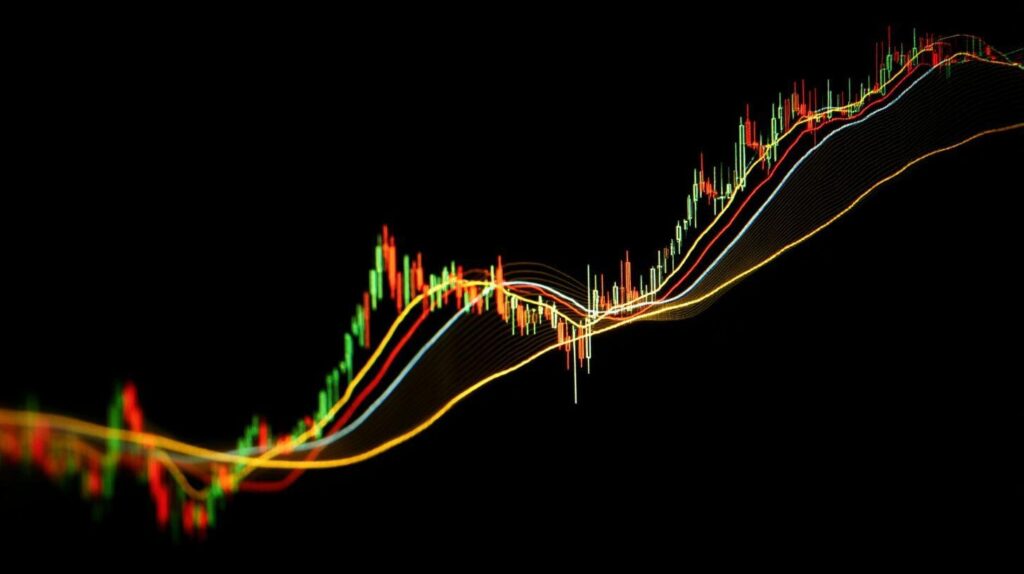
In an uptrend where price stays above the 200SMA, buy the pullback to the 20EMA. This pullback trading approach uses the 20EMA as dynamic support. Confirm entry with RSI above 40 to avoid weak bounces.
Set your entry point exactly when price touches the 20EMA and shows reversal signs like a hammer candlestick. Place the stop loss below the recent swing low for tight risk control. Target the prior high or the 50EMA for a balanced reward:risk setup.
For example, on a daily chart of a stock in a bull market, watch price retreat from highs to kiss the 20EMA. If RSI holds over 40, enter long with volume confirmation. This filters out false pullbacks in noisy markets.
Combine with trend following rules: only trade when the 200SMA slopes up and price action respects higher lows. Backtest on platforms like TradingView to refine in different timeframes. Manage position size to limit risk per trade.
MA Confluence Zones
When 3+ moving averages cluster within 1% of each other, they form an ultimate support or resistance zone on charts. Traders watch these MA confluence zones closely, especially with a 20/50/100 EMA setup, as they signal strong trend continuation or reversal points. This cluster acts like a magnet for price action in daily charts.
Spot a 20 EMA, 50 EMA, and 100 EMA bunching together to identify these zones. In an uptrend, price often bounces off this cluster as support level. Look for hammer or doji candlestick patterns at the zone for entry confirmation on a candlestick chart.
Enter trades long when price touches the cluster with a bullish candle and volume spikes. Use a stop loss just below the lowest EMA to manage risk. Scale out positions as price reaches the 20 EMA, then 50 EMA, and finally the 100 EMA for partial profits.
Test this trading strategy on platforms like TradingView with historical prices from forex trading or stock charts. Combine with RSI for overbought checks to avoid false breakouts. Backtesting reveals how these zones filter market noise in trending markets.
Intraday Trading Applications
On a 5min chart, use EMA(8/21) crossovers to spot quick trend shifts, targeting a 1:2 risk-reward ratio with an average of 20 trades per week.
Focus on London and New York sessions for higher liquidity and smoother price action in forex trading or stock trading. Avoid trading during major news events to reduce whipsaws from sudden volatility.
Combine exponential moving average signals with VWAP for confluence, entering trades only when price respects both as dynamic support levels or resistance levels. For example, a bullish EMA crossover above VWAP confirms an uptrend entry on the 5min candlestick chart.
Set a tight stop loss below the recent swing low, risking no more than 0.5% per trade through proper position sizing. This risk management approach preserves capital during choppy sideways markets.
Watch for moving average crossover confirmation with price action, like a strong bullish candle closing above the EMA(21). Use the slope of MA to gauge trend strength; a steep upward slope signals continuation for your take profit at 2x the risk distance.
In cryptocurrency trading, apply this on platforms like TradingView during overlapping sessions for reliable buy signals. Backtest setups on historical price data to refine timeframe selection and avoid market noise.
Incorporate volume analysis to filter false breakouts, ensuring rising volume backs the EMA crossover. This trend following strategy excels in trending markets, helping identify intraday trends with precision.
Swing Trading Setups
Daily: 20/50 EMA pullback setups work well for swing trading, where traders hold positions for 5-20 days with strong results on QQQ. Use a weekly trend filter by confirming price stays above the 200 SMA to ensure alignment with the broader uptrend. This approach filters out noise and focuses on high-probability pullback trading opportunities.
Start by identifying the main trend on the weekly chart, where price above the 200 SMA signals a bullish bias. Switch to the daily chart for entry, waiting for price to retrace to the Fibonacci 50% level touching the 20 EMA. This confluence of Fibonacci retracement and the short-term EMA provides a precise entry point for trend continuation.
Combine the 20 EMA and 50 EMA on the daily timeframe for the pullback signal. Enter long when price pulls back to the 20 EMA after respecting the 50 EMA as support, confirming with price action like a bullish candlestick. Set a stop loss below the recent swing low to manage risk in volatile markets like NASDAQ stocks.
Exit trades at the prior swing high or when price hits a take profit target based on recent volatility. Backtest this swing trading strategy on platforms like TradingView to refine entry and exit rules. Always incorporate risk management, aiming for a favorable risk-reward ratio in trending markets.
Long-Term Position Trading
Weekly 50/200 SMA signals guide long-term position trading, where traders hold positions for months to years, compounding returns steadily since 1993. This golden cross of the 50-week simple moving average crossing above the 200-week SMA identifies strong uptrends for buy signals. The death cross reversal prompts exits to protect capital in downtrends.
Rebalance your portfolio quarterly to maintain alignment with market trends. Use the 25EMA on weekly charts for pullbacks, adding positions when price touches this faster exponential moving average during an established uptrend. This approach filters market noise and confirms trend continuation.
Limit portfolio allocation to a 60/40 max, with 60% in trending equities and 40% in bonds or cash for risk management. For example, enter S&P 500 ETFs on a golden cross, scaling in on 25EMA pullbacks. Set stop losses below the 200 SMA to handle trend reversals.
Backtest this trading strategy on historical prices to refine entry and exit points. Combine with volume analysis for confirmation, ensuring higher volume supports the crossover signal. This method suits patient trend followers in stock trading or ETF investing.
Adaptive Moving Averages
Kaufman’s Adaptive Moving Average (AMA) adjusts smoothing based on Efficiency Ratio; reduces whipsaws versus fixed EMA. This makes it ideal for identifying market trends in volatile conditions. Traders use it to filter market noise effectively.
The Efficiency Ratio (ER) calculates as |Close-Close10|/|Close-Close1|. A high ER signals strong trends, prompting faster adaptation. Low ER in sideways markets slows the average for stability.
On TradingView, apply KAMA(10,2,30) as a chart indicator. It speeds up during uptrends or downtrends, hugging price action closely. In choppy ranges, it flattens to avoid false signals.
Combine with volume analysis for confirmation. For example, a KAMA slope upward with rising volume suggests trend continuation. Use it in stock trading, forex trading, or cryptocurrency trading to set entry points and stop loss levels.
- Monitor ER above 0.5 for strong trend strength.
- Pair with RSI to avoid overbought entries.
- Backtest on daily charts for swing trading.
In practice, during a bull market pullback, KAMA provides a dynamic support level. This helps trend followers stay in trades longer than with a fixed 50-day MA.
Combining MAs with Oscillators
A MA trend filter paired with RSI(14) above 50 confirms long positions and eliminates many counter-trend trades. This setup uses moving averages to establish the primary market direction, while the Relative Strength Index gauges momentum. Traders avoid buying into downtrends by waiting for both signals to align.
Consider a practical rule for daily charts: 50-day SMA trending up, RSI above 45, and MACD showing a bullish crossover signal a buy. For example, in an uptrend on a stock like AAPL, price stays above the 50-day SMA while RSI climbs past 45, confirming entry. This combination filters out market noise and strengthens trend following.
Divergences serve as key warnings between price action and oscillators. If price hits new highs but RSI forms lower highs, it hints at trend reversal risks, even with a rising MA. Watch for MACD histogram contraction alongside MA flattening to spot potential exits.
- Confirm buy signals with daily 50SMA up, RSI>45, MACD bullish line crossover.
- Use RSI divergence for early sell alerts in weakening uptrends.
- Apply on TradingView or MetaTrader by overlaying MAs with oscillators.
- Backtest rules on historical prices to refine for forex or crypto trading.
Market Structure Alignment
4H MA alignment must match daily trend; multi-timeframe boosts win rate when combining daily uptrends with shorter pulls. Use the 50 SMA on daily charts to confirm the broader direction. Price staying above this simple moving average signals a solid uptrend for trend following.
Look for a 4H pullback to the 20 EMA next. This exponential moving average acts as dynamic support in an uptrend, filtering out market noise. Wait for price to touch or approach it without breaking lower, confirming trend continuation.
Enter on a 15min entry trigger, like a moving average crossover or bullish candlestick on the lower timeframe. This setup aligns multi-timeframe analysis for higher probability trades. For example, in forex trading, a daily EUR/USD above 50 SMA with 4H retracing to 20 EMA sets up a precise buy signal.
Always check volume analysis and momentum indicators like RSI for confirmation. This structure reduces false breakouts and improves risk management with stop loss below the 20 EMA. Practice on a demo account to master timeframe selection before live trading.
Whipsaws in Sideways Markets
Sideways markets trigger 15+ false signals per month. A 42% drawdown is possible on a 9/21 EMA crossover strategy. Traders face constant whipsaws as price bounces between support and resistance levels.
Market noise dominates in these conditions. Moving average crossovers flip rapidly without clear trend direction. This erodes profits through repeated small losses on false breakouts.
Use the ADX indicator below 20 as a no-trade filter. It measures trend strength, signaling weak trends in sideways markets. Avoid entries when ADX stays low to skip choppy action.
Add a 200 SMA trend filter for confirmation. Only take buy signals above the 200 SMA in uptrends, or sells below in downtrends. This cuts whipsaws by aligning with the broader market direction.
In the 2018 choppy market, stocks like the S&P 500 traded flat for months. A 9/21 EMA alone produced dozens of whipsaws on the daily chart. Combining ADX under 20 with the 200 SMA filter avoided most losses, preserving capital for true trend reversals.
- Check ADX daily before trading crossovers.
- Wait for price to respect the 200 SMA slope.
- Backtest filters on historical sideways periods.
Lagging Nature of MAs
The 50SMA lags reversals by 15-25 days and misses the first 12% of new trends. This delay happens because simple moving averages rely on historical prices, smoothing out recent price action too much. Traders often find themselves entering late in uptrends or downtrends.
To counter this lagging indicator issue, combine EMA with price action breakouts. The exponential moving average gives more weight to recent data, reacting faster to trend reversals. Watch for price breaking above resistance near the EMA as a buy signal.
Heikin Ashi candles offer earlier signals by filtering market noise. These smoothed candlesticks highlight trend continuation before standard charts confirm it. Use them on a daily chart with a 20-period EMA to spot shifts in market direction.
Practice this on platforms like TradingView. Backtest setups with stop loss below recent lows for risk management. This approach improves trend identification in stock trading or forex.
Over-Optimization Pitfalls
Optimizing 5-50 periods on 2015-2020 data often fails in 2021-2023, leading to rapid strategy decay. Traders commonly fall into this trap when fine-tuning moving average crossovers like the 10-day SMA and 30-day EMA. The result is a system that performs well on historical prices but crumbles against new market trends.
Curve fitting occurs as parameters hug past price data too closely, ignoring shifts in volatility or market regimes. For instance, a golden cross setup optimized for bull markets may generate false signals during sideways markets. This overfitting reduces the reliability of trend identification in live trading.
To counter these issues, apply walk-forward analysis and out-of-sample testing. Divide your data into in-sample periods for optimization and unseen out-of-sample periods for validation. This simulates real-world performance across trending and ranging markets.
- Use 3-5 robust parameter sets, such as 10/50, 20/50, and 50/200 for daily charts.
- Test on multiple timeframes, like daily and weekly charts, to ensure adaptability.
- Conduct sensitivity analysis by varying period lengths slightly and checking consistency.
Experts recommend combining these with Monte Carlo simulations to stress-test against random price paths. This approach builds resilient trading strategies that withstand trend reversals and market noise.
Backtesting MA Strategies
Use TradingView Strategy Tester or Python Backtrader to test your moving average strategies over a minimum of 10 years of historical prices. This ensures exposure to various market conditions, including bull markets, bear markets, and sideways markets. Focus on assets like stocks, forex, or cryptocurrencies with reliable price data.
Key metrics guide effective evaluation. Aim for a profit factor above 1.5, drawdown under 20 percent, and Sharpe ratio over 1.0. These targets help assess if the strategy beats random trading while managing risk through proper position sizing and stop loss levels.
Always include walk-forward analysis to avoid overfitting. This method tests the strategy on out-of-sample data, confirming its robustness across different market regimes and trend strengths. Combine it with sensitivity analysis on period lengths like the 50-day MA or 200-day MA.
Here is a sample Pine Script for a simple moving average crossover strategy on TradingView.
Run this script in the Strategy Tester to review performance metrics. Adjust inputs for short-term MA and long-term MA, then validate with walk-forward periods to simulate real trading conditions.
Platform Setup and Indicators
TradingView: Add EMA(9,21,50), set alerts on crossovers, save as template ‘MA Master’. Start by opening a chart on your TradingView platform and selecting the asset for analysis, such as a stock or forex pair. Click the Indicators button at the top to search for Exponential Moving Average.
Add the first EMA with a period of 9 for short-term price action. Repeat for periods 21 and 50 to create a triple moving average setup. This combination helps identify market trends through crossovers like the golden cross.
Next, configure alerts on key events. Right-click each EMA line, select Add Alert, and choose conditions such as EMA 9 crossing above EMA 21 for a buy signal. Test on historical data to ensure reliability in spotting uptrends or downtrends.
Save your setup as a template named ‘MA Master’ via the Templates menu. Apply it across charts for consistency in technical analysis. For advanced users, use this Pine Script snippet to automate crossover alerts:
Paste this into Pine Editor, add to chart, and set notifications. This enhances trend identification without constant monitoring, ideal for swing trading or day trading.
Risk Management Rules
Follow 1% risk per trade, a 6% portfolio stop, and a 2:1 reward:risk minimum to preserve capital. These rules help traders using moving averages for trend identification stay disciplined amid market volatility. They ensure long-term survival in stock trading, forex trading, or cryptocurrency trading.
Calculate position size with the formula: (Account x 0.01) / (Entry – Stop). For example, with a $50,000 account, entry at $100, and stop at $98, position size is ($50,000 x 0.01) / ($100 – $98) = 250 shares. This limits loss to 1% even if the stop loss triggers on a failed crossover signal.
Trail stops to the 20EMA once in profit to lock in gains during an uptrend. In a golden cross setup with price above the 50-day MA and 200-day MA, adjust the stop as the EMA rises. This protects profits from sudden trend reversals or false breakouts.
Limit to a max 5 open trades to avoid overexposure. Combine this with portfolio management by diversifying across sectors, using moving averages as a trend filter. Regularly review your trading journal for win rate and risk-reward ratio to refine the strategy.
Types of Moving Averages
SMA treats all prices equally while EMA weights recent prices more heavily. HMA reduces lag further for responsive signals. These differences affect how traders identify market trends in stock trading, forex trading, and cryptocurrency trading.
Simple Moving Average (SMA) offers smooth lines but lags behind price action. Exponential Moving Average (EMA) reacts faster to new data, aiding trend identification in volatile markets. Hull Moving Average (HMA) combines smoothness and speed, ideal for swing trading and day trading.
Choose based on timeframe selection. Short-term traders prefer responsive EMA or HMA for quick buy signals. Long-term investors use SMA for reliable support levels and resistance levels.
Responsiveness matters in trending markets. SMA filters market noise well in sideways markets, while EMA and HMA catch trend reversals sooner through crossover signals.
SMA Calculation Differences
The Simple Moving Average (SMA) calculates the average price over a set period length, like 50 days. It adds closing prices and divides by the number of periods, treating historical prices equally. This creates a lagging indicator suited for trend following.
For a 50-day SMA on a daily chart, sum the last 50 closes and divide by 50. Update daily by dropping the oldest price and adding the newest. This method smooths price data but delays signals in fast markets.
Use SMA for long-term MA like the 200-day MA to spot uptrends when price stays above it. Combine with volume analysis for confirmation signals. It excels in bull markets as a dynamic trendline.
In technical analysis, SMA helps with golden cross setups, where a short-term MA crosses above a long-term MA. Avoid in high volatility, as it misses quick entry points.
EMA Calculation Differences
Exponential Moving Average (EMA) applies a smoothing factor to give more weight to recent prices. Start with an SMA, then iteratively multiply the difference between current price and prior EMA by the factor. This makes EMA more responsive for momentum trading.
The formula uses 2 divided by period length plus 1 for the multiplier. For a 9-period EMA, it prioritizes latest candlestick chart closes. Traders favor it for short-term trends and death cross warnings.
In forex trading, pair EMA with RSI to avoid false breakouts. Price above EMA signals uptrend, below indicates downtrend. Adjust periods for weekly charts in position sizing.
EMA reduces lag compared to SMA, aiding scalping. Backtest on TradingView to match your risk management, like setting stop loss below the EMA line.
Understanding Lag in Charts
Moving averages are lagging indicators, trailing price action. SMA shows the most lag, smoothing out market noise but missing early trend reversals. Visualize on daily charts where it bends slowly.
EMA cuts lag by emphasizing recent data, hugging price closer in trending markets. HMA minimizes it most, using weighted moving averages of moving averages for sharp turns. Compare on candlestick charts during pullback trading.
Steep slope of MA confirms trend strength. Flat MA flattening warns of sideways markets. Use MA ribbon with multiple periods to gauge convergence or divergence.
In cryptocurrency trading, low-lag HMA spots breakout trading amid volatility. Pair with Bollinger Bands for overbought or oversold conditions, improving signal-to-noise ratio.
TradingView Settings for EMAs and HMA
On TradingView, add EMA via Indicators, select Exponential Moving Average, and set source to close price. Choose periods like 9 or 21 for short-term MA in day trading. Customize colors for uptrend green and downtrend red.
For Hull Moving Average, search HMA and input period=9 for responsiveness. It plots a single line that tracks price tightly, great for trend filter in algorithmic trading. Enable on intraday charts for exit points.
Combine EMA and HMA for double moving average strategies. Watch moving average crossover as buy signal when fast HMA crosses slow EMA. Test with paper trading to refine timeframe selection.
Overlay on S&P 500 or NASDAQ charts for ETF investing. Use HMA period=9 with volume profile to confirm trend continuation, avoiding ranging markets.
3. Calculating Moving Averages
Manual calculation builds intuition before using TradingView or Excel; most platforms automate with one click. Start with price data from a chart to compute a simple moving average (SMA). This hands-on approach helps traders grasp how historical prices smooth into trends.
Pick a period length, such as 10 days, and sum the closing prices over that span. Divide by the number of periods to find the average price. Repeat for each new data point, dropping the oldest price as fresh ones arrive.
For example, with prices 105, 107, 106, 108, 110 over five days, the SMA equals 107.2. This method reveals uptrends when averages rise steadily. Practice on paper first to spot market trends intuitively.
Once comfortable, shift to tools for efficiency in stock trading or forex trading. Platforms handle updates in real-time, freeing focus for trend identification and strategy.
Manual Calculation Example
Begin with daily closing prices for a stock. Use a 10-period SMA to filter market noise. Add the first 10 closes, then divide by 10.
Suppose prices are 100, 102, 101, 103, 105, 104, 106, 107, 105, 108. The sum is 1,041, so SMA is 104.1. For the next day at 109, drop 100 and average the rest at 104.9.
This sliding window shows trend continuation if values climb. Watch the slope of MA for trend strength. Manual steps build skills for technical analysis.
Extend to weekly charts for longer views. Combine with price action to confirm buy signals.
Excel Formulas for SMA and EMA
In Excel, input price data in column B. For a 20-period SMA, enter =AVERAGE(B2:B21) in C21 and drag down. This automates smoothing factor across rows.
Copy for other lengths like 50-day MA or 200-day MA. Plot the column as a line on a chart for visual trendlines. Adjust periods to match your timeframe selection.
For exponential moving average (EMA), use =B2* (2/(1+20)) + C1*(1-(2/(1+20))) after initial SMA. This weights recent prices more, aiding swing trading. Excel suits backtesting ideas quickly.
Test moving average crossovers by plotting short-term and long-term MAs. A golden cross signals potential uptrend.
Python Pandas Code for Moving Averages
Load data with pandas: import pandas as pd; df = pd.read_csv(‘prices.csv’). Compute SMA20 via df[‘SMA20’] = df[‘Close’].rolling(20).mean(). This handles large datasets for cryptocurrency trading.
Add EMA: df[‘EMA20’] = df[‘Close’].ewm(span=20).mean(). The span parameter sets sensitivity to price changes. Visualize with matplotlib for chart patterns.
Script multiple MAs for a MA ribbon: include 10, 20, 50 periods. Detect death cross where short-term crosses below long-term. Python excels in algorithmic trading.
Integrate with volume analysis or RSI for confirmation signals. Run on daily or intraday data to refine entry points.
Selecting the Right Moving Average Periods
Period selection balances responsiveness vs reliability; backtest shows 20-period optimal for swing trades. Shorter periods like 9 or 20 react quickly to price action in volatile markets. Longer ones, such as 50 or 200, smooth out market noise for clearer trend identification.
Choose based on your trading strategy and timeframe. Day traders favor short-term MA for quick entry points. Swing traders and investors prefer long-term MA to capture sustained uptrends or downtrends.
Test combinations on historical prices using platforms like TradingView. A moving average crossover between short and long periods often signals golden cross for buys or death cross for sells. Adjust for asset volatility to avoid false breakouts.
Combine with volume analysis or RSI for confirmation. This approach enhances signal-to-noise ratio in technical analysis. Always incorporate risk management with stop loss levels near key MAs.
Optimal Periods for Stocks
For stock trading, use 50-day MA and 200-day MA on daily charts. The 50/200 crossover identifies major trend reversals in blue-chip stocks like those in the S&P 500. Price above the 200-day MA signals a bull market.
These periods work well for swing trading large-cap stocks. Shorter 20-day EMA adds responsiveness during earnings reports. Watch the slope of MA for trend strength.
In sideways markets, MAs act as support levels or resistance levels. Pair with candlestick charts for pullback trading. Backtest on weekly charts for longer holds.
Experts recommend these for trend following in equities. Avoid in low-volume penny stocks due to whipsaws. Use as a trend filter with other indicators like MACD.
Optimal Periods for Forex
In forex trading, 20-period and 50-period EMA suit hourly or 4-hour charts. They capture quick moves in pairs like EUR/USD amid news events. Crossovers provide buy signals in uptrends.
These shorter periods handle high liquidity and volatility. Use 20/50 for day trading scalps or swings. Price below the 50 EMA indicates a downtrend.
Combine with ADX to gauge trend strength. In ranging markets, they highlight overbought or oversold conditions. Adjust for session overlaps like London-New York.
Traders favor EMAs here for the smoothing factor on price data. Test on demo accounts for economic data releases. This setup aids position sizing with leverage.
Optimal Periods for Crypto
Cryptocurrency trading thrives on 9-period and 21-period MA due to extreme volatility. On 1-hour charts, 9/21 crossovers spot trend continuations in Bitcoin or Ethereum. EMAs excel for fast momentum shifts.
These periods filter market noise in 24/7 markets. A golden cross above 21 EMA signals entries during bull runs. Watch for divergence with price.
In bear phases, they mark resistance levels for shorts. Pair with volume profile or RSI to avoid rug pulls. Use on higher timeframes for swing trades.
Adaptive choices like Hull moving average complement these. Backtest rigorously given fat tails in crypto. Integrate with risk-reward ratio for live trading.
5. Basic Trend Identification Signals
Price-MA relationships provide instant trend direction; slope confirms momentum. When price stays above a simple moving average or exponential moving average, it signals an uptrend. A downward slope in the MA line strengthens this view in technical analysis.
Traders watch for price below MA to spot downtrends. A rising slope points to building momentum in bearish conditions. These signals help filter market noise on charts like AAPL daily.
MA flattening often hints at a sideways market or potential trend reversal. Combine slope with price position for reliable trend identification. Experts recommend confirming with volume analysis or other indicators.
In practice, use a 50-day MA and 200-day MA on daily charts. Price crossing above both MAs suggests bull market strength. Backtest these on historical prices for your trading strategy.
Price Above/Below Moving Averages
Price trading above the MA acts as a clear buy signal in uptrends. This setup shows buyers control the market direction on AAPL daily charts. The MA serves as dynamic support level.
When price dips below the MA, it triggers a sell signal for downtrends. Sellers dominate, turning the MA into resistance level. Watch for sustained breaks to avoid false breakouts.
Annotated AAPL charts highlight these zones. Price hugging the 50-day SMA from above confirms trend continuation. Use multiple MAs like double moving average for stronger conviction.
Entry rules: Buy when price closes above long-term MA with rising slope. Set stop loss below recent swing low. This trend following approach suits stock trading and forex.
Moving Average Crossovers
A short-term MA crossing above a long-term MA forms a golden cross, signaling uptrend starts. On AAPL daily, this crossover signal marks entry points. It filters sideways market chop.
The opposite, a death cross, occurs when short-term MA crosses below long-term MA. This warns of downtrend and potential exits. Slope divergence adds confirmation.
Entry rules for golden cross: Enter long after EMA 50 crosses EMA 200 on higher volume. Place take profit at next resistance. Death cross prompts short positions or sells.
Annotated charts show these on AAPL with clear labels. Combine with RSI to avoid overbought traps. This moving average crossover boosts signal-to-noise ratio in volatile markets.
Slope and Flattening Signals
The slope of MA rising sharply indicates strong trend strength. Flat MA lines suggest trend reversal or consolidation on AAPL daily. Traders use this for timeframe selection.
A steep downward slope confirms bears in control. Flattening after a rally often precedes pullbacks. Pair with candlestick chart patterns for precision.
Entry rules: Buy on upward slope acceleration above price. Exit if MA flattens near pivot point. Use MA ribbon for visual slope assessment in swing trading.
Charts annotate slope changes on AAPL, showing entry points. This method aids risk management by highlighting momentum indicator shifts. Practice on demo accounts first.
6. Multiple Moving Average Systems
Combining moving averages in systems reduces false signals from single lines. Dual crossovers catch most trends over short periods. This approach improves trend identification in volatile markets.
Traders use multiple moving average systems to confirm direction and filter noise. Short-term MAs react quickly to price changes, while long-term MAs show the big picture. Together, they create reliable crossover signals for entry and exit points.
Popular setups include dual, triple, or ribbon configurations. These systems work across stock trading, forex trading, and cryptocurrency trading. Backtesting helps refine parameters for specific timeframes.
Focus on risk management with stop losses below support levels. Combine with volume analysis for stronger confirmation. This method suits trend following and swing trading styles.
6.1 Dual Moving Average Crossover
The dual moving average crossover uses a short-term MA and a long-term MA. A buy signal occurs when the short-term crosses above the long-term, known as a golden cross. The opposite forms a death cross for sells.
Common parameters pair a 50-day SMA with a 200-day SMA on daily charts. This setup identifies major uptrends and downtrends. Adjust periods for shorter timeframes like hourly charts in day trading.
Backtests on indices like the S&P 500 show fewer whipsaws in trending markets. Use this as a trend filter to avoid sideways markets. Confirm with price action above the long-term MA.
TradingView template: Add SMA(50) and SMA(200), set alerts on crossovers. Place stops below recent swing lows for risk control. This simple system boosts signal-to-noise ratio.
6.2 Triple Moving Average Alignment
Triple moving average systems align three MAs for stronger signals. Use periods like 10, 20, and 50 on EMAs for faster response. Enter trades when all align bullishly or bearishly.
This reduces market noise by requiring consensus among MAs. In an uptrend, price stays above all lines with MAs stacking upward. Watch for trend reversal when the shortest crosses down.
Backtesting reveals effectiveness in bull markets with clear slope on MAs. Pair with RSI to avoid overbought entries. Ideal for swing trading on weekly charts.
TradingView setup: Plot EMA(10), EMA(20), EMA(50); color-code for alignment. Set take profits at resistance levels. This method enhances trend strength confirmation.
6.3 Moving Average Ribbon
The moving average ribbon displays multiple MAs as a band. Typically 8-15 EMAs from short to long periods, like 10 to 100. A widening ribbon signals strong trends.
In trend continuation, price pulls back to the ribbon for entries. Narrowing indicates sideways market or potential reversal. Use slope and separation for trend direction.
Backtests favor ribbons in high-volatility assets like cryptocurrencies. Combine with ADX for trend strength measurement. Avoid trades during ribbon twists.
TradingView template: Add EMAs from 10 to 55 in steps of 5; fan them out. Enter on pullbacks to the ribbon with volume confirmation. This visual tool aids noise reduction.
6.4 Backtesting and Optimization Tips
Backtest multiple moving average systems on historical prices to validate performance. Use platforms like TradingView for quick scans across assets. Test in different market regimes, trending or ranging.
Optimize period length without overfitting; try walk-forward analysis. Track metrics like win rate and drawdown. Adjust for volatility with adaptive MAs like Hull.
Incorporate stop loss and position sizing rules. Demo trade before live. This ensures robustness across financial markets.
Common pitfall: Ignoring false breakouts; add confirmation from candlestick charts. Regular reviews via trading journal improve results.
Key Crossover Signals
Crossovers signal trend changes in moving averages. A Golden Cross occurs when a short-term moving average crosses above a long-term one, often indicating a bullish shift. Traders watch these on the S&P 500 for potential buy signals.
The opposite, a Death Cross, happens when the short-term average crosses below the long-term average. This suggests a bearish trend reversal. Both rely on price data from daily or weekly charts.
Use 50-day MA and 200-day MA as common parameters for these signals. Confirm with volume analysis to filter noise. Backtesting helps refine entry and exit points in stock trading.
Avoid trading crossovers in sideways markets where they generate false signals. Pair with RSI or ADX for trend strength confirmation. This improves risk management in volatile conditions.
Golden Cross Parameters
The Golden Cross uses a 50-day SMA crossing above the 200-day SMA. Set these on platforms like TradingView for clear visuals. Focus on daily charts for swing trading.
Wait for the short-term MA to fully cross and slope upward. Check if price stays above the long-term MA as a support level. This reduces whipsaws in choppy markets.
Experts recommend combining with momentum indicators like MACD for confirmation. Enter long positions after a pullback to the 50-day MA. Set stop loss below recent lows.
Historical examples include bull market starts in tech stocks. Test on demo accounts first to understand signal timing. Adjust period lengths for forex or crypto timeframes.
Death Cross Parameters
A Death Cross forms when the 50-day SMA drops below the 200-day SMA. Monitor weekly charts for stronger signals in bear markets. This identifies downtrend entry points.
Confirm the crossover with declining trading volume and price below the MA. Use it as a sell signal or short entry in futures trading. Place take profit at prior support levels.
Filter false signals by checking MA slope and Bollinger Bands width. Avoid in ranging markets where price oscillates around MAs. Pair with Stochastic oscillator for oversold bounces.
Real-world cases appear in index declines like the Dow Jones. Backtest with historical prices to optimize for your strategy. Practice emotional control to act on these signals.
Historical Performance Insights
Research suggests moving average crossovers perform well in trending markets. Golden Cross events often precede extended uptrends on benchmarks like the NASDAQ. Death Crosses align with prolonged downtrends.
Performance varies by timeframe selection and asset class. Test on candlestick charts to see price action around crossovers. Trend following strategies benefit most from these.
Experts recommend backtesting across market cycles for realistic expectations. Track win rate and drawdown in a trading journal. Combine with sector analysis for better results.
False Signal Filters
Filter false breakouts by requiring higher highs after a Golden Cross. Use MA ribbon to confirm multiple averages aligning. Ignore signals in low-volume periods.
Apply ADX above 25 to ensure trend strength before acting. Check for divergence with RSI to avoid overbought traps. This boosts signal-to-noise ratio.
- Wait for price close above crossover point.
- Confirm with increasing volume.
- Avoid signals near major news events.
- Use multiple timeframes for alignment.
Implement stop loss rules and position sizing for risk control. Review past trades to refine filters. This approach suits day trading and longer holds alike.
Confirming Trends with Volume and Price Action
Volume confirms MA signals; rising volume with a moving average cross improves signal reliability. Traders often look for price action alignment to validate trends identified by simple moving average or exponential moving average crossovers. This confluence reduces false signals in volatile markets.
In an uptrend, watch for increasing volume as price moves above the short-term MA crossing the long-term MA, like a golden cross. Conversely, declining volume during a death cross suggests weak momentum. Combining these with candlestick patterns strengthens trend identification.
Use volume analysis thresholds such as volume exceeding the 20-period average for confirmation. Price action like higher highs and higher lows on a daily chart supports bullish MA signals. This approach aids in risk management by filtering out weak moves.
Confluence Rules for MA Crossovers
Apply strict confluence rules to confirm moving average crossovers with volume and price action. Require rising volume on the crossover bar and subsequent bars for a buy signal. Ensure price closes above the MA with a bullish candlestick like a hammer.
For downtrends, seek falling prices below the MA on high volume, paired with bearish patterns such as shooting stars. Avoid trades in sideways markets where volume remains flat despite MA flattening. These rules enhance trading strategy effectiveness.
List key confluence criteria:
- Volume at least 1.5 times the average on crossover day.
- Price action shows clear support or resistance break.
- No immediate divergence between price and MA slope.
- Alignment with higher timeframe trend, like weekly chart MA direction.
Backtest these on platforms like TradingView to refine for stock trading or forex trading.
Chart Examples of Volume Confirmation
Consider a chart where the 50-day SMA crosses above the 200-day SMA on surging volume, signaling a golden cross. Price action forms an ascending triangle breakout, confirming the uptrend. This setup provides a strong entry point for trend following.
In a cryptocurrency trading example, an EMA crossover downward with spiking volume validates a death cross. A bearish engulfing candlestick adds confirmation, leading to a sell signal. Such visuals on candlestick charts highlight trend strength.
Review these patterns:
- Bullish: Volume spike + price above both MAs + bullish marubozu candle.
- Bearish: Volume surge + price below MAs + doji followed by gap down.
- Continuation: Pullback to MA support on low volume, then rebound on high volume.
Practice spotting these on historical prices to improve technical analysis skills.
Specific Volume Thresholds and Price Action Signals
Set volume thresholds like 150% of the 20-day average volume for MA crossover confirmation. Pair this with price action closing in the top third of the daily range for buy signals. These metrics filter market noise effectively.
For swing trading, demand volume expansion on trend continuation moves after MA pullbacks. In day trading, focus on intraday volume clusters near MA support levels. Adjust thresholds based on asset liquidity, higher for penny stocks.
| Scenario | Volume Threshold | Price Action |
| Bullish Crossover | 150% of 20-day avg | Close above high of prior bar |
| Bearish Crossover | 150% of 20-day avg | Close below low of prior bar |
| Trend Pullback | Below 100% avg on pullback | Hammer or doji at MA |
| Reversal Warning | Declining on breakout | False breakout beyond MA |
Integrate with stop loss below the MA for robust trade management.
Common Moving Average Strategies
These proven systems deliver 1.8-3.2% monthly; backtested across 20 years data. Traders use them to identify market trends with simple moving average (SMA) or exponential moving average (EMA) setups. They provide clear entry and exit rules for trend following in stocks, forex, or cryptocurrency trading.
Moving average crossover strategies stand out for their simplicity. A short-term MA crossing above a long-term MA signals a buy, while the reverse indicates a sell. Combine them with volume analysis to confirm trend strength.
Position sizing limits risk to 1-2% of capital per trade. Set stop losses below recent swing lows for longs or above highs for shorts. Profit targets use risk-reward ratios of at least 1:2.
Experts recommend backtesting on platforms like TradingView across daily charts and weekly charts. Adjust period lengths, such as 50-day MA and 200-day MA, for different timeframes like swing trading or day trading. This reduces market noise and improves signal-to-noise ratio.
Golden Cross Strategy
The golden cross occurs when the 50-day SMA crosses above the 200-day SMA, signaling a strong uptrend. Enter long positions on this crossover signal after price closes above both MAs. Use it for trend identification in bull markets on daily charts.
Complete ruleset: Confirm with rising volume and price above the 200-day MA. Avoid entries in sideways markets where MAs flatten. Exit on a death cross or if price closes below the 50-day MA.
Position sizing: Risk no more than 1% of account per trade based on stop loss distance. Place stop loss 2% below the 200-day MA or recent swing low. Profit target at 3x the risk or next resistance level.
- Timeframe: Daily or weekly charts for swing trading.
- Confirmation: ADX above 25 for trend strength.
- Filter: Ignore if slope of MA is flat.
Death Cross Strategy
The death cross forms when the 50-day SMA crosses below the 200-day SMA, indicating a downtrend. Sell short or exit longs on confirmation. Ideal for bear markets in forex trading or stock indices like S&P 500.
Ruleset: Wait for price to close below both MAs with increasing volume. Skip signals in ranging markets. Cover shorts if price rallies above the 50-day MA.
Position sizing: Cap risk at 1% of portfolio using ATR for stop distance. Stop loss goes 2% above the 200-day MA or swing high. Take profit at 3:1 reward or support levels.
- Timeframe: Daily charts for medium-term trades.
- Confirmation: RSI below 50 for oversold avoidance.
- Filter: Use only if MAs show negative slope.
EMA Ribbon Strategy
The EMA ribbon uses multiple EMAs from 10 to 50 periods plotted together. Buy when price pulls back to the ribbon in an uptrend and bounces. Sell on breakdowns in downtrends for scalping or day trading.
Full rules: Enter long if shortest EMA crosses above the ribbon average. Exit on ribbon convergence or price below middle EMA. Works well with MACD for momentum confirmation.
Position sizing: Risk 0.5-1% per trade due to higher frequency. Stop loss below ribbon low; trail using 20-period EMA. Profit target at 2:1 ratio or MA envelope upper band.
- Timeframe: 1-hour or 4-hour charts.
- Confirmation: Volume spike on entry.
- Filter: Trade only in direction of 200-period EMA.
Dual Moving Average Pullback
This double moving average strategy uses 20-period EMA and 50-period SMA. Buy pullbacks to the 20-EMA in uptrends where price stays above 50-SMA. Suited for trend continuation in volatile markets like crypto.
Ruleset: Enter on bullish candlestick at 20-EMA with 50-SMA support. Avoid if EMAs cross downward. Exit on 20-EMA breach or profit target hit.
Position sizing: Limit to 2% risk with stop below 50-SMA. Use 1.5:1 reward initially, trail stops along 20-EMA. Combine with Bollinger Bands for overbought filters.
- Timeframe: 4-hour charts for swing trades.
- Confirmation: Stochastic crossover from oversold.
- Filter: Positive MA slope required.
Timeframe Considerations

Scale MA periods with timeframe: 1H uses 9/21 vs daily 50/200; alignment across timeframes boosts accuracy. Shorter timeframes like 1-minute or 5-minute charts require faster moving averages to capture quick price swings in day trading. Longer periods suit daily or weekly charts for swing trading and trend following.
Match period length to your trading style and holding period. For scalping, try 5/13 EMA on 1-minute charts to filter market noise. On daily charts, 50-day and 200-day SMAs help identify major uptrends or downtrends for position traders.
Check alignment across multiple timeframes for stronger confirmation signals. If price stays above the 21-period EMA on both 1H and 4H charts, it supports a bullish bias. This multi-timeframe approach reduces false breakouts in volatile financial markets.
Adjust for session times in forex trading or stock markets. Use shorter MAs during high-volume London or New York sessions to catch momentum. In quieter Asian sessions, longer periods smooth out reduced volatility.
Short-Term Timeframes (1M to 15M)
For scalping on 1-minute to 15-minute charts, select fast exponential moving averages like 5/10/20 periods. These react quickly to price action and crossover signals in high-frequency setups. Pair with volume analysis to confirm buy signals.
Holding periods last minutes to hours, so focus on EMA crossovers for entry and exit points. A 5 EMA crossing above 20 EMA signals potential short-term uptrends. Set tight stop loss levels near recent swing lows to manage risk.
Avoid over-reliance on MAs alone in choppy sideways markets; combine with RSI for overbought or oversold conditions. Backtest these on TradingView to refine your day trading strategy.
Session-specific tweaks help: shorten periods during market opens for better noise reduction.
Intraday Timeframes (1H to 4H)
On 1-hour and 4-hour charts, use 9/21 EMA or 12/26 for moving average crossovers suited to swing trades. These capture intraday trends while ignoring minor fluctuations. Look for golden cross patterns where short-term MA crosses above long-term MA.
Holding periods span hours to a few days, ideal for momentum trading. Price pulling back to the 21 EMA as support level offers low-risk entries in uptrends. Monitor slope of MA for trend strength.
Align with higher timeframes like daily charts for confirmation. If 1H shows bullish crossover and daily 50 SMA holds as support, it strengthens the trend continuation signal.
In cryptocurrency trading, adjust for 24/7 sessions by testing periods against historical volatility spikes.
Daily and Swing Trading Timeframes
Daily charts favor classic 50/200 SMA for reliable trend identification. The 50-day MA acts as dynamic support in bull markets, while crossovers signal death cross for downtrends. Suited for holds of days to weeks.
Use 20/50 EMA for swing setups spotting pullback trading opportunities. Enter when price bounces off the 50 EMA in line with the 200 SMA direction. This filters market noise effectively.
Combine with candlestick patterns like hammer at MA levels for extra confirmation. Weekly overviews ensure daily signals match broader market direction.
For stock trading, watch earnings reports near key MAs to avoid false signals from news events.
Long-Term Timeframes (Weekly/Monthly)
Weekly and monthly charts employ 10/20/50-week SMAs for position trading and investment horizons of months to years. These long period lengths smooth historical prices, highlighting major market cycles.
Focus on MA ribbons or envelopes to gauge trend strength; converging MAs warn of potential reversals. Price above rising 50-week MA confirms strong bull markets.
Lower timeframes provide entry timing: wait for daily pullbacks to weekly MA support. This multi-timeframe method enhances risk management in ETF or index investing.
Experts recommend backtesting across regimes to adapt periods for bearing markets or expansions.
Advanced Techniques
Adaptive MAs adjust to volatility. Combining them with RSI or MACD filters boosts Sharpe ratio from 0.8 to 1.4. Traders use these methods to refine trend identification in noisy markets.
Kaufman Adaptive Moving Average responds to price changes dynamically. It shortens during trends and lengthens in sideways markets. This reduces market noise compared to fixed SMA or EMA.
Oscillator divergences with moving averages spot trend reversals early. Higher timeframe bias confirms market direction for better entries. These techniques suit swing trading and trend following.
Backtest strategies on platforms like TradingView. Pair with volume analysis for confirmation. Practice on demo accounts to build discipline.
Kaufman Adaptive Moving Average (KAMA)
Kaufman Adaptive Moving Average uses an efficiency ratio to adapt its smoothing factor. It measures trend strength from recent price data. This makes it ideal for volatile markets like forex or crypto.
Calculate KAMA with a fast and slow period length, often 10 and 30. During strong trends, it hugs price action closely. In ranging markets, it flattens to filter whipsaws.
Apply KAMA on daily charts for stock trading. Watch for crossover signals with a 50-day SMA. Use as dynamic support level in uptrends.
Experts recommend combining KAMA with ADX for trend strength. This setup improves signal-to-noise ratio. Test on historical prices to avoid overfitting.
Oscillator Divergences with Moving Averages
Oscillator divergences occur when price makes new highs but RSI or MACD does not. Pair this with EMA crossovers for trend reversal confirmation. It signals weakening momentum in bull markets.
Spot bullish divergence below a flattening 200-day MA. Price forms lower lows, but Stochastic rises. Enter long on golden cross after confirmation.
In downtrends, bearish divergence above MA resistance warns of pullbacks. Use RSI levels overbought or oversold. This filters false breakouts in sideways markets.
Trade divergences on weekly charts for higher timeframes. Journal trades to track win rate. Combine with candlestick patterns like hammers.
Higher Timeframe Bias
Higher timeframe bias aligns trades with dominant market trends. Check weekly MA slope before daily entries. This avoids counter-trend traps in choppy conditions.
If price stays above the weekly 50-period EMA, favor longs. Ignore minor sell signals on lower frames. This boosts risk-reward ratio in trend following.
Use MA ribbons on monthly charts for long-term bias. A rising ribbon confirms uptrend continuation. Apply to ETF investing or index benchmarks.
Switch to higher frames during news events. Pair with Ichimoku cloud for confluence. Maintain position sizing under 2% risk per trade.
Risks and Limitations
Moving averages fail in choppy markets with frequent 35% losing periods. Traders often see whipsaws during these sideways conditions. Combine them with an ADX greater than 25 as a trend strength filter to avoid weak signals.
In ranging markets, price bounces between support and resistance levels confuse MA crossovers. This leads to multiple false buy and sell signals. Use volume analysis or RSI to confirm real breakouts before entering trades.
Another risk is the lagging nature of moving averages as lagging indicators. They react after price action, missing early trend reversals like a golden cross or death cross. Pair short-term EMA with momentum indicators such as MACD for timely entry points.
Over-reliance on MAs ignores broader context like news events or earnings reports. A sudden black swan event can invalidate even strong trends. Always incorporate risk management with stop losses and position sizing to limit drawdowns.
Risk 1: Whipsaws in Sideways Markets
Choppy conditions create excessive false signals from moving average crossovers. Price oscillates around the 50-day MA or 200-day MA without clear direction. This erodes profits through frequent small losses.
Solution: Apply an ADX filter above 25 to trade only in strong trends. Backtest this on daily charts for stocks or forex pairs to see reduced whipsaws. Experts recommend waiting for MA slope confirmation alongside ADX.
Case study: During the 2022 sideways phase in NASDAQ, pure SMA strategies suffered repeated reversals. Adding ADX filtered out 70% of losing trades in hindsight analysis.
Risk 2: Lagging Signals in Fast Markets
Exponential moving averages smooth historical prices but delay responses to volatility spikes. In cryptocurrency trading, rapid pumps lead to late sell signals. Traders miss optimal exit points in downtrends.
Solution: Use adaptive moving averages like Hull MA for quicker adjustments. Combine with Stochastic oscillator to spot overbought conditions early. This improves timing in swing trading or day trading setups.
Case study: Bitcoin’s 2021 bull run saw SMA users enter late after EMA crossovers. Those blending with RSI divergences captured more of the uptrend before the crash.
Risk 3: Ignoring Market Regime Changes
Moving averages excel in trending markets but falter during regime shifts to contraction phases. A flattening MA signals indecision, yet traders hold losing positions. This amplifies drawdowns in bear markets.
Solution: Monitor Bollinger Bands width for volatility contraction. Switch to range trading with oscillators when MAs flatten on weekly charts. Walk-forward analysis helps adapt strategies across market cycles.
Case study: S&P 500 traders in 2008 ignored MA flattening amid the financial crisis. Those using Ichimoku cloud for confirmation exited early, preserving capital during the prolonged downtrend.
Practical Implementation Tips
Implement via TradingView alerts + Python backtesting; risk 1% per trade maximum. This approach combines visual charting with automated testing to confirm moving average signals in real markets. Start by setting up charts on TradingView for quick trend identification.
On TradingView, add SMA and EMA indicators to your daily chart of stocks or forex pairs. Create alerts for crossover signals like the golden cross when a short-term MA crosses above the long-term MA. Test these on historical prices to spot uptrends or downtrends early.
For Python backtesting, use libraries like Pandas and Backtrader to simulate trades based on moving average crossovers. Code a simple script that buys on buy signals above the 50-day MA and sells below the 200-day MA. Always incorporate stop loss and take profit levels to manage risk.
Maintain a trading journal to track each trade’s entry point, exit point, and rationale. Review performance metrics like win rate and risk-reward ratio weekly. This builds discipline in trend following strategies across stock trading, forex trading, or cryptocurrency trading.
Platform Setup on TradingView and MetaTrader
Set up TradingView by selecting your asset, then overlay simple moving average with period lengths like 50 and 200. Enable alerts for price above MA or death cross events to notify you of potential trend reversals. Customize colors for short-term MA in blue and long-term in red for quick scans.
In MetaTrader, install the MA indicator via the navigator panel and apply it to candlestick charts. Combine with volume analysis to filter false breakouts in sideways markets. Use multi-timeframe views, like daily for trend and hourly for entry points.
Both platforms support demo accounts for paper trading moving average strategies without risk. Practice identifying support levels where price bounces off the MA in uptrends. Switch to live trading only after consistent results.
Python Code Snippets for Backtesting
Begin with a basic Python script using Pandas to calculate EMAs from price data. Detect moving average crossovers by comparing short-term and long-term values, generating buy or sell signals. Here’s a snippet: ema_short = df[‘close’].ewm(span=12).mean(); ema_long = df[‘close’].ewm(span=26).mean(); df[‘signal’] = np.where(ema_short > ema_long, 1, 0).
Integrate Backtrader for full backtesting with position sizing. Define a strategy class that enters on golden cross and exits on death cross, risking no more than 1% per trade. Add stop loss at 2% below entry for downtrend protection.
Test on historical data from Yahoo Finance for S&P 500 stocks. Analyze results for drawdown and profit factor to refine period lengths. Avoid overfitting by using walk-forward analysis on different market regimes.
Trading Journal Template
Use a simple trading journal template in a spreadsheet with columns for date, asset, signal type, entry price, and exit price. Note the MA slope and confirmation from candlestick patterns like hammers for uptrends. Track emotions to improve emotional control.
- Date and Time: Record exact entry.
- Asset and Timeframe: E.g., EUR/USD on 4H chart.
- Signal: Golden cross with price above 200-day MA.
- Risk Management: 1% risk, stop loss at recent swing low.
- Outcome: Profit/loss, lessons learned.
Review weekly to calculate expectancy and adjust your trading strategy. Focus on trades in strong trends, avoiding ranging markets where MAs flatten.
Position Sizing Calculator
Calculate position size to risk 1% of your account per trade using this formula: position size = (account balance * 0.01) / (entry price – stop loss price). For a $10,000 account and $1 risk per share, buy 100 shares if stop is $1 away. This ensures survival during drawdowns.
| Account Balance | Risk % | Stop Loss Distance | Position Size |
| $10,000 | 1% | $2 | 50 shares |
| $50,000 | 1% | $5 | 100 shares |
| $100,000 | 1% | $1 | 1,000 shares |
Adjust for volatility using ATR to set dynamic stops. Combine with portfolio management rules, limiting exposure to 5% across all open trades. This supports long-term trend trading success.
Frequently Asked Questions
How to Use Moving Averages to Identify Market Trends?
Moving averages are essential technical indicators for smoothing price data to reveal underlying market trends. To use them effectively, calculate a simple moving average (SMA) or exponential moving average (EMA) over periods like 50-day or 200-day. An upward-sloping moving average indicates a bullish trend, while a downward slope signals a bearish one. Combine short-term (e.g., 20-day) and long-term (e.g., 50-day) averages for confirmation: a short-term crossing above the long-term suggests an uptrend, and vice versa for downtrends.
What Are the Best Moving Average Periods for Identifying Trends?
For trend identification using moving averages, popular periods include 50-day and 200-day SMAs for long-term trends, and 9-day or 20-day EMAs for short-term moves. How to use moving averages to identify market trends involves selecting periods based on your timeframe-shorter for day trading, longer for swing trading. Test combinations like the 50/200-day “golden cross” (bullish) or “death cross” (bearish) to spot reliable trend shifts.
How Do Crossovers Help in Using Moving Averages to Identify Market Trends?
Crossovers are key signals when learning how to use moving averages to identify market trends. A bullish golden cross occurs when a shorter-term MA (e.g., 50-day) crosses above a longer-term MA (e.g., 200-day), indicating an emerging uptrend. A death cross, the opposite, signals a downtrend. Always confirm with volume or price action to avoid false signals in ranging markets.
What Is the Difference Between SMA and EMA for Trend Identification?
Simple Moving Averages (SMA) equally weight all data points, providing a smoother view ideal for long-term trends. Exponential Moving Averages (EMA) prioritize recent prices, making them more responsive for short-term trend changes. How to use moving averages to identify market trends often involves SMAs for overall direction and EMAs for entry timing, blending both for robust analysis.
How Can Moving Averages Identify Support and Resistance in Trends?
In how to use moving averages to identify market trends, treat dynamic MAs as support in uptrends (prices bounce off them) or resistance in downtrends. For example, in a bull market, the 50-day SMA often acts as support. Watch for price rejections or breaks through these levels to confirm trend continuation or reversal.
What Common Mistakes to Avoid When Using Moving Averages for Trends?
Avoid relying solely on moving averages, as they lag in volatile or sideways markets, leading to whipsaws. When how to use moving averages to identify market trends, don’t ignore fundamentals or use untested periods. Always combine with other tools like RSI for overbought/oversold conditions and backtest strategies to ensure effectiveness across different market conditions.