
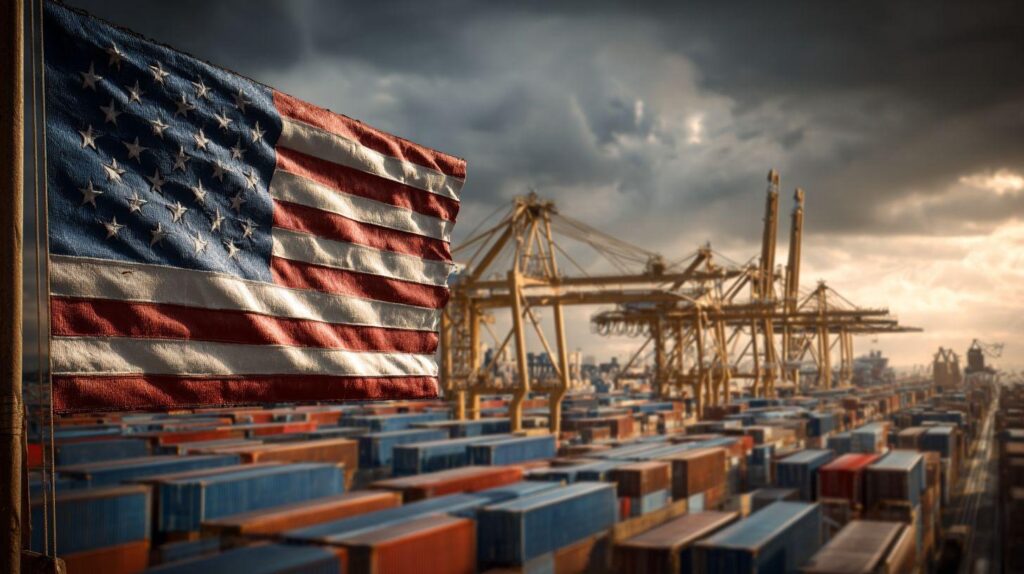
In the wake of COVID-19 lockdowns and escalating US-China trade wars, global supply chains have proven perilously fragile, prompting a seismic shift: companies are onshoring production at record pace. This article explores the drivers-from pandemic disruptions and geopolitical risks to rising offshore costs and tech enablers like automation-alongside risk mitigation gains, policy incentives, real-world case studies, and future challenges. Discover why reshoring isn’t just resilient-it’s strategic.
Definition and Historical Context
Onshoring means moving manufacturing back to the home country. Reshoring is repatriating production from overseas locations. Nearshoring involves shifting operations to neighboring countries like Mexico.
Companies use onshoring for full domestic production, such as building factories in the US. For example, GE Appliances reshored from China to Kentucky to cut supply chain risks. Nearshoring helps with Mexico manufacturing from places like Vietnam for shorter shipping times.
The offshoring boom started in the 1980s as firms chased low labor costs abroad. This led to heavy reliance on distant suppliers and exposed offshoring risks over decades. By 2020, events like the COVID-19 pandemic sparked a new wave of onshoring to build supply chain resilience.
The Kearney Reshoring Index tracks 400,000 jobs returned to the US since 2010. This shift addresses supply chain disruptions from trade wars and geopolitical tensions. Firms now prioritize risk management through domestic production and manufacturing relocation.
Shift from Offshoring Dominance
By 2010, 85% of Fortune 500 companies had embraced offshoring, but the COVID-19 pandemic reversed this trend as many now prioritize reshoring to mitigate supply chain risk.
Companies faced supply chain disruptions from port congestion, labor strikes, and raw material shortages during the crisis. This exposed offshoring risks like long lead times and single source dependency. Firms began exploring domestic production for better control.
BCG notes a significant close in the $2.8T US manufacturing output gap, with reshoring efforts reducing it by 15%. Offshoring peaked around 2005, then declined sharply post-2020 amid geopolitical tensions and trade wars. Walmart CEO Doug McMillon declared, “Never again” on China dependency, signaling a broader corporate shift.
Production onshoring offers lead time reduction and inventory management benefits, moving away from just-in-time vulnerabilities. Examples include auto industry responses to semiconductor shortages. This trend builds supply chain resilience through dual sourcing and local manufacturing.
Supply Chain Disruptions Driving Onshoring
Global disruptions cost companies dearly in 2021 alone according to McKinsey, with many Fortune 1000 firms facing delays that prompted onshoring consideration. Major shocks like the COVID-19 pandemic, trade wars, Ukraine war, and Suez Canal blockage exposed vulnerabilities in global networks. These events pushed firms toward reshoring to build supply chain resilience.
The Reshoring Index showed a sharp rise after 2021 disruptions, reflecting a clear correlation with manufacturing relocation trends. Companies saw supply chain disruptions lead to inventory shortages and shipping delays. This shift prioritizes domestic production over offshoring risks.
Practical steps include supply chain diversification and lead time reduction through local manufacturing. Firms now assess total cost of ownership, factoring in hidden costs like freight expenses. Onshoring helps mitigate risk and ensures business continuity.
Experts recommend mapping tier 1 and tier 2 suppliers for end-to-end visibility. Tools like IoT sensors aid real-time tracking, reducing single source dependency. This approach fosters an agile supply chain for long-term resilience.
COVID-19 Pandemic Lessons
COVID exposed JIT vulnerabilities when demand surged for essentials, with the US needing billions of masks yet facing shortages for months due to reliance on overseas production. The PPE crisis highlighted ventilator shortfalls, while the semiconductor shortage crippled auto plants. Empty grocery shelves became common as global links broke.
FedEx CEO called it a supply chain Armageddon, underscoring how just-in-time manufacturing failed under pressure. Companies shifted to safety stock and buffer inventory to counter inventory shortages. This lesson drives production onshoring for faster response times.
Practical advice includes adopting dual sourcing or multi-sourcing to avoid single source dependency. Firms like automakers now invest in US manufacturing to cut ocean freight risks. Vertical integration offers control over critical components.
Research suggests building predictive analytics into inventory management improves demand forecasting. Local factories reduce stockouts and enhance service levels. Onshoring supports pandemic preparedness and crisis response speed.
Geopolitical Tensions
Geopolitical risks have grown sharply since 2018, with many executives viewing them as a key driver for reshoring according to Deloitte insights. Trade wars imposed tariffs that raised costs, while Taiwan tensions threaten advanced chip supplies. Russia sanctions disrupted neon gas for lithography, hitting tech production.
Risk hotspots include China for IP theft concerns and Russia for energy dependencies, with Middle East routes facing shipping vulnerabilities. These factors fuel offshoring risks and prompt manufacturing relocation. Companies map suppliers to identify exposure.
To mitigate, experts recommend friendshoring to allied nations or nearshoring to Mexico. Strategies like China plus one diversify away from high-risk areas. Dual sourcing enhances vendor reliability and compliance.
Firms conduct supplier audits and scenario planning for stress testing. Blockchain tools improve traceability and IP protection. Onshoring bolsters national security and economic sovereignty amid rising protectionism.
Risk Mitigation Benefits
Onshoring cuts supply disruption risk through a clear risk matrix that shows reduced probability and impact. Companies plot disruptions on this matrix, where domestic production shifts high-risk offshore scenarios to lower quadrants. This approach helps mitigate risk from global events like trade wars and port congestion.
Lead times drop dramatically from over 90 days offshore to under 30 days with domestic production. Inventory needs shrink, cutting carrying costs and freeing capital. Businesses avoid stockouts during peaks, improving cash flow.
Research suggests risk avoidance from onshoring delivers value far beyond short-term relocation costs. Firms weigh this against ongoing offshoring risks like geopolitical tensions and shipping delays. The result supports stronger business continuity.
Practical steps include mapping current supply chains and stress testing scenarios. Companies like automakers have used onshoring to build supply chain resilience. This positions them for faster recovery from disruptions such as labor strikes or raw material shortages.
Reducing Lead Times and Inventory Risks
Offshore lead times average 90-120 days versus 2-4 weeks for domestic production. Inventory carrying costs drop with shorter cycles. This shift supports just-in-time manufacturing and reduces vulnerabilities exposed during the COVID-19 pandemic.
Consider these comparisons across sourcing options:
| Location | Lead Time | Tariffs/Trade Factors |
| China | 120 days | 25% tariff |
| Mexico | 21 days | USMCA benefits |
| US | 14 days | No tariff |
Shorter leads mean less buffer inventory, lowering costs. For a $10M inventory at 25% annual cost, savings reach $2.5M per year. Auto firms like Ford cut stockouts through such lead time reduction.
Actionable advice includes auditing current lead times and piloting local manufacturing. Integrate predictive analytics for demand forecasting. This builds an agile supply chain less prone to ocean freight delays.
Enhancing Supply Chain Resilience
Resilient chains recover faster from disruptions with onshoring. Stress tests during the pandemic showed US plants at higher capacity than offshore ones. Hurricane recovery took weeks locally versus months for imports.
Onshoring scores highest in frameworks like NIST models for supply chain resilience. It enables quick pivots amid global disruptions. Domestic setups maintain uptime through better vendor reliability.
Examples include pandemic scenarios where local factories adapted swiftly. Nearshoring to Mexico offers similar gains over China offshoring. Experts recommend scenario planning to identify weak points.
Build resilience with end-to-end visibility using IoT sensors. Conduct regular supplier audits. These steps ensure business continuity and reduce exposure to logistics challenges like port congestion.
Minimizing Single-Source Dependencies

Many firms faced failures from single-source reliance during recent crises. Dual-sourcing cuts risk, while multi-sourcing provides the strongest buffer. Onshoring supports this evolution from 1990s single suppliers to modern diversified networks.
A risk matrix colors single sources red for high danger, dual yellow, and domestic multi green. Apple diversified with TSMC and Samsung chips. GM spread battery supply across five vendors.
Practical steps involve supply chain mapping of tier 1 and tier 2 suppliers. Shift to multi-sourcing with local partners. This mitigates single source dependency amid trade wars.
Adopt collaborative planning like CPFR for better alignment. Use real-time tracking to monitor vendor performance. These tactics enhance risk management and strategic sourcing.
Cost Structure Evolution
Total landed cost of Chinese imports rose significantly since 2018, pushing many firms toward onshoring production to mitigate risk. The total cost of ownership (TCO) model now includes labor, freight, tariffs, and inventory costs, revealing domestic options as competitive.
A break-even analysis shows US labor at around $25 per hour matching adjusted China rates of $5 per hour plus 35% in extras like duties and shipping. This parity drives manufacturing relocation for supply chain resilience. Companies reassess strategic sourcing amid trade wars and global disruptions.
Practical steps include mapping full TCO for key products to identify offshoring risks. Firms adopting dual sourcing reduce single source dependency. Local manufacturing cuts lead times, aiding business continuity during events like the COVID-19 pandemic.
Experts recommend break-even analysis tools to compare scenarios. This shift supports supply chain diversification and positions companies for long-term stability over short-term savings.
Rising Offshore Labor and Shipping Costs
China labor wages rose 250% since 2005, from about $1.5 to $5.5 per hour, eroding offshoring advantages. Ocean freight for a 20-foot container jumped from $1,500 to $15,000 at its 2021 peak, amplifying freight costs.
Freight rates from Shanghai to the US increased dramatically, with air freight doubling to around $20 per kilogram. These trends, fueled by port congestion and labor strikes, heighten supply chain disruption risks. Companies face logistics challenges that delay inventory.
For example, Walmart saw total costs for TV imports rise sharply after 2021 due to these factors. Firms mitigate this through nearshoring to Mexico or production repatriation. Lead time reduction becomes key for just-in-time manufacturing.
Practical advice includes building buffer inventory and exploring vendor reliability via audits. This evolution encourages reshoring to stabilize costs amid geopolitical tensions.
Total Landed Cost Analysis
A landed cost calculator reveals a $10 China widget, plus 25% tariff, 30% freight, and 20% inventory, totals around $18.25 versus $16 for US-made versions. The formula covers material, labor, duty, freight, insurance, and inventory carry costs.
Compare categories like electronics, apparel, and machinery across China, Vietnam, and the US to spot savings in domestic production. Total cost ownership analysis shows advantages in US manufacturing for many items. This drives decisions on factory relocation.
| Category | China Landed Cost | Vietnam Landed Cost | US Landed Cost |
| Electronics | Higher due to tariffs, freight | Moderate, rising wages | Lower total with short leads |
| Apparel | Tariffs add burden | Competitive but volatile | Favorable for speed |
| Machinery | Freight heavy | Logistics issues | Best for customization |
Companies use such tables for ROI calculation and sensitivity analysis. Adopting multi-sourcing enhances resilience against raw material shortages like the semiconductor crisis.
Hidden Costs of Offshoring Exposed
IP theft imposes massive annual losses on US firms, with quality rework offshore often three times higher than domestic levels. These hidden costs include intellectual property risks and management overhead that erode savings.
Breakdowns reveal IP loss, quality failures at 15% versus 5% domestically, currency swings, and 20% overhead on gains. For instance, Caterpillar faced significant losses from IP theft in China. Supply chain risk management now prioritizes these factors.
- IP protection via local production reduces theft exposure.
- Quality control improves with proximity to suppliers.
- Currency risk drops without exchange volatility.
- Overhead falls through simpler oversight.
Firms address this with supplier audits and insourcing benefits. Transitioning to agile supply chains via automation and workforce training builds competitive edges in market responsiveness.
Technological Enablers
Automation cut US manufacturing labor content 25% since 2010; robots now $4/hr equivalent vs $25/hr labor. This tech stack, including cobots, 3D printing, and AI, enables reshoring by slashing costs and boosting flexibility. Companies mitigate supply chain risk through domestic production, avoiding offshoring pitfalls like tariffs and disruptions.
These tools deliver quick ROI, with automation payback in 18 months versus five years pre-2015. Firms achieve lead time reduction and supply chain resilience by adopting Industry 4.0 solutions. Onshoring becomes viable as total cost of ownership drops sharply.
For example, manufacturers use cobots for repetitive tasks, 3D printing for custom parts, and AI for demand forecasting. This combination supports production repatriation amid geopolitical tensions and COVID-19 lessons. Local manufacturing enhances business continuity and risk management.
Experts recommend starting with pilot projects to test these enablers. Such steps build supply chain diversification and reduce single-source dependency. Domestic setups improve vendor reliability and cut logistics challenges like port congestion.
Automation and Robotics Reducing Labor Needs
Universal Robots cobots cost $35K/unit, replace 2-3 workers; Ford used 1,400 robots saving $1B. These systems lower labor needs dramatically, making US manufacturing competitive again. Companies onshore production to leverage this for cost mitigation.
Robot ModelPriceKey Strength Fanuc$50KHeavy payload Universal Robots$35KFlexible deployment ABB$45KPrecision tasks
| Robot Model | Price | Key Strength |
| Fanuc | $50K | Heavy payload |
| Universal Robots | $35K | Flexible deployment |
| ABB | $45K | Precision tasks |
ROI shines in calculations like a $35K robot plus $5K/year maintenance versus two workers at $100K/year, yielding six-month payback. Fanuc delivered 30% productivity gain in one case. This drives factory relocation by offsetting skilled labor shortages.
Firms integrate cobots for just-in-time manufacturing without JIT vulnerabilities. Practical advice includes assessing payload needs first. Such automation supports American jobs in oversight roles while cutting hidden costs.
3D Printing and Additive Manufacturing
GE saved $1.5M/part via 3D printed fuel nozzles; lead time from 18 months to 10 days. This technology speeds prototyping and production, ideal for onshoring complex parts. It mitigates risks from global disruptions like raw material shortages.
Printer ModelPriceBest Use Markforged$20KMetal/composite parts Formlabs$3.5KPrototyping Stratasys$50KProduction scale
| Printer Model | Price | Best Use |
| Markforged | $20K | Metal/composite parts |
| Formlabs | $3.5K | Prototyping |
| Stratasys | $50K | Production scale |
Costs drop to $0.50/g versus CNC’s $5/g, enabling local manufacturing. Boeing produced 10K parts for the 787; Adidas made 1M shoe pairs. These examples show product innovation speed and customization flexibility.
Start with desktop units for pilots to build supply chain resilience. Integrate with robotics for end-to-end domestic flows. This approach cuts freight costs and enhances IP protection against theft abroad.
AI-Driven Supply Chain Optimization

Blue Yonder AI cut Walmart forecasting error 30%; onshoring + AI = 50% inventory reduction. These tools predict demand accurately, supporting reshoring efforts. Firms reduce buffer inventory while boosting service levels.
SoftwareAnnual CostCore Feature Blue Yonder$100K+Enterprise planning Kinaxis$50K+Real-time visibility o9 Solutions$75K+Advanced planning
| Software | Annual Cost | Core Feature |
| Blue Yonder | $100K+ | Enterprise planning |
| Kinaxis | $50K+ | Real-time visibility |
| o9 Solutions | $75K+ | Advanced planning |
Unilever hit 92% demand sensing accuracy with AI versus 78% manual methods, using LSTM forecasting and reinforcement learning. This tackles bullwhip effect and semiconductor shortages. Onshoring pairs well for agile supply chains.
Implement via cloud pilots for quick wins in risk assessment. Combine with IoT for end-to-end visibility across tier 1 and tier 2 suppliers. Results include faster crisis response and lower stockouts.
Government Policies and Incentives
The CHIPS Act allocates $52B plus $24B tax credits, while the IRA offers $369B clean energy incentives driving reshoring. From 2021 to 2023, these policies spurred a timeline of executive orders, legislation, and funding announcements. They aim to counter supply chain disruptions from the COVID-19 pandemic and geopolitical tensions.
Private investment topped $200B in announcements for domestic production. Companies seek to mitigate risk through onshoring, reducing offshoring risks like shipping delays and single source dependency. This shift boosts supply chain resilience and business continuity.
Government incentives encourage manufacturing relocation to the US, addressing semiconductor shortages and auto industry crises. Firms benefit from tax credits that lower total cost of ownership, including hidden costs from ocean freight and port congestion. Local manufacturing cuts lead times and improves inventory management.
These policies promote economic nationalism and buy American initiatives. They support workforce training to tackle skilled labor shortages, fostering American jobs and factory relocation. Overall, they enable risk management via supply chain diversification and dual sourcing strategies.
US CHIPS Act and Semiconductor Onshoring
CHIPS Act provides $39B manufacturing grants plus $13B R&D Intel receives $8.5B for Ohio and Arizona fabs. This targets the semiconductor shortage exposed by global disruptions. It drives production onshoring to enhance national security and reduce JIT vulnerabilities.
Intel plans three new fabs with this funding, while TSMC gets $6.6B for Arizona Fab21 and Samsung $6.4B for Texas sites. These create 20,000 direct jobs and 40,000 indirect ones. US chip fab capacity aims to rise from 12% to 20% global by 2030 through such efforts.
Companies mitigate supply chain risk by building domestic capacity, avoiding IP theft and cyber risks from overseas. Onshoring supports vertical integration and in-house production for critical infrastructure. It shortens lead times and builds buffer inventory against raw material shortages.
Practical steps include scenario planning and supplier audits for strategic sourcing. Firms like Intel show how government grants enable CAPEX shifts for long-term ROI. This strengthens enterprise risk management and end-to-end visibility in semiconductors.
Inflation Reduction Act Subsidies
IRA offers 45X tax credits equaling $12/kWh battery production; First Solar secures $845M for Ohio expansion. These subsidies target clean energy to promote domestic production and cut carbon footprints. They address ESG factors and sustainability goals amid trade wars.
Incentives drive over $100B in battery factory announcements, with Tesla gaining $3.2B for Texas incentives. This fosters reshoring in EVs and renewables, reducing reliance on foreign suppliers. It mitigates freight costs and logistics challenges from offshoring.
| Incentive | Description |
| EV batteries (45X) | $35/kWh |
| Solar modules | $12/module |
| Wind components | $0.4/kg |
These credits lower OPEX and encourage local sourcing for supply chain diversification. Companies gain faster time-to-market and customization flexibility. They build resilience against natural disaster disruptions like hurricanes or floods.
Tariffs and Trade Barriers
25% Section 301 tariffs apply to $370B Chinese goods; UFLPA bans 3,000+ Xinjiang firms. Tariff escalations from 2021 onward raise costs, pushing onshoring to avoid compliance burdens. UFLPA adds $1M+ yearly costs per company for audits and traceability.
Solar panels face +50% cost hikes, sparking a US production boom, while 25% steel tariffs prompt Nucor expansions. These barriers counter geopolitical tensions and China plus one strategies. Firms shift to nearshoring in Mexico or friendshoring with allies.
Timeline shows steady increases: initial tariffs in 2018, expansions post-COVID, and UFLPA enforcement in 2022. This mitigates supply chain disruption risks like labor strikes and port congestion. Companies adopt multi-sourcing and vendor reliability checks.
To comply, use blockchain traceability and IoT sensors for visibility. Tariffs highlight total cost ownership, favoring US manufacturing over cheap imports. They promote deglobalization trends and strategic autonomy for business continuity.
Case Studies of Successful Onshoring
Onshoring success often measures through ROI, lead time reduction, and supply chain resilience. Companies evaluate these metrics to justify manufacturing relocation from offshoring risks. A BCG study highlights how top reshoring firms captured greater market share amid global disruptions.
Onshoring success ROI averages 25% IRR. Intel and Apple cases demonstrate 2-3 year payback periods. These examples show how domestic production mitigates supply chain risk from tariffs and geopolitical tensions.
Firms track lead time cuts and resilience gains post-onshoring. Shorter cycles reduce inventory shortages seen in the COVID-19 pandemic. Resilience builds business continuity against trade wars and port congestion.
These cases offer practical lessons in risk management. Leaders use them to plan supply chain diversification and local manufacturing shifts. Success stems from balancing short-term costs with long-term gains.
Intel’s US Semiconductor Investments
Intel committed $20B to an Ohio fab, $20B to Arizona facilities, plus $7B in New Mexico. These investments create 10,000 jobs and support 28K construction roles. The move advances US manufacturing and counters semiconductor shortages.
Implementation targets a 3nm process in Ohio by 2025 and 18A in Arizona by 2026. A CHIPS Act grant of $8.5B covers much of the CAPEX. This aid boosts ROI and speeds factory relocation.
Key metrics include lead time slashed by 80% and 70% domestic content. These gains enhance supply chain resilience against ocean freight delays and raw material shortages. Intel’s approach reduces single source dependency.
CEO Pat Gelsinger champions the IDM 2.0 strategy for vertical integration. It promotes in-house production and IP protection from overseas risks. Companies can model this for their own production repatriation.
Apple’s Partial Supply Chain Reshoring
Apple produces the Mac Pro 100% in the US at an Austin, Texas facility. The company invests $1B in suppliers across 50 states. This partial onshoring addresses JIT vulnerabilities exposed by the pandemic.
Efforts include MacBook battery production and work with 150 US suppliers. Production at a Flex facility started in 2019. These steps cut reliance on distant vendors and improve vendor reliability.
Lead times drop significantly while avoiding tariffs, despite higher upfront costs. The shift supports 5,000 US jobs and broad economic impact. A CEA study notes benefits from such local manufacturing.
Apple’s strategy aids risk mitigation through dual sourcing and faster time-to-market. It shows how supply chain diversification builds agility against disruptions like labor strikes. Firms can apply similar tactics for customization flexibility and crisis response.
Future Outlook and Challenges

Reshoring efforts promise strong growth, yet companies must navigate significant hurdles to realize full benefits in onshoring production. Projections point to major investments, but skilled labor shortages and regulatory pressures loom large. BCG highlights the need for $1T in manufacturing investment from 2025 to 2030 to build supply chain resilience.
Reshoring to add 1M+ US jobs by 2025 according to the Reshoring Initiative, but faces a 650K skilled worker gap. Firms relocating production domestically aim to mitigate risk from global disruptions like the COVID-19 pandemic and trade wars. Success depends on addressing workforce needs and ESG demands.
Optimistic scenarios include expanded government incentives like the CHIPS Act, boosting domestic production. Challenges such as automation adoption and training programs will shape outcomes. Companies balancing short-term costs with long-term resilience will lead in this shift.
Practical steps involve scenario planning for labor and sustainability risks. Examples like Intel fabs and TSMC Arizona show progress amid hurdles. Overall, onshoring supports economic sovereignty while demanding strategic adaptation.
Expected Growth Projections
Kearney reports the Reshoring Index at 380k jobs in 2023, rising to 500k by 2025, with US manufacturing GDP share climbing from 13% to 16%. This growth stems from efforts to reduce supply chain disruptions and enhance business continuity. Sectors like electronics and pharmaceuticals drive much of the momentum.
| Metric | Current | 2025 Projection |
| Jobs | 400k | 1M |
| Investment | $200B | $500B |
| Key Sectors | Electronics 40%, Pharma 25% | Same, expanded |
Base scenario assumes 20% growth through steady manufacturing relocation. Optimistic case leverages CHIPS expansion for 35% gains, while pessimistic sees 10% if trade dtente slows urgency. Companies should use risk assessment to align strategies.
Practical examples include Tesla factories and Samsung Texas plants boosting local manufacturing. Firms pursuing production repatriation gain faster time-to-market and reduced stockouts. Monitoring these projections aids in strategic sourcing decisions.
Skilled Labor Shortages
NAM identifies 650K unfilled manufacturing jobs, with automation filling 30% and training programs needed for 70%. Shortages hit roles like welders, CNC machinists, and engineers hardest. This gap threatens onshoring goals amid rising demand for US manufacturing.
Solutions include apprenticeships, as seen with Siemens training thousands, and community college programs targeting high graduate numbers. H1B reform could supplement domestic pipelines. Companies face potential GDP impacts without action.
- Expand workforce training via partnerships with vocational schools.
- Adopt robotics in manufacturing to offset shortages in welding and machining.
- Implement Industry 4.0 tools like AI for skill augmentation.
Firms like Boeing highlight risks of ignoring shortages, while successes show apprenticeships build vendor reliability. Prioritizing training ensures supply chain diversification and mitigates single source dependency.
Sustainability and ESG Factors
Onshoring cuts Scope 3 emissions 25-40% according to BCG, with many investors prioritizing ESG in supply chains. Domestic production lowers carbon footprint compared to overseas imports. This aligns with sustainability goals and reduces offshoring risks.
Key metrics favor onshoring: lower carbon per dollar exported, reduced water usage, and no forced labor risks. Regulations like EU CBAM tariffs in 2026 and SEC disclosures push compliance. Unilever cut Scope 3 emissions via nearshoring strategies.
- Audit suppliers for ESG factors to ensure traceability.
- Shift to local sourcing for water and energy efficiency.
- Use blockchain for end-to-end visibility in emissions tracking.
Examples like Apple onshoring components demonstrate carbon footprint reduction. Companies gain competitive edges through friendshoring and ESG alignment. This supports long-term resilience against regulatory changes.
Frequently Asked Questions
Why Companies are Onshoring Production to Mitigate Risk?
Companies are onshoring production to mitigate risk primarily due to vulnerabilities exposed by global supply chain disruptions, such as those during the COVID-19 pandemic and geopolitical tensions. By bringing manufacturing back home, firms reduce dependency on distant suppliers, ensuring greater control over operations and quicker response to crises.
What are the main risks that drive companies to onshore production?
The main risks include supply chain interruptions from events like pandemics, trade wars, natural disasters, and shipping delays. Onshoring production to mitigate risk helps companies avoid these issues by localizing sourcing and manufacturing, thereby enhancing reliability and reducing exposure to international uncertainties.
How does onshoring production help mitigate geopolitical risks?
Onshoring production to mitigate risk counters geopolitical risks such as tariffs, sanctions, and conflicts that disrupt global trade routes. Domestic production shields companies from sudden policy changes abroad, stabilizing costs and supply continuity in an unpredictable international landscape.
Why are companies onshoring to address supply chain vulnerabilities?
Global supply chains have proven fragile, with bottlenecks causing shortages and delays. Companies are onshoring production to mitigate risk by shortening supply lines, improving inventory management, and enabling just-in-time manufacturing closer to markets and consumers.
What economic benefits come from onshoring production to mitigate risk?
Onshoring production to mitigate risk offers economic benefits like job creation, reduced transportation costs, and avoidance of currency fluctuations. It also fosters innovation through proximity to skilled labor and R&D hubs, ultimately lowering long-term operational risks and boosting resilience.
Why Companies are Onshoring Production to Mitigate Risk from natural disasters?
Natural disasters like earthquakes, floods, and hurricanes frequently halt overseas production. By onshoring production to mitigate risk, companies minimize downtime from such events, leveraging domestic infrastructure and emergency response capabilities for faster recovery and sustained output.