
Hidden two miles beneath the ocean’s surface lie trillions in polymetallic nodules, cobalt-rich crusts, and sulfides-critical minerals fueling the green energy revolution. As deep-sea mining surges, driven by International Seabed Authority regulations and robotic innovations, investors face tantalizing high returns amid environmental devastation, geopolitical tensions, and volatile markets. Discover the rewards, risks, and strategies shaping this frontier industry.
Definition and Scope
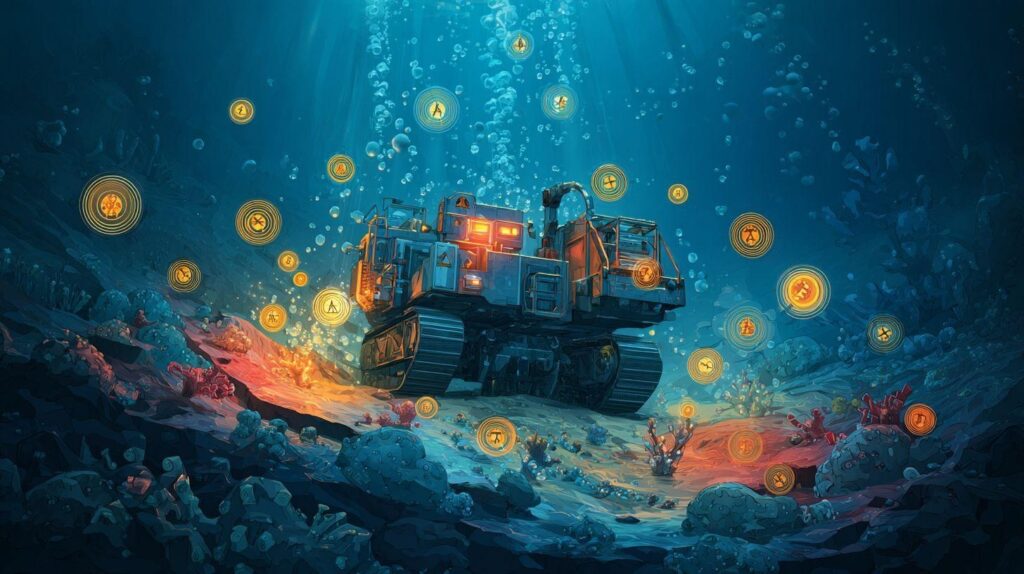
Deep-sea mining extracts critical minerals from ocean floor deposits beyond 400m depth, targeting polymetallic nodules (Clarion-Clipperton Zone), cobalt-rich crusts (Pacific seamounts), and seafloor massive sulfides (hydrothermal vents).
These deposits form under specific conditions. Polymetallic nodules lie on abyssal plains at 4,000-6,000m, rich in manganese, nickel, copper, and cobalt. Companies eye them for high-grade metals suited to electric vehicle batteries.
Cobalt-rich crusts coat seamounts at 400-4,000m, holding cobalt, platinum, and rare earth elements. Seafloor massive sulfides cluster near hydrothermal vents at 1,000-4,000m, packed with copper, zinc, gold, and silver. Each type draws interest from mining firms testing extraction tech.
The International Seabed Authority (ISA) oversees Areas Beyond National Jurisdiction under UNCLOS Article 133, which limits scope to nodules, sulfides, and crusts. Target metals like nickel, copper, cobalt, and manganese meet surging demand from EV batteries, with each Tesla Model 3 needing 70kg of cobalt.
- Nickel powers battery cathodes for longer range.
- Copper enables efficient wiring in renewables.
- Cobalt stabilizes high-performance cells.
- Manganese supports cost-effective alternatives.
Historical Development
Deep-sea mining exploration began in 1965 when J.L. Mero published The Mineral Resources of the Sea, estimating 1.3 trillion tons of polymetallic nodules in Pacific basins. This book sparked interest in ocean mining potential for metals like nickel, copper, and manganese. It laid the groundwork for international efforts to regulate seabed resources.
In the 1970s, the UN Seabed Committee formed to address deep ocean exploration. This led to the 1982 United Nations Convention on Law of the Sea (UNCLOS), which established the International Seabed Authority (ISA) for high-seas mining oversight. The 1994 ISA Convention resolved key disputes, enabling exploration licenses.
Key milestones include the 1978 Ocean Mining Administration in the USA and the 2011 Nautilus Minerals Solwara 1 permit, the first for seafloor massive sulfides. By 2021, ISA faced moratorium debates amid environmental concerns. Several projects failed, such as Nautilus Minerals’ 2019 bankruptcy due to upfront costs and technology issues.
- Nautilus Minerals (Solwara 1): Bankrupted in 2019 from capital investment shortfalls and operational expenses.
- Early Lockheed Martin tests: Halted by regulatory uncertainty and high R&D costs.
- DEME and Allseas ventures: Abandoned over processing challenges and metal price volatility.
Deep-Sea Mineral Resources
Deep-sea deposits contain 21 billion tons of polymetallic nodules alone, representing 95% of global nickel and cobalt reserves outside land-based mines. These resources include three main deposit types: polymetallic nodules, seafloor massive sulfides, and cobalt-rich crusts. Global hotspots span the Clarion-Clipperton Zone (CCZ), Indian Ocean nodules, and Pacific seamounts.
Experts estimate contained metals value at $16 trillion at current prices per USGS 2023 data. This vast potential links directly to green energy demand, as nickel, cobalt, and copper power electric vehicle batteries and renewable energy systems. Investors eye these critical minerals amid terrestrial supply shortages.
Key challenges include seabed disturbance from extraction and regulatory oversight by the International Seabed Authority (ISA). Rewards lie in long-term supply security for the green energy transition. Exploration licenses cover prime areas, drawing venture capital and mining companies.
Deep ocean exploration uses ROVs and AUVs to map reserves. Balancing investment risks like biodiversity loss with rewards demands careful environmental impact assessments. Sustainable practices could mitigate ecosystem damage while unlocking economic viability.
Key Deposit Types: Polymetallic Nodules
Polymetallic nodules, potato-sized mineral concretions, cover 75% of the Clarion-Clipperton Zone (CCZ) at 4,000-6,000m depths, containing 1.3% nickel, 1.1% copper, 0.2% cobalt, and 27% manganese. These form over 4-5 million years through slow precipitation from seawater. Grades compare closely to land ores, like 1.3% nickel in nodules versus 1.5% in Indonesia deposits.
CCZ resource estimates reach 21 billion tons per ISA 2022 data. Contractors such as NORI, TOML, and Interoceanmetal hold exploration licenses. They target nodule collection rates of 3-5 km per year using marine mining technology.
Extraction involves collector vehicles stirring sediments, raising concerns over sediment plumes and habitat destruction. Companies invest in ROVs for precise mapping. Investors assess upfront costs against potential ROI from high manganese yields.
Pilot projects test processing challenges on surface vessels. Regulatory uncertainty from ISA exploitation contracts adds risk. Rewards include supply for EV batteries, positioning nodules as key to commodity markets.
Sulfides and Cobalt-Rich Crusts
Seafloor Massive Sulfides (SMS) at hydrothermal vents contain 5-10% copper and zinc plus gold and silver, while cobalt-rich crusts on seamounts average 0.6-2.5% cobalt. SMS form at 2,500m depths, like in the Okinawa Trough, offering high-grade polymetallic riches. Crusts coat 1,500m seamounts with up to 25 critical metals in the Prime Crust Zone.
Resource estimates show SMS at 300 million tons and crusts at 1.2 billion tons cobalt-equivalent per ISA data. Notable SMS projects include Solwara 1 and Nautilus Minerals efforts in Papua New Guinea EEZ. These sites highlight extraction potential near shorelines.
SMS mining risks chemical leakage from vents and species extinction. Crusts face noise pollution from cutting tools. TechMet and DeepGreen explore scalable methods with AUVs for baseline studies.
Investment rewards stem from rare earth elements and strategic metals. Geopolitical tensions in EEZs demand monitoring. Sustainable mining via adaptive management could address stakeholder opposition from NGOs.
Global Distribution and Reserves
The Clarion-Clipperton Zone holds 75% of identified nodule reserves (21B tons), while EEZs like Peru, Mexico, and Japan host prime crust and SMS deposits. Five key hotspots include CCZ for nodules, Peru EEZ for crusts, Papua New Guinea EEZ for SMS, Mid-Atlantic Ridge for SMS, and Indian Ocean for nodules. ISA oversees 31 exploration licenses covering 1.3 million km.
CCZ reserves equal three times global land cobalt, underscoring depletion risks in terrestrial deposits. High-seas mining under UNCLOS contrasts with resource nationalism in EEZs. Pacific seamounts draw private equity for cobalt-rich crusts.
Mining companies like The Metals Company and DEME target these areas amid permitting hurdles. Timeline delays from environmental NGOs affect NPV calculations. Rewards promise supply chain stability for green energy.
Monitoring programs track biodiversity loss and methane release. Insurance premiums rise with decommissioning costs. Investors weigh ROI against fishing industry conflicts and recycling alternatives.
Technological Advancements Driving Growth
Patented collector systems now achieve 200-400 tph nodule harvest rates, enabling economic scale at $100-150/dmt operating costs. Robotic breakthroughs like Allseas’ Patria nodule collector and DEME’s Odd Pod have transformed deep-sea mining efficiency. These innovations allow collection of polymetallic nodules from depths over 5,000 meters.
Integration of ROVs and AUVs provides precise mapping and extraction. Real-time data from autonomous vehicles guides collectors, minimizing seabed disturbance. This reduces risks tied to investment in deep ocean exploration.
Processing innovations cut capex by 40% since 2018, making seabed mining viable for critical minerals like nickel and cobalt. Onboard dewatering and leaching handle slurries effectively. Investors see rewards in scalable marine mining technology amid green energy demand.
Trials by companies like The Metals Company highlight extraction rates supporting commercial scale. Yet, challenges like sediment plumes persist, balancing investment risks and rewards.
Extraction Equipment Innovations
Allseas’ Patria system, tested 2023, harvests 400 tph nodules using hydraulic collection with 90% recovery efficiency at 5,300m. This riserless system avoids costly risers, cutting upfront costs. It targets polymetallic nodules rich in manganese and copper.
DEME’s Odd Pod offers 200 tph modular design, ideal for pilot projects. Global Sea Mineral Fields advances pre-commercial tools for seafloor massive sulfides. Nautilus seafloor production tools integrate power up to 20MW with 95% particle size recovery under 50mm.
These systems lower operational expenses in exclusive economic zones. Experts recommend riserless setups to mitigate technology development risks. They enable handling of cobalt-rich crusts at commercial scale.
Investors note reduced R&D costs from modular components. Practical examples from NORI trials show reliable performance, boosting ROI potential despite regulatory uncertainty.
Robotic and Autonomous Systems
AUV swarms map 1,000 km/month at 6,000m, feeding real-time data to ROV collectors achieving 98% nodule detection accuracy. Saab Sabertooth AUV endures 24 hours with multibeam sonar and magnetometers. This supports precise deep-sea mining navigation.
Kongsberg HUGIN excels in AUV mapping for ocean mining surveys. Oceaneering ROVs deploy collectors with AI-driven paths. Sensor suites detect rare earth elements deposits amid biodiversity concerns.
NORI Area D trials in 2022 validated autonomous underwater vehicles in high-seas mining. AI reduces human error, addressing seabed disturbance risks. Stakeholders value data for environmental impact assessments.
These robotics cut timeline delays in exploration licenses. Practical integration with remotely operated vehicles enhances safety, offering investment rewards in strategic metals supply.
Processing and Transport Challenges
Riserless processing on collector vessels recovers 92% metals onboard, eliminating $500M subsea riser capex while handling 6% moisture nodule slurries. The Metals Company flowsheet targets efficient critical minerals extraction. This tackles processing challenges head-on.
Dewatering uses centrifuges to recover most water from slurries. Leaching via H-pall R circuits achieves high nickel recovery rates. These solutions manage sediment plumes and chemical leakage risks.
- Transport relies on 20,000 DWT bulk carriers for nodules.
- Monitoring programs track ecosystem damage during shipping.
- Adaptive management adjusts for noise pollution effects.
Challenges like dewatering persist, but innovations lower decommissioning costs. Investors weigh these against rewards from electric vehicle battery demand, guided by ISA regulations.
Regulatory Framework and Governance
The International Seabed Authority (ISA) regulates The Area, which covers 54% of the ocean, having issued 31 exploration contracts covering 1.3M km but delaying exploitation regulations until 2025. UNCLOS Part XI sets the foundation by declaring seabed resources as the Common Heritage of Mankind. The ISA balances resource development with marine environment protection through its dual mandate.
A current 2-year moratorium from 2023 to 2025 pauses new exploitation activities amid debates. This hold allows time for finalizing the pending mining code, which will outline production rules and environmental safeguards. Investors face regulatory uncertainty as timelines shift due to geopolitical tensions.
Key guidelines emphasize environmental impact assessments (EIAs) and adaptive management for polymetallic nodules, cobalt-rich crusts, and seafloor massive sulfides. Nations push for stricter controls on sediment plumes and biodiversity loss. Practical advice for investors includes monitoring ISA sessions for updates on exploitation contracts.
The framework highlights investment risks from permitting hurdles and stakeholder opposition by environmental NGOs. Yet, clear governance could unlock investment rewards in critical minerals like nickel, copper, and cobalt for green energy transitions. Experts recommend baseline studies to prepare for compliance.
International Seabed Authority (ISA) Role
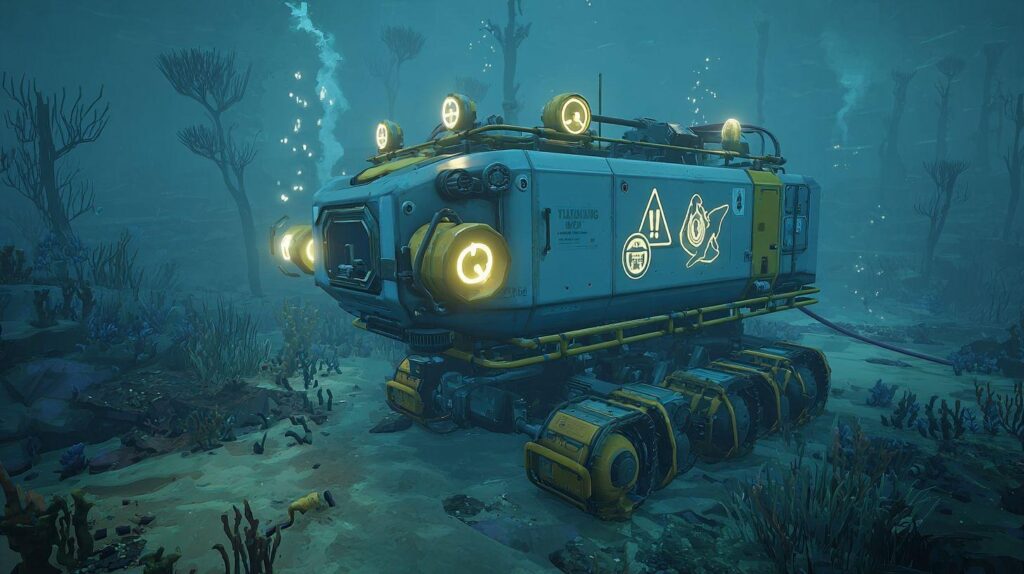
Established in 1994 under UNCLOS, ISA manages mineral resources beyond national jurisdiction as Common Heritage of Mankind, collecting royalties for developing nations. Its structure includes a Council of 36 members and an Assembly of 168 states. This setup ensures equitable revenue sharing, with a 2% royalty model post-2030.
Seventeen contractor states hold exploration rights, fueling deep-sea mining interest. 2023 saw controversies like the Nauru trigger, which accelerated exploitation talks, and Russia’s election amid geopolitical tensions. Investors should track these events for regulatory uncertainty impacts on timelines.
ISA’s role extends to approving environmental impact assessments and monitoring programs. For projects targeting rare earth elements and manganese, it enforces the precautionary principle. Practical steps include partnering with contractor states to navigate governance.
Revenue from royalties supports developing nations, balancing investment rewards with sustainability. Challenges like zero-draft strategy debates highlight risks from delays. Experts advise diversifying into ISA-compliant technologies like ROVs and AUVs for compliance.
Exploration vs. Exploitation Licenses
31 ISA exploration contracts with 15-year terms and $500K annual fees authorize surveys but prohibit commercial mining until exploitation regulations finalize, targeted for July 2025. Exploration licenses focus on mapping and drilling with a $3M security bond. They build data for deep ocean exploration without production.
In contrast, exploitation licenses will impose production caps, require EIAs, and demand $10M+ bonds for actual extraction. This shift raises upfront costs and operational expenses for companies like The Metals Company. Investors must assess R&D costs for scaling from surveys to mining.
- Nodule contractors: NORI, TOML, and five others targeting polymetallic nodules.
- SMS/crusts contractors: Nine firms focused on seafloor massive sulfides and cobalt-rich crusts.
Comparing licenses reveals investment risks in timeline delays and technology development. Rewards lie in securing early exploitation rights for critical minerals. Conduct break-even analysis to weigh ROI potential against permitting hurdles.
National Laws and Bilateral Agreements
32 coastal nations claim EEZ mining rights covering 50% potential crust deposits, with Norway, Japan, and Mexico enacting DSM laws since 2019. These exclusive economic zones (EEZs) fall under national jurisdiction, unlike ISA’s high-seas mining. Examples include Norway’s 2021 act, Japan’s 2017 law, Mexico’s Noddings 2022, and Cook Islands regulations.
Eight active EEZ regimes enable faster permitting than ISA processes, reducing some regulatory uncertainty. The US Deep Seabed Hard Mineral Resources Act allows domestic firms to pursue international claims. Bilateral agreements supplement these, aiding cross-border tech sharing for marine mining technology.
ISA governs international waters with global standards, while EEZs prioritize national interests like resource nationalism. Investors face geopolitical tensions in EEZs from fishing industry conflicts. Eight regimes offer practical entry points: review Norway for nodules, Japan for sulfides.
National laws highlight investment rewards in quicker ROI but risks from ecosystem damage claims. Experts recommend stakeholder engagement with indigenous rights groups. Compare EEZ caps on seabed disturbance to ISA’s broader marine protected areas for strategy.
Market Drivers and Economic Projections
EV battery demand will consume 40% of global cobalt and 25% nickel by 2030, creating 12.1 Mtpa seabed supply gap unmet by land mines. This gap ties directly to forecasts of 50 million EV sales by 2030, each requiring high-grade critical minerals from the ocean floor. Deep-sea mining emerges as a key response to this pressure.
Wind turbines demand about 1.2 tons of copper per megawatt, while solar installations need roughly 0.6 tons of nickel per gigawatt-hour. These figures highlight how the green energy transition strains terrestrial supplies. Polymetallic nodules from the Clarion-Clipperton Zone offer a potential fix with rich deposits of nickel, copper, and cobalt.
Seabed economics favor ocean mining where nodules contain multiple metals in one go, unlike single-metal land ores. Investors eye this for investment rewards, but must weigh upfront costs against rising metal prices. Pilot projects using remotely operated vehicles test extraction feasibility.
Overall, demand growth from renewables and EVs positions seabed mining for expansion. Companies like The Metals Company explore exploitation contracts under the International Seabed Authority. Success hinges on balancing technology development with regulatory paths.
Demand from Green Energy Transition
IEA forecasts 3,700% cobalt demand growth from 2006 to 2030 for 660 million EVs, requiring 17 times current mine supply. Each Tesla battery uses about 70 kg of cobalt, pushing total needs to 2.5 million tons per annum by 2030. This surge underscores the role of cobalt-rich crusts and nodules.
Nickel demand hits 35 kg per EV, totaling 4.5 million tons annually by decade’s end, while copper requires 83 kg per vehicle or 8 million tons. The IEA Sustainable Development Scenario shows a 40% shortfall versus land supply. Seafloor massive sulfides could bridge this for offshore sources.
Green tech amplifies needs, with EV batteries alone driving most growth. Experts recommend investors track polymetallic nodules for their bundled metals. Land-based mining faces depletion risks, making ocean options vital.
Practical steps include monitoring exploration licenses in exclusive economic zones. Firms like DeepGreen pursue deep ocean exploration to secure future supplies. Transition demands call for adaptive strategies in commodity markets.
Price Forecasts for Critical Minerals
Benchmark Minerals forecasts nickel at $20,000 per ton, cobalt $60,000 per ton, and copper $12,000 per ton by 2027, valuing CCZ nodules at $380 per ton FOB. These rises stem from supply chain disruptions and green demand. Deep-sea mining gains edge with nodule cash costs at $120 per ton versus $180 per ton for land ore.
| Mineral | 2024 Price (USD/t) | 2030 Forecast (USD/t) |
| Nickel | 18,000 | 22,000 |
| Cobalt | 28,000 | 65,000 |
| Copper | 9,000 | 13,000 |
Sources like BMI and CRU Group back these trends, signaling investment rewards for early movers. Higher prices boost economic viability of projects using AUVs for nodule collection. Yet, volatility poses investment risks.
Investors should assess net present value with these forecasts in mind. Nodule processing challenges remain, but low ore grades on land tilt odds toward sea. Track metal prices for ROI potential in ventures like those from Allseas.
Investment Opportunities and Rewards
Early investors in The Metals Company achieved 5x returns from the 2021 SPAC deal, with $650M equity raised across 15 DSM ventures since 2019. This reflects $2.5B deployed capital in deep-sea mining, drawing venture capital and sovereign wealth funds. Seed investors have seen up to 300% equity returns, positioning projects for 2030 production of polymetallic nodules.
Opportunities stem from demand for critical minerals like nickel, copper, and cobalt in electric vehicle batteries. Ocean mining targets seafloor massive sulfides and cobalt-rich crusts, offering high ore grades compared to terrestrial deposits. Strategic positioning includes exploration licenses from the International Seabed Authority.
Investors benefit from marine mining technology advances, such as remotely operated vehicles and autonomous underwater vehicles. These reduce operational expenses over time. Rewards include exposure to green energy transition amid supply chain disruptions.
Funding trends show private equity focusing on ROI potential from NPV and IRR metrics. Pilot projects test extraction rates and processing challenges. Early entry secures stakes in commercial-scale operations by 2030.
High-Return Potential for Early Investors
NORI-D project models 28% IRR and $2.6B NPV at $408/t basket price, with first production cash flow in 2026. This outperforms typical copper mining at 12% IRR. TOML offers 22% IRR, while GSR projects 25% IRR on polymetallic nodules.
Breakeven sensitivity sits at $280/t basket price, cushioning metal price volatility. Investors eye net present value from cobalt, nickel, and manganese recovery. Deep ocean exploration lowers upfront costs versus land-based mining depletion risks.
Practical examples include NORI-D economics, factoring R&D costs and technology development. Return on investment hinges on commodity markets and demand growth. Experts recommend break-even analysis for risk assessment.
Seed funding captures value from exploitation contracts under UNCLOS. Timeline delays from permitting hurdles affect cash flows. High returns reward tolerance for regulatory uncertainty in high-seas mining.
Key Players and Funding Trends
TechMet ($680M AUM) and Nautilus Minerals led $1.2B DSM investments from 2015-2023, with sovereign funds from Norway and Korea committing $450M. Top investors include TechMet ($300M), MBF ($150M), Allseas ($122M), and Maersk ($60M). These back ventures like The Metals Company and DeepGreen.
- TMC SPAC raised $400M in 2021 for nodule collection.
- Transocean invested $75M in 2023 for drilling tech.
- Lockheed Martin supports early ROV development.
- DEME funds vessel construction.
Trends show venture capital shifting to seabed mining amid rare earth elements shortages. Private equity targets economic viability through pilot projects. Sovereign wealth funds hedge against resource nationalism.
Funding rounds emphasize capital investment in AUVs and collector systems. Geopolitical tensions in EEZs drive high-seas focus. Investors track ISA regulations for exploitation timelines.
Partnerships with Tech and Mining Giants
Allseas ($122M investment) provides Patria collector, DEME ($85M) develops vessels, and Glencore supplies offtake for 1.3Mtpa nodules. These tie into Maersk-TMC transport solutions and Panasonic battery supply deals. Samsung SDI handles refining for critical minerals.
Partnerships reduce upfront costs and operational expenses. Allseas-TMC advances nodule harvesting tech. DEME-TMC builds on dredging expertise for seabed disturbance control.
- Glencore-TMC offtake secures metal prices.
- Panasonic-TMC links to EV battery chains.
- Maersk-TMC optimizes nodule transport.
- Samsung SDI-TMC refines cobalt-rich crusts.
These alliances mitigate processing challenges and supply chain disruptions. Mining giants provide offtake certainty, boosting NPV. Tech partners accelerate R&D for commercial scale.
Environmental Risks and Impacts
ISA baseline studies document thousands of deep-sea species, many endemic, facing risks from seabed disturbance in mining zones. These fragile ecosystems support unique life forms adapted to extreme conditions. Mining activities threaten long-term biodiversity loss through multiple pathways.
Sediment plumes spread widely, burying habitats and smothering organisms. Noise pollution from equipment disrupts marine life over vast areas. Chemical releases add to contamination risks in these isolated environments.
Experts recommend thorough environmental impact assessments before exploitation contracts. Monitoring programs track changes using ROVs and AUVs. The precautionary principle guides ISA regulations to protect high-seas mining areas.
Investors face investment risks from stakeholder opposition by environmental NGOs. Regulatory uncertainty under UNCLOS could delay projects. Balancing these impacts with demand for critical minerals like cobalt and nickel remains challenging.
Sediment Plumes and Ecosystem Damage
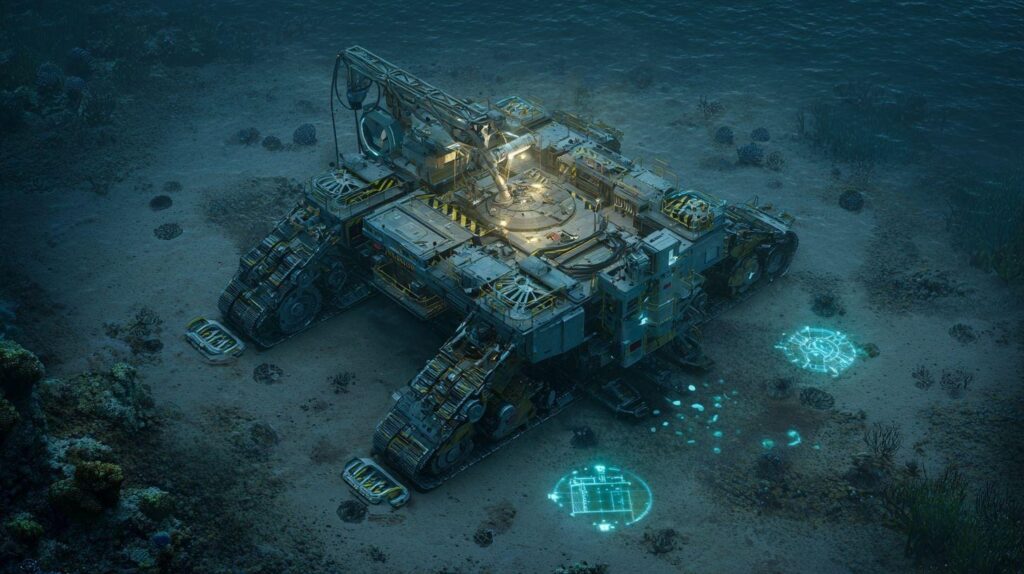
Mining generates massive sediment plumes that disperse widely, smothering filter feeders with high mortality in trials like DISCOL. These plumes arise from collector vehicles stirring up seafloor material. Discharge processes spread particles across ocean currents.
Plume dynamics involve high concentrations near the source, thinning as they settle over days. DOMES trials showed severe fauna impacts from such disturbances. Mitigation strategies include deep discharge below 1,000 meters to limit surface effects.
Habitat burial alters seafloor landscapes, affecting species reliant on polymetallic nodules. Filter feeders like sponges suffer most from smothering. Ongoing research uses AUVs to model plume behavior and recovery times.
Companies like The Metals Company test plume reduction tech in pilot projects. Investors should assess operational expenses for mitigation gear. Long-term monitoring ensures compliance with ISA exploration licenses.
Biodiversity Loss in Deep-Sea Habitats
The CCZ hosts thousands of species, many new to science, with nodule fields supporting megafauna like stalked anemones facing decimation from disturbance. Keystone species such as sea pigs and xenophyophores anchor these ecosystems. Mining disrupts food webs in these nodule-rich areas.
Projects like MIDAS highlight risks of biomass loss in disturbed zones. Recovery may take over a century for some habitats, per iDIV insights. ISA mandates set-asides of 30 percent or more to preserve biodiversity hotspots.
Habitat destruction from nodule removal leaves barren patches, impacting endemic fauna. Examples include brittle stars and anemones vanishing post-disturbance. Adaptive management plans adjust operations based on baseline studies.
Scientific research urges marine protected areas around mining sites. Investors weigh permitting hurdles from fishing industry conflicts. Sustainable practices could mitigate species extinction risks in EEZs and high seas.
Chemical Pollution and Long-Term Effects
Nodule processing releases toxic metals exceeding limits, with methane clathrates posing risks of seabed destabilization. Leaching from manganese oxides alters sediments. Metal bioaccumulation affects fish tissues in surrounding waters.
Chemical leakage includes copper and nickel, concentrating in food chains. Peru EEZ monitoring reveals ongoing contamination from test sites. GHG impacts arise from methane, far more potent than CO2, during extraction.
Long-term effects include persistent pollution harming deep ocean exploration efforts. Experts recommend zero-draft strategies to contain releases. Decommissioning costs rise with rehabilitation needs for affected areas.
Insurance premiums reflect these environmental risks. Companies invest in R&D for cleaner marine mining technology. Regulatory frameworks from ISA aim to curb chemical pollution in commercial-scale operations.
Geopolitical and Operational Risks
China controls 5/17 ISA Council votes and a dominant share of global cobalt processing, creating strategic vulnerabilities for Western green energy supply chains. This influence shapes International Seabed Authority decisions on deep-sea mining regulations. Investors face risks from shifting alliances in the race for polymetallic nodules and cobalt-rich crusts.
The US non-ratification of UNCLOS limits its direct role in ISA governance, pushing reliance on private firms like The Metals Company. Pacific Island nations leverage their voting power to demand technology transfers and revenue shares. This dynamic heightens geopolitical tensions around high-seas mining.
Russia’s strong showing in the 2023 ISA elections underscores bloc voting patterns, complicating consensus on exploitation contracts. Operational risks include supply chain disruptions from resource nationalism in key mineral nations. Diversifying partnerships with firms like Allseas can mitigate these issues.
Experts recommend monitoring ISA council meetings for early signals of regulatory uncertainty. Investors should assess exposure to exclusive economic zones near disputed areas. Building alliances with Pacific stakeholders supports long-term operational stability.
Territorial Disputes in International Waters
China’s COMRA holds the largest ISA area overlapping NORI claims, with several bilateral disputes pending ISA Legal Tribunal review. This clash in CCZ Area D involves polymetallic nodules rich in nickel, copper, and manganese. Such overlaps delay exploration licenses and raise investment risks.
Russia-Nauru tensions center on seafloor massive sulfides, where claim boundaries blur in international waters. India-China disputes along the CIO Ridge involve cobalt-rich crusts and rare earth elements. These conflicts highlight territorial disputes complicating marine mining technology deployment.
Implications include stalled projects and forced technology transfer demands. Investors face patent disputes and higher insurance premiums in contested zones. Conducting thorough baseline studies aids in navigating legal hurdles.
Pilot projects using ROVs and AUVs can test claims without full commitment. Engaging ISA early for mediation reduces timeline delays. Monitoring UNCLOS arbitration outcomes provides actionable insights for risk assessment.
Supply Chain and Infrastructure Vulnerabilities
Indonesia processes a major portion of global nickel, while China dominates cobalt refining, acting as single points of failure that delayed EV production in past years. These bottlenecks expose green energy transition efforts to disruptions. Deep-sea mining offers alternatives through diversified sourcing of critical minerals.
DRC political instability adds layers of risk to land-based cobalt supplies, prompting calls for ocean mining solutions. Proposed processing centers in Norway, Korea, and Texas aim to reduce reliance on Asian refineries. This strategy addresses supply chain disruptions from export bans.
Investors should map vulnerabilities using scenario planning for commodity market swings. Partnering with firms like DEME for modular processing tech cuts operational expenses. Establishing regional hubs lowers transport risks and supports economic viability.
Research suggests integrating recycling with seabed mining for resilience. Monitoring geopolitical shifts in Indonesia and DRC informs investment timing. Diversified infrastructure hedges against permitting hurdles and stakeholder opposition.
Financial and Market Risks
Deep-sea mining projects face massive upfront costs. A $4.5B capex for 1.3Mtpa NORI delayed from 20252027 loses $800M NPV at 10% discount rate. These figures highlight the investment risks in ocean mining.
Upfront costs range from $2-5B for commercial-scale operations targeting polymetallic nodules. Net present value shows 35% sensitivity to nickel prices, with breakeven around $18K/t. Investors must weigh these against potential rewards from critical minerals like nickel, copper, and cobalt.
Standard 24-month permitting delays through the International Seabed Authority add pressure. Such timelines disrupt cash flows and raise operational expenses. Experts recommend building buffers into financial models for seabed mining ventures.
Market risks extend to supply chain issues and demand shifts from the green energy transition. Projects like those from The Metals Company illustrate how commodity markets can make or break ROI. Diversifying funding sources helps mitigate these uncertainties.
Commodity Price Volatility
Nickel prices swung $15K-$50K/t (2022), stressing projects needing $18K/t sustained for positive NPV. The 2022 LME squeeze drove +200% spikes, while COVID caused -40% drops and the Ukraine war +30% jumps. This volatility challenges economic viability in deep-sea mining.
Hedging strategies include 24-month forwards and offtake prepayments, such as Glencore’s $500M deals. These tools secure revenue for polymetallic nodules and cobalt-rich crusts. Investors should explore such prepayments to lock in prices early.
Price swings affect break-even analysis for nickel, copper, and cobalt extraction. For example, a sustained drop below breakeven erodes IRR quickly. Monitoring global demand from electric vehicle batteries guides better timing for capital investment.
Practical advice centers on scenario planning for metal prices. Combine forwards with flexible contracts to handle seafloor massive sulfides projects. This approach balances risks in the green energy transition.
High Capital Expenditures and Delays
NORI-D requires $4.5B total capex ($2.1B development, $1.2B processing, $1.2B fleet), with 18-month ISA delays costing $250M opportunity. These costs dwarf land-based mines at $150M versus $3B for ocean projects. High upfront costs demand careful planning.
Capex breaks down as equipment 45%, vessels 25%, processing 20%, working capital 10%. Financing targets 60/40 debt/equity splits from venture capital, sovereign wealth funds, and mining companies like DEME or Allseas. This structure spreads risk in deep ocean exploration.
Delays from permitting hurdles and stakeholder opposition, including environmental NGOs, extend timelines. Such issues raise R&D costs for marine mining technology like ROVs and AUVs. Companies must prioritize baseline studies and monitoring programs upfront.
To manage these, pursue pilot projects before commercial scale. Compare to terrestrial deposits to justify premiums for strategic metals. Strong financing plans ensure projects weather delays and advance sustainable mining goals.
Social and Reputational Risks
Greenpeace’s Stop Deep Sea Mining campaign mobilized 1.2M signatures in 2023, pressuring BMW and Volvo to reject ocean cobalt. This activism highlights growing NGO opposition, with the Deep Sea Conservation Coalition uniting over 40 organizations against seabed mining. Investors face reputational damage from such public campaigns targeting critical minerals extraction.
Corporate procurement bans add to the challenges, as 12 original equipment manufacturers now avoid deep-sea sourced metals. These policies stem from concerns over biodiversity loss and ecosystem damage in the deep ocean. Companies like mining firms must navigate this shift to protect brand value.
S&P ESG penalties further illustrate the risks, with ratings dropping up to two notches for firms involved in deep-sea mining. Such downgrades increase borrowing costs and deter venture capital. Investors should assess how stakeholder opposition from environmental NGOs impacts long-term project viability.
To mitigate these risks, firms pursue transparency in environmental impact assessments and engage with the International Seabed Authority. Baseline studies and monitoring programs help address concerns about sediment plumes and habitat destruction. Proactive dialogue with fishing industries and indigenous groups builds trust amid regulatory uncertainty.
Public Opposition and Activism
#StopDeepSeaMining trended globally with 2.8M impressions, leading eight nations like France, New Zealand, and Chile to enact moratoriums citing biodiversity risks. Greenpeace’s petition gathered 1.4M signatures, amplifying calls to halt polymetallic nodules and cobalt-rich crusts extraction. This wave of activism pressures governments and corporations alike.
The Deep Sea Conservation Coalition, backed by 50 organizations, runs the #ProtectOurOcean campaign targeting seafloor massive sulfides projects. Public campaigns focus on potential species extinction and noise pollution from remotely operated vehicles. Investors see direct corporate impacts, such as Volvo and BMW adopting no-ocean-metal policies in 2021.
These movements influence supply chains for nickel, copper, and cobalt used in electric vehicle batteries. Mining companies face boycotts and protests at shareholder meetings. To counter this, firms highlight recycling alternatives and land-based mining options in their communications.
Practical steps include partnering with scientific research for baseline studies before exploration licenses. Engaging local communities near exclusive economic zones reduces fishing industry conflicts. Adaptive management plans demonstrate commitment to the precautionary principle.
ESG Compliance Challenges

S&P Global ESG scores average 23/100 for deep-sea mining versus 45/100 for copper peers, driven by high biodiversity risk ratings. MSCI assigns ‘CC’ ratings, while Sustainalytics flags ‘severe’ controversies for ocean mining ventures. These metrics challenge access to sovereign wealth funds and private equity.
Compliance demands 30% set-asides for marine protected areas, 10-year ecological baselines, and adaptive management protocols. CDP rates water risks high due to potential chemical leakage and sediment plumes. Investors must factor in elevated insurance premiums and decommissioning costs tied to ESG shortfalls.
Firms like The Metals Company and DeepGreen face scrutiny under UNCLOS frameworks from the ISA. Poor ESG performance raises capital investment hurdles amid green energy transition demands. Experts recommend robust monitoring programs to track methane release and carbon footprint.
To improve standings, prioritize R&D in marine mining technology like AUVs for minimal seabed disturbance. Publish transparent environmental impact assessments early. Align with circular economy goals by emphasizing critical minerals recovery without ecosystem damage.
Risk Mitigation Strategies
Allseas’ dynamic plume modeling helps reduce impact radius in deep-sea mining operations, while insurance pools address environmental liabilities. These tools form part of broader risk mitigation strategies that balance investment risks and rewards in ocean mining. Companies use them to protect against seabed disturbance and biodiversity loss.
Technological advances like autonomous underwater vehicles (AUVs) enable real-time monitoring of sediment plumes and ecosystem damage. Financial instruments, such as catastrophe bonds, provide coverage for worst-case scenarios in polymetallic nodule extraction. This approach helps manage upfront costs and operational expenses.
Securing a social license to operate involves stakeholder MOUs with communities near exclusive economic zones (EEZs). Firms engage in dialogues to address fishing industry conflicts and indigenous rights concerns. These steps build trust and reduce regulatory uncertainty from the International Seabed Authority (ISA).
Overall, combining tech, finance, and engagement creates a framework for sustainable mining. Investors in critical minerals like nickel, copper, and cobalt benefit from lower exposure to habitat destruction risks. Adaptive management ensures long-term economic viability.
Technological and Insurance Solutions
Real-time AUV monitoring with sensors triggers auto-shutdown at elevated plume levels, as seen in recent trials. This technology predicts impacts from seafloor massive sulfides extraction and cobalt-rich crusts harvesting. It supports environmental impact assessments required under UNCLOS.
Plume mitigation through deep discharge minimizes sediment spread during nodule collection. Biodiversity offsets establish marine protected areas as sanctuaries around mining sites. These measures counter noise pollution and chemical leakage risks in deep ocean exploration.
- Insurance policies offer coverage per metric ton of extracted material to handle liabilities.
- Decommissioning bonds secure funds for site rehabilitation after operations end.
- AI-driven impact prediction models forecast effects on marine life from remotely operated vehicles (ROVs).
Experts recommend integrating these solutions for comprehensive risk coverage. They address processing challenges and ore grades variability in commercial-scale projects. This setup enhances ROI by cutting insurance premiums and decommissioning costs.
Stakeholder Engagement Approaches
TMC’s MOUs with Pacific Island nations include capacity building funds, helping ease local opposition. These agreements cover deep-sea mining in high-seas areas and EEZs. They focus on tuna fishery compensation to avoid conflicts with traditional livelihoods.
Key strategies involve extended dialogues and community investment funds. Partnerships with research bodies like JAMSTEC provide baseline studies and monitoring programs. This builds scientific consensus on sustainable practices for rare earth elements recovery.
- Conduct 12-month stakeholder dialogues before exploration licenses.
- Establish community funds for economic diversification.
- Offer direct compensation to affected fisheries.
- Form scientific collaborations for ongoing research.
- Develop adaptive management plans with NGOs input.
- Share data transparently via ISA platforms.
- Prioritize indigenous rights in permitting processes.
- Create joint monitoring committees.
- Fund local training in marine mining technology.
- Implement zero-draft strategies for precaution.
These approaches secure exploitation contracts and reduce geopolitical tensions. They promote a social license essential for venture capital and sovereign wealth funds. Long-term engagement supports the green energy transition by ensuring stable critical minerals supply.
Future Outlook and Investment Recommendations
First commercial nodule production in 2026-2027 promises strong returns despite notable execution risk, favoring diversified $50-100M allocations. The $16T resource potential in polymetallic nodules and other seabed deposits draws interest from venture capital and sovereign wealth funds. Yet, regulatory hurdles from the International Seabed Authority (ISA) and environmental concerns balance this appeal.
Deep-sea mining faces execution risks like technology development and permitting delays, but rewards tie to rising demand for critical minerals such as nickel, copper, and cobalt. Investors should weigh geopolitical tensions in exclusive economic zones (EEZs) against supply shortages from land-based mining depletion. A phased approach mitigates upfront costs and operational expenses.
Phased investment starts with pilot projects using remotely operated vehicles (ROVs) and autonomous underwater vehicles (AUVs), scaling to commercial operations by 2030. Companies like The Metals Company and Allseas advance marine mining technology for polymetallic nodules and seafloor massive sulfides. Experts recommend monitoring ISA exploitation contracts for entry timing.
Balancing investment risks and rewards requires focus on sustainable mining practices, including baseline studies and monitoring programs. Adaptive management addresses seabed disturbance and sediment plumes. Long-term, green energy transition drives demand, supporting economic viability.
Balanced Risk-Reward Assessment
Base case shows solid returns with $1.8B NPV at 10% discount, alongside bear and bull scenarios tied to 2030 forecasts. High rewards stem from metal shortages for electric vehicle batteries and renewable energy. Medium regulatory risk arises from the 2025 ISA mining code under UNCLOS.
Low technology risk benefits from proven systems by Patria in deep ocean exploration. Risks include biodiversity loss, habitat destruction, and noise pollution from extraction. Rewards link to cobalt-rich crusts and rare earth elements amid commodity market volatility.
A risk matrix highlights high reward potential against medium regulatory uncertainty and low tech hurdles. Environmental impact assessments and stakeholder opposition from NGOs add complexity. Investors gain from diversified exposure to nickel and manganese supplies.
Monte Carlo analysis underscores positive outcomes in most scenarios, factoring timeline delays and metal prices. Practical advice centers on break-even analysis for ROI. Focus on projects with strong environmental baseline studies ensures resilience.
Strategic Entry Points for Investors
Allocate 2-5% of portfolio to Phase 2 assets like NORI and TOML, with $25-50M tickets targeting strong exits at FID. Three strategies suit different risk appetites in seabed mining. Timeline spans 2024 pilots to 2027 commercial scale.
- $10-25M in contractor equity offers entry discounts, supporting firms like DEME in ROV deployment.
- $50M offtake prepayments yield returns, securing cobalt and nickel for supply chains.
- $100M vessel leasing generates royalties, backing Allseas technology for nodule collection.
Private equity and mining companies favor equity for upside in ore grades and extraction rates. Offtake suits those hedging processing challenges and demand growth. Leasing appeals to funds avoiding operational expenses.
Entry points align with exploration licenses progressing to exploitation contracts. Monitor fishing industry conflicts and marine protected areas. This approach balances investment risks with rewards from strategic metals.
Frequently Asked Questions
What is ‘The Growth of Deep-Sea Mining: Investment Risks and Rewards’ all about?
The Growth of Deep-Sea Mining: Investment Risks and Rewards refers to the expanding industry of extracting valuable minerals like polymetallic nodules, cobalt, and rare earth elements from the ocean floor beyond national jurisdictions. It highlights the massive investment potential driven by demand for EV batteries and tech, balanced against risks like environmental damage, regulatory uncertainty, and technological hurdles.
What are the main rewards of investing in The Growth of Deep-Sea Mining: Investment Risks and Rewards?
Key rewards include access to vast, untapped reserves of critical minerals worth trillions, potentially lower long-term costs than land mining, and strategic advantages in the green energy transition. Early investors could see high returns as companies like The Metals Company pioneer operations in the Clarion-Clipperton Zone.
What environmental risks are associated with The Growth of Deep-Sea Mining: Investment Risks and Rewards?
Major risks involve irreversible damage to fragile deep-sea ecosystems, including sediment plumes that smother marine life, noise pollution disrupting biodiversity, and potential toxicity from disturbed minerals. These could lead to global backlash, lawsuits, and moratoriums, severely impacting investment viability.
How do regulatory uncertainties affect The Growth of Deep-Sea Mining: Investment Risks and Rewards?
The International Seabed Authority (ISA) regulates mining in international waters, but ongoing delays in finalizing exploitation rules create uncertainty. National bans (e.g., France) and geopolitical tensions could halt projects, stranding investments and exposing shareholders to policy-driven losses.
What technological challenges define The Growth of Deep-Sea Mining: Investment Risks and Rewards?
Challenges include developing reliable remotely operated vehicles (ROVs) for extreme depths up to 6,000 meters, efficient mineral collection without excessive disturbance, and scalable processing tech. Failures here could balloon costs and timelines, turning promising ventures into money pits for investors.
Is investing in The Growth of Deep-Sea Mining: Investment Risks and Rewards worth the hype?
It depends on risk tolerance: rewards could yield 10x returns amid mineral shortages, but high risks from unproven tech, activism, and regulations make it speculative. Diversify with established players and monitor ISA progress for smarter entry points in this high-stakes frontier.