
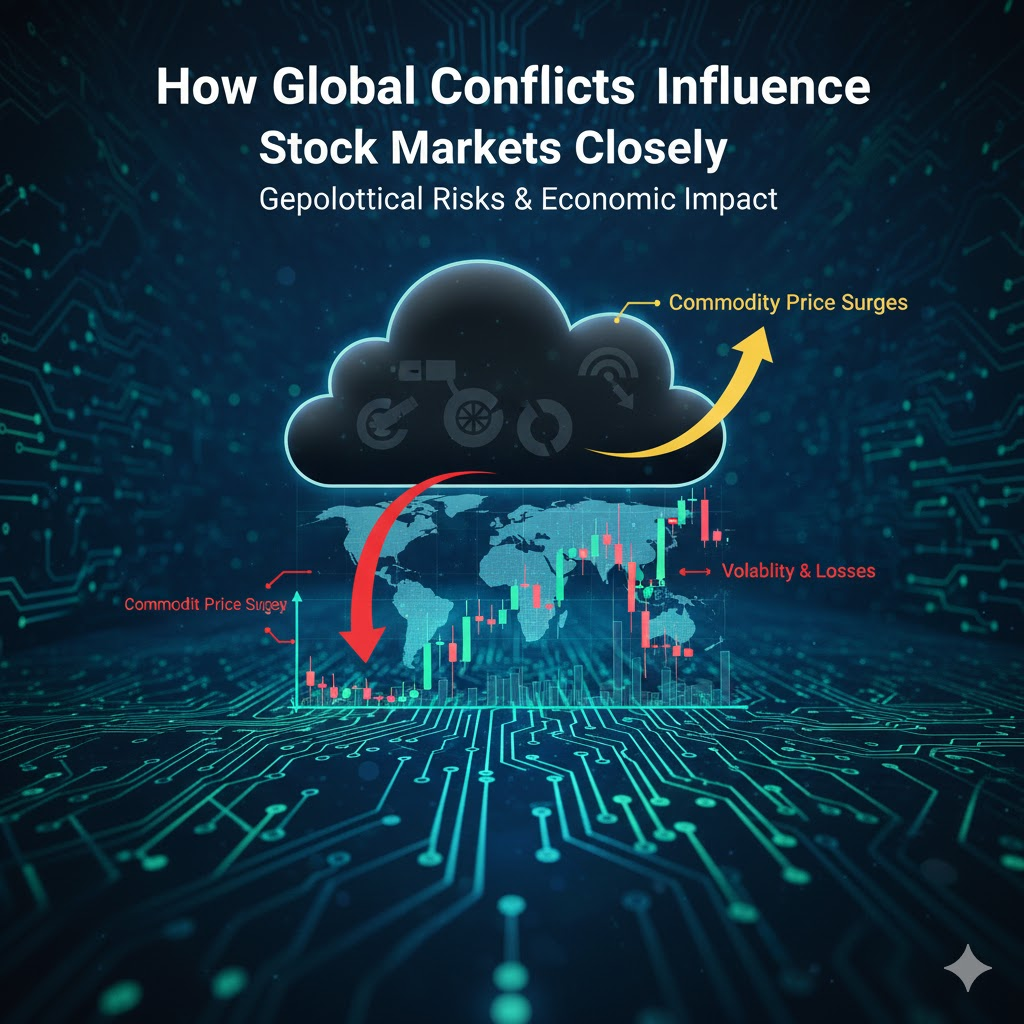
Global conflicts have always played a significant role in shaping financial markets. Whether it is a regional war, geopolitical tension, or prolonged diplomatic standoff, uncertainty created by conflicts often spills into stock markets. Investors react not only to the immediate events but also to the long-term economic and political consequences that may follow.
Market Reaction to Uncertainty
Stock markets are highly sensitive to uncertainty. When a global conflict breaks out, investors often shift to a risk-averse mindset. This usually results in sharp market volatility, with indices experiencing sudden declines as participants rush to protect capital. Fear-driven selling is common during the early stages of a conflict, even before the actual economic impact becomes clear.
At the same time, rumors, media coverage, and speculation can amplify market reactions. Even limited conflicts can trigger global market movements if they involve major economies or strategically important regions.
Impact on Different Asset Classes
Global conflicts rarely affect all assets equally. While equities often face downward pressure, safe-haven assets tend to benefit.
- Stocks: Equity markets usually experience short-term declines due to uncertainty around earnings, trade disruptions, and economic slowdown.
- Commodities: Prices of oil, gas, and metals often rise, especially if the conflict threatens supply chains or key production regions.
- Currencies: Safe-haven currencies like the US dollar or Swiss franc may strengthen, while currencies of conflict-affected nations weaken.
- Bonds and Gold: Government bonds and gold typically see increased demand as investors look for stability.
Sector-Wise Effects
Certain sectors are more vulnerable to global conflicts than others.
- Energy: Conflicts involving oil-producing regions often push energy prices higher, benefiting energy companies but increasing costs for other sectors.
- Defense: Defense and aerospace stocks may gain as governments increase military spending.
- Transportation and Travel: Airlines, tourism, and logistics companies often suffer due to higher fuel costs and reduced travel demand.
- Technology and Manufacturing: Supply chain disruptions can affect production timelines and profit margins.
Investor Sentiment and Behavioral Shifts
Beyond numbers and fundamentals, global conflicts heavily influence investor psychology. Panic selling, reduced risk appetite, and short-term trading behavior become more common. Long-term investors may pause new investments until clarity emerges, while institutional investors rebalance portfolios to reduce exposure to high-risk regions.
Over time, markets tend to adapt. Once the conflict becomes predictable or diplomatic solutions appear possible, investor confidence may slowly return.
Long-Term Economic Consequences
Prolonged conflicts can have deeper economic implications. Rising inflation due to higher energy and commodity prices, reduced global trade, and increased government spending can affect corporate earnings and economic growth. These factors influence interest rates, fiscal policies, and long-term market valuations.
However, history shows that markets often recover once uncertainty stabilizes. While conflicts may cause short-term disruptions, stock markets generally refocus on economic fundamentals, innovation, and growth over the long run.
Final Thoughts
Global conflicts undeniably influence stock markets through volatility, sector shifts, and changes in investor behavior. While short-term reactions are often driven by fear and uncertainty, long-term market performance depends on how conflicts evolve and how economies respond.
For investors, staying informed, avoiding emotional decisions, and maintaining diversification are key strategies during such periods. Understanding how global events impact markets can help navigate uncertainty with greater confidence and discipline.