
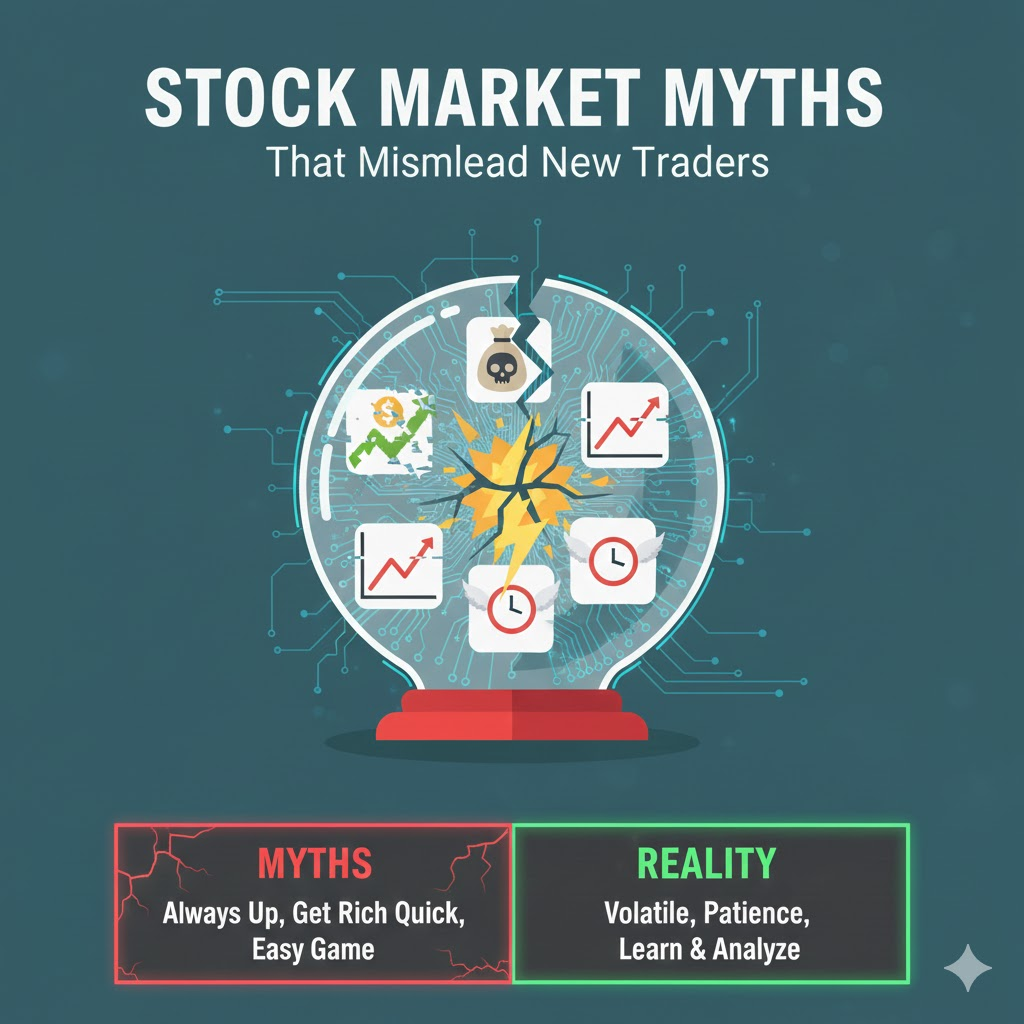
The stock market offers opportunities for wealth creation, but it can also be confusing for beginners. Many new traders enter the market with misconceptions that lead to poor decisions, unnecessary risks, and avoidable losses. Understanding common myths helps investors develop realistic expectations and smarter strategies.
Here’s a look at the stock market myths that often mislead new traders.
Myth 1: You Need a Lot of Money to Start Investing
The Reality
Thanks to fractional shares, low-cost ETFs, and commission-free trading platforms, investors can start with very small amounts. Consistency and disciplined investing matter more than the initial capital.
Key Takeaway
Even modest investments grow significantly over time with compounding and smart choices.
Myth 2: The Stock Market Is Like Gambling
The Reality
While short-term trading can feel risky, investing based on research, diversification, and long-term strategy is not gambling. Unlike games of chance, the stock market rewards informed decisions and patience.
Key Takeaway
Treat investing as a disciplined process, not a bet on luck.
Myth 3: You Can Get Rich Quick
The Reality
Stories of overnight millionaires dominate headlines, but they are exceptions. Most successful investors build wealth steadily over years through consistent contributions, compounding, and careful risk management.
Key Takeaway
Focus on long-term growth rather than chasing quick wins.
Myth 4: You Must Time the Market Perfectly
The Reality
Trying to buy at the absolute low and sell at the peak is nearly impossible. Even professionals rarely achieve perfect timing. Time in the market matters more than timing the market.
Key Takeaway
Regular investing, dollar-cost averaging, and staying invested during market cycles yield better results than frequent speculation.
Myth 5: High Returns Come With High Risk Only
The Reality
While risk and return are correlated, not all high-return investments require extreme risk. Diversification, research, and strategic asset allocation can increase returns without taking unnecessary gambles.
Key Takeaway
Understand risk, manage it wisely, and focus on sustainable growth.
Myth 6: Past Performance Predicts Future Results
The Reality
Just because a stock or fund performed well in the past does not guarantee future success. Markets evolve, and companies face changing conditions.
Key Takeaway
Analyze fundamentals, market trends, and business health rather than relying solely on historical returns.
Myth 7: You Need Complex Strategies to Succeed
The Reality
Many beginners think successful investing requires complicated models, algorithms, or day trading. Simple strategies like investing in diversified index funds or ETFs often outperform more complex attempts.
Key Takeaway
Keep strategies simple, consistent, and aligned with your goals.
Myth 8: You Should Follow the Crowd
The Reality
Herd behavior can lead to buying at highs and selling at lows. Popular trends may not match your investment goals or risk tolerance.
Key Takeaway
Make decisions based on research, not hype.
Myth 9: Dividends Are Always Better Than Growth
The Reality
Dividend stocks provide steady income, but growth stocks often offer higher total returns over time. The choice depends on your investment horizon and income needs.
Key Takeaway
Balance your portfolio according to goals, not just dividend yield.
Myth 10: Short-Term Volatility Means You’re Losing Money
The Reality
Market fluctuations are normal. Short-term dips do not equal permanent loss if you maintain a long-term perspective.
Key Takeaway
Focus on long-term trends and avoid panic selling during temporary market swings.
Conclusion
New traders often fall prey to myths that distort expectations and influence poor decision-making. Understanding these misconceptions helps investors approach the stock market with clarity, discipline, and patience.
By focusing on research, long-term strategies, diversification, and realistic goals, beginners can avoid common pitfalls and build a foundation for sustainable wealth. Education, consistency, and emotional control remain the most reliable tools for success in the stock market.