
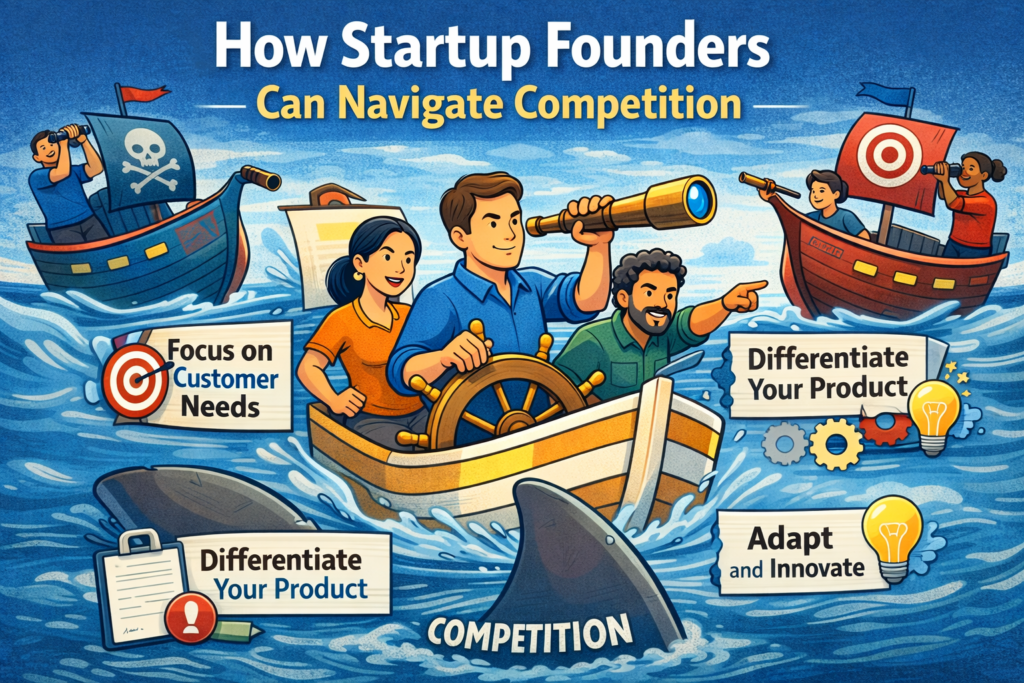
Competition is a natural part of building a startup. No matter how unique an idea seems, alternatives will exist or emerge quickly. Successful founders do not avoid competition. They learn how to understand it, adapt to it, and use it to strengthen their business.
Navigating competition effectively requires clarity, focus, and continuous learning.
Understand Your Competitive Landscape
Identify Direct and Indirect Competitors
Direct competitors offer similar products to the same audience. Indirect competitors solve the same problem in a different way. Both matter.
Understanding who you are competing against helps you position your startup clearly.
Analyze Strengths and Weaknesses
Study competitor pricing, features, customer reviews, and messaging. Look for gaps where customer needs are unmet or poorly served.
These gaps often reveal opportunity.
Define a Clear Differentiation Strategy
Focus on a Specific Niche
Trying to compete with everyone leads to dilution. Focusing on a niche allows startups to serve a specific audience better than larger players.
Niche focus builds loyalty and reduces competitive pressure.
Solve One Problem Extremely Well
Many startups fail by doing too much too soon. Excelling at one core problem creates a strong foundation for expansion later.
Build a Strong Value Proposition
Communicate Benefits Not Features
Customers care about outcomes, not technical details. Clear messaging about how your product improves their life or business creates stronger connection.
Strong value propositions cut through noise.
Align Product and Messaging
What you promise in marketing must match the product experience. Consistency builds trust and reduces churn.
Use Customer Feedback as a Competitive Advantage
Listen Faster Than Competitors
Startups can move quicker than large companies. Rapid feedback collection and implementation helps improve products faster.
Speed is a major advantage.
Build Relationships With Early Users
Engaged customers provide insights and advocacy. Loyal users are harder for competitors to win over.
Compete on Experience Not Just Price
Price Wars Hurt Everyone
Lowering prices to compete often leads to unsustainable margins. Competing on value and experience creates healthier growth.
Deliver Exceptional Customer Support
Fast and personal support differentiates startups. Positive experiences create trust and referrals.
Innovate Continuously
Improve in Small Steps
Innovation does not always mean big changes. Small, consistent improvements compound over time.
This keeps products relevant and competitive.
Watch Trends Without Copying Blindly
Learn from competitors but avoid copying without strategy. Blind imitation weakens differentiation.
Build Brand Trust Early
Be Authentic and Transparent
Startups that communicate openly build stronger relationships. Transparency creates emotional connection and trust.
Share the Journey
Sharing wins, challenges, and learnings humanizes the brand and builds community.
Use Strategic Partnerships
Collaborate Instead of Compete
Partnering with complementary businesses can expand reach and create new value without direct competition.
Partnerships can accelerate growth efficiently.
Stay Focused Internally
Avoid Obsessing Over Competitors
Constantly watching competitors can distract from building great products. Focus on customers and execution first.
Set Clear Internal Metrics
Measure success using customer satisfaction, retention, and product usage rather than competitor actions.
Prepare for Competitive Pressure Long Term
Expect New Entrants
If your startup succeeds, others will follow. Preparing systems, culture, and processes early builds resilience.
Build Moats Over Time
Moats may include brand trust, customer loyalty, proprietary data, or community. These take time but protect long term value.
Common Mistakes Founders Make
Reacting Emotionally
Panic driven decisions often harm strategy. Calm analysis leads to better outcomes.
Competing on Too Many Fronts
Spreading efforts thin weakens execution. Focus creates strength.
Conclusion
Competition is not a threat but a signal that demand exists. Startup founders who understand their market, differentiate clearly, listen to customers, and execute consistently can thrive even in crowded spaces.
By focusing on value, experience, and adaptability, startups can turn competition into a catalyst for growth rather than an obstacle.