
Starting a new business is exciting, but legal foundations are often overlooked in the rush to build products and acquire customers. Many startups fail or face serious setbacks not because of poor ideas, but due to avoidable legal mistakes made early on.
Understanding these common legal errors can help founders protect their business, reduce risk, and build a strong foundation for long term growth.
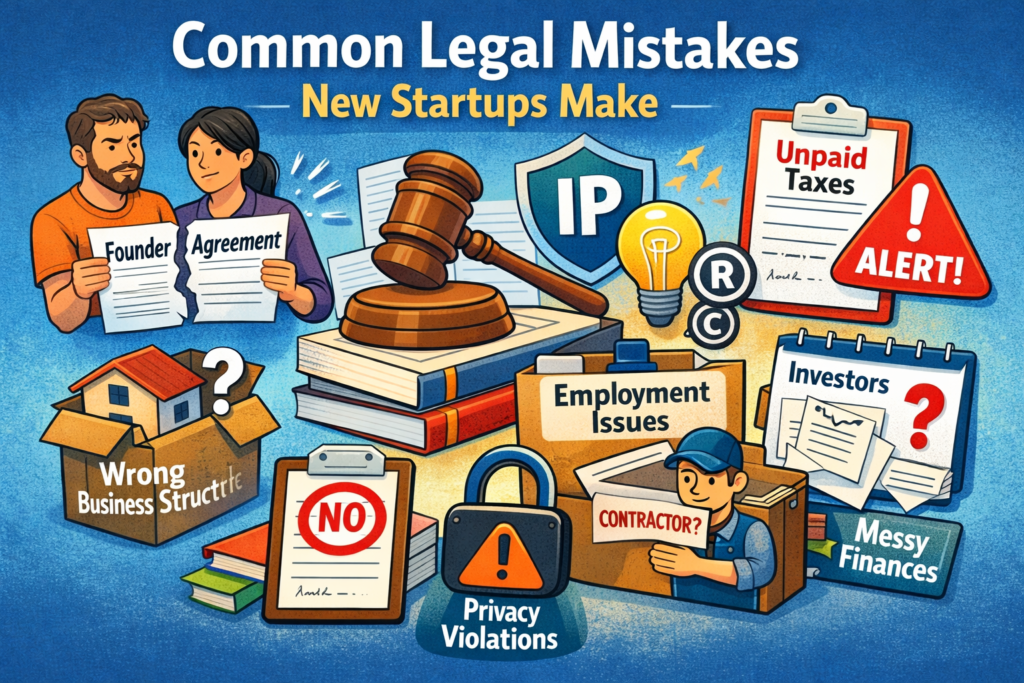
Choosing the Wrong Business Structure
Not Registering the Business Properly
Many founders delay formal registration to save time or money. Operating without proper registration can expose personal assets to risk and create tax and compliance issues later.
Choosing the right structure such as sole proprietorship, partnership, or company is critical from day one.
Ignoring Future Growth Needs
Some startups choose a structure that works short term but creates problems when raising funds or expanding. Changing structures later can be expensive and complicated.
Planning for growth early avoids unnecessary restructuring.
Poor Founder Agreements
No Written Founder Agreement
Verbal agreements between co founders often lead to disputes. Without a written agreement, ownership, roles, and responsibilities can become unclear.
A founder agreement helps prevent conflicts and protects relationships.
Unclear Equity Distribution
Unbalanced or undocumented equity splits cause tension over time. Equity should reflect contribution, commitment, and long term involvement.
Clear vesting schedules protect the company if a founder exits early.
Ignoring Intellectual Property Protection
Not Protecting Ideas and Assets
Many startups fail to secure intellectual property such as trademarks, copyrights, or patents. This can allow competitors to copy branding or products.
Protecting IP early builds value and credibility.
Ownership Confusion With Contractors
Work done by freelancers or agencies may not legally belong to the startup unless proper agreements are signed.
Always ensure IP ownership clauses are included in contracts.
Using Online Templates Without Legal Review
Generic Contracts Can Be Risky
Free templates may not suit your business model or local laws. Small errors can lead to serious legal consequences.
Customized contracts provide better protection.
Missing Key Clauses
Important clauses related to liability, termination, or confidentiality are often missing in generic documents.
Legal review helps identify gaps before problems arise.
Failing to Comply With Employment Laws
Misclassifying Employees and Contractors
Hiring contractors instead of employees without proper classification can lead to penalties and legal action.
Understanding labor laws helps avoid costly mistakes.
Lack of Employment Contracts
Verbal employment agreements create uncertainty. Written contracts protect both the startup and employees.
Clear terms build trust and reduce disputes.
Overlooking Regulatory and Compliance Requirements
Ignoring Industry Regulations
Some industries have strict regulations related to data, finance, health, or safety. Ignoring these can result in fines or shutdowns.
Compliance should be built into operations early.
Data Privacy and User Protection Issues
Startups collecting user data must follow privacy laws. Missing privacy policies or consent mechanisms can damage trust and lead to legal trouble.
Not Preparing for Fundraising Legally
Poor Documentation for Investors
Incomplete records, unclear ownership, or missing agreements make startups unattractive to investors.
Clean legal documentation speeds up fundraising.
Accepting Informal Investments
Taking money from friends or family without proper agreements can create legal and tax complications.
Every investment should be documented clearly.
Weak Terms and Conditions
Missing Customer Agreements
Without clear terms of service, startups face disputes related to refunds, liabilities, or misuse.
Strong customer agreements protect the business.
Unclear Pricing and Refund Policies
Ambiguous policies lead to customer dissatisfaction and legal complaints.
Transparency reduces risk and builds credibility.
Ignoring Legal Advice to Save Costs
Short Term Savings Create Long Term Risk
Many founders avoid lawyers to cut costs. This often leads to expensive fixes later.
Early legal guidance is an investment, not an expense.
Waiting Until a Problem Arises
Seeking legal help only after an issue occurs limits options and increases costs.
Proactive advice prevents damage.
Conclusion
Legal mistakes are common among new startups, but most are preventable with awareness and early action. Choosing the right structure, protecting intellectual property, documenting agreements, and ensuring compliance create a solid foundation for growth.
Startups that address legal basics early can focus on innovation and scaling without unnecessary risk. A strong legal framework supports trust, stability, and long term success.